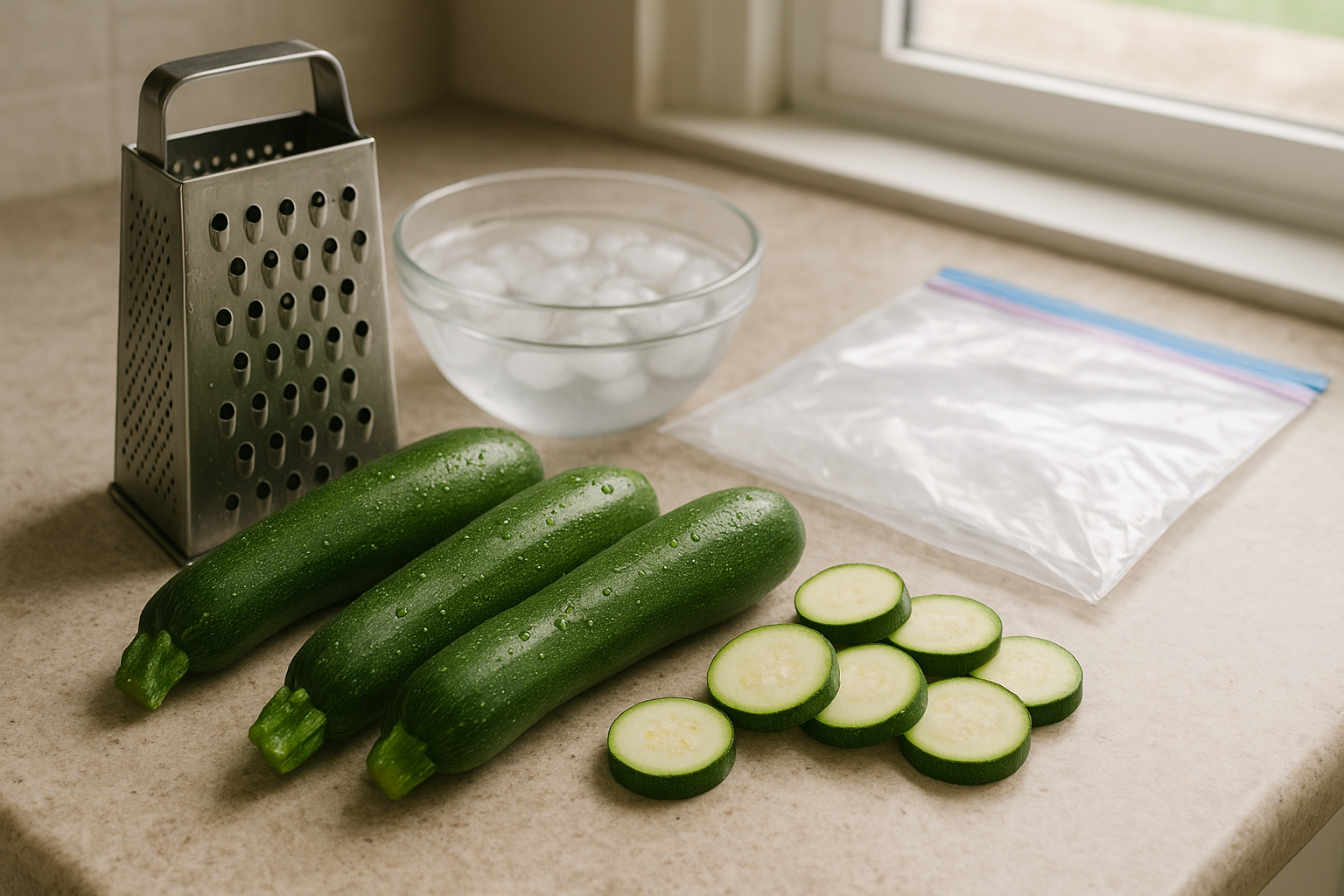
How to Freeze Zucchini for Bread, Soup, and Sides
If your garden or farmers market bag has more zucchini than you can cook this week, the freezer is your friend. The trick is matching the cut to how you will use it later: shredded for bread and muffins, slices for soups and casseroles, and small portions for quick weeknight cooking.
Here is a practical, no-fuss guide to freezing zucchini so it is useful later—not one giant icy brick you dread pulling out.
Can You Freeze Zucchini?
Yes, zucchini freezes well, but it will not thaw with the same crisp texture as fresh zucchini. Because zucchini is high in water, frozen zucchini is best for cooked dishes such as quick breads, muffins, soups, casseroles, sauces, fritters, and skillet meals.
For the best quality, use young, tender zucchini with thin skins and small seeds. Oversized garden zucchini can still be frozen, but it is often better shredded for baking or soup rather than sliced for side dishes.
What You’ll Need
- Fresh zucchini
- Cutting board and knife
- Box grater or food processor, if shredding
- Large pot with lid
- Steamer basket or blanching basket
- Large bowl of ice water
- Clean towels or salad spinner
- Freezer bags or freezer-safe containers
- Permanent marker for labeling
Method 1: How to Freeze Shredded Zucchini for Bread
Shredded zucchini is the most useful form to keep in the freezer if you bake zucchini bread, muffins, pancakes, or chocolate zucchini cake. The National Center for Home Food Preservation recommends steam blanching grated zucchini in small quantities for 1 to 2 minutes, until translucent, then packing it with 1/2 inch headspace. Nebraska Extension shares the same guidance and notes that any extra liquid can be discarded after thawing. ([food.unl.edu](https://food.unl.edu/article/freezing-zucchini/?utm_source=openai))
- Wash the zucchini. Scrub gently under cool running water. Do not peel unless the skin is tough or damaged.
- Trim and shred. Cut off the stem and blossom ends, then grate on the large holes of a box grater or use a food processor.
- Steam blanch briefly. Place shredded zucchini in a steamer basket over boiling water. Cover and steam 1 to 2 minutes, just until it looks slightly translucent.
- Cool quickly. Spread the hot zucchini in a shallow bowl or place the packed container in cold water to cool it fast.
- Portion for recipes. Pack in 1-cup or 2-cup amounts, depending on your favorite recipes. Leave about 1/2 inch headspace in rigid containers.
- Seal, label, and freeze. Press extra air from freezer bags, flatten, label with the amount and date, and freeze.
Handy tip: If your go-to zucchini bread recipe calls for 2 cups shredded zucchini, freeze it in 2-cup bags. Future you will be grateful.
Method 2: How to Freeze Zucchini Slices
Sliced zucchini is handy for soups, casseroles, pasta bakes, rice skillets, and vegetable sautés where a softer texture is fine. For slices, research-based food preservation guidance recommends cutting zucchini into 1/2-inch slices and water blanching for 3 minutes before freezing. ([food.unl.edu](https://food.unl.edu/article/freezing-zucchini/?utm_source=openai))
- Wash and trim. Rinse the zucchini well and cut off both ends.
- Slice evenly. Cut into 1/2-inch rounds or half-moons. Even pieces blanch and cook more evenly.
- Boil water. Use a large pot with plenty of water. Nebraska Extension notes the standard is 1 gallon of water per pound of prepared vegetables.
- Blanch 3 minutes. Lower zucchini into vigorously boiling water. Once the water returns to a boil, start timing 3 minutes.
- Chill immediately. Transfer zucchini to a large bowl of ice water to stop the cooking.
- Drain very well. Pat dry on clean towels. Extra surface water turns into extra ice.
- Tray freeze if you want loose pieces. Spread slices on a parchment-lined baking sheet and freeze until firm, then transfer to bags.
- Seal and label. Remove as much air as possible, label, and freeze.
Should You Blanch Zucchini Before Freezing?
For the best color, flavor, and storage quality, yes. Blanching slows enzyme activity that can cause frozen vegetables to lose flavor, color, and texture over time. University of New Hampshire Extension notes that frozen food should be kept at 0°F or lower for safe freezer storage. ([extension.unh.edu](https://extension.unh.edu/resource/freezing-vegetables?utm_source=openai))
That said, some home cooks freeze raw shredded zucchini for short-term use in baking. It is convenient, but for a reliable long-term method, especially if you are preserving a big harvest, blanching is the safer bet for quality.
How to Freeze Zucchini Without One Big Frozen Block
The biggest mistake is packing wet zucchini into a large bag and tossing it in the freezer. You can prevent the dreaded zucchini iceberg with a few small habits:
- Freeze recipe-sized portions. Use 1-cup or 2-cup bags for shredded zucchini.
- Flatten bags before freezing. Thin, flat bags stack neatly and thaw faster.
- Tray freeze slices. Freeze slices in a single layer first, then bag them.
- Remove air. Press out air by hand or use a straw to pull out the last bit before sealing.
- Label clearly. Write “shredded, 2 cups” or “slices, blanched” plus the date.
How Long Does Frozen Zucchini Last?
For best quality, use frozen zucchini within about 8 to 12 months if it has been properly blanched, cooled, packed, and kept at 0°F or lower. It may remain safe longer if continuously frozen, but flavor and texture are best when you use it within the year.
How to Thaw and Use Frozen Zucchini
For baking, thaw shredded zucchini in the refrigerator or in a bowl on the counter if you are using it soon. It will release liquid as it thaws. Unless your recipe says otherwise, drain off the extra liquid before adding the zucchini to batter. Oregon State University Extension also recommends thawing and draining frozen summer squash before using it in baking. ([extension.oregonstate.edu](https://extension.oregonstate.edu/catalog/sp-50-447-preserving-summer-squash?utm_source=openai))
For soups, stews, chili, pasta sauce, and casseroles, you can often add frozen zucchini straight to the pot. Expect it to soften quickly, so add it near the end of cooking if you want it to hold some shape.
Best Uses for Frozen Zucchini
- Zucchini bread, muffins, and snack cakes
- Vegetable soup or minestrone
- Tomato-based pasta sauce
- Lasagna, baked ziti, and casseroles
- Fritters, if thawed and squeezed very dry
- Smooth blended soups
- Rice, quinoa, or egg skillets
What Not to Expect From Frozen Zucchini
Frozen zucchini is not a good stand-in for raw zucchini sticks, crisp salads, or lightly cooked dishes where you want a firm bite. The freezer changes the structure of the vegetable, so thawed zucchini will always be softer than fresh. That does not make it bad—it just means it belongs in the right recipes.
Quick Troubleshooting
My zucchini is watery after thawing.
That is normal. Drain it in a fine-mesh strainer or squeeze shredded zucchini gently in a clean towel before baking.
My slices froze together.
Next time, dry them well and tray freeze them first. For now, tap the bag on the counter or add the frozen clump directly to soup or sauce.
My zucchini tastes flat.
Use frozen zucchini in seasoned dishes with garlic, herbs, tomatoes, cheese, broth, or spices. It is better as an ingredient than as a plain side.
The Bottom Line
The best way to freeze zucchini depends on how you cook. Shred and portion it for baking, slice and blanch it for cooked dishes, and always label the bags before they disappear into the freezer. With a little prep now, your summer zucchini can become easy muffins, soups, casseroles, and quick dinners for months to come.