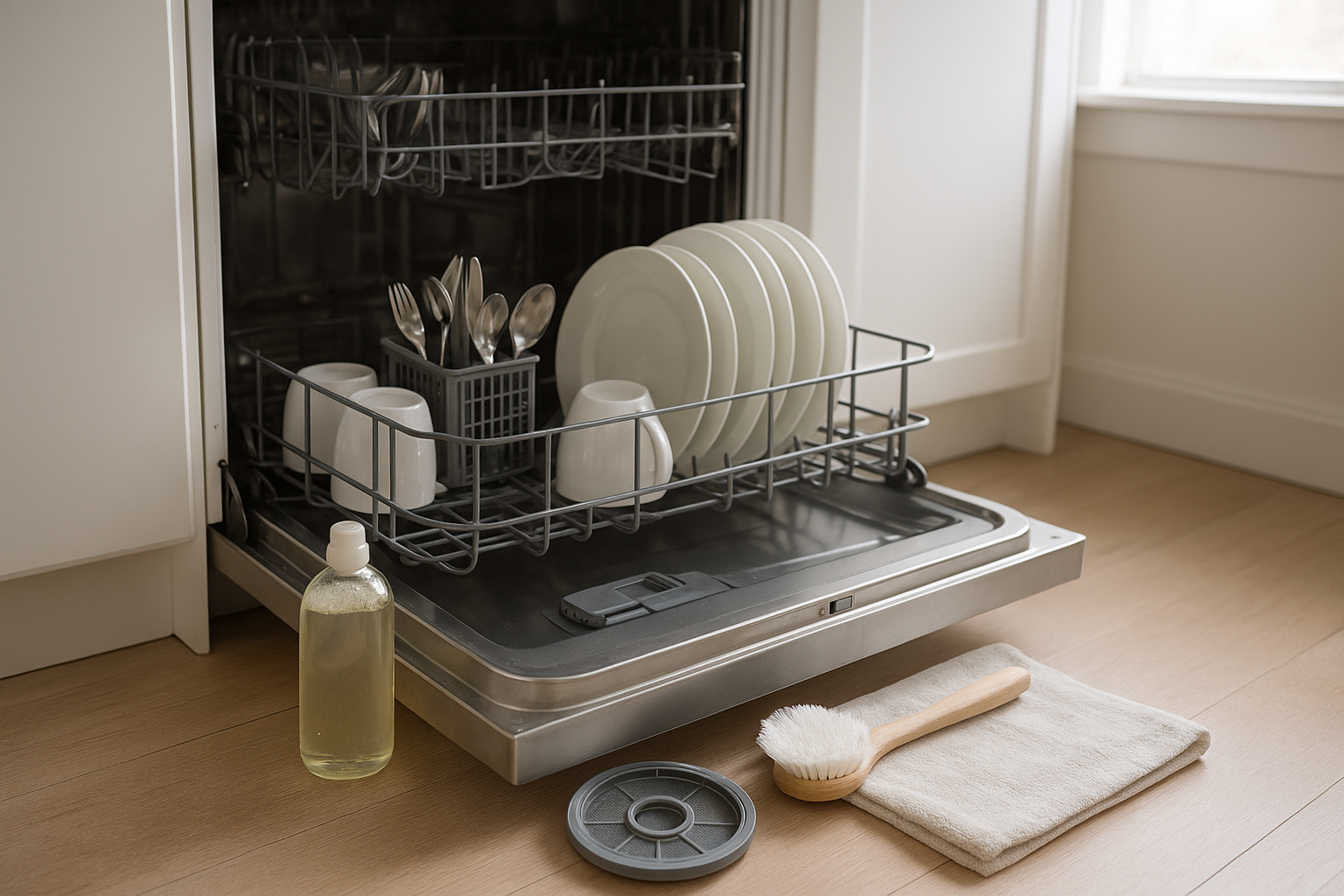
How to Clean a Dishwasher Filter the Right Way
If your dishwasher smells sour, leaves grit on glasses, or has water sitting in the bottom after a cycle, the filter is a good place to start. Learning how to clean a dishwasher filter takes only a few minutes, and it can make a tired machine work noticeably better.
Many newer dishwashers have a removable filter in the bottom of the tub. Manufacturers note that a clean filter helps keep wash water flowing properly and helps prevent food particles from recirculating onto dishes. ([producthelp.whirlpool.com](https://producthelp.whirlpool.com/Dishwashers/Dishwasher/Other/Cleaning_and_Odor/Cleaning_and_Maintenance/Cleaning_the_Filter/Cleaning_the_Filter_-_Dishwasher?utm_source=openai))
Why the Dishwasher Filter Gets Dirty
Your dishwasher filter catches bits of food, labels, seeds, glass chips, and greasy residue before they can clog the pump or spray back onto clean dishes. That is a helpful job, but it also means the filter can get coated with a gray, slippery film over time.
Pre-rinsing every plate is not the answer. ENERGY STAR recommends scraping food off dishes instead of rinsing them first, because modern dishwashers and detergents are designed to clean without that extra water use. ([energystar.gov](https://www.energystar.gov/products/dishwashers?utm_source=openai)) A better habit is to scrape plates well, load correctly, and clean the filter regularly.
How Often Should You Clean It?
A simple rule for most busy kitchens is to check the filter once a month. Whirlpool recommends cleaning the dishwasher about every 30 days for best performance, and GE also recommends checking the bottom of the dishwasher for debris and cleaning removable filters according to the owner’s manual. ([producthelp.whirlpool.com](https://producthelp.whirlpool.com/Dishwashers/Dishwasher/Other/Cleaning_and_Odor/Cleaning_and_Maintenance/Cleaning_the_Filter/Cleaning_the_Filter_-_Dishwasher?utm_source=openai))
You may need to clean it more often if you cook a lot, run the dishwasher daily, have kids loading plates with food still stuck on them, or notice any of these signs:
- Grit, crumbs, or cloudy residue on glasses
- A musty or sour smell when you open the door
- Standing water near the filter area
- Food bits stuck to bowls after a full cycle
- A dishwasher that sounds louder or struggles to drain
Before You Start: Check What Kind of Filter You Have
Not every dishwasher filter removes the same way. Some machines have a manual filter assembly that twists out. Others have a maintenance-free or self-cleaning system, and forcing parts loose can cause damage.
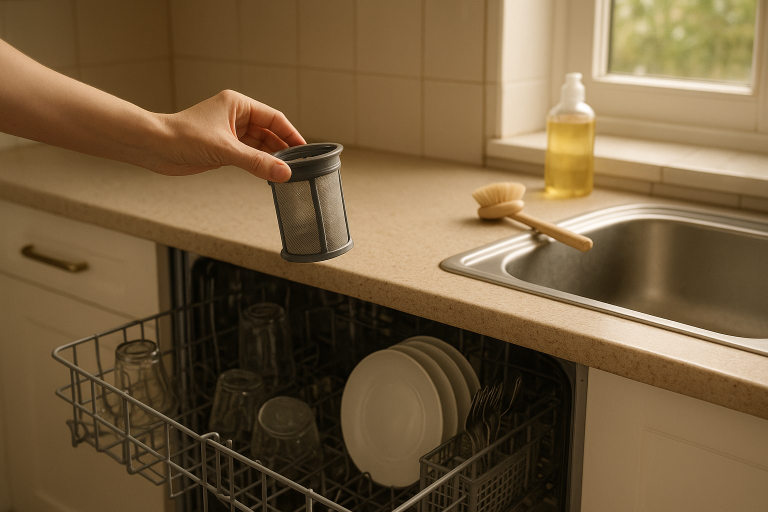
Look at the bottom of the dishwasher under the lower rack. A removable filter usually looks like a round cylinder, screen, or cup that sits near the spray arm. If you are unsure, search your model number and owner’s manual before pulling anything apart. Whirlpool notes that some models have a removable upper and lower filter assembly, while other models use a different system with a foreign object cup instead. ([producthelp.whirlpool.com](https://producthelp.whirlpool.com/Dishwashers/Dishwasher/Other/Cleaning_and_Odor/Cleaning_and_Maintenance/Cleaning_the_Filter/Cleaning_the_Filter_-_Dishwasher?utm_source=openai))
What You Need
- Warm running water
- Mild dish soap
- A soft brush, old toothbrush, or small nylon brush
- A soft cloth or sponge
- Rubber gloves, optional but helpful
- A toothpick or paper clip for clogged spray arm holes, if needed
Avoid abrasive pads, steel wool, bleach, and harsh cleaners inside the dishwasher unless your owner’s manual specifically allows them. GE cautions against abrasive scouring pads or harsh cleaners because they can damage the interior finish. ([products.geappliances.com](https://products.geappliances.com/appliance/gea-support-search-content?contentId=21552&utm_source=openai))
How to Clean a Dishwasher Filter Step by Step
1. Empty the dishwasher and remove the lower rack
Start with a cool, empty dishwasher. Pull the lower rack out and set it aside so you can reach the bottom of the tub easily. If you just ran a cycle, give the heating element time to cool before putting your hands inside.
2. Remove loose debris from the bottom
Use a damp cloth or paper towel to pick up obvious food scraps, broken pasta, popcorn kernels, twist ties, or pieces of glass. Be careful if you suspect broken glass; wear gloves and dab with a folded damp paper towel instead of sweeping with your bare hand.
3. Unlock and lift out the filter
Most round manual filters unlock with a short counterclockwise turn. Whirlpool’s instructions for one common style say to turn the upper filter assembly one-quarter turn counterclockwise and lift it out. ([producthelp.whirlpool.com](https://producthelp.whirlpool.com/Dishwashers/Dishwasher/Other/Cleaning_and_Odor/Cleaning_and_Maintenance/Cleaning_the_Filter/Cleaning_the_Filter_-_Dishwasher?utm_source=openai)) Your model may differ, so do not force it. If it resists, stop and check the manual.
4. Separate the parts if your model allows it
Some filters have two pieces: a fine mesh cylinder and a flat lower screen. Gently separate them over the sink. Take a quick photo before you remove the pieces if you are worried about putting them back correctly.
5. Rinse under warm water
Hold the filter under warm running water and rinse away loose soil. Turn it slowly so water flows through the mesh from different directions. You should see trapped grease and food bits wash out.
6. Scrub gently with soap
Add a drop of mild dish soap to a soft brush and scrub the mesh, rim, and seams. Pay attention to the underside, where greasy film often hides. For mineral buildup from hard water, manufacturers recommend a soft brush rather than anything abrasive. ([producthelp.whirlpool.com](https://producthelp.whirlpool.com/Dishwashers/Dishwasher/Other/Cleaning_and_Odor/Cleaning_and_Maintenance/Cleaning_the_Filter/Cleaning_the_Filter_-_Dishwasher?utm_source=openai))
7. Clean the filter well and spray arm area
Before reinstalling the filter, wipe the sump area where the filter sits. If the spray arm holes look blocked, GE suggests using a paper clip or tweezers carefully to clear clogged jets. ([geappliances.com](https://www.geappliances.com/ge/lifestyles/how-to-deep-clean-your-dishwasher.htm?utm_source=openai)) Spin the spray arm by hand to make sure it moves freely.
8. Reinstall the filter securely
Put every piece back exactly where it belongs and lock the filter in place. This step matters. A loose filter can let food and debris reach areas they should not, and dishes may come out dirtier than before. After reinstalling, give the filter a gentle tug to confirm it is seated.
Should You Run Vinegar Through the Dishwasher?
For general freshening or mineral film, some manufacturers allow a vinegar rinse. GE says one option is to pour 1 cup of vinegar into the dishwasher just after the detergent cup opens and let the cycle finish; it also lists dishwasher cleaner or citric acid as options for buildup. ([products.geappliances.com](https://products.geappliances.com/appliance/gea-support-search-content?contentId=21552&utm_source=openai))
That said, vinegar is not a replacement for cleaning the filter by hand. If the filter is coated with food sludge, a cleaning cycle will not scrub the mesh clean. Remove the filter first, wash it at the sink, and then run a cleaning cycle if the interior still smells stale or looks filmy.
What Not to Do
- Do not use steel wool. It can scratch stainless or plastic surfaces and leave rust-prone bits behind.
- Do not force the filter loose. If it does not twist or lift easily, check the manual.
- Do not run the dishwasher without the filter installed. The filter protects the pump and helps keep debris out of the wash system.
- Do not overload the racks. Blocked spray arms can make a clean filter seem like it is not helping.
- Do not pre-rinse everything. Scrape plates instead; rinsing first wastes water and can interfere with soil-sensing cycles. ([energystar.gov](https://www.energystar.gov/products/dishwashers?utm_source=openai))
Simple Habits That Keep the Filter Cleaner
The easiest way to stretch time between messy cleanings is to keep big food out of the machine in the first place. Scrape plates into the trash or compost bin, remove fruit stickers from produce bowls, and avoid washing jars with paper labels unless the labels are fully removed.
Run full loads when you can. ENERGY STAR notes that dishwashers use about the same amount of energy and water regardless of how many dishes are inside, so full loads make better use of each cycle. ([energystar.gov](https://www.energystar.gov/products/dishwashers?utm_source=openai)) If dishes will sit overnight, use a rinse-only feature if your machine has one rather than hand-rinsing every item.
When Cleaning the Filter Is Not Enough
If the dishwasher still smells bad, drains poorly, or leaves grit after the filter is clean, look for other issues. The drain hose may be kinked, the air gap may be clogged, the garbage disposal knockout plug may be a problem after a new disposal installation, or the spray arms may be blocked.
Also check the water temperature. GE recommends incoming dishwasher water of at least 120 degrees Fahrenheit so detergent can dissolve and clean properly. ([geappliances.com](https://www.geappliances.com/ge/lifestyles/how-to-deep-clean-your-dishwasher.htm?utm_source=openai)) If your dishwasher suddenly stops draining, makes grinding sounds, leaks, or shows an error code, it may be time to call a qualified appliance technician.
The Bottom Line
Cleaning a dishwasher filter is one of those small chores that pays off quickly. Once a month, pull the lower rack, remove the filter, rinse and scrub it gently, wipe the filter well, and lock everything back into place.
With that simple routine, your dishwasher has a better chance of draining well, smelling fresh, and sending glasses, plates, and silverware back to the cabinet truly clean.