How to Harvest and Freeze Basil Before Frost
Basil always seems to look its best right before the weather turns on it. If you have a big, leafy plant in late summer or early fall, now is the time to harvest and freeze basil before frost turns those tender leaves black.
The good news is that basil is easy to save, and freezing keeps its fresh flavor better than drying for most everyday cooking. With one good harvest session, you can have basil ready for soups, sauces, pasta, eggs, roasted vegetables, and winter batches of pesto.
Why Basil Needs to Be Harvested Before Frost
Basil is a warm-season annual herb, and it is one of the first herbs to suffer when cold weather arrives. Extension garden guidance notes that basil does not tolerate cold temperatures and is readily damaged by frost; Oregon State University’s fall gardening guidance even recommends harvesting basil before night temperatures drop below 50°F. ([yardandgarden.extension.iastate.edu](https://yardandgarden.extension.iastate.edu/how-to/growing-basil-home-garden?utm_source=openai))
Once frost hits, basil leaves often darken, wilt, and lose their clean flavor. You may still be able to salvage a few protected leaves after a chilly night, but it is much better to harvest while the plant is still green, fragrant, and dry.
When to Do the Big Basil Harvest
Plan your final basil harvest when your local forecast shows several nights approaching the low 50s, or definitely before the first frost advisory. If you live in a cold-winter area, that may mean early fall. In mild regions, you may get several more weeks.
For the best flavor, harvest in the morning after dew has dried but before the hottest part of the day. Iowa State University Extension notes that leafy herbs have their oils at peak levels around the flower bud stage, and annual herbs can be cut back more severely during the final fall harvest before frost. ([yardandgarden.extension.iastate.edu](https://yardandgarden.extension.iastate.edu/faq/how-do-i-harvest-herbs?utm_source=openai))
How to Cut Basil Without Making a Mess
Use clean scissors, garden snips, or pruners. If you are harvesting before frost and do not need the plant to keep growing, you can cut large stems low on the plant. If you still expect a few warm weeks, leave 4 to 6 inches of stem with leaves so the plant can push out new growth; Iowa State recommends cutting just above a pair of leaves and leaving that lower stem for regrowth. ([yardandgarden.extension.iastate.edu](https://yardandgarden.extension.iastate.edu/how-to/growing-harvesting-and-drying-herbs?utm_source=openai))
- Bring a basket or bowl to the garden. Basil bruises easily, so do not cram it tightly into a bag.
- Cut whole stems instead of plucking leaf by leaf. This is faster and keeps the leaves cleaner.
- Remove flowers and tough stems. Basil flowers are edible, but older flower stalks can taste stronger and more bitter.
- Sort as you go. Compost yellow, spotted, slimy, or frost-damaged leaves.
If your basil has already started flowering, do not panic. Cut the flowering stems back several leaf nodes and use the good leaves. They may be a little stronger in flavor, but they are still useful in cooked dishes and pesto.
Should You Wash Basil Before Freezing?
Yes, if the leaves are dusty, gritty, or came from a garden where soil splashed during rain. Swish the stems gently in a bowl of cool water, lift them out, and repeat if needed. Do not soak basil for a long time.
The most important step is drying. Wet basil freezes into icy clumps and can taste diluted. Spread the leaves on clean towels or run them through a salad spinner, then let them air-dry until no visible water remains. Pick the leaves from the stems after washing and drying; it is easier and less fussy than stripping tiny wet leaves.
Best Method: Freeze Basil in Oil Cubes
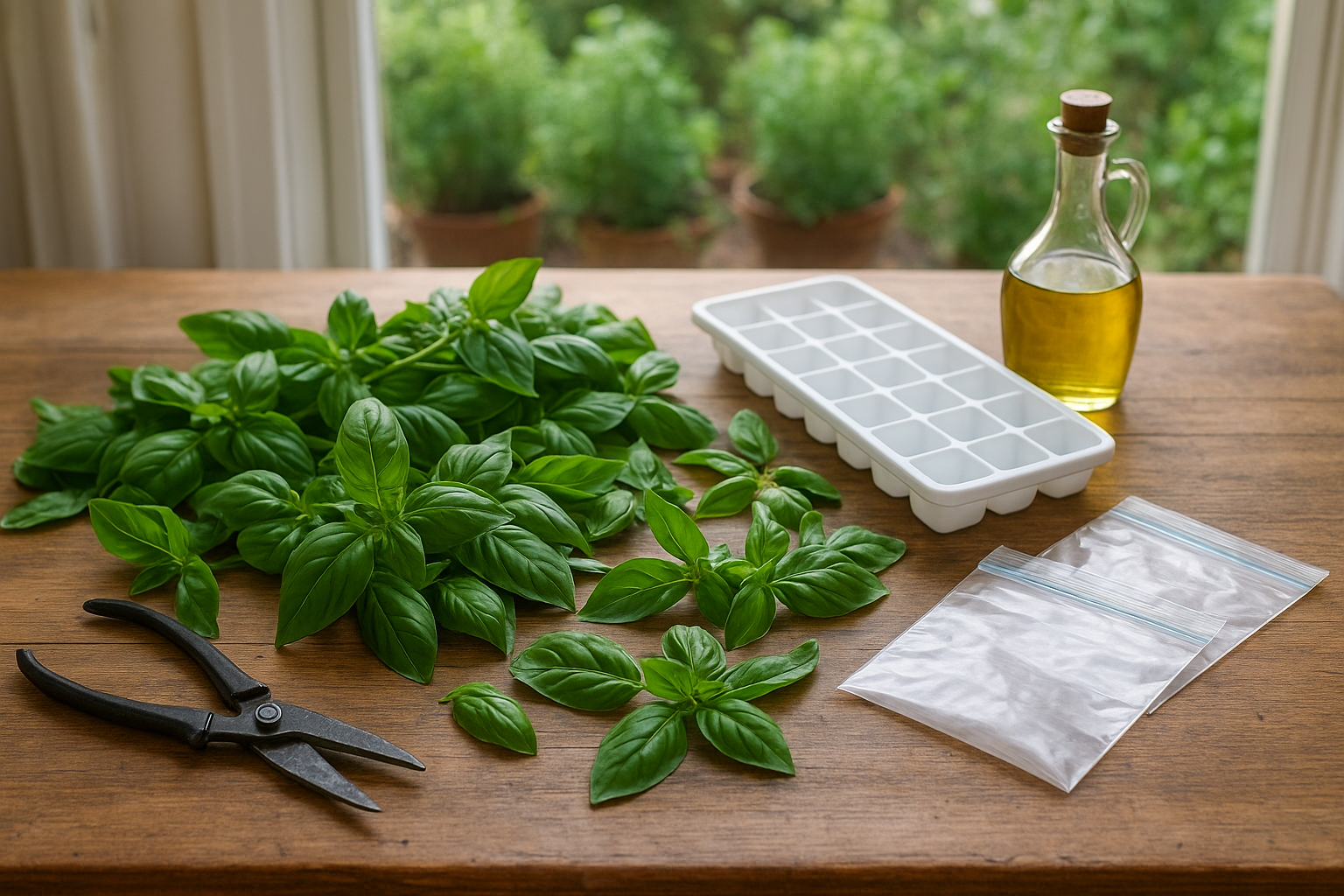
For most home cooks, basil-oil cubes are the most useful freezer method. They drop neatly into tomato sauce, minestrone, skillet chicken, scrambled eggs, beans, and roasted vegetables.
- Pack clean basil leaves into a food processor. Use about 2 packed cups of leaves at a time.
- Add olive oil. Start with 2 to 4 tablespoons, just enough to help the basil chop and coat the leaves.
- Pulse, do not puree completely. A coarse paste is easier to portion and use.
- Spoon into ice cube trays. Press out air pockets with the back of a spoon.
- Freeze until solid. Transfer cubes to a labeled freezer bag or container.
The National Center for Home Food Preservation recommends freezing herbs in water or oil and notes that frozen herbs become limp when thawed, so they are better for cooking than garnish. ([nchfp.uga.edu](https://nchfp.uga.edu/how/freeze/vegetable/freezing-fresh-herbs/?utm_source=openai))
Second Method: Freeze Basil Pesto Cubes
If you already know you want pesto, make a simple freezer pesto base. Blend basil leaves with olive oil, garlic, and nuts if you like. Many gardeners leave out the cheese until serving because freshly grated cheese tastes better and lets the pesto freeze more flexibly.
Spoon the pesto into ice cube trays or small freezer containers. Once frozen, move the cubes to a freezer bag. Label the bag with the date and whether it contains nuts, cheese, or garlic. Iowa State’s basil growing guidance also lists freezing basil in ice cube trays and storing the cubes in freezer bags as a practical preservation method. ([yardandgarden.extension.iastate.edu](https://yardandgarden.extension.iastate.edu/how-to/growing-basil-home-garden?utm_source=openai))
Third Method: Freeze Whole Basil Leaves
Whole frozen basil leaves are not as pretty as fresh leaves, but they are handy when you want a small amount. Wash and dry the leaves very well, spread them on a parchment-lined baking sheet, and freeze until firm. Then transfer them to a freezer bag.
Press extra air out of the bag before sealing. The leaves will be fragile, so expect some crumbling. That is not a problem if you plan to add them to soup, sauce, beans, or stew.
How Long Frozen Basil Keeps
For best flavor, use frozen basil within about 6 months. It may remain safe longer if kept continuously frozen at 0°F, but the aroma fades over time. The National Center for Home Food Preservation says a refrigerator-freezer is suitable for frozen food storage only if it can maintain 0°F or below. ([nchfp.uga.edu](https://nchfp.uga.edu/faqs/general-freezing/category/faq-freezing?utm_source=openai))
Always label your bags with the date and form: “basil oil cubes,” “pesto no cheese,” or “whole basil leaves.” Future you will be grateful in January.
What Not to Do With a Big Basil Harvest
- Do not can homemade pesto. Pesto is a low-acid mixture, and home canning is not the safe storage choice. Freeze it instead.
- Do not freeze wet leaves in a thick pile. They will turn into a hard, icy block.
- Do not expect thawed basil to work like fresh garnish. Use frozen basil in cooked dishes or blended sauces.
- Do not wait for frost to “finish” the plant. Basil is too tender for that gamble.
Can You Bring Basil Indoors Instead?
You can try, especially if your plant is small and healthy, but garden basil often struggles indoors with lower light, dry air, and transplant shock. Basil is an annual, so even indoors it will not live forever. If you want indoor basil, taking cuttings from healthy stems before frost is often easier than digging up a large, tired plant.
Place 4- to 6-inch cuttings in water, remove leaves that would sit below the waterline, and move them to a bright windowsill. Once roots form, pot them in fresh potting mix. This gives you a better chance at a small winter plant while your main outdoor harvest is safely tucked in the freezer.
The Simple Fall Basil Plan
If cold nights are coming, do not overthink it: cut the basil while it is still green, wash and dry it well, and freeze it in the form you will actually use. Oil cubes are the most versatile, pesto cubes are the fastest dinner helper, and whole leaves are fine for soups and sauces.
A single afternoon of harvesting can keep your summer basil from going to waste. When you stir a cube into bubbling tomato sauce on a cold night, you will be glad you beat the frost.