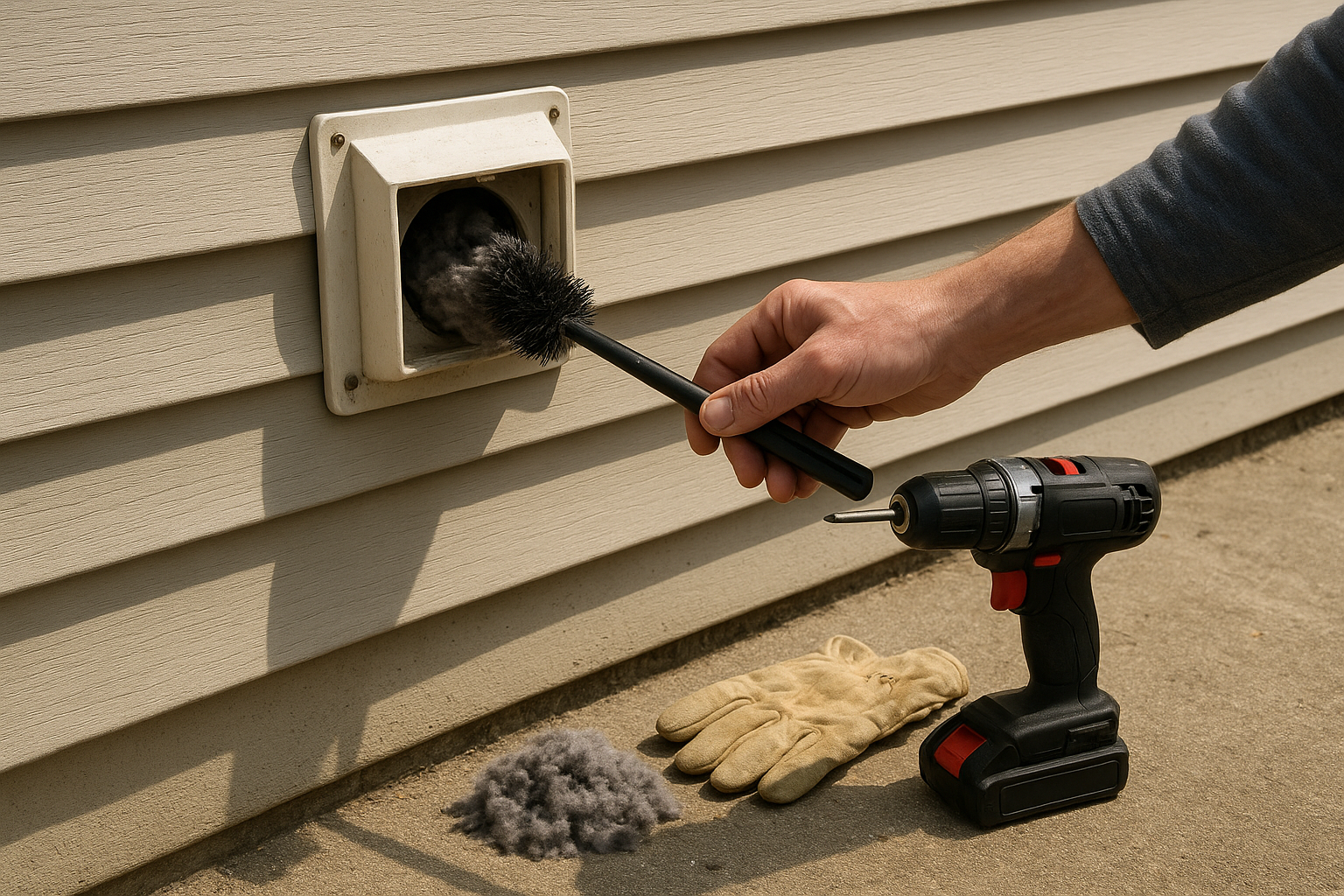
How to Clean a Dryer Vent from Outside
If your dryer takes forever to dry towels, the problem may not be the dryer at all. A clogged outside vent can trap moist air, waste energy, and create a real fire risk, so learning how to clean a dryer vent from outside is a smart bit of home maintenance.
This job is usually manageable for a handy homeowner if the vent exits through a nearby exterior wall. If your dryer vents to the roof, runs a very long distance, or has repeated clogs, it is often safer to call a dryer vent cleaning pro.
Why the Outside Dryer Vent Matters
Your dryer works by pushing hot, damp air through a duct and out of the house. Over time, lint can collect inside the duct, around the outside flap, or behind a pest guard. That restriction slows airflow, which can leave clothes damp and make the dryer run hotter than it should.
The U.S. Fire Administration warns that failure to clean was the leading factor in home clothes dryer fires from 2018 to 2020, accounting for 31% of the ignition causes they tracked. They also advise cleaning the lint filter before and after each cycle, checking the venting system behind the dryer, and making sure the outdoor vent covering opens while the dryer runs. ([usfa.fema.gov](https://www.usfa.fema.gov/prevention/home-fires/prevent-fires/appliance-and-electrical/?utm_source=openai))
Signs Your Dryer Vent Is Clogged
Clean the vent sooner rather than later if you notice any of these common warning signs:
- Loads take more than one cycle, especially heavy towels, jeans, or bedding.
- Clothes feel unusually hot at the end of the cycle.
- The laundry room feels humid or smells musty when the dryer runs.
- Lint collects outside around the vent hood or on the ground below it.
- The exterior flap barely opens while the dryer is running.
- The dryer shuts off early or shows a check-vent warning.
Long drying times are one of the clearest signs of a dirty or clogged dryer vent, and several appliance makers and fire-safety agencies point to restricted airflow as a common cause of poor dryer performance. ([apps.usfa.fema.gov](https://apps.usfa.fema.gov/pdf/efop/efo239668.pdf?utm_source=openai))
Tools and Supplies
Gather everything before you start so the dryer is unplugged for as little time as possible.
- Work gloves
- Flashlight
- Screwdriver or nut driver, if your vent cover is screwed on
- Dryer vent brush kit with flexible rods
- Cordless drill, if your brush kit is drill-compatible
- Vacuum with hose attachment
- Leaf blower, optional for short, straight vents
- Trash bag for lint
- Dust mask, especially if the vent is very linty
Use only tools made for dryer vents, and read the brush kit directions. Some rods are designed to spin in one direction only; reversing the drill can unscrew a rod inside the duct, which turns a simple job into a frustrating rescue mission.
Step-by-Step: How to Clean a Dryer Vent from Outside
1. Unplug the dryer and shut off gas if needed
Start inside. Unplug an electric dryer from the wall. If you have a gas dryer and need to move it, turn off the gas supply valve first. If you are not comfortable moving a gas appliance, skip the indoor disconnect and clean only what you can safely reach from outside, or call a professional.
2. Find and inspect the exterior vent
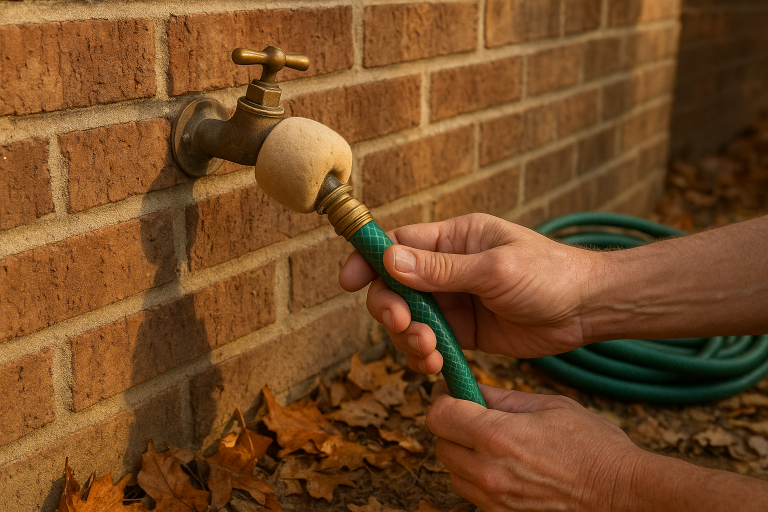
Go outside and locate the vent hood. It is often low on an exterior wall behind the laundry room, but it may also exit through a crawl space wall or roof. Look for a stuck flap, visible lint, a bird nest, broken louvers, or a plastic cage packed with lint.
Important: dryer vent covers should let lint pass out freely. The Building America Solution Center notes that screens should not be used on clothes dryer exhaust ducts because they clog easily with lint and stop airflow. ([basc.pnnl.gov](https://basc.pnnl.gov/diy-guides/clean-dryer-exhaust?utm_source=openai))
3. Remove surface lint by hand
Put on gloves and pull away lint from the flap, louvers, and the first few inches of the duct. If the cover is screwed on and easy to remove, take it off and set the screws where you will not lose them. Do not force brittle plastic; older vent hoods crack easily.
4. Feed in the dryer vent brush
Push the brush into the duct from outside, adding rods as needed. Work slowly. If the brush meets resistance, back it out a little and try again rather than ramming it forward. For drill-compatible kits, keep the drill on a low or moderate speed and follow the manufacturer’s spin-direction instructions.
Pull the brush out every few feet and remove the lint. A big clog may come out in clumps. Keep going until the brush comes back with very little lint.
5. Vacuum the vent opening
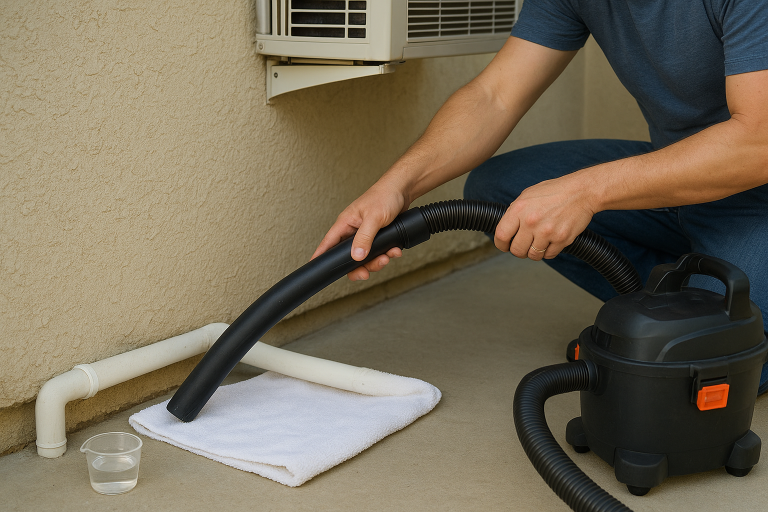
Use a vacuum hose to clean loose lint from the exterior opening, the flap area, and the ground below. If your vacuum can reach inside the duct, use it gently. Avoid shoving a rigid vacuum wand so far in that it dents or separates flexible ductwork.
6. Optional: blow out a short, straight vent
For a short wall vent, some homeowners use a leaf blower from the dryer side to push loosened lint outside. Only do this if you can disconnect the dryer safely, the duct is not damaged, and someone can watch the exterior vent. Do not use this method on a roof vent, a shared vent, or a duct you suspect is disconnected inside a wall or ceiling.
7. Reattach the cover and test airflow
Reinstall the vent hood if you removed it. Go back inside, reconnect the dryer, and run it on an air-only or low-heat setting. Then go outside and check the flap. It should open freely with a steady stream of air.
How Often Should You Clean It?
As a practical rule, check the outside vent every few months and clean the full vent at least once a year. The U.S. Fire Administration recommends cleaning lint out of the vent pipe once a year or having a dryer lint removal service do it. Some manufacturer guidance varies by use, but heavy laundry households, pet owners, and homes with long vent runs may need cleaning more often. ([apps.usfa.fema.gov](https://apps.usfa.fema.gov/pdf/efop/efo239668.pdf?utm_source=openai))
Make the quick check easy: when you take out trash or walk around the house, glance at the dryer flap while a load is running. If it is not opening well, lint is probably building up somewhere.
When to Call a Professional
Call a pro if the vent exits through the roof, runs more than one story, has multiple bends, or keeps clogging after you clean it. You should also get help if you smell burning, see scorch marks, suspect a bird or rodent nest deep in the duct, or have a gas dryer that must be moved but you are not trained to disconnect it safely.
A professional can also check for crushed transition hose, disconnected duct sections, and unsafe vent materials. The outside cleaning helps, but it cannot fix a duct that is kinked behind the dryer or buried behind a finished wall.
Keep the Vent Clear Longer
- Clean the lint filter every load. This is the easiest habit and one of the most important.
- Wash the lint screen occasionally with warm, soapy water if it has dryer-sheet residue.
- Do not overload the dryer. Crowded loads shed more lint and dry poorly.
- Keep the area behind the dryer clean so dust and lint do not get pulled into the machine.
- Replace crushed foil hose with proper rigid or semi-rigid metal ducting where allowed by your dryer manual and local code.
- Check the outside flap after storms and during nesting season.
A clean dryer vent is one of those chores that pays you back right away. Your clothes dry faster, the dryer does not have to work as hard, and you remove a hidden household hazard before it becomes a bigger problem.