How to Freeze Peaches Without Them Turning Brown
When peaches are at their best, they tend to arrive all at once: a farmers market basket, a backyard tree, or a sale you could not pass up. Learning how to freeze peaches without browning lets you save that ripe summer flavor for smoothies, crisps, oatmeal, sauces, and quick desserts later.
The key is to start with good fruit, work in small batches, and treat the slices before they spend time exposed to air. Here is a practical, no-fuss method that works whether you want loose frozen peach slices or a softer syrup pack for cobblers and spooning over yogurt.
Choose Peaches That Are Ripe but Not Mushy
For freezing, use peaches that smell fragrant and give slightly near the stem end. They should be ripe enough to taste good now, but not so soft that they collapse when sliced. Bruised, mealy, or overripe fruit can still be used for puree, but it will not freeze into neat slices.
Peaches are commonly available through summer in many parts of the U.S., with July and August often being peak months. Extension guidance also notes that peaches should be handled gently because bruising lowers quality, which matters even more when you are freezing them for later use. ([extension.unh.edu](https://extension.unh.edu/blog/2018/08/peak-taste-summer?utm_source=openai))
What You Need
- Ripe peaches
- Large pot of boiling water
- Bowl of ice water
- Paring knife
- Ascorbic acid, fruit-preserving powder, or bottled lemon juice
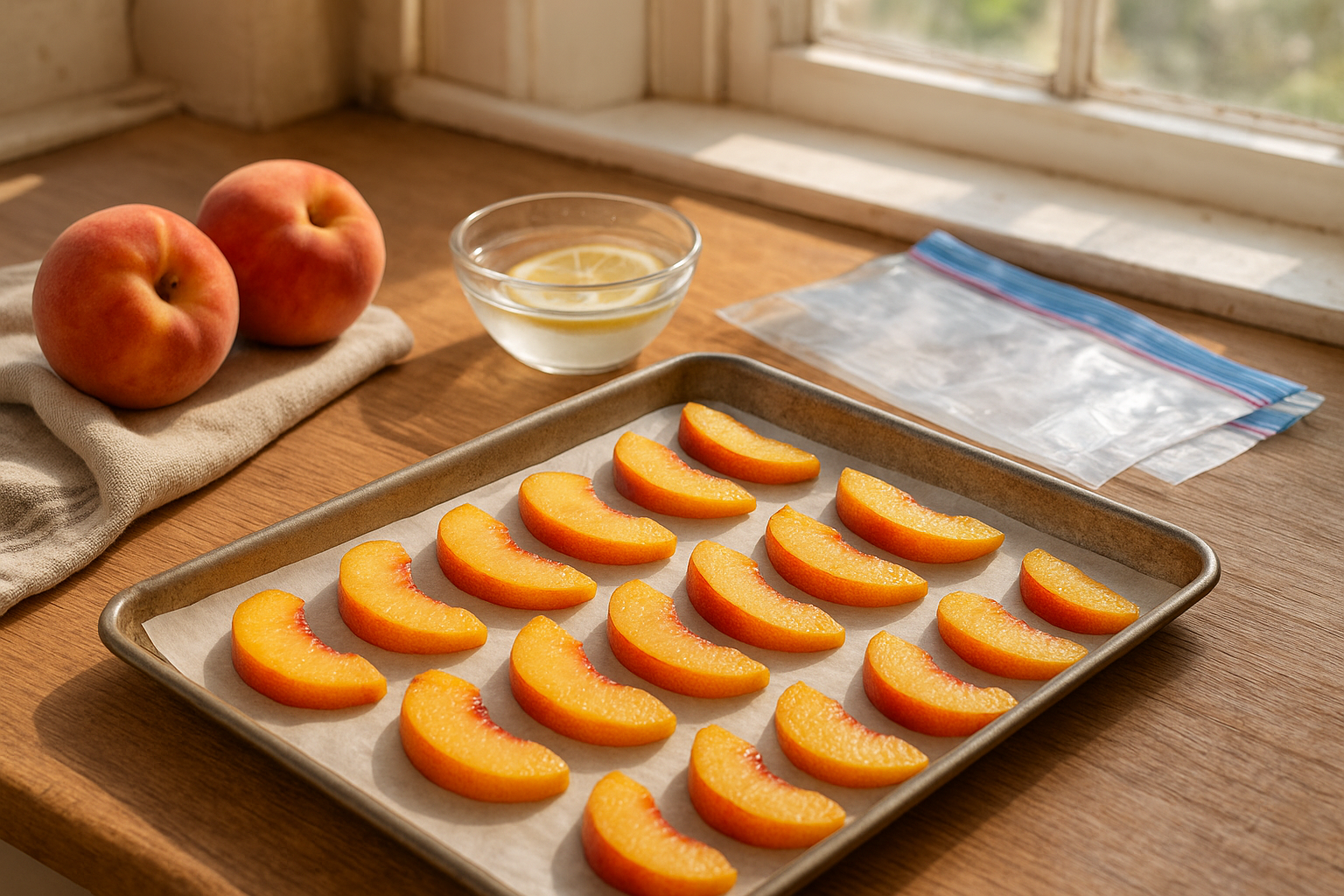
- Parchment-lined baking sheet
- Freezer bags or rigid freezer containers
- Permanent marker for labeling
Best anti-browning choice: ascorbic acid, which is vitamin C. The National Center for Home Food Preservation recommends ascorbic acid for better quality when freezing peaches, especially in syrup packs. ([nchfp.uga.edu](https://nchfp.uga.edu/how/freeze/fruits/freezing-peaches-or-nectarines/?utm_source=openai)) If you do not have it, a commercial fruit preserver is convenient. Lemon juice can help, too, though it may add a light tart flavor and is generally less precise than ascorbic acid.
Step 1: Wash and Peel the Peaches
Rinse peaches under cool running water and rub gently to remove fuzz and dirt. To peel a large batch quickly, cut a shallow X in the bottom of each peach. Drop peaches into boiling water for about 30 to 60 seconds, then move them straight into ice water. When they are cool enough to handle, the skins should slip off easily with your fingers or a paring knife.
If the skins do not loosen, the peaches may be a little underripe. You can peel them with a knife instead, or let the remaining peaches ripen another day before freezing.
Step 2: Slice and Treat for Browning
Cut peaches in half, remove the pits, and slice the fruit into wedges. As soon as you slice them, place the pieces into an anti-browning solution. Work in small batches so the cut fruit does not sit on the counter exposed to air.
Simple Anti-Browning Options
- Ascorbic acid solution: Follow the package directions if using powdered ascorbic acid or fruit preserver. This is the best option for keeping color and flavor clean.
- Lemon water: Mix cold water with bottled lemon juice and dip the slices briefly. This is easy for home kitchens, but the peaches may pick up a slight lemony tang.
- Syrup with ascorbic acid: If you plan to freeze peaches in syrup, add ascorbic acid to the syrup for better quality. The National Center for Home Food Preservation lists 1/2 teaspoon, or 1,500 mg, ascorbic acid per quart of syrup for better-quality frozen peaches. ([nchfp.uga.edu](https://nchfp.uga.edu/how/freeze/fruits/freezing-peaches-or-nectarines/?utm_source=openai))
After treating, drain the peaches well if you are doing a dry pack. Excess water creates more ice crystals and can make the slices clump together.
Method 1: Freeze Peach Slices Loose on a Tray
This is the most useful method if you want to grab a handful at a time for smoothies, muffins, oatmeal, or quick skillet sauces.
- Line a rimmed baking sheet with parchment paper.
- Arrange drained peach slices in a single layer, with a little space between pieces.
- Freeze until firm, usually 2 to 4 hours depending on slice thickness and freezer strength.
- Transfer frozen slices to freezer bags.
- Press out as much air as possible, seal, label, and return to the freezer.
For the best texture, use the frozen slices while they are still partly frozen in cooked recipes. Fully thawed peaches will be softer than fresh peaches, which is normal because freezing breaks down some of the fruit’s structure.
Method 2: Freeze Peaches in Syrup
A syrup pack takes more freezer space, but it gives excellent color and texture for dessert peaches. It is especially nice for cobblers, shortcakes, ice cream topping, and fruit cups.
The National Center for Home Food Preservation recommends a 40 percent syrup for freezing peaches or nectarines, with fruit pressed under the syrup and proper headspace left in the container. Utah State University Extension gives similar instructions and notes leaving 1/2 inch headspace for pint containers and 1 inch for quarts. ([nchfp.uga.edu](https://nchfp.uga.edu/how/freeze/fruits/freezing-peaches-or-nectarines/?utm_source=openai))
- Make a light-to-medium syrup and chill it before using.
- Add ascorbic acid to the syrup if desired for better color.
- Put about 1/2 cup syrup into each pint container.
- Add sliced peaches, pressing them down gently.
- Cover with more syrup, leaving headspace for expansion.
- Place a small piece of crumpled freezer paper or waxed paper on top to help keep fruit submerged.
- Seal, label, and freeze.
Use freezer-safe containers rather than regular glass jars unless the jars are specifically labeled for freezing. Liquids expand as they freeze, and too little headspace can crack containers.
Method 3: Freeze Peach Puree
Puree is the easiest way to save very ripe peaches. Peel and pit the fruit, then blend until smooth. Add a little ascorbic acid or lemon juice to help preserve color. Freeze the puree in small containers, silicone trays, or ice cube trays. Once solid, pop the cubes into a freezer bag.
Peach puree cubes are handy for smoothies, baby-food-style fruit blends, sauces, salad dressings, cocktails, mocktails, and stirring into plain yogurt. They also thaw faster than a large block of frozen fruit.
How Much to Freeze per Bag
Think about how you cook before packing. For smoothies, 1- to 2-cup portions are convenient. For crisps and cobblers, freeze in 4- to 6-cup portions and label the amount on the bag. A little measuring now saves you from chiseling apart a frozen block later.
Lay freezer bags flat until solid. Once frozen, they can be stacked upright like files, which saves space and makes it easier to see what you have.
How Long Frozen Peaches Keep
For best flavor and texture, use frozen peaches within about 8 to 12 months. They may remain safe longer if kept continuously frozen, but quality gradually declines. Label every bag with the date, amount, and whether the peaches are sweetened, unsweetened, syrup-packed, or pureed.
Best Ways to Use Frozen Peaches
- Smoothies: Use slices straight from the freezer for a thick, cold blend.
- Cobblers and crisps: Add peaches while still frozen or only partly thawed, and expect a little extra juice.
- Oatmeal: Simmer chopped frozen peaches with oats, cinnamon, and a pinch of salt.
- Skillet sauce: Cook peaches with a spoonful of sugar or honey and a splash of water until saucy.
- Yogurt bowls: Thaw syrup-packed peaches in the refrigerator overnight.
Common Mistakes to Avoid
- Skipping the anti-browning step: Peaches darken quickly once cut. Treat them as you slice.
- Freezing underripe fruit: Freezing will not improve flavor. If a peach tastes flat now, it will taste flat later.
- Packing wet slices loose: Drain well before tray-freezing to reduce ice and clumping.
- Forgetting headspace: Syrup-packed peaches need room to expand in the freezer.
- Using thin storage bags: Choose true freezer bags or containers to reduce freezer burn.
The Bottom Line
The best way to freeze peaches without browning is to peel and slice ripe fruit, treat it promptly with ascorbic acid or another anti-browning option, then freeze it either loose on a tray or packed under syrup. Tray-frozen slices are the most flexible for everyday cooking, while syrup-packed peaches give you the prettiest fruit for desserts. Either way, a little work now turns a short peach season into months of easy, sunny flavor.