How to Set Up a Basement Dehumidifier Drain Hose
If you are tired of emptying a dehumidifier bucket every morning, a drain hose can make basement humidity control much easier. The setup is usually simple, but the details matter: the hose needs the right slope, the right drain, and regular cleaning so it does not leak or clog.
A dehumidifier is most useful when it helps keep indoor moisture in a safe range. The EPA recommends keeping indoor relative humidity below 60%, ideally between 30% and 50%, and the CDC advises keeping home humidity no higher than 50% all day to help reduce mold risk. ([epa.gov](https://www.epa.gov/mold/mold-course-chapter-9?utm_source=openai))
When a Drain Hose Makes Sense
A basement dehumidifier drain hose is worth setting up if your unit fills its bucket daily, if you travel often, or if the basement smells musty after rain. It is also helpful in finished basements, laundry rooms, workshops, and storage areas where you do not want the unit shutting off because the bucket is full.
Most dehumidifiers have one of three drainage options:
- Manual bucket: You empty the tank by hand. Simple, but easy to forget.
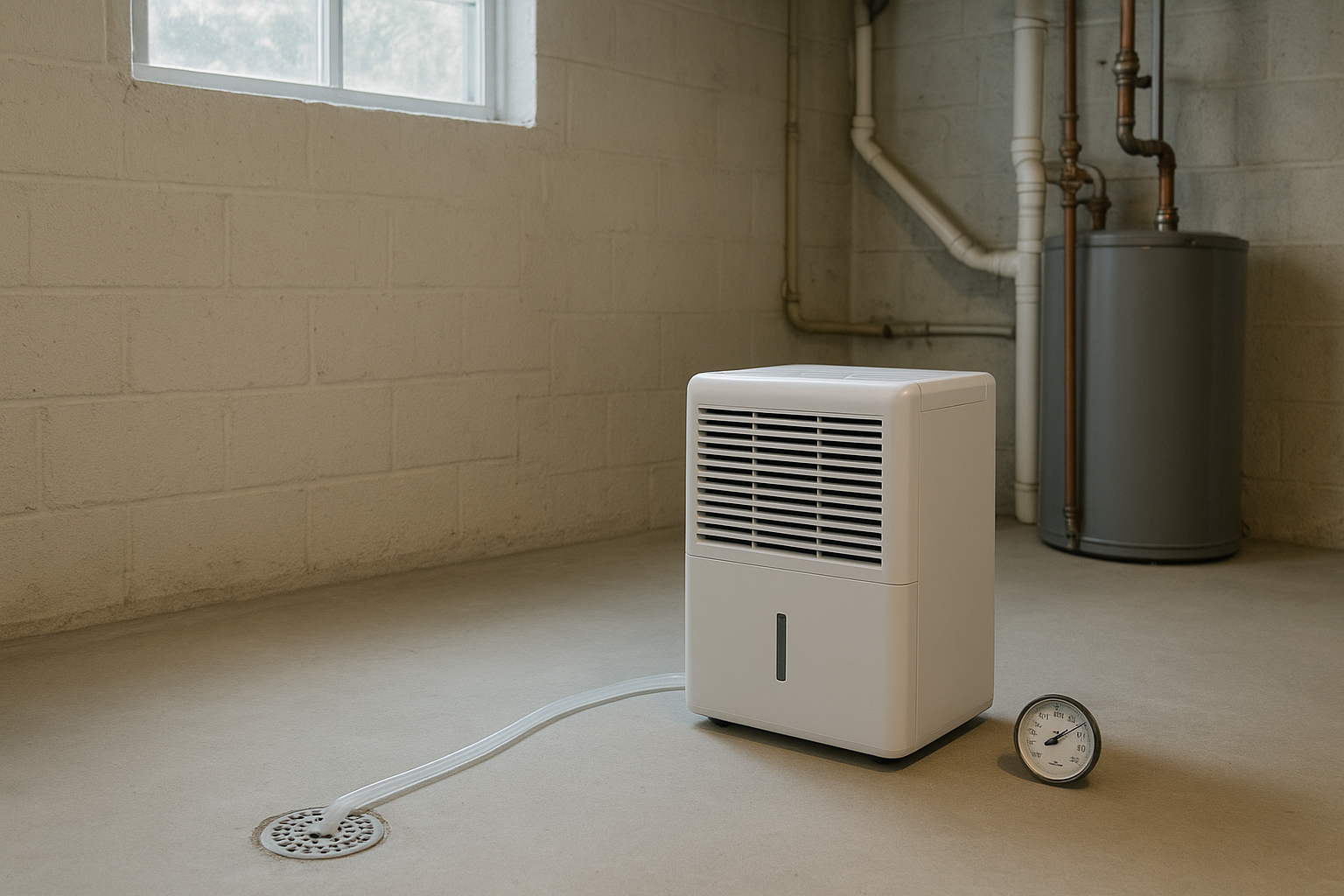
- Gravity drain hose: Water flows downhill through a hose into a floor drain, utility sink, sump pit, or condensate drain.
- Built-in pump or external condensate pump: Water can be pushed upward to a sink, standpipe, or higher drain point.
This guide focuses on a gravity drain hose, because it is the easiest and most common setup. If your drain point is higher than the dehumidifier outlet, you will need a pump model or a separate condensate pump instead.
What You’ll Need
- A clean garden hose or manufacturer-approved drain hose
- Washer or gasket for the hose connection, if required
- Adjustable pliers, used gently
- Small level, optional but helpful
- Zip ties or hose clips to keep the hose in place
- Bucket or towel for testing
- Hygrometer, also called a humidity gauge
Check your owner’s manual before buying a hose. Many dehumidifiers use a standard garden hose thread, but not all do. Some need a short adapter or a specific hose size. ENERGY STAR also notes that if you plan to use a hose, the dehumidifier should be close enough to a floor drain or sump so you do not need a long, awkward hose run. ([energystar.gov](https://www.energystar.gov/products/dehumidifiers?utm_source=openai))
Choose the Best Drain Location
The best drain is one that is lower than the dehumidifier’s drain outlet and will not back up. A basement floor drain is usually ideal. A sump pit can work if it is active and uncovered enough to accept the hose safely. A utility sink may work only if the hose can run downhill the whole way or your unit has a pump.
Avoid draining onto the basement floor, into a cracked drain, or into a spot where the hose end could sit underwater. If the hose end is submerged, water can slow down, siphon strangely, or let grime move back toward the hose. Keep the hose end visible if you can, especially during the first few days.
Step-by-Step: How to Install the Drain Hose
1. Unplug the dehumidifier
Always unplug the unit before working around the bucket, filter, or drain port. Pull the dehumidifier away from the wall so you can see the back or side clearly.
2. Empty and remove the bucket
Empty the water bucket and set it aside. On many models, removing the bucket gives you better access to the drain cap or internal fitting. Wipe out any slime or mineral buildup before you start.
3. Find and open the drain port
Look for a threaded drain outlet, rubber plug, plastic cap, or hose adapter. Some models require you to remove a small knockout piece or route the hose through a cutout in the bucket compartment. Do not force anything; if the part does not move, check the manual again.
4. Attach the hose snugly
Thread the hose onto the drain outlet by hand. Make sure it goes on straight, not crooked. Cross-threading can cause slow leaks that look like a cracked unit. Tighten by hand first, then use pliers only if needed, and only a small extra turn. Overtightening can damage plastic threads.
5. Run the hose downhill
Lay the hose so it slopes continuously from the dehumidifier to the drain. Gravity drainage does not need a steep drop, but it does need a clear downhill path. Avoid loops, kinks, high spots, and long flat runs where water can sit.
6. Secure the hose end
Place the hose end over the drain and secure it with a clip, brick, zip tie, or heavy object that will not crush the hose. This matters more than people think. A hose that shifts off the drain can quietly empty gallons of water onto the floor.
7. Replace the bucket correctly
Many dehumidifiers still need the bucket installed even when a hose is attached. The bucket often presses a safety switch that allows the machine to run. Slide it in fully until it clicks or sits flush.
8. Test for 20 to 30 minutes
Plug the unit in, set it to run, and watch the hose connection. Look for drips at the fitting, water collecting in the bucket, or dampness under the machine. After 20 to 30 minutes, confirm that water is reaching the drain.
Where to Set the Humidity Level
For most basements, start with a target around 45% to 50% relative humidity. That is low enough to help discourage musty conditions without forcing the unit to run nonstop in many homes. If the basement still smells damp, try lowering the setting a few points. If the unit runs constantly and the air feels overly dry, raise it slightly.
Use a separate hygrometer rather than relying only on the number displayed on the dehumidifier. The built-in sensor measures the air near the unit, not necessarily the far corner behind stored boxes. If you have a large basement, check humidity in a few spots.
Common Drain Hose Mistakes
- Running the hose uphill: A gravity drain cannot push water upward.
- Using too much hose: Long coils create low spots where water sits and grows biofilm.
- Skipping the washer: If your hose connection needs a rubber washer, leaving it out can cause dripping.
- Letting the hose kink behind the unit: This can send water back into the bucket or onto the floor.
- Forgetting the filter: A dirty filter reduces airflow and makes the unit work harder.
Simple Maintenance Schedule
A drain hose setup is not completely hands-off. Give it a quick check on this schedule:
- Weekly during humid weather: Make sure the hose is still aimed at the drain and the area around the unit is dry.
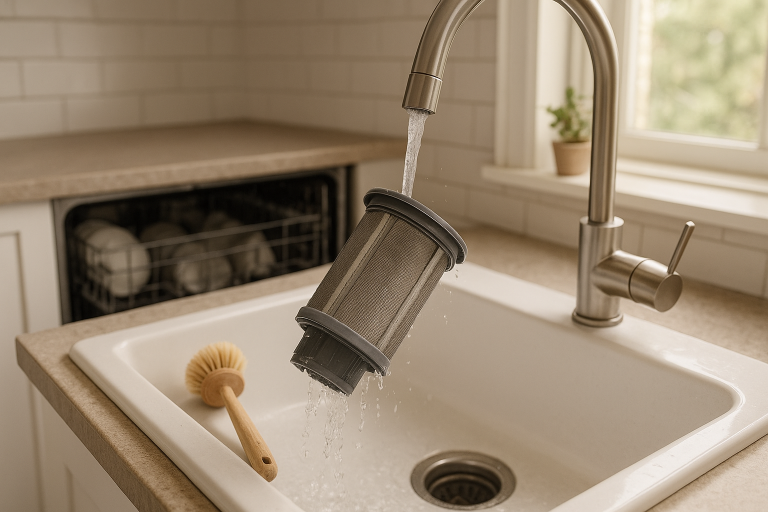
- Every 2 to 4 weeks: Clean or rinse the air filter according to the manual.
- Monthly: Detach the hose and flush it with warm water if you see slime, sediment, or slow drainage.
- Seasonally: Wash the bucket, wipe the intake grille, vacuum dust from the exterior, and inspect the cord.
If you ever see mold growth in the basement, moisture control is the first priority. The CDC says that if mold is growing in a home, you need to clean up the mold and fix the moisture problem. ([cdc.gov](https://www.cdc.gov/mold-health/about/?utm_source=openai))
Troubleshooting: Why Is Water Still Going Into the Bucket?
If the bucket keeps filling after you attach the hose, start with the simple fixes. Make sure the hose is screwed on tightly, the internal drain plug is removed if your model has one, and the bucket is seated properly. Then check the hose for a kink or uphill section.
If water reaches the hose but stops partway, shorten the hose and create a better slope. If water never enters the hose, the drain port may be blocked with mineral deposits or the adapter may be installed incorrectly. Unplug the unit before cleaning the port.
When to Use a Pump Instead
Use a pump if the only drain is higher than the dehumidifier, such as a laundry sink rim, washer standpipe, or overhead drain line. A pump is also useful when the dehumidifier must sit far from the drain and a gravity hose would cross a walkway.
Do not try to fake a pumped setup by running a gravity hose up and over something. It will either stop draining, leak, or send water back to the bucket. If you need lift, choose a dehumidifier with a built-in pump or add a condensate pump rated for this use.
The Bottom Line
A basement dehumidifier drain hose is a small upgrade that can save a lot of daily fuss. Keep the unit close to a reliable drain, run the hose downhill, test it before walking away, and check it regularly during humid months.
Once it is working, pair the setup with a humidity gauge and aim for a practical range around 45% to 50%. That gives your basement a better chance of staying dry, fresher-smelling, and easier to maintain.