How to Clean a Range Hood Filter the Easy Way
If the fan over your stove sounds loud, smells greasy, or seems to pull less steam than it used to, the range hood filter may be overdue for a wash. The good news: most metal grease filters can be cleaned with hot water, dish soap, and a little patience—no harsh fumes required.
This guide walks you through how to clean a range hood filter safely, when to use the dishwasher, and what to do if the filter is so greasy it feels sticky before you even touch it.
First, Know What Kind of Filter You Have
Before you soak anything, take a quick look at your filter. Most home range hoods use one of these:
- Aluminum mesh grease filter: A lightweight, layered metal mesh panel. These are common under cabinets and are usually washable.
- Stainless steel baffle filter: A heavier filter with angled channels, often found on more powerful or professional-style hoods. These are also typically washable.
- Charcoal or carbon filter: Often used in ductless range hoods. These trap odors and are generally not washable; they should be replaced according to your hood’s manual.
If you are not sure which one you have, look up the model number inside the hood or on the owner’s manual. As a safe rule, wash metal grease filters and replace charcoal filters.
How Often Should You Clean a Range Hood Filter?
For a typical home kitchen, clean the metal grease filter about once a month if you cook most days. If you fry foods, use a wok, sear meat often, or cook with a lot of oil, you may need to clean it every two to three weeks. If you cook lightly, every two to three months may be enough.
A filter is due for cleaning when it looks shiny with grease, feels tacky, has yellow-brown buildup, drips oil, or no longer lets the fan pull steam well. Don’t wait until grease starts dripping back onto the stovetop—that is both unpleasant and harder to clean.
Supplies You’ll Need
- Dishwashing gloves
- Very hot tap water
- Grease-cutting dish soap
- Baking soda
- Large sink, dish tub, or rimmed baking sheet
- Soft scrub brush or old toothbrush
- Microfiber cloth or towel
- Optional: non-abrasive kitchen degreaser
Avoid using oven cleaner, bleach, steel wool, or highly caustic cleaners on aluminum filters. They can discolor, pit, or damage the metal. A little discoloration after cleaning does not usually affect how a metal grease filter works, but you still want to be gentle enough that the filter stays intact.
Step-by-Step: How to Clean a Range Hood Filter
1. Turn Off the Fan and Let Everything Cool
Make sure the range hood fan and lights are off. If you have just cooked, wait until the stovetop, hood, and filter are cool enough to touch comfortably. This is also a good time to move pots and pans out of the way so you do not drip greasy water onto clean cookware.
2. Remove the Filter
Most filters slide, tilt, or pop out with a small latch or tab. Support the filter with one hand as you release it so it does not fall onto the stove. If there are two filters, remove both and note how they fit before you set them down.
Lay the filter on an old towel or directly in the sink. Greasy filters can drip, so avoid carrying them across the kitchen without something underneath.
3. Knock Off Loose Grease and Dust
If the filter has clumps of linty grease, wipe them away with a paper towel and throw it in the trash. Do not rinse thick grease straight down the drain if you can help it. The less grease that goes into your pipes, the better.
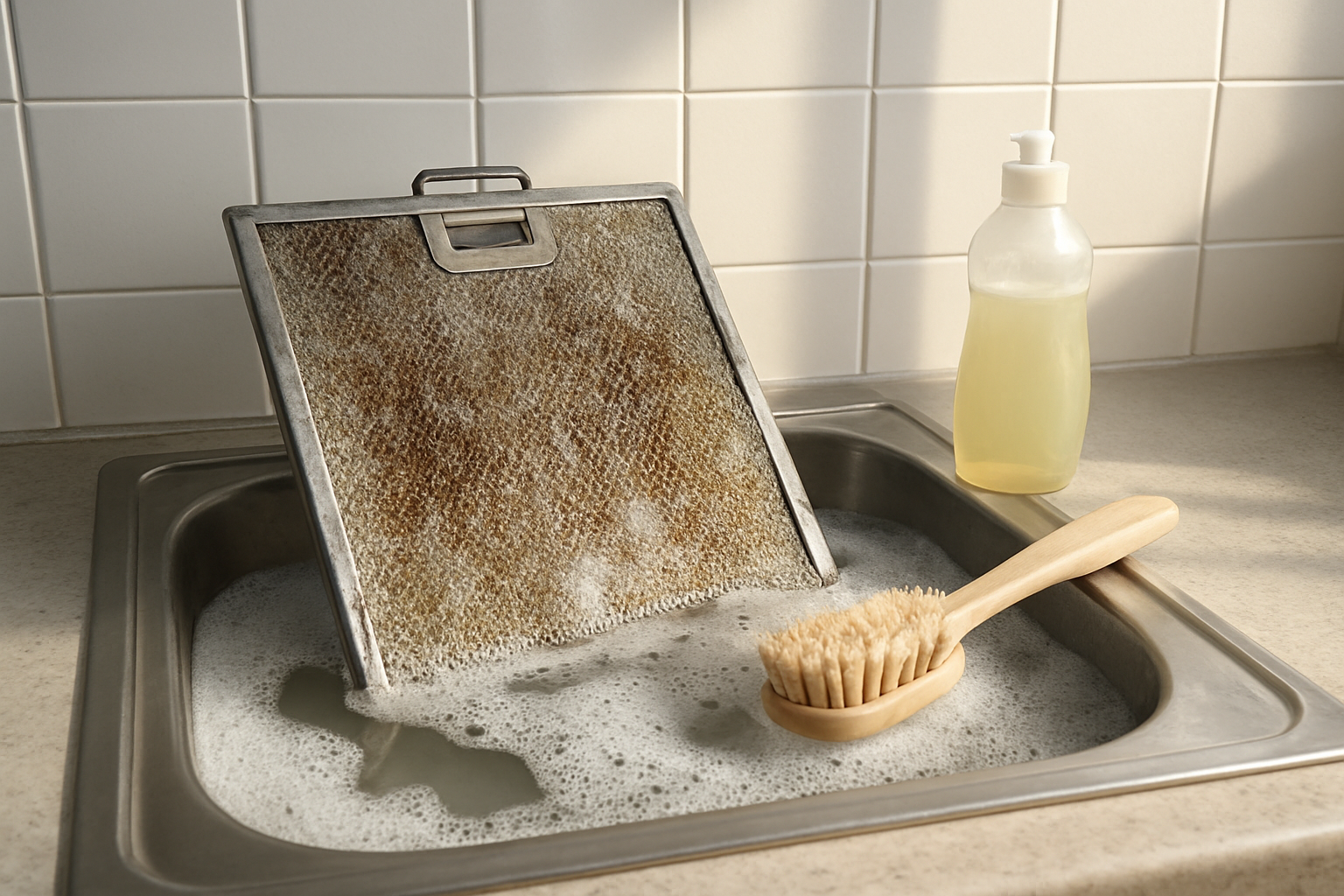
4. Make a Hot Soapy Soak
Fill your sink or dish tub with enough very hot water to cover the filter. Add a generous squirt of grease-cutting dish soap and about 1/4 cup baking soda. Stir the water with a gloved hand until the baking soda is mostly dissolved.
Place the filter in the water. If it does not fit flat, soak one side first, then flip it. Let it sit for 15 to 20 minutes per side. This soak softens the sticky grease so you do not have to scrub as hard.
5. Scrub Gently
After soaking, use a soft brush to scrub with the direction of the mesh or channels. Pay attention to the corners and frame, where grease likes to collect. For baffle filters, brush along the channels and rinse through the openings to flush out loosened oil.
If the water turns very brown or greasy, drain it, wipe the sink, and repeat the soak with fresh hot water, soap, and baking soda. A badly neglected filter may need two rounds.
6. Rinse Well
Rinse the filter under hot running water until the water runs clear and no suds remain. Flip it several times so water moves through all the mesh layers. Soap left behind can attract grime, so take an extra minute here.
7. Dry Completely Before Reinstalling
Shake off excess water, then stand the filter upright on a towel to air-dry. Let it dry completely before putting it back in the hood. This helps prevent trapped moisture and keeps water from dripping onto the stovetop later.
Can You Put a Range Hood Filter in the Dishwasher?
Many all-metal grease filters are dishwasher-safe, but not all. Check your owner’s manual first. If your manual says the filter can go in the dishwasher, place it on the bottom rack or wherever it fits securely, wash it separately from dishes, and use a regular non-phosphate detergent if recommended by the manufacturer.
The dishwasher is convenient for monthly maintenance, but a very greasy filter can leave residue in the machine. If the filter is heavily coated, pre-soak it in hot soapy water first. Also know that aluminum filters may darken or discolor in the dishwasher. That cosmetic change usually does not hurt performance, but hand-washing is gentler if you care about appearance.
How to Clean the Range Hood While the Filter Is Out
With the filter removed, take five minutes to wipe the hood itself. Grease builds up on the underside, around the light cover, and along the front edge where steam hits first.
- Spray a microfiber cloth with warm soapy water or a mild kitchen degreaser. Do not spray directly into the fan motor or controls.
- Wipe the underside of the hood, working from the cleaner areas toward the greasiest spots.
- Use a toothbrush for seams and corners.
- Wipe again with a clean damp cloth.
- Dry with a towel to prevent streaks, especially on stainless steel.
For stainless steel, wipe with the grain rather than in circles. If you use a stainless cleaner afterward, keep it away from the filter opening and fan components.
What If the Filter Still Feels Greasy?
If the filter still feels slick after soaking and scrubbing, repeat the process with fresh hot water. You can also apply a small amount of non-abrasive degreaser to the frame and stubborn spots, then rinse thoroughly. Do not mix cleaning products, and do not use anything with strong fumes in a poorly ventilated kitchen.
If the mesh is crushed, torn, permanently clogged, or the frame no longer sits securely in the hood, replace the filter. A cleanable filter is meant to be reused, but it still needs to fit properly so grease does not bypass it and collect inside the hood.
Simple Maintenance Routine
The easiest way to avoid a miserable deep clean is to make the filter part of your regular kitchen routine:
- Weekly: Wipe the outside and underside of the hood after greasy cooking.
- Monthly: Wash metal grease filters if you cook often.
- Every few months: Check for sticky buildup around the fan opening and light cover.
- As needed: Replace charcoal filters in ductless hoods rather than washing them.
Once the filter is clean and dry, slide it back into place and turn the fan on for a quick test. You should notice better airflow, fewer lingering cooking smells, and a range hood that simply looks less grimy. It is a small chore, but it makes the whole kitchen feel fresher.