How to Plant Spinach in Late Summer for Fall Harvest
If spring spinach always seems to bolt before you get a decent bowl of greens, try planting it again in late summer. Fall-grown spinach gets shorter days and cooler weather as it matures, which usually means sweeter leaves and less rushing to flower.
The trick is getting seeds through the warm late-summer soil and giving young plants steady moisture until cooler nights arrive. Here is a practical, home-garden way to plant spinach in late summer for a reliable fall harvest.
Why Late Summer Is a Good Time to Plant Spinach
Spinach is a cool-season green. It grows best in mild weather, and many gardeners find fall easier than spring because the plants are heading into cooler conditions instead of hotter ones. The University of Minnesota Extension notes that spinach planted in August for a fall crop grows under shortening days and will not bolt the way spring plantings often do. ([extension.umn.edu](https://extension.umn.edu/vegetables/growing-spinach-and-swiss-chard?utm_source=openai))
That does not mean spinach loves hot soil. Utah State University Extension cautions that temperatures above 80°F can reduce spinach seed germination, and hot weather can lower quality and push plants toward flowering. ([extension.usu.edu](https://extension.usu.edu/yardandgarden/research/spinach-in-the-garden?utm_source=openai)) Your job in late summer is to keep the seedbed cool and evenly damp long enough for the seedlings to get established.
When to Plant Spinach for a Fall Harvest
For most home gardeners, a good target is 6 to 8 weeks before your average first fall frost. In colder northern areas, that may mean early to mid-August. In milder regions, it may be late August, September, or even later.
Another simple guide: plant when daytime heat is beginning to ease, but while there is still enough warmth for seeds to sprout. University of Minnesota’s Upper Midwest garden calendar lists mid-August as a typical time to direct seed fall spinach and lettuce in that region. ([extension.umn.edu](https://extension.umn.edu/gardening-minnesota/upper-midwest-home-garden-care-calendar?utm_source=openai)) In warmer climates, check your local Extension planting calendar because your best spinach window may come later.
If you want a longer harvest, sow a small row every 7 to 10 days for two or three rounds. This gives you baby spinach first, then larger leaves later, instead of one big harvest all at once.
Choose the Right Spot
Spinach likes full sun in cool weather, but late-summer seedlings appreciate a little help. Choose a bed that gets morning sun and some afternoon shade, or plant on the east side of taller crops such as tomatoes, pole beans, or trellised cucumbers.
If your only open bed gets strong afternoon sun, use shade cloth for the first couple of weeks. UC IPM suggests young spinach seedlings can be protected with 50% shade cloth or two layers of floating row cover in summer conditions until they have about six leaves. ([ipm.ucanr.edu](https://ipm.ucanr.edu/home-and-landscape/cultural-tips-for-growing-spinach/?utm_source=openai)) Once the weather cools, remove the shade so plants receive more light.
Prepare the Soil Before Sowing
Spinach grows quickly, so it needs loose, fertile soil from the start. Before planting, pull old crop roots and weeds, then loosen the top few inches of soil with a hand fork or rake. Mix in 1 to 2 inches of finished compost if your bed is tired from summer crops.
Aim for soil that holds moisture but does not stay soggy. Spinach has shallow roots, so a dry crust on top of the soil can stop germination or stress seedlings. If the bed is dusty, water deeply the day before planting so you are sowing into evenly moist soil.
How to Sow Spinach Seeds
Spinach is usually direct-seeded rather than transplanted. Transplants can work, but direct sowing is simpler and avoids root disturbance.
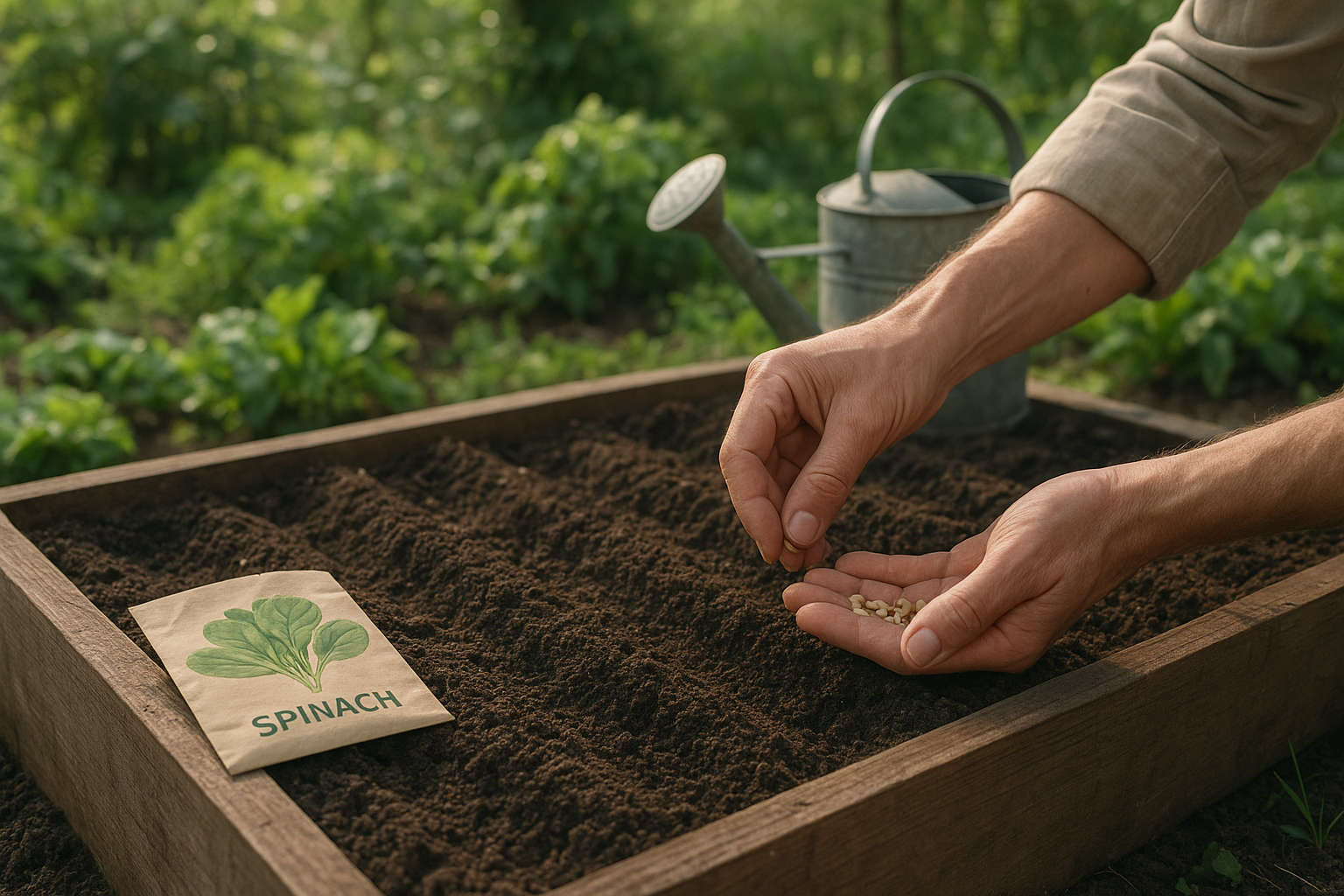
- Make shallow furrows. Use a finger, stick, or trowel handle to make rows about 1/2 inch deep.
- Space rows 12 inches apart. You can tighten this to 6 to 8 inches if you plan to harvest mostly baby leaves.
- Sow seeds close together. Drop seeds about 1 inch apart. You will thin them later.
- Cover lightly. Cover with 1/2 inch of fine soil or compost, then gently firm the surface.
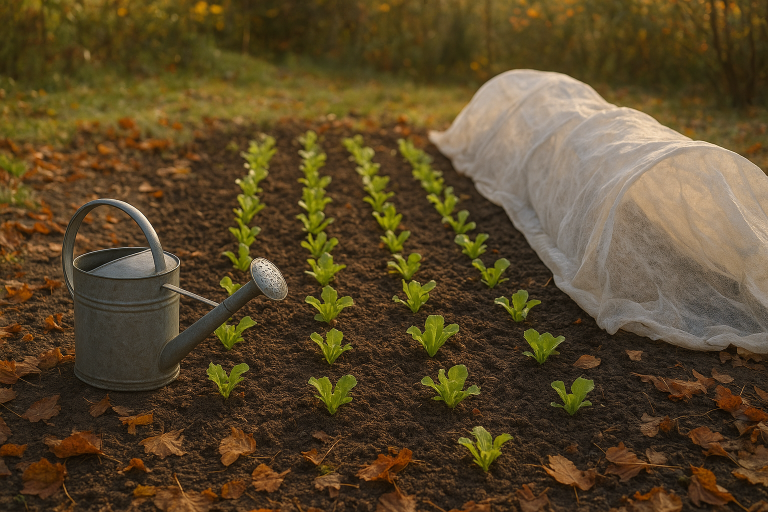
- Water with a gentle spray. Use a watering can with a rose or a hose on shower setting so seeds do not wash away.
Keep the seedbed consistently moist until germination. UC IPM notes spinach can germinate in about 10 days at 40°F, but late-summer soil is much warmer, so moisture and shade become more important than speed. ([ipm.ucanr.edu](https://ipm.ucanr.edu/home-and-landscape/cultural-tips-for-growing-spinach/?utm_source=openai))
Help Spinach Germinate in Warm Weather
Warm soil is the main frustration with late-summer spinach. If you have had spotty germination before, try one or more of these tricks:
- Pre-moisten the row. Water the furrow before adding seed, then cover and water again lightly.
- Use a board for 3 to 5 days. Lay a thin board over the seeded row to hold moisture and shade the soil. Check daily and remove it the moment you see sprouts.
- Refrigerate seed before planting. UC Master Gardeners of Sonoma County recommend refrigerating spinach seed for one week before planting to encourage germination, especially for late-summer sowing. ([ucanr.edu](https://ucanr.edu/site/mg-sonoma/spinach?utm_source=openai))
- Sow extra seed. Late-summer conditions are not perfect, so plant a little heavier and thin later.
Watering and Mulching Young Spinach
Spinach leaves turn tough when plants are stressed, so do not let seedlings swing from wet to bone dry. Water lightly once or twice a day during hot, dry spells until seeds sprout. After seedlings are up, shift to deeper watering whenever the top inch of soil begins to dry.
Once seedlings are 2 to 3 inches tall, mulch around them with a thin layer of straw, shredded leaves, or untreated grass clippings. Keep mulch light at first so you do not smother small plants. Mulch helps hold moisture, keeps soil cooler, and reduces grit splashing onto leaves.
Thin for Bigger, Healthier Plants
When seedlings have a couple of true leaves, thin them so plants stand about 3 to 4 inches apart for baby spinach, or 5 to 6 inches apart for larger leaves. It feels wasteful, but crowded spinach stays small and competes for water.
Use scissors to snip extras at soil level instead of yanking them out. The tiny thinnings are edible, so rinse them well and toss them into eggs, sandwiches, or salads.
Harvesting Fall Spinach
You can begin harvesting when leaves are big enough to use. For a cut-and-come-again harvest, pick the outer leaves and leave the center growing point intact. This lets the plant keep producing.
For baby spinach, cut leaves when they are about 3 to 4 inches long. For larger bunching spinach, let plants size up, then cut the whole plant just above the crown. If the crown stays healthy, it may regrow for another small harvest.
Fall spinach can handle cool weather better than many summer crops. UMass Extension notes that young spinach plants can withstand temperatures as low as 15°F to 20°F, though protection helps extend quality. ([umass.edu](https://www.umass.edu/agriculture-food-environment/fact-sheets/spinach?utm_source=openai)) When frost threatens, cover the bed with row cover, a low tunnel, or even an old sheet overnight.
Common Late-Summer Spinach Problems
Poor germination
This is usually caused by hot, dry soil. Resow in a slightly shadier spot, keep the seedbed evenly moist, and try the board method for a few days.
Leggy seedlings
Seedlings stretching toward light may be getting too much shade for too long. Remove shade cloth once plants are established and temperatures begin to moderate.
Chewed leaves
Slugs, flea beetles, and caterpillars may bother fall greens. Check leaves in the morning and evening, handpick pests, and keep weeds and plant debris cleaned up around the bed.
Bolting
Bolting is less common in fall than spring, but stress can still cause trouble. Keep plants watered, avoid letting seedlings bake under plastic covers, and choose varieties described as slow-bolting if your late summers stay hot.
A Simple Fall Spinach Planting Plan
For an easy first planting, sow one 4-foot row of spinach 6 to 8 weeks before your first expected frost. Water daily until it sprouts, thin to 4 inches apart, and mulch once the seedlings are a few inches tall. One week later, sow a second short row for a staggered harvest.
That small planting can give you tender leaves for salads, soups, sautés, and quick weeknight sides. If your spring spinach has always disappointed you, late summer may be the season that finally makes this crop feel easy.