How to Unclog an AC Drain Line Before It Leaks
A clogged AC drain line is one of those small home problems that can turn into a ceiling stain, a wet floor, or a shut-off air conditioner at the worst possible time. The good news: if the clog is mild and the drain line is accessible, you can often clear it yourself with a wet/dry vacuum and a few careful steps.
This guide walks through how to unclog an AC drain line, what warning signs to look for, and how to help keep it from clogging again during hot, humid weather.
What an AC Drain Line Does
When your central air conditioner or heat pump cools the air, it also removes moisture. That water collects in a drain pan near the indoor unit and flows out through a small condensate drain line, usually made of PVC. If algae, dust, rust flakes, or slime build up inside that line, the water has nowhere to go.
Many systems have a float switch that shuts the AC off when water backs up. That is annoying, but it is meant to prevent water damage. If your system keeps turning off and the thermostat seems fine, the drain line is a smart place to check.
Signs Your AC Drain Line May Be Clogged
You may have a clogged condensate drain line if you notice any of these problems:
- Water pooling around the indoor air handler or furnace
- A musty smell near vents or the HVAC closet
- The AC starts, then shuts off before cooling the house
- Water in the secondary drain pan
- Ceiling stains below an attic air handler
- Gurgling sounds near the drain line
- The outdoor drain pipe is not dripping on a humid day when the AC has been running
Moisture problems are worth taking seriously. The EPA recommends fixing water problems and keeping indoor humidity below 60 percent, ideally between 30 and 50 percent, to help reduce mold growth. ([epa.gov](https://www.epa.gov/mold/what-are-ten-things-i-need-know-about-mold?utm_source=openai))
Before You Start: Safety First
Turn the air conditioner off at the thermostat before working around the drain line. If you will be opening the air handler panel or working near wiring, turn power off at the breaker as well. Do not pour chemicals into the drain line, and do not use compressed air unless your HVAC technician has told you it is safe for your specific setup. Too much pressure can separate fittings or force dirty water into places you do not want it.
If the air handler is in an attic, work slowly and use a stable platform. Water damage around attic HVAC equipment can spread quickly, so call a professional if you see sagging drywall, soaked insulation, or water near electrical components.
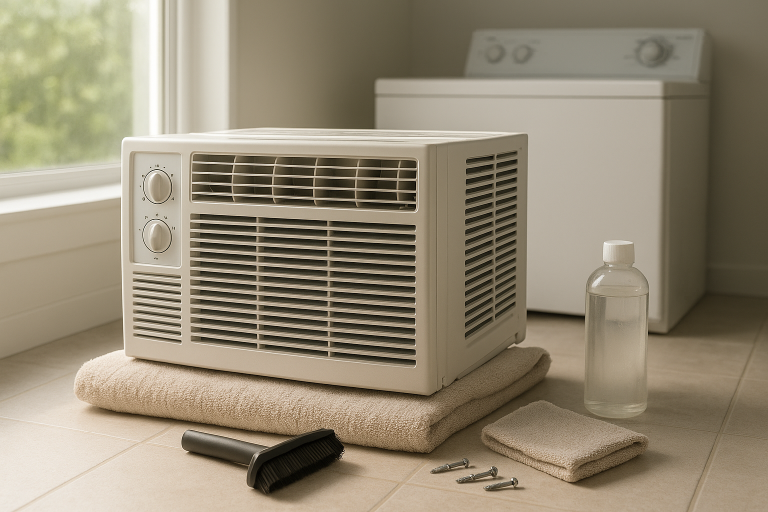
Tools and Supplies
- Wet/dry vacuum
- Duct tape or a rag to seal around the vacuum hose
- Distilled white vinegar
- Measuring cup
- Small funnel
- Towels
- Flashlight
- Rubber gloves
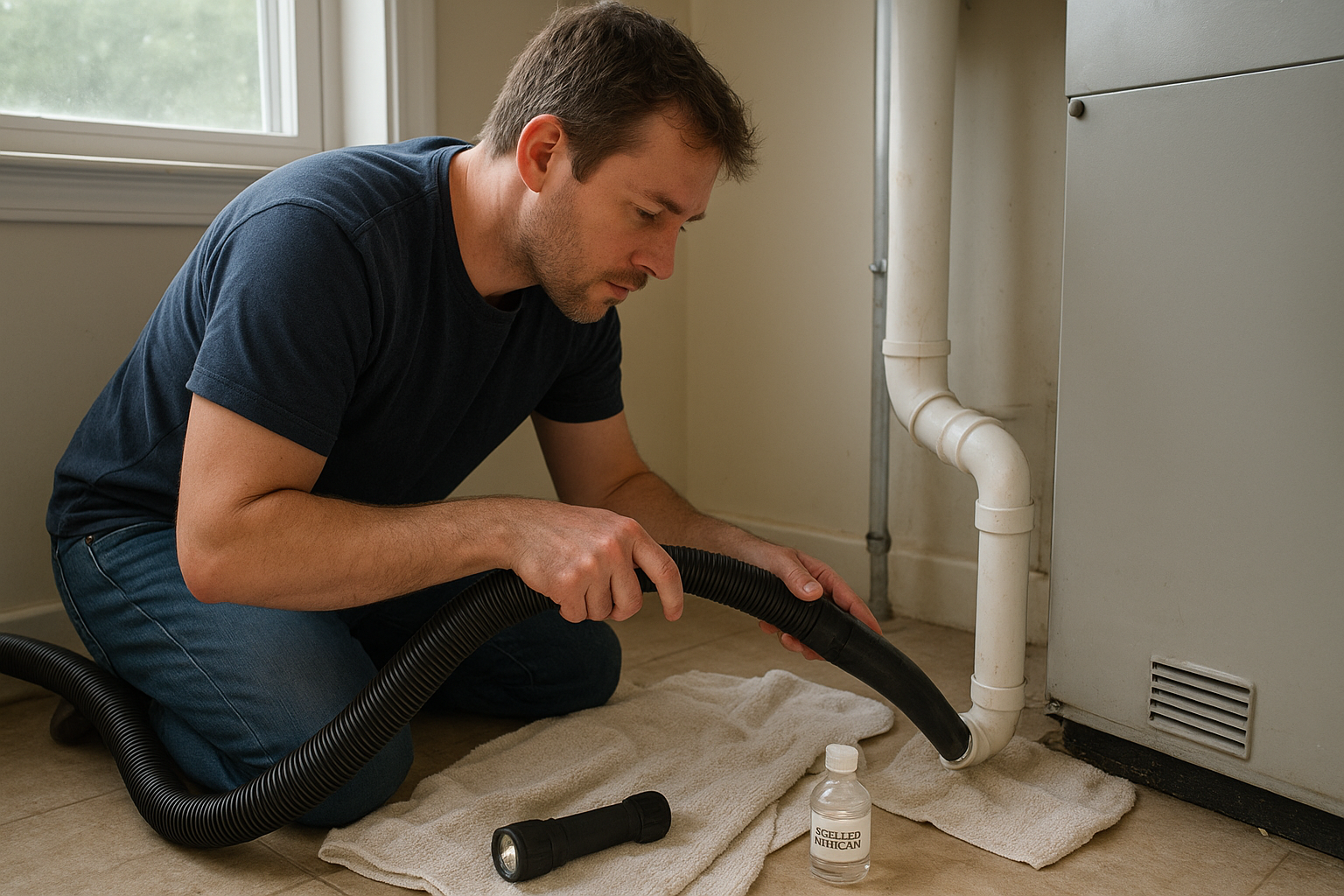
A wet/dry vacuum is the most useful tool for this job. HVAC manufacturers commonly recommend suctioning the clog from the drain line’s exit point, and some also suggest using about a cup of distilled vinegar through the access point to help clear or discourage buildup. ([carrier.com](https://www.carrier.com/residential/en/us/products/air-conditioners/air-conditioner-maintenance/how-to-clean-ac-drain-line/?utm_source=openai))
Step 1: Find the Drain Line
Look near your indoor air handler, furnace, or evaporator coil for a white PVC pipe. Many systems have a vertical pipe with a cap or open top near the unit; this is often the cleanout or access point. The drain line usually runs outside, into a floor drain, or to a condensate pump.
If the pipe drains outdoors, look for a small PVC pipe near the foundation. It may be close to the outdoor condenser, but not always. On a humid day, you may normally see occasional dripping when the AC is running.
Step 2: Check the Drain Pan
Use a flashlight to inspect the drain pan under or near the indoor unit. If it is full of water, soak up what you can with towels or use the wet/dry vacuum. A full pan usually means the clog has been there long enough for water to back up.
If the pan is cracked, badly rusted, or overflowing into a ceiling or wall cavity, stop and call an HVAC technician. Clearing the line may not be enough if the pan itself has failed.
Step 3: Vacuum the Line from the Outside
Go to the drain line’s exit point. Remove the paper filter from your wet/dry vacuum if your vacuum’s manual says to do so for wet pickup. Place the vacuum hose over the end of the drain pipe, then use duct tape or a damp rag to make the seal as tight as you can.
Run the vacuum for one to three minutes. You may hear a sudden slurp or see dirty water, algae, or sludge collect in the vacuum canister. Turn the vacuum off, remove the hose, and check whether water begins to drip from the pipe again after the AC runs.
Step 4: Flush with Vinegar from the Access Point
Back inside, remove the cap from the drain line access point if your system has one. Slowly pour about one cup of distilled white vinegar into the line using a funnel. Let it sit for 20 to 30 minutes, then flush with a small amount of clean water if the line is draining freely.
Do not force water into a line that is still backed up. If vinegar immediately overflows from the access point, the clog is still blocking the pipe. Repeat the vacuum step once. If that does not work, it is time for a pro.
Step 5: Restart the AC and Watch It
Turn the system back on and let it run for 15 to 20 minutes. Check the drain pan, the access point, and the outdoor drain termination. You want to see water moving where it should and no new pooling around the unit.
If your system had tripped a float switch, it may restart once the pan is dry and the switch drops back into position. If it does not, do not keep cycling the system on and off. Call an HVAC technician to inspect it.
How to Help Prevent Another Clog
During cooling season, check the area around your indoor unit once a month. Look for water, musty smells, rust, or algae around the drain line. ENERGY STAR also recommends checking HVAC filters monthly and cleaning or replacing them when dirty, because a dirty filter makes the system work harder and can contribute to performance problems. ([energystar.gov](https://www.energystar.gov/products/energy_star_home_upgrade/clean_heating_cooling?utm_source=openai))
- Change the air filter regularly. Less dust moving through the system means less debris reaching the wet coil and drain pan.
- Keep the drain access point capped. An open pipe can collect dust and insects.
- Use vinegar periodically if your HVAC pro approves. Many homeowners pour about a cup into the access point during heavy cooling months, but follow your system’s needs.
- Keep the outdoor drain outlet clear. Trim grass and remove mud, mulch, or insect nests near the pipe.
- Schedule annual HVAC maintenance. ENERGY STAR recommends annual pre-season checkups for heating and cooling equipment. ([energystar.gov](https://www.energystar.gov/saveathome/heating-cooling/maintenance-checklist?utm_source=openai))
When to Call a Professional
Call an HVAC technician if the drain line keeps clogging, you cannot locate the outlet, the line runs through finished walls or ceilings, or water is leaking near electrical parts. You should also get help if the condensate pump is not working, the drain pan is damaged, or the clog returns every few weeks.
A recurring clog may point to a poorly sloped drain line, heavy algae growth, a dirty evaporator coil, or a missing trap or vent detail. Those are not problems you want to guess at, especially if the air handler is in an attic or above finished space.
The Bottom Line
For a simple clog, the best first move is usually suction from the drain outlet with a wet/dry vacuum, followed by a careful vinegar flush through the access point. Keep an eye on the drain pan afterward, change dirty filters promptly, and treat repeated clogs as a sign that your system needs professional attention.
A clear AC drain line is not glamorous home maintenance, but it can save you from water damage, musty smells, and a sweltering house on a hot afternoon.