How to Clean a Dryer Vent So Clothes Dry Faster
If your towels need two cycles or your laundry room feels hotter than usual, your dryer vent may be clogged with lint. Learning how to clean a dryer vent is a practical home maintenance job that can help clothes dry faster, improve airflow, and reduce a common fire hazard.
The lint screen catches a lot, but it does not catch everything. Over time, lint can collect in the hose, the wall duct, and the outside vent flap, especially if the vent has bends or a long run.
Why Cleaning the Dryer Vent Matters
A clogged dryer vent makes your dryer work harder because moist air cannot escape efficiently. The Department of Energy recommends periodically inspecting the dryer vent to make sure it is not blocked, and ENERGY STAR notes that regular dryer maintenance helps efficiency and appliance lifespan. ([energy.gov](https://www.energy.gov/energysaver/laundry?linkId=452853648&utm_source=openai))
There is also a safety reason to stay on top of lint. NFPA research has found that failure to clean was a leading factor in home dryer fires, and lint buildup was a major material first ignited in those fires. ([content.nfpa.org](https://content.nfpa.org/-/media/Project/Storefront/Catalog/Files/Research/NFPA-Research/US-Fire-Problem/osdryer.pdf?hash=639DD7887A6C083F71E4FD34726B1197&rev=6e5e44af45a54ee38ab86a33bef98e86&utm_source=openai))
How Often Should You Clean a Dryer Vent?
For most households, clean the full dryer vent at least once a year. If you do laundry every day, have pets, dry lots of towels or blankets, or have a long vent run, check it every 6 months.
Clean the lint screen before or after every load. That small habit helps airflow and keeps lint from being pushed deeper into the system.
Signs Your Dryer Vent Needs Cleaning
- Clothes take longer than normal to dry.
- Towels, jeans, or blankets are still damp after one full cycle.
- The dryer feels unusually hot on the outside.
- The laundry room gets warm or humid while the dryer runs.
- You notice a burning or musty smell.
- The outside vent flap barely opens when the dryer is running.
- Lint is collecting around the outside vent cover.
Important: If you smell burning, stop the dryer right away, unplug it if you can do so safely, and do not run it again until the vent and appliance have been checked.
Tools and Supplies You’ll Need
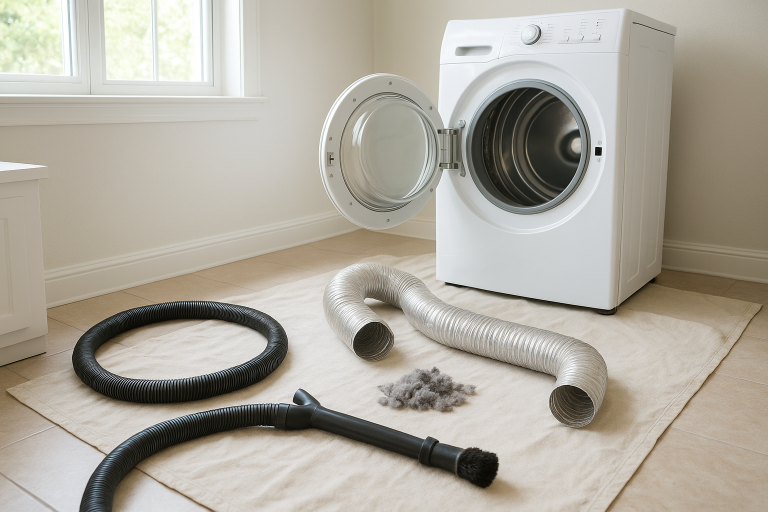
- Vacuum with hose attachment
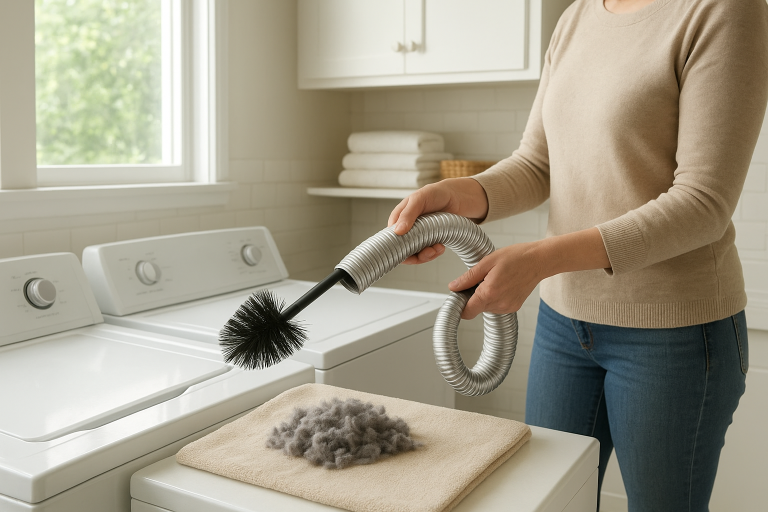
- Dryer vent brush kit or flexible lint brush
- Screwdriver or nut driver
- Work gloves
- Flashlight
- Dust mask, optional but helpful
- Foil HVAC tape, if you need to reseal duct joints
A dryer vent brush kit is useful because the flexible rods can reach farther into the duct than a vacuum hose alone. Choose a kit that fits your vent size and follow the tool instructions carefully, especially if using a drill attachment.
Step 1: Turn Off and Unplug the Dryer
Before you start, turn the dryer off and unplug it. If you have a gas dryer, turn off the gas supply valve before moving the dryer. If you are not comfortable disconnecting or moving a gas dryer, call a qualified appliance technician instead.
Pull the dryer away from the wall slowly. Do not yank it forward, because the vent hose or gas line may be shorter than you expect.
Step 2: Clean the Lint Screen Area
Remove the lint screen and clean it by hand. Then use a long, narrow vacuum attachment or lint brush to clean inside the lint trap slot. This area often hides compacted lint that can block airflow before air even reaches the vent hose.
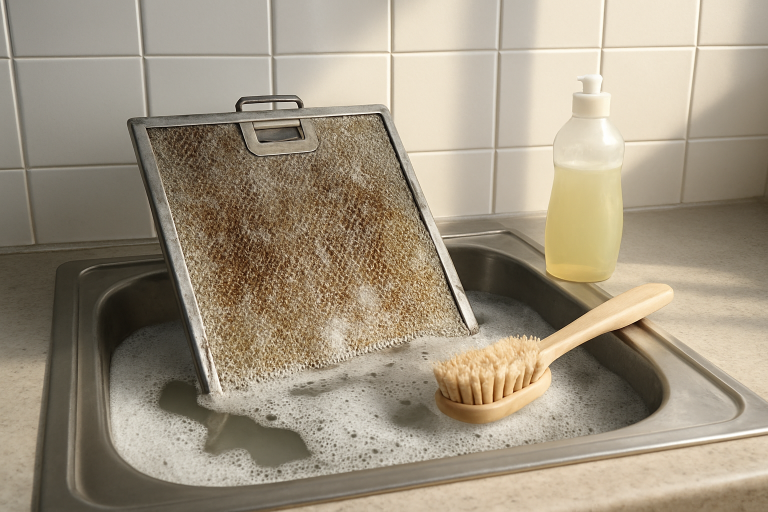
If your lint screen has a waxy film from dryer sheets, wash it with warm water, a little dish soap, and a soft brush. Let it dry completely before putting it back.
Step 3: Disconnect the Vent Hose
Look behind the dryer where the vent hose connects to the appliance. Loosen the clamp with a screwdriver or nut driver, then gently slide the hose off the dryer outlet.
Inspect the hose. If it is crushed, torn, clogged, or made from thin plastic or foil-style material, consider replacing it with rigid or semi-rigid metal ducting that meets your dryer manufacturer’s instructions and local code. A crushed hose restricts airflow and can quickly undo your cleaning work.
Step 4: Vacuum the Dryer Outlet and Hose
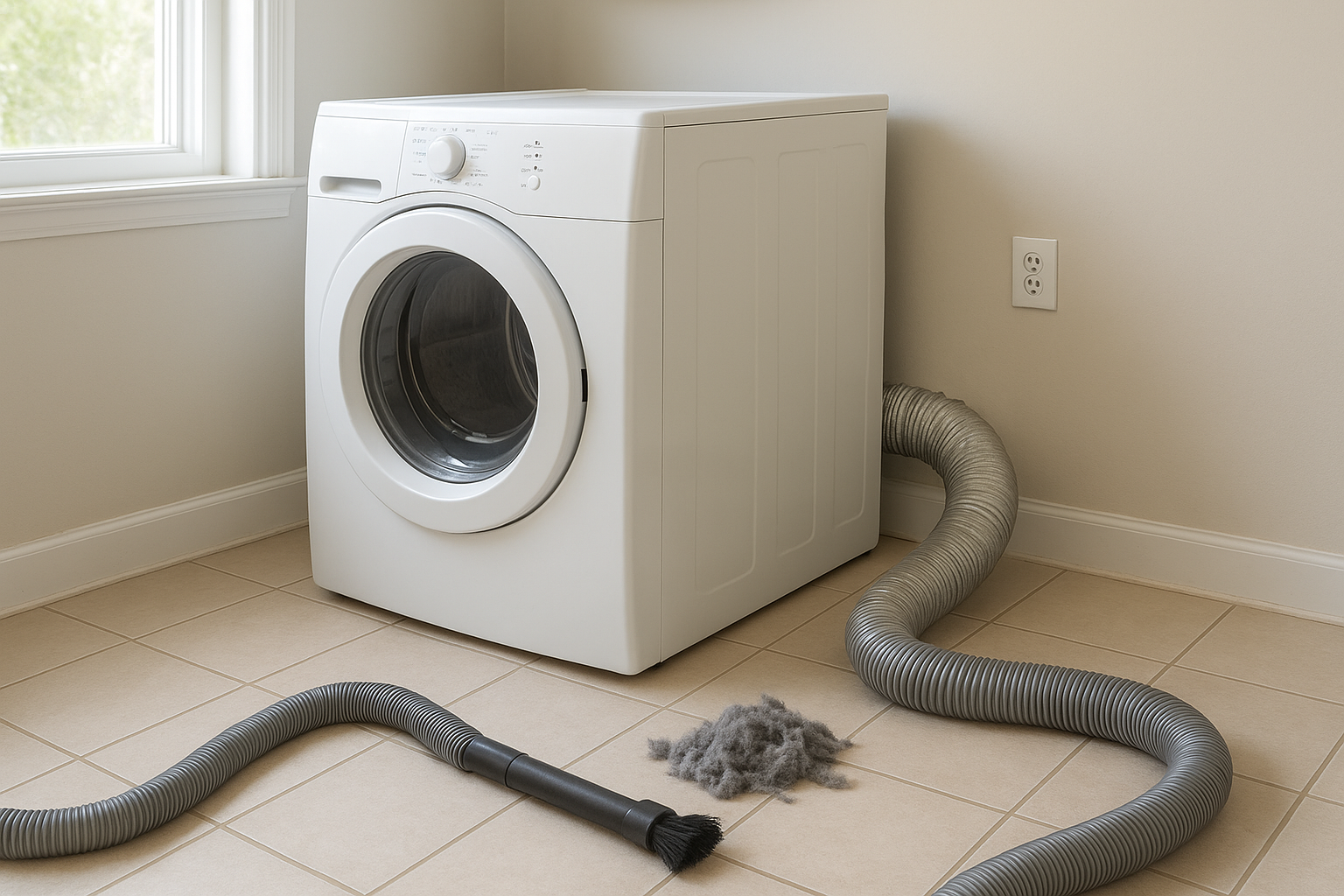
Use the vacuum hose to remove lint from the dryer outlet. Then vacuum inside the vent hose from both ends if you can. Move gently so you do not puncture or collapse the hose.
Next, feed the dryer vent brush into the hose. Rotate it slowly and pull lint out in sections. Do not force the brush if it catches; back it out, clear the lint, and try again.
Step 5: Clean the Wall Duct
Now clean the duct opening in the wall. Vacuum around the opening first, then feed the vent brush into the duct. Work in short sections, pulling the brush back often to remove lint.
If your vent run is long, has several elbows, or goes up through the roof, you may not be able to clean it fully from the laundry room. In that case, clean what you can and consider hiring a dryer vent cleaning service.
Step 6: Check the Outside Vent
Go outside and find the dryer vent cover. Remove lint, leaves, grass clippings, or nesting material from around the cover. The flap or louvers should open freely when the dryer runs and close when it stops.
Use the brush and vacuum from the outside opening if the design allows it. Be careful with plastic vent covers, which can crack in cold weather or with too much pressure.
Step 7: Reconnect Everything Correctly
Reconnect the vent hose to the dryer outlet and tighten the clamp. Make sure the hose is not kinked or crushed when you push the dryer back into place. Shorter and straighter is better for airflow.
If any metal duct joints need sealing, use foil HVAC tape. Do not use regular cloth duct tape inside a dryer vent setup; it can dry out and fail from heat and lint.
Step 8: Test the Dryer
Plug the dryer back in. If it is gas, turn the gas valve back on and check that everything is properly connected. Run the dryer on an air-only or low-heat setting for a few minutes.
Go outside and look at the vent. You should feel steady airflow, and the flap should open. If airflow is still weak after cleaning, there may be a blockage deeper in the duct, a crushed section behind the wall, or an issue with the dryer itself.
When to Call a Professional
Call a pro if the vent exits through the roof, the duct run is very long, you cannot reach a clog, the dryer still overheats, or you smell burning after cleaning. You should also get help if you have a gas dryer and are unsure about safely moving or reconnecting it.
A professional can also inspect for disconnected ducts, hidden lint buildup, pest nests, or old vent materials that should be replaced.
Simple Habits That Keep the Vent Cleaner
- Clean the lint screen every load.
- Do not overload the dryer; heavy loads shed more lint and dry slower.
- Shake out pet bedding, rugs, and towels before drying.
- Keep the area behind the dryer free of dust and clutter.
- Check the outside vent every few months for lint or debris.
- Pay attention when drying times suddenly get longer.
Cleaning a dryer vent is not glamorous, but it is one of those small home jobs that pays you back quickly. With a vacuum, a vent brush, and a little patience, you can clear lint, improve airflow, and help your dryer do its job safely and efficiently.