How to Freeze Zucchini for Bread, Soup, and Skillets
When zucchini starts piling up on the counter, freezing it is one of the easiest ways to save the harvest without committing to a big canning project. The trick is matching the prep method to how you’ll use it later: shredded for zucchini bread, slices for soups, and small cubes for casseroles or skillet meals.
Here’s how to freeze zucchini so it stays useful, easy to portion, and less watery when you pull it out months from now.
Before You Start: Pick the Right Zucchini
Choose young, firm zucchini with tender skin whenever possible. The National Center for Home Food Preservation recommends young summer squash with tender skin for freezing, which gives you better texture than oversized, seedy squash. ([nchfp.uga.edu](https://nchfp.uga.edu/how/freeze/vegetable/freezing-summer-squash/?utm_source=openai))
Small to medium zucchini are best for most freezer projects. If you have a giant garden zucchini, you can still freeze it, but cut it open first and scoop out the spongy seed center. That part gets extra watery and soft after thawing.
What You’ll Need
- Fresh zucchini
- Cutting board and sharp knife
- Box grater or food processor, if shredding
- Large pot with boiling water, for blanching slices or cubes
- Large bowl of ice water
- Colander
- Clean kitchen towels or paper towels
- Rimmed baking sheet
- Parchment paper, optional
- Freezer bags or freezer-safe containers
- Permanent marker for labeling
Should You Blanch Zucchini Before Freezing?
For sliced or cubed zucchini, yes, blanching is worth it. Blanching slows the enzyme activity that can hurt flavor, color, and texture in frozen vegetables. The University of New Hampshire Extension notes that blanching time matters and that food should be frozen at 0°F or lower for safe, quality storage. ([extension.unh.edu](https://extension.unh.edu/resource/freezing-vegetables?utm_source=openai))
For shredded zucchini, you’ll see mixed advice. Some cooks freeze it raw because it is usually headed into quick breads, muffins, sauces, or soups where texture is less important. However, Penn State Extension cautions that grated zucchini frozen without blanching can keep undergoing enzyme changes and become tough. ([extension.psu.edu](https://extension.psu.edu/zucchini?utm_source=openai))
My practical recommendation: blanch slices and cubes. For shredded zucchini, blanch if you want the best long-term quality, or freeze it raw if you know you’ll use it within a few months in baked goods.
Method 1: How to Freeze Shredded Zucchini for Bread
This is the best method if you make zucchini bread, muffins, pancakes, fritters, sauces, or meatballs with added vegetables.
- Wash and trim. Rinse the zucchini well and trim off the stem and blossom ends.
- Shred. Use the large holes on a box grater or the shredding disc of a food processor.
- Portion it. Measure the shredded zucchini into common baking amounts, such as 1 cup or 2 cups. Most zucchini bread recipes call for a measured amount, and future-you will appreciate not having to chisel apart a frozen block.
- Optional blanching step. If blanching, steam-blanch shredded zucchini briefly until just heated through, then cool quickly. Utah State University Extension emphasizes cooling zucchini quickly and thoroughly after blanching to avoid overcooking. ([extension.usu.edu](https://extension.usu.edu/preserve-the-harvest/research/zucchini?utm_source=openai))
- Drain well. Let the zucchini drain in a colander. Press gently with a clean towel if it is very wet, but don’t wring it bone-dry if you plan to bake with it.
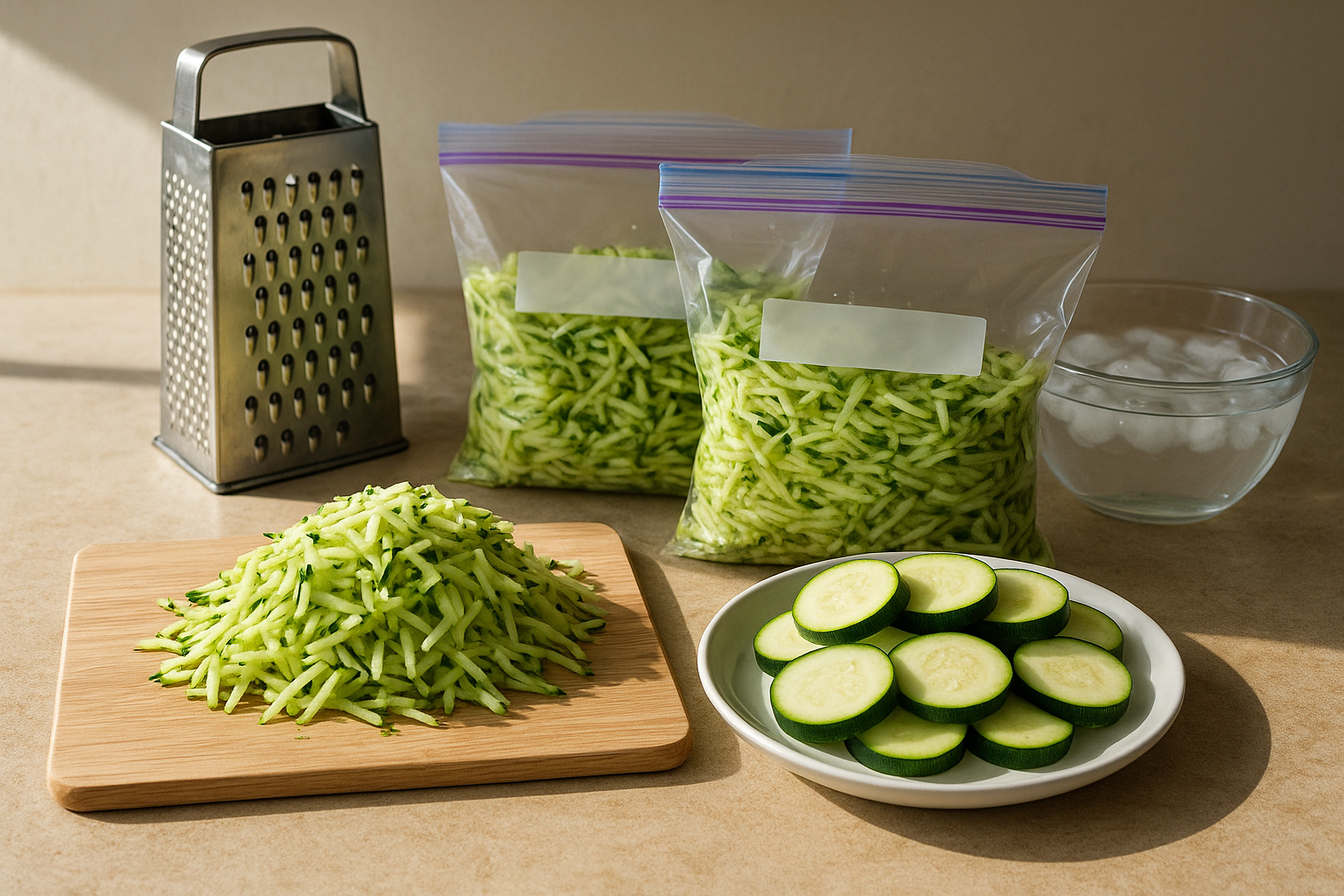
- Pack and freeze. Place each portion in a freezer bag, flatten it into a thin slab, press out excess air, seal, label, and freeze.
Tip: Label the bag with the amount inside: “2 cups shredded zucchini.” Flat bags stack neatly and thaw faster than round containers.
Method 2: How to Freeze Zucchini Slices
Frozen zucchini slices are best for soups, stews, casseroles, pasta bakes, and blended sauces. They will not thaw crisp like fresh zucchini, so don’t plan to use them in raw salads.
- Wash and slice. Cut zucchini into 1/2-inch rounds or half-moons.
- Blanch. Drop the slices into boiling water. The National Center for Home Food Preservation recommends blanching sliced summer squash for 3 minutes before cooling, draining, packing, and freezing. ([nchfp.uga.edu](https://nchfp.uga.edu/how/freeze/vegetable/freezing-summer-squash/?utm_source=openai))
- Cool fast. Move the zucchini straight into ice water to stop the cooking.
- Drain and dry. Spread the slices on a towel and pat dry. Less surface water means fewer ice crystals.
- Flash-freeze. Arrange slices in a single layer on a baking sheet and freeze until solid.
- Pack. Transfer frozen slices to freezer bags, remove extra air, label, and return to the freezer.
Flash-freezing is optional, but it keeps the slices loose so you can grab a handful for soup instead of thawing the whole bag.
Method 3: How to Freeze Cubed Zucchini
Cubed zucchini is handy for minestrone, vegetable soup, egg bakes, casseroles, and pasta sauce. Cut it into pieces that match how you cook. For soup, 1/2-inch cubes are usually right. For casseroles, slightly larger chunks are fine.
- Wash, trim, and cube. Remove the seedy center from very large zucchini.
- Blanch for 3 minutes. Keep the water boiling and work in small batches so the pot returns to a boil quickly.
- Cool in ice water. Cool for about as long as you blanched.
- Drain very well. Cubes hold water, so give them time in the colander.
- Freeze on a tray, then bag. This prevents one giant frozen clump.
How Long Does Frozen Zucchini Last?
For best quality, use frozen zucchini within about 8 to 12 months when stored at 0°F or lower. It may remain safe longer if kept continuously frozen, but the texture and flavor gradually decline. Good freezer packaging helps protect flavor, color, moisture, and nutrients, according to UNH Extension. ([extension.unh.edu](https://extension.unh.edu/resource/freezing-vegetables?utm_source=openai))
Always label bags with the date and form: shredded, sliced, or cubed. If your freezer tends to collect mystery bags, be specific: “zucchini for bread, 2 cups, July 2026.”
How to Thaw and Use Frozen Zucchini
For zucchini bread and muffins, thaw shredded zucchini in the refrigerator or in a bowl on the counter if you’re baking soon. Stir the thawed liquid back in if your recipe expects moist shredded zucchini, or drain some off if the mixture looks soupy.
For soups, stews, and sauces, you can usually add frozen sliced or cubed zucchini straight to the pot. Add it near the end of cooking so it doesn’t turn mushy.
For skillet meals, thaw and drain first, then cook over medium-high heat so excess moisture evaporates quickly. Frozen zucchini is softer than fresh, so it works better as a supporting ingredient than as the star of a crisp sauté.
Common Mistakes to Avoid
- Freezing whole zucchini. It takes up space and thaws into a watery, hard-to-use vegetable.
- Skipping labels. Frozen shredded zucchini can look a lot like frozen cucumber or chopped greens once it’s bagged.
- Overpacking bags. Smaller portions thaw faster and reduce waste.
- Not drying slices before freezing. Extra water creates more ice and poorer texture.
- Expecting fresh texture. Frozen zucchini is best cooked, baked, or blended.
Best Uses for Frozen Zucchini
- Zucchini bread, muffins, and pancakes
- Vegetable soup or minestrone
- Turkey or beef meatballs with added vegetables
- Pasta sauce or lasagna filling
- Egg casseroles and frittatas
- Rice bakes and casseroles
- Blended vegetable soups
The Bottom Line
If you want the most useful freezer stash, freeze zucchini in more than one form. Shred some in 1- or 2-cup portions for baking, blanch and freeze slices for soups, and cube a few bags for casseroles and sauces.
It takes a little prep up front, but it turns a too-big zucchini pile into easy ingredients for busy nights. And when winter rolls around, a bag of summer zucchini ready for bread or soup feels like a small gift from your July kitchen.