How to Freeze Corn on the Cob the Right Way
Freezing corn on the cob is one of the easiest ways to save sweet summer corn for later, but the best results come from doing a few small things right. A quick blanch, a fast chill, and careful wrapping help the kernels stay bright, sweet, and less watery when you reheat them.
This guide walks you through how to freeze corn on the cob for weeknight dinners, soups, cookouts, and off-season cravings. You can freeze whole ears, half ears, or kernels cut from the cob, depending on how you plan to use them.
Why Blanch Corn Before Freezing?
Blanching means briefly boiling the corn, then cooling it quickly in ice water. The National Center for Home Food Preservation explains that blanching is recommended for most vegetables before freezing because it slows enzyme activity that can affect flavor, color, and texture. ([nchfp.uga.edu](https://nchfp.uga.edu/how/freeze/freeze-general-information/blanching-vegetables/?utm_source=openai))
Can you freeze corn without blanching? Technically, yes, but it is more likely to taste starchy, flat, or freezer-burned if stored for more than a short time. If you are freezing corn for just a couple of weeks, skipping the blanch may be fine. For a freezer stash you want to enjoy months from now, blanching is worth the extra step.
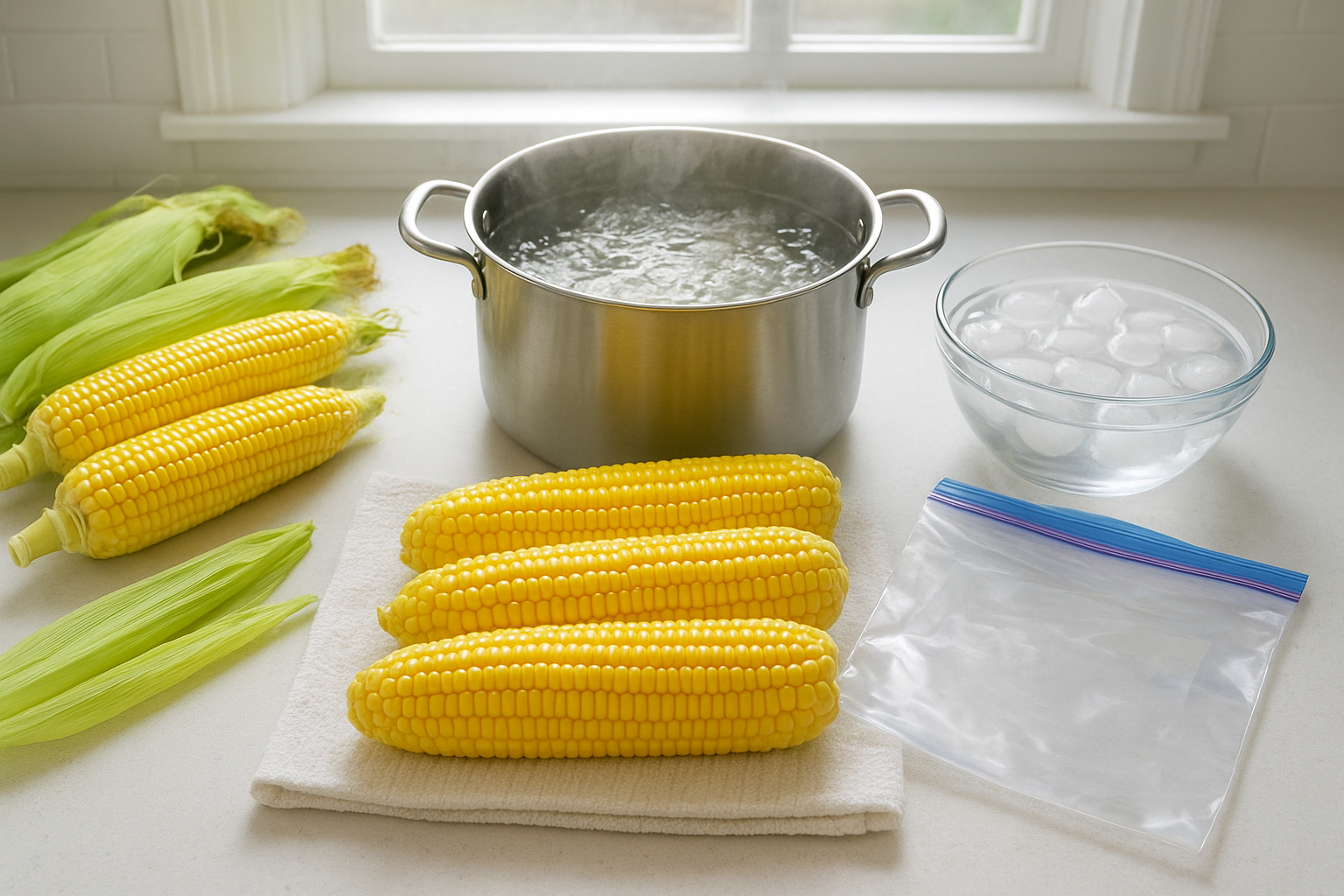
What You’ll Need
- Fresh corn on the cob
- Large pot with lid
- Large bowl or clean sink filled with ice water
- Tongs
- Clean kitchen towels
- Freezer bags or vacuum-seal bags
- Permanent marker for labeling
Choose the Best Corn for Freezing
Start with the freshest corn you can get. Corn is best frozen soon after harvest or purchase, while the kernels are still plump and sweet. Look for ears with bright green husks, moist-looking silk, and full rows of kernels. Avoid ears with dry husks, sunken kernels, or a sour smell.
If you brought home more corn than you can freeze right away, keep it in the refrigerator with the husks on and freeze it as soon as possible. The fresher the corn going into the freezer, the better it will taste coming out.
How to Freeze Corn on the Cob
1. Husk and clean the corn
Pull off the husks and remove as much silk as you can. Rinse the ears under cool water, then trim off any damaged tips or tough stem ends if needed.
2. Bring a large pot of water to a full boil
Use enough water so the corn can move freely. A crowded pot cools down too much when the corn goes in, which can throw off the blanching time.
3. Blanch by ear size
Add the corn to the boiling water, cover the pot, and start timing as soon as the water returns to a boil. Michigan State University Extension recommends blanching small ears about 7 minutes, medium ears about 9 minutes, and large ears about 11 minutes. ([canr.msu.edu](https://www.canr.msu.edu/news/how_to_freeze_corn_now?utm_source=openai))
- Small ears: 7 minutes
- Medium ears: 9 minutes
- Large ears: 11 minutes
Do not guess too loosely here. Under-blanching can leave quality-damaging enzymes active, while over-blanching can make the kernels soft.
4. Cool the corn quickly
Move the hot ears straight into ice water. Let them cool for about the same amount of time they were blanched. If the water warms up, add more ice. Fast cooling stops the cooking process so the corn does not turn mushy.
5. Dry very well
Drain the corn and pat each ear dry with a clean towel. This step matters. Extra water turns into ice crystals, and ice crystals can make reheated corn taste watery.
6. Wrap and pack
For the best protection, wrap each dry ear tightly in freezer wrap or place ears in a vacuum-seal bag. If using regular freezer bags, press out as much air as possible before sealing. You can freeze whole ears, or cut them in halves or thirds for smaller portions.
7. Label and freeze
Label the bag with the date and amount. Freeze the corn as flat as you can at first so the packages stack neatly later. For best quality, keep frozen vegetables at 0°F or below, a standard recommended by food preservation resources. ([extension.oregonstate.edu](https://extension.oregonstate.edu/food/preservation/preserving-corn-sp-50-443?utm_source=openai))
How Long Does Frozen Corn on the Cob Last?
For best flavor and texture, use frozen corn on the cob within 8 to 12 months. It may still be safe longer if kept continuously frozen, but the quality can decline. If you notice heavy freezer burn, lots of ice crystals inside the bag, or a stale freezer smell, the corn will probably not taste its best.
Can You Freeze Corn Cut Off the Cob?
Yes, and it saves freezer space. Blanch the ears first, cool them in ice water, dry them, then cut the kernels from the cob. Hold the cob upright in a large bowl or on a rimmed baking sheet and slice downward with a sharp knife.
Pack kernels into freezer bags in recipe-size portions, such as 1 cup, 2 cups, or enough for one soup or casserole. Flatten the bags before freezing so they thaw quickly and stack easily.
How to Reheat Frozen Corn on the Cob
You do not have to fully thaw frozen corn before cooking. In fact, cooking it from frozen often gives a better texture.
- Boil: Add frozen ears to boiling water and cook just until hot, usually 4 to 6 minutes.
- Steam: Steam frozen ears until heated through, about 6 to 8 minutes depending on size.
- Microwave: Place one frozen ear on a microwave-safe plate with a splash of water, cover loosely, and heat in short bursts until hot.
- Grill: Thaw slightly, pat dry, brush with butter or oil, and grill until hot with light char.
Because the corn was blanched before freezing, it is already partially cooked. Heat it gently and avoid boiling it for too long, which can make the kernels tough or waterlogged.
Tips for Better Frozen Corn
- Freeze the same day you buy or pick it. Sweet corn loses quality as it sits.
- Work in batches. Too much corn in the pot lowers the water temperature.
- Use plenty of ice water. Cooling fast is just as important as blanching.
- Dry before packing. Less surface water means fewer ice crystals.
- Remove as much air as possible. Air exposure leads to freezer burn.
- Freeze smaller portions. Half ears and cob chunks are easier for kids, soups, and quick sides.
Common Mistakes to Avoid
Skipping the ice bath: If the corn keeps cooking after blanching, it can turn soft before it even reaches the freezer.
Using sandwich bags: Thin bags do not protect corn well for long-term storage. Use freezer-grade bags or vacuum-seal bags.
Freezing wet corn: Water on the surface turns icy and can hurt texture.
Overcooking when reheating: Frozen corn on the cob only needs to be heated through. Long boiling will not make it sweeter; it usually makes it duller.
Is It Better to Freeze Corn on the Cob or as Kernels?
It depends on how you cook. Corn on the cob feels more like fresh summer corn and is great for simple dinners. Kernels are more practical if you use corn in soups, casseroles, cornbread, salads, salsa, or skillet meals.
If you have the freezer space, freeze some both ways. Whole ears are nice for a January dinner that needs a little sunshine, while bags of kernels are the ones you will reach for again and again.
The Bottom Line
The best way to freeze corn on the cob is simple: husk it, blanch it by size, cool it fast, dry it well, and seal it tightly. Those steps help lock in the sweet flavor and firm texture that make summer corn worth saving.
Put up a few extra ears when corn is at its best, and you will have an easy side dish ready long after the farm stands close for the season.