How to Clean a Dishwasher Filter the Right Way
If your dishwasher smells funky or leaves grit on glasses, the filter is one of the first places to check. Learning how to clean a dishwasher filter takes about 10 minutes, and it can make a big difference in how well the machine washes and drains.
Most newer dishwashers have a manual filter in the bottom of the tub that catches food bits before they recirculate onto your dishes. Appliance makers note that a clean filter helps water flow properly and keeps food particles from moving through the wash cycle again. ([producthelp.whirlpool.com](https://producthelp.whirlpool.com/Dishwashers/Dishwasher/Other/Cleaning_and_Odor/Cleaning_and_Maintenance/Cleaning_the_Filter/Cleaning_the_Filter_-_Dishwasher?utm_source=openai))
How Often Should You Clean a Dishwasher Filter?
The honest answer is: it depends on how often you run the dishwasher and how much food you leave on plates. Whirlpool’s filter-cleaning chart gives a useful real-world guide: if you run 8 to 12 loads a week and only scrape dishes before loading, clean the filter about every two months; if you run 1 to 3 loads a week, twice a year may be enough. ([whirlpool.com](https://www.whirlpool.com/content/dam/global/documents/202006/owners-manual-w11384187-reva.pdf?utm_source=openai))
That said, many busy kitchens need a quick filter rinse more often. Check yours monthly if you notice any of these signs:
- Dishes come out gritty or cloudy.
- The dishwasher smells sour or musty.
- Water pools in the bottom after a cycle.
- You see food bits around the filter area.
- The machine sounds louder than usual while washing or draining.
A good habit: peek at the filter once a month. If it looks clean, put it back. If it has food, grease, paper labels, or seeds stuck in it, give it a wash.
What You’ll Need
- Warm water
- Dish soap
- Soft brush, old toothbrush, or small nylon cleaning brush
- Microfiber cloth or sponge
- Rubber gloves, optional
- Flashlight, optional but helpful
Avoid harsh scouring pads, metal brushes, bleach, and drain cleaners. The filter is usually plastic or fine mesh, and rough tools can damage it.
Step-by-Step: How to Clean a Dishwasher Filter
1. Empty the dishwasher
Take out clean dishes, silverware, and anything loose in the bottom rack. It is much easier to reach the filter when the lower rack is out of the way.
2. Pull out the bottom rack
Slide the lower rack forward and lift it out if your model allows it. Set it on a towel or just off to the side.
3. Find the filter
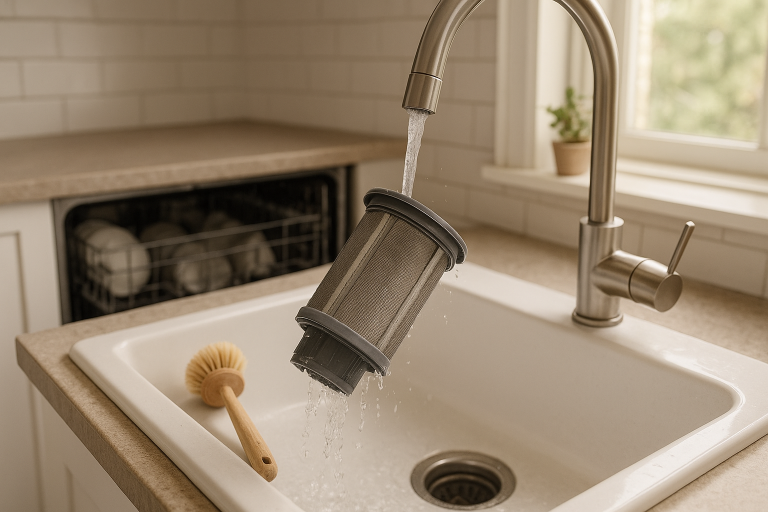
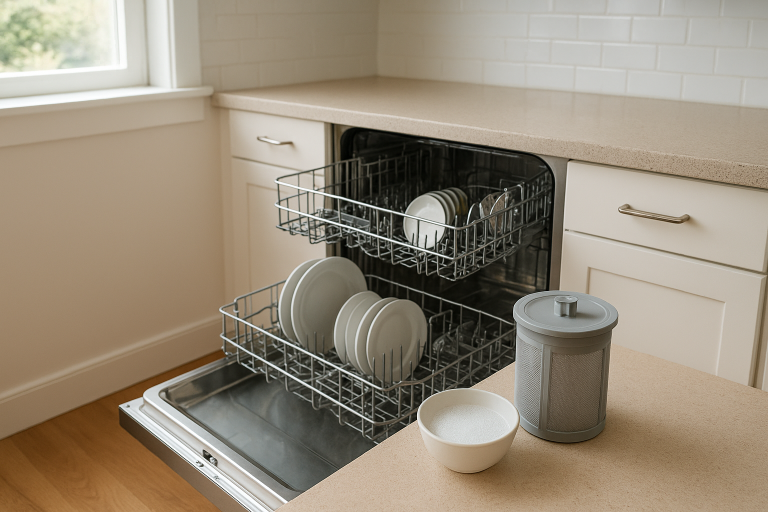
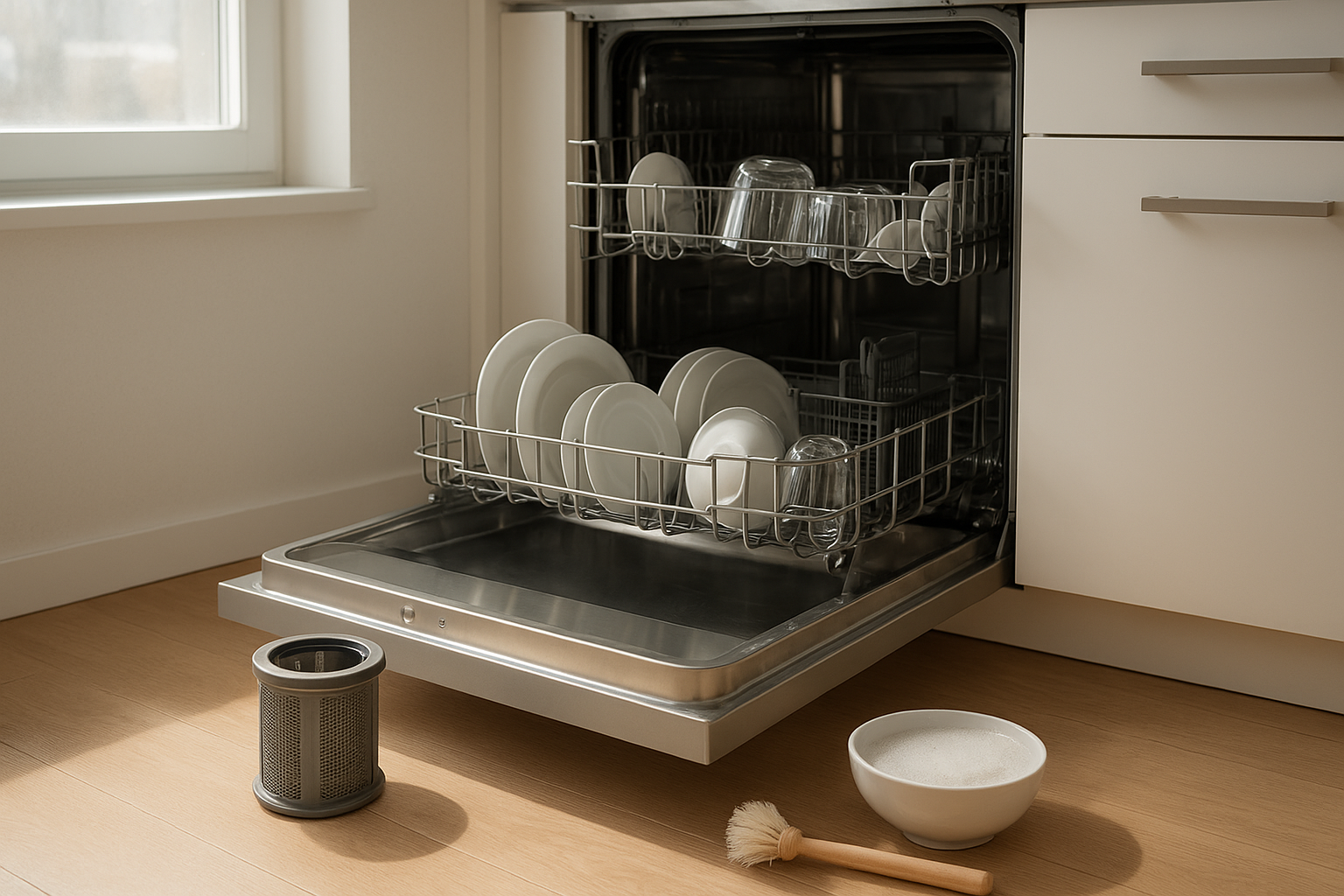
The filter is usually in the bottom of the dishwasher tub, often under the lower spray arm. Many models have a round, twist-lock filter assembly with an upper cylinder and a lower flat screen. Some dishwashers are different, so check your owner’s manual if the filter does not lift out easily.
4. Remove the filter gently
Most manual filters unlock with a small counterclockwise turn, then lift straight out. Do not force it. If it feels stuck, look for arrows, lock symbols, or tabs. Forcing the filter can crack the plastic or make it hard to reseat correctly.
5. Rinse away loose food
Hold the filter under warm running water. Rinse from both sides to loosen crumbs, rice, coffee grounds, seeds, and greasy residue. If your sink has a sprayer, use a gentle spray rather than a harsh blast.
6. Scrub with soap and a soft brush
Add a drop of dish soap to a soft brush and scrub the mesh and plastic frame. Pay attention to the seam where the cylinder meets the screen, since grease and fine food bits like to collect there. LG also recommends periodic filter cleaning to support wash performance and prevent odors. ([lg.com](https://www.lg.com/us/support/help-library/lg-dishwasher-how-to-clean-the-filter–20153082659663?utm_source=openai))
7. Wipe the filter well in the dishwasher
Before putting the filter back, use a damp cloth to wipe the sump area where the filter sits. Remove lemon seeds, broken glass, twist ties, labels, noodles, or anything else that may block drainage. If you suspect broken glass, wear gloves and use a flashlight.
8. Reinstall the filter securely
Put each filter piece back exactly as it came out. Twist until it locks, but do not overtighten. A loose or misaligned filter can let food particles circulate through the dishwasher, which defeats the whole point.
9. Run a short rinse or normal cycle
Once the filter is back in place, run a rinse cycle or regular wash with no dishes if the dishwasher had a strong odor. If you use a dishwasher cleaner, follow the product label and your appliance manual.
Should You Rinse Dishes Before Loading?
You do not need to fully wash plates before putting them in the dishwasher. ENERGY STAR notes that modern dishwashers and detergents are designed to do the cleaning, and many machines use soil sensors to adjust the cycle based on how dirty the water is. ([energystar.gov](https://www.energystar.gov/products/dishwashers?utm_source=openai))
The better approach is to scrape, not wash. Scrape bones, pits, large food scraps, and paper labels into the trash or compost. Leave light sauce and normal residue for the dishwasher. This saves time and water while still protecting the filter from big debris.
What Not to Put Through the Dishwasher Filter
A dishwasher filter can handle small food particles, but it is not a garbage disposal. Try to keep these out of the machine:
- Fruit stickers and jar labels
- Toothpicks and wooden skewers
- Popcorn kernels and fruit pits
- Large pasta pieces, rice clumps, and eggshells
- Grease puddles or thick melted cheese
- Broken glass or chipped ceramic pieces
Grease is especially sneaky. It can cool and cling to the filter mesh, then trap more food. Wipe very greasy pans with a paper towel before loading.
If the Dishwasher Still Smells After Cleaning the Filter
If the filter was dirty, cleaning it may solve the smell right away. If not, check these common trouble spots:
- Door gasket: Wipe the rubber seal around the door with warm soapy water.
- Spray arms: Look for clogged holes. Remove food bits with a toothpick if your manual allows it.
- Drain area: Make sure nothing is blocking the sump under the filter.
- Garbage disposal connection: If your dishwasher drains through the disposal, run the disposal and flush it with water.
- Standing water: Persistent water in the bottom may point to a drain hose, pump, or installation issue.
Do not pour chemical drain cleaner into a dishwasher. If you have standing water that will not drain after the filter is clean, it is safer to check the manual or call an appliance technician.
Quick Maintenance Routine
Here is a simple routine that keeps this chore from turning into a smelly project:
- After each load: Remove obvious food chunks from the bottom of the tub.
- Weekly: Wipe the door edge and gasket if you run the dishwasher often.
- Monthly: Check the filter and rinse it if needed.
- Every few months: Clean the filter thoroughly with soap and a soft brush.
Cleaning the dishwasher filter is not glamorous, but it is one of those small home jobs that pays off quickly. Once you know where the filter is and how it locks in place, the whole task takes less time than unloading the top rack.