How to Clean a Washing Machine Drain Filter
If your washer smells musty, drains slowly, or leaves clothes wetter than usual, the drain filter may be the quiet little part causing trouble. Learning how to clean a washing machine drain filter is simple, but it does need a little patience because trapped water can spill out fast.
This guide is written for everyday front-load washers with a small access door near the bottom front of the machine. Some top-load washers and newer models do not have a homeowner-accessible drain filter, so always check your owner’s manual before removing anything.
What the Washing Machine Drain Filter Does
The drain pump filter, sometimes called a debris filter or pump filter, catches small items before they reach the pump. Think coins, hair pins, lint clumps, pet hair, buttons, and the occasional mystery object from a pocket.
LG notes that a clogged drain pump filter can keep a washer from draining properly, and Whirlpool says access and cleaning instructions can vary by model number. Samsung also advises checking the drain pump impeller area inside the filter housing for debris on front-load machines. ([lg.com](https://www.lg.com/us/support/help-library/lg-washer-how-to-clean-the-drain-pump-filter–20150206838321?utm_source=openai))
How Often Should You Clean It?
A good rule of thumb is every two to three months for an average household, or more often if you wash pet bedding, rugs, muddy clothes, baby socks, or anything that sheds heavily. Samsung Australia advises cleaning the pump filter five to six times a year to help keep the washer operating well. ([samsung.com](https://www.samsung.com/au/support/home-appliances/how-to-clean-the-pump-filter/?utm_source=openai))
You should also clean the filter right away if you notice any of these signs:
- The washer takes a long time to drain.
- Clothes come out sopping wet after the spin cycle.
- You see a drain-related error code.
- There is standing water in the drum.
- The washer smells sour even after a cleaning cycle.
- You hear the pump working harder than usual.
Before You Start: Check Your Washer Type
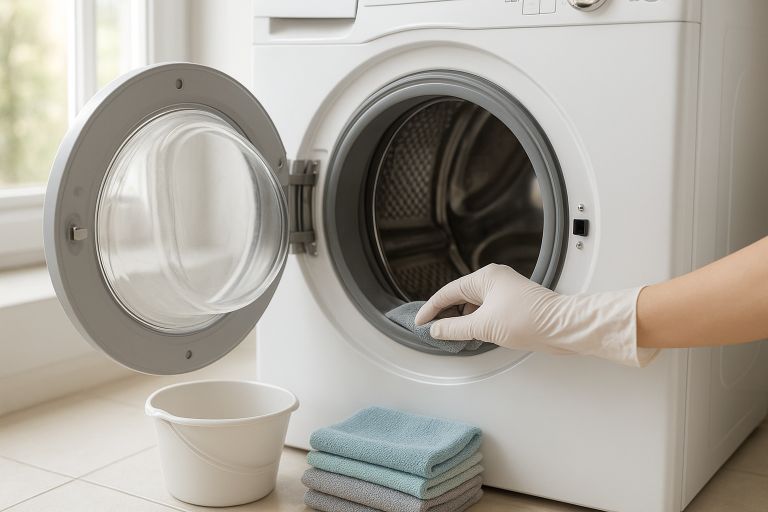
Most front-load washers with an accessible drain filter have a small square or rectangular door near the lower front corner. Behind it, you may find a short drain hose with a cap and a larger round filter knob.
Not every washer is built this way. Some filters are behind a lower kick panel, some are not meant to be cleaned by the homeowner, and some top-load washers handle lint and debris differently. ENERGY STAR recommends consulting the owner’s manual for washer maintenance, and that is especially important before opening panels or removing parts. ([energystar.gov](https://www.energystar.gov/products/clothes_washers?utm_source=openai))
Supplies You’ll Need
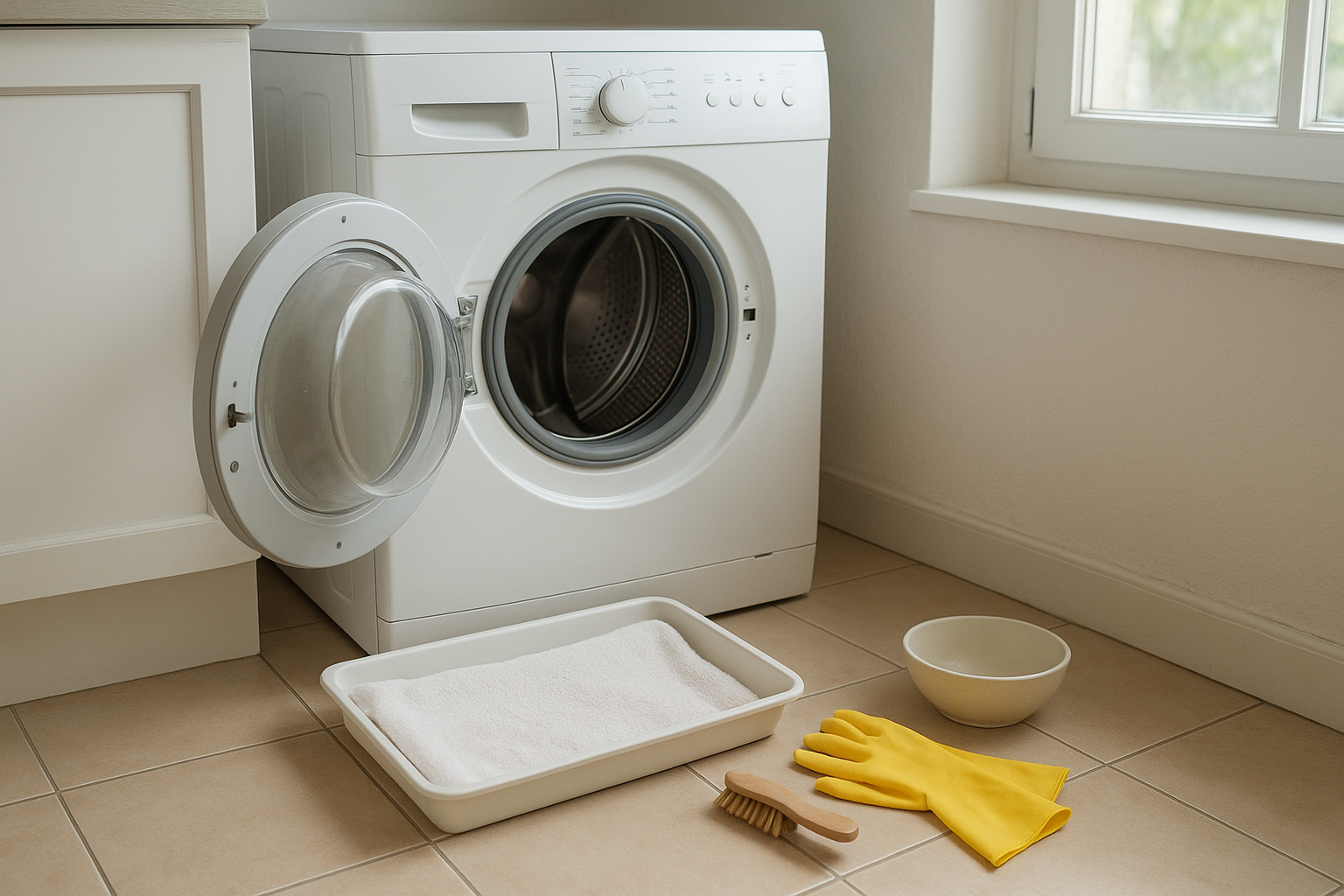
- Old towels or rags
- A shallow pan, baking sheet, or plastic tray
- A small bowl or bucket
- Rubber gloves
- Soft brush or old toothbrush
- Flashlight
- Mild dish soap
A shallow tray matters because the drain hose and filter are usually very close to the floor. If your washer sits on a pedestal, you may be able to use a small bucket. If it sits directly on the floor, towels and a rimmed baking sheet are often easier.
How to Clean a Washing Machine Drain Filter
1. Turn the washer off and unplug it
Safety first. Turn the machine off, unplug it, and let the washer cool if you recently ran a hot cycle. If the washer is full of water and you cannot open the door, do not force it. Use the emergency drain hose if your model has one, or call for service if you are unsure.
2. Open the access panel
Look for the small door near the bottom front of the washer. It may pop open by hand, or you may need a flat tool wrapped in a cloth to avoid scratching the finish. Keep towels under the door before you open anything.
3. Drain the leftover water slowly
If your washer has a small drain hose, pull it out gently and aim it into your shallow pan or bowl. Remove the cap slowly. Water may trickle out at first, then flow faster.
Empty the pan as needed, replace it, and continue until the water stops. This step can take a few minutes, especially if there is standing water in the machine.
4. Remove the filter carefully
Once the water is drained, turn the large filter knob counterclockwise. Go slowly. More water may come out as the seal breaks, so keep towels in place.
Pull the filter straight out and look it over. Do not be surprised if you find lint, coins, hair, small socks, buttons, gravel, or slimy residue. That is exactly what the filter is there to catch.
5. Clean the filter
Rinse the filter under warm running water. Use a soft brush and a drop of mild dish soap to remove lint and buildup from the screen, threads, and rubber gasket. Avoid harsh scraping tools that could damage the seal.
If the filter smells bad, wash it well with soap and warm water, then rinse thoroughly. Do not soak rubber seals in bleach unless your manual specifically says it is safe.
6. Check inside the filter housing
Shine a flashlight into the opening where the filter came out. Look for hair pins, coins, lint balls, fabric pieces, or anything wrapped around the small impeller. Samsung’s washer cleaning guidance specifically mentions checking that the drain pump impeller inside the filter housing is clean. ([samsung.com](https://www.samsung.com/ca/support/home-appliances/how-to-clean-your-samsung-washer/?utm_source=openai))
Use your fingers or needle-nose pliers carefully to remove loose debris, but do not force the impeller or pull on anything that feels attached. If something is jammed deep inside, it is safer to call a repair technician.
7. Reinstall the filter snugly
Slide the clean filter back into place and turn it clockwise until it is secure. It should be snug, but not cranked so hard that you damage the threads. LG warns that using a washer with the drain filter installed incorrectly, or without the filter, can cause leaks or malfunction. ([lg.com](https://www.lg.com/us/support/products/documents/WM8000%20Manual.pdf?utm_source=openai))
8. Replace the drain hose cap and close the panel
If your machine has a drain hose, make sure the cap is pushed on firmly and the hose is clipped back into position. Wipe the area dry, close the access door, and remove the towels.
9. Run a quick test
Plug the washer back in. Run a rinse and spin or quick wash cycle with no laundry inside. Watch the filter door area for drips. If you see water, stop the machine, unplug it, and check that the filter and hose cap are seated correctly.
What If the Filter Won’t Open?
A stuck filter is common when it has not been cleaned in a long time. First, make sure you are turning it the correct direction, usually counterclockwise to loosen. Try gripping it with a dry towel for better traction.
Do not use extreme force. If the filter is jammed by debris behind it, forcing the knob can crack the filter housing or cause a leak. At that point, it is usually cheaper to call for help than to break a plastic part that was only meant to be hand-tightened.
How to Prevent Clogs Next Time
- Empty pockets before every load. Coins and hair pins are frequent offenders.
- Use mesh bags for baby socks and small items. Tiny garments can slip into places they should not go.
- Shake out pet bedding and rugs outside. Remove loose hair, grit, and debris before washing.
- Use the right amount of detergent. Too much detergent can leave residue that adds to buildup.
- Leave the washer door open after use. The EPA recommends leaving the clothes washer door open after use so moisture can evaporate, which helps discourage mold, especially in front-load machines. ([epa.gov](https://www.epa.gov/watersense/home-maintenance?utm_source=openai))
When to Call a Professional
Cleaning the drain filter solves many washer drainage problems, but not all of them. Call an appliance repair technician if the washer still will not drain, the pump makes a grinding noise, the filter housing leaks after being reinstalled correctly, the filter is cracked, or you find a stuck object you cannot safely remove.
You should also get help if your washer is under warranty and the manual does not clearly describe homeowner filter cleaning. Opening the wrong panel or removing the wrong part can create a bigger problem.
The Bottom Line
Cleaning a washing machine drain filter is one of those small home tasks that can prevent a very annoying laundry day mess. Go slowly, drain the water first, clean both the filter and the housing, and make sure everything is sealed before running the washer again.
If you add this to your regular home maintenance routine a few times a year, your washer is more likely to drain well, smell fresher, and avoid clogs from the little things that sneak through the wash.