How to Wash Pillows Without Making Them Lumpy
Pillows do a lot of quiet work. Night after night, they collect sweat, skin oils, drool, hair products, and dust, even when you use a pillowcase. The good news is that many bed pillows can be washed at home, as long as you match the method to the filling and take drying seriously.
This guide walks through how to wash pillows without turning them into lumpy bricks, trapping detergent inside, or putting damp pillows back on the bed too soon.
First, Check What Kind of Pillow You Have
Before you start, read the care tag. That little label matters because not all pillows can handle the same treatment. Most polyester, down, and feather pillows are often machine washable, but memory foam and latex pillows usually should not go in the washer or dryer because the agitation and trapped water can damage the foam. The Sleep Foundation notes that memory foam pillows generally should not be machine washed or dried, while many down, feather, and synthetic pillows can be washed if the care label allows it. ([sleepfoundation.org](https://www.sleepfoundation.org/best-pillows/how-to-wash-pillows?utm_source=openai))
If the tag is missing, use the filling as your guide:
- Polyester or fiberfill: Usually machine washable and fairly forgiving.
- Down or feather: Often machine washable, but needs gentle washing and very thorough drying.
- Memory foam or latex: Spot clean or hand clean only unless the manufacturer clearly says otherwise.
- Decorative pillows: Check for trim, beading, embroidery, non-removable covers, or “spot clean only” tags before washing.
How Often Should You Wash Bed Pillows?
For most households, washing washable bed pillows about two to four times a year is a practical routine. If you sweat heavily, sleep with wet hair, have allergies, share the bed with pets, or recently had a cold, you may want to wash them more often. Pillowcases should be washed much more frequently, usually along with your sheets.
A zippered pillow protector is one of the easiest ways to keep pillows cleaner between washes. It sits under the pillowcase and helps block sweat, oils, dust mites, and stains. If washing pillows is a chore you tend to put off, protectors make the whole job easier.
What You’ll Need
- Mild liquid laundry detergent
- Stain remover or a small amount of detergent for pretreating
- Washing machine, preferably large enough for two pillows
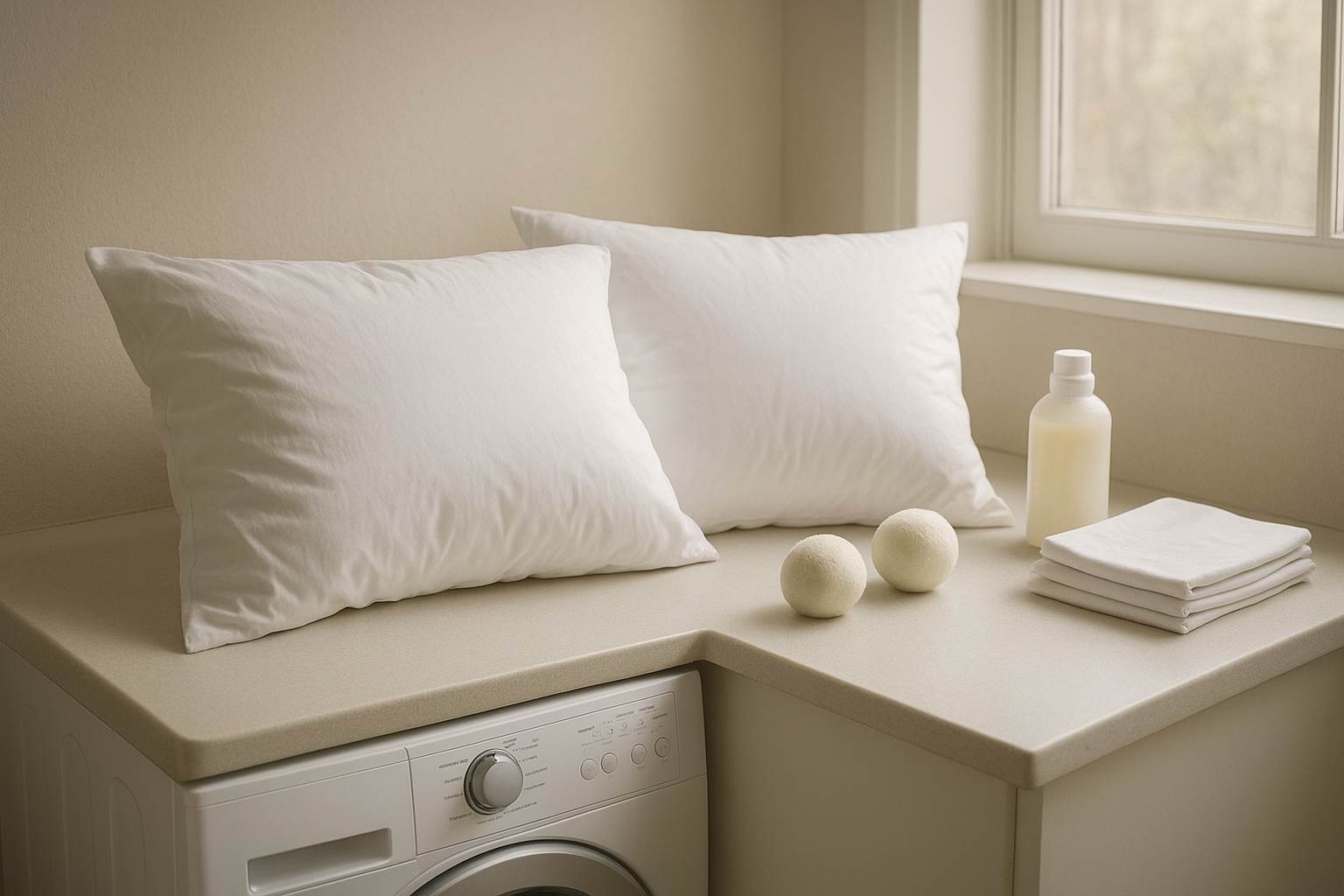
- Dryer balls or clean tennis balls
- Clean towels, if needed for balancing the load
- A sunny or well-ventilated drying spot for air-drying or finishing
Use a light hand with detergent. Pillows are thick and absorbent, and too much soap can be hard to rinse out. Leftover detergent can make pillows stiff, attract more grime, and bother sensitive skin.
How to Wash Polyester, Down, or Feather Pillows
These are the pillow types most likely to survive a machine wash well. The key is balance, gentle agitation, and extra rinsing.
- Remove pillowcases and protectors. Wash those separately according to their care labels.
- Inspect the seams. If a pillow has tears or weak stitching, repair it first. A ripped feather pillow in a washer is a mess you do not want.
- Pretreat stains. Dab yellowed or oily spots with a small amount of mild detergent or stain remover. Let it sit for 10 to 15 minutes.
- Wash two pillows at a time. Two pillows help balance the washer drum. If you only have one pillow, add a couple of towels to help even out the load. Several sources recommend washing pillows in pairs for better balance. ([sleepfoundation.org](https://www.sleepfoundation.org/best-pillows/how-to-wash-pillows?utm_source=openai))
- Use a gentle cycle. Choose cool or warm water, depending on the care tag. Avoid hot water unless the label specifically allows it.
- Add only a small amount of detergent. For a normal pair of pillows, use less than you would for a full load of clothes.
- Run an extra rinse and spin. This helps remove detergent and more water before drying.
How to Dry Pillows So They Don’t Mildew
Drying is the step that makes or breaks the job. A pillow can feel dry on the outside while still holding moisture deep in the center. That trapped dampness can lead to musty smells or mold. Consumer Reports warns against relying only on auto-dry sensors because they may read the outside of the pillow as dry while the inside is still damp. ([consumerreports.org](https://www.consumerreports.org/pillows/how-to-wash-a-pillow/?utm_source=openai))
Here’s the safer method:
- Press out extra water first. Gently squeeze the pillow over a tub or sink. Do not wring it, especially if it is down or feather.
- Dry on low heat or air-dry setting. Follow the care tag. Low heat is common for synthetic pillows, while some delicate fills do better with air-only drying.
- Add dryer balls. Dryer balls or clean tennis balls help break up clumps and keep the filling moving.
- Stop and fluff often. Every 30 to 45 minutes, pull the pillows out, shake them, and separate any clumps with your hands.
- Expect it to take time. Thick pillows may need more than one dryer cycle. Down and feather pillows can take especially long to dry completely.
- Check the center. Press your hands into the thickest part of the pillow. If it feels cool, heavy, or damp, keep drying.
If the weather is dry and sunny, you can finish pillows outside after machine drying. Lay them flat or prop them so air can move around both sides. Do not put pillows away or make the bed with them until they are completely dry.
How to Clean Memory Foam or Latex Pillows
Memory foam and latex need a gentler approach. The main problem is that foam acts like a sponge. Once soaked, it can be very hard to dry all the way through, and the washer’s agitation can break the foam apart. The Sleep Foundation and Lowe’s both advise that memory foam and latex pillows generally should not go through a regular washing machine cycle. ([sleepfoundation.org](https://www.sleepfoundation.org/best-pillows/how-to-clean-memory-foam-pillows?utm_source=openai))
To freshen a foam pillow:
- Remove and wash the cover. Many foam pillows have a removable cover that can be machine washed. Check the tag.
- Vacuum the pillow. Use an upholstery attachment to remove dust and hair from both sides.
- Spot clean stains. Mix a small amount of mild detergent with water. Dip a clean cloth in the solution, wring it well, and blot the stain. Do not soak the foam.
- Rinse lightly. Blot with a second cloth dampened with plain water.
- Air dry completely. Set the pillow in a well-ventilated area. A fan helps. Do not put memory foam in the dryer unless the manufacturer specifically says it is safe.
For odors, sprinkle the foam lightly with baking soda, let it sit for a few hours, then vacuum it well. This will not remove deep stains, but it can help with stale smells.
How to Keep Pillows From Getting Lumpy
Lumps usually happen when filling clumps together during washing or drying. Some pillows recover with patient fluffing, while old or low-quality pillows may not bounce back fully.
- Do not overload the washer. Pillows need room to move.
- Wash similar pillows together. A heavy pillow and a tiny pillow will not balance well.
- Use less detergent. Soap residue can make filling clump.
- Dry slowly and fluff often. Dryer balls help, but your hands help too.
- Finish with air circulation. Even after the dryer, let pillows sit out for a bit before putting on cases.
When to Replace Instead of Wash
Washing can freshen a pillow, but it cannot fix every problem. Replace a pillow if it stays lumpy after washing and drying, smells musty even when dry, has visible mold, leaks feathers constantly, or no longer supports your head and neck.
A quick fold test can help with some pillows: fold the pillow in half and let go. If it stays folded or feels flat and tired, it may be past its prime. Foam pillows that are cracked, crumbling, or permanently dented are also ready to go.
Simple Pillow Care Between Washes
You can stretch the time between deep washes with a few easy habits:
- Use a zippered pillow protector under every pillowcase.
- Wash pillowcases weekly or with your regular sheet routine.
- Air pillows out near a sunny window on dry days.
- Never sleep on a pillow with wet hair if you can avoid it.
- Fluff pillows each morning so moisture can escape.
Once you know the filling, washing pillows is not complicated. Machine wash washable pillows gently, rinse them well, and give them all the drying time they need. For foam pillows, skip the washer and stick with spot cleaning. The real secret is patience: a fully dry pillow is a clean pillow you can actually sleep on safely.