How to Clean a Dryer Vent So Clothes Dry Faster
If your towels need two cycles to dry or your laundry room feels warmer than it should, your dryer vent may be packed with lint. Learning how to clean a dryer vent is one of those simple home jobs that can save time, help your dryer work better, and reduce a real household fire risk.
The good news: most straight, reachable dryer vents can be cleaned with basic tools and a little patience. Here’s how to do it safely, plus when the job is better left to a professional.
Why Dryer Vent Cleaning Matters
Your lint screen catches a lot, but not everything. Over time, fine lint slips past the filter and builds up inside the dryer duct, wall vent, and outside vent hood. ENERGY STAR recommends cleaning the lint filter after every load because airflow directly affects dryer efficiency. ([energystar.gov](https://www.energystar.gov/products/clothes_dryers?utm_source=openai))
Lint buildup is also a safety issue. The National Fire Protection Association’s home dryer fire research found that failure to clean was the leading factor in home clothes dryer fires. ([content.nfpa.org](https://content.nfpa.org/-/media/Project/Storefront/Catalog/Files/Research/NFPA-Research/US-Fire-Problem/osdryer.pdf?hash=639DD7887A6C083F71E4FD34726B1197&rev=6e5e44af45a54ee38ab86a33bef98e86&utm_source=openai)) The U.S. Consumer Product Safety Commission also advises cleaning the dryer vent and exhaust duct periodically. ([cpsc.gov](https://www.cpsc.gov/s3fs-public/5022.pdf?utm_source=openai))
Signs Your Dryer Vent Needs Cleaning
You do not need to wait for a full clog. Clean the vent if you notice any of these warning signs:
- Clothes take longer than usual to dry.
- Heavy items, like towels or jeans, need a second cycle.
- The dryer feels unusually hot on the outside.
- The laundry room gets humid or overly warm while the dryer runs.
- You smell a hot, dusty, or slightly burning odor.
- The outside vent flap barely opens while the dryer is running.
- Lint is collecting around the outside vent hood.
A long drying time is often the first clue. Restricted airflow makes the dryer run harder, and that can mean more wear on the appliance and more energy used for the same load.
How Often Should You Clean a Dryer Vent?
For many households, cleaning the dryer vent once a year is a good baseline. You may need to do it more often if you dry laundry daily, have pets, wash a lot of fleece or towels, or have a long vent run with several bends. The Building America Solution Center notes that annual dryer duct cleaning can help clothes dry faster, save energy, and help prevent fires. ([basc.pnnl.gov](https://basc.pnnl.gov/diy-guides/clean-dryer-exhaust?utm_source=openai))
Also clean the lint screen after every load. If you use dryer sheets, wash the lint screen occasionally with warm water, mild dish soap, and a soft brush. Dryer sheet residue can create a film that blocks airflow even when the screen looks clean.
Tools You’ll Need
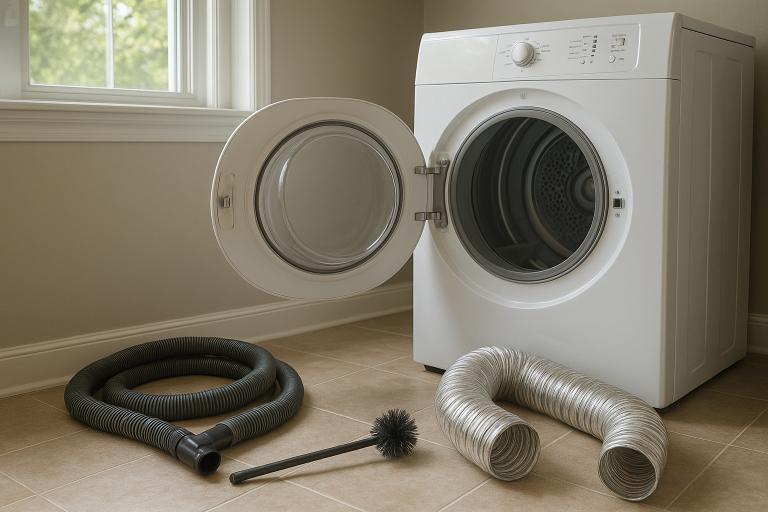
- Vacuum with hose attachment
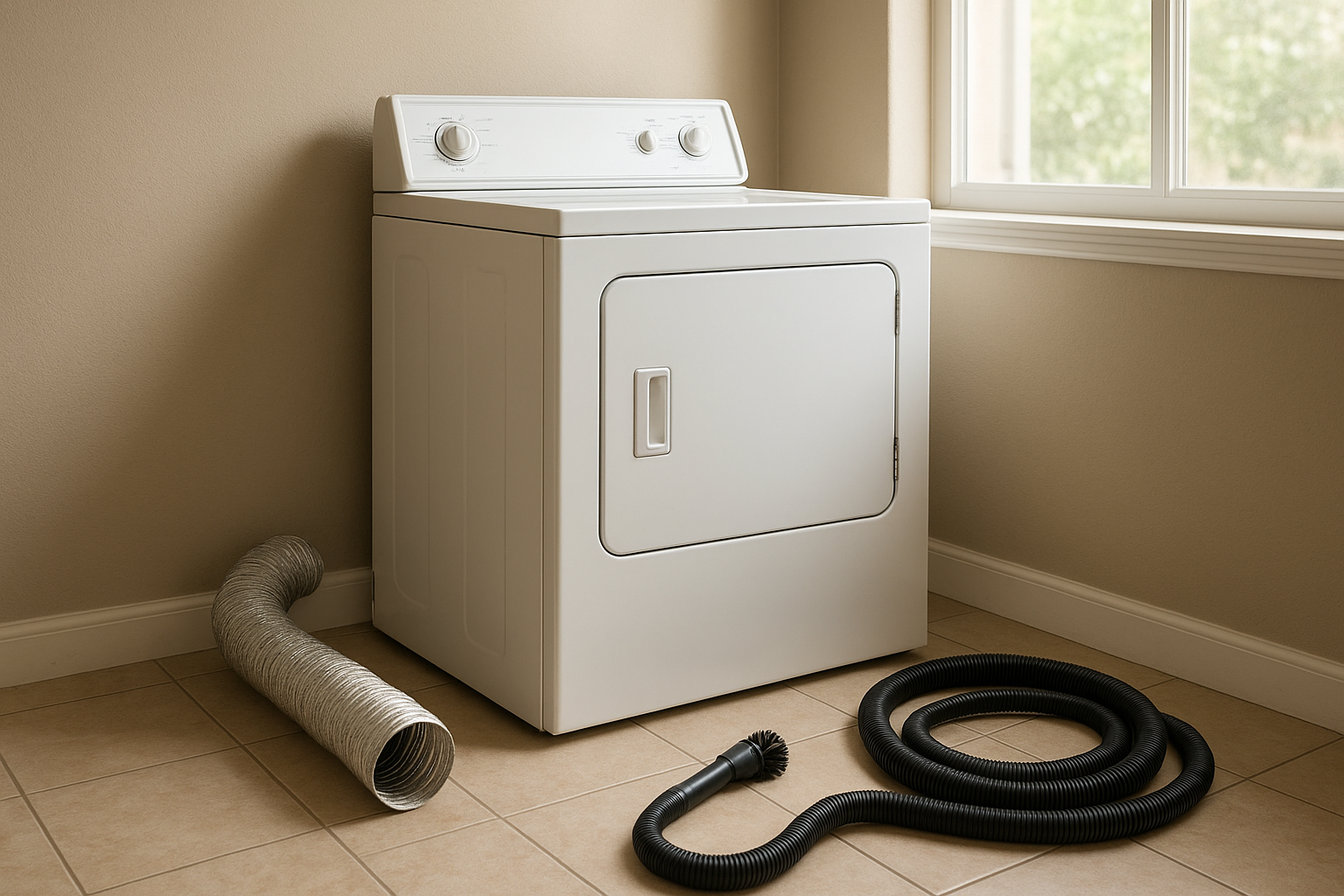
- Dryer vent cleaning brush kit
- Screwdriver or nut driver
- Work gloves
- Flashlight
- Foil HVAC tape, if needed
- Broom or small trash bag for loose lint
Most dryer vent brush kits include flexible rods that screw together. If you plan to use a drill attachment, go slowly and follow the brush kit directions so the rods do not separate inside the duct.
Step-by-Step: How to Clean a Dryer Vent
1. Unplug the dryer
Always start by unplugging the dryer. If you have a gas dryer, do not move it aggressively or strain the gas line. If you are not comfortable working around a gas connection, clean what you can from the exterior vent and call a professional for the interior side.
2. Pull the dryer away from the wall
Gently slide the dryer forward just enough to reach the vent connection. Avoid crushing the duct or yanking the appliance. If the dryer is stacked, built in, or too heavy to move safely, skip the interior disconnect and call for help.
3. Disconnect the vent hose
Loosen the clamp or remove the tape holding the duct to the back of the dryer. Set the clamp aside. Look inside the dryer outlet and the hose with a flashlight. If you see matted lint, vacuum it out before brushing.
4. Vacuum the dryer outlet and floor
Use the vacuum hose to remove lint from the back of the dryer, the dryer outlet, and the floor behind the appliance. Lint behind the dryer can be a dust magnet, so take a minute to clean the area well.
5. Brush the duct from the inside
Insert the dryer vent brush into the duct that leads through the wall. Feed it in slowly, turning as you go. Pull it back out and remove lint from the brush. Repeat until the brush comes back mostly clean.
If your vent run is long, work in sections and add rods as needed. Do not force the brush through a hard bend. A crushed, disconnected, or badly clogged duct is not something to muscle through.
6. Clean from the outside vent
Go outdoors and find the vent hood. Remove lint from the opening by hand or with the vacuum. Then run the brush inward from the exterior side. A proper dryer vent hood should open freely and should not have a screen; screens can catch lint and block airflow. The Building America Solution Center specifically notes that screens should not be used on dryer exhaust ducts because they clog easily with lint. ([basc.pnnl.gov](https://basc.pnnl.gov/diy-guides/clean-dryer-exhaust?utm_source=openai))
7. Reconnect the duct
Reconnect the duct to the dryer outlet and secure it with the clamp. If you need tape, use foil HVAC tape, not cloth duct tape. Push the dryer back carefully, making sure the vent hose is not crushed or kinked.
8. Test the airflow
Plug the dryer back in and run it on an air-only or low-heat setting for a few minutes. Go outside and check that the vent flap opens and air flows strongly. If airflow is still weak, there may be a deeper clog, a crushed duct, or a vent run that needs professional cleaning.
What Not to Do
- Do not ignore burning smells. Stop the dryer and investigate before running another load.
- Do not use screws to join duct sections. Screw tips can catch lint inside the duct.
- Do not vent a dryer into an attic, crawl space, garage, or wall cavity. Dryer exhaust should go outdoors.
- Do not use flimsy plastic ducting. Smooth metal ducting is generally safer and less likely to trap lint than flexible plastic or foil-style hoses.
- Do not block the outside vent. Check for leaves, nests, snow, mulch, or lint mats around the vent hood.
When to Call a Professional
Call a dryer vent professional if the vent is on a second story, exits through the roof, runs a long distance, has several bends, or still has poor airflow after cleaning. You should also call if you find a damaged duct, disconnected duct, bird nest, or heavy clog you cannot reach.
For gas dryers, it is worth being extra cautious. If you smell gas, leave the area and contact your gas utility or emergency services. Do not try to troubleshoot a gas leak yourself.
Simple Habits to Keep the Vent Clear Longer
- Clean the lint screen after every load.
- Keep the area behind and around the dryer free of dust and clutter.
- Shake pet hair from blankets before washing and drying.
- Do not overload the dryer; clothes need room for air to circulate.
- Check the outside vent flap every month or two while the dryer is running.
- Add annual dryer vent cleaning to your fall or spring home maintenance list.
A clean dryer vent is not glamorous, but it is one of the most useful maintenance jobs in the house. If your dryer suddenly feels faster, cooler, and less fussy after cleaning, you will know the effort paid off.