Which Way Should a Ceiling Fan Turn in Winter?
A ceiling fan is not just for hot weather. Used the right way, it can help move warm air that collects near the ceiling back down into the room, making your home feel more comfortable on chilly days.
The key is setting the correct ceiling fan direction in winter and keeping the speed low. Here is how to check it, change it safely, and know when it is actually worth running.
The Short Answer: Clockwise on Low
In winter, most ceiling fans should turn clockwise when viewed from below. ENERGY STAR recommends reversing the motor in winter and running the fan at low speed clockwise to create a gentle updraft. That updraft helps redistribute warm air near the ceiling without creating a strong breeze on your skin. ([energystar.gov](https://www.energystar.gov/products/ceiling_fans/installation-and-usage-tips?utm_source=openai))
In summer, the usual setting is the opposite: counterclockwise, which pushes air downward and creates a cooling breeze. So the simple seasonal rule is: counterclockwise for summer, clockwise for winter. ([energystar.gov](https://www.energystar.gov/products/ceiling_fans/installation-and-usage-tips?utm_source=openai))
Why Fan Direction Matters in Winter
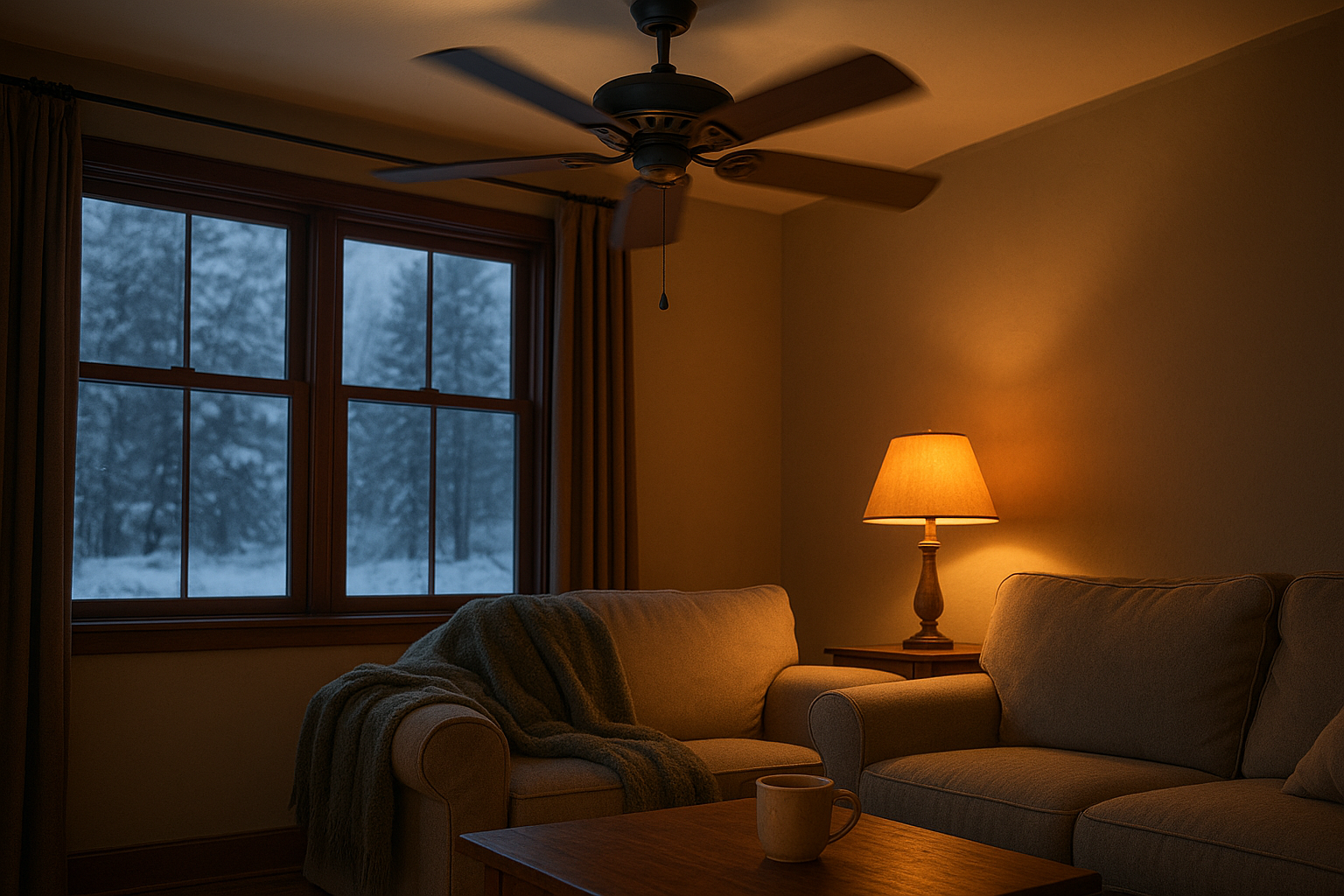
Warm air rises. In a room with a high ceiling, open stairwell, fireplace, or uneven heating, a surprising amount of warmth can sit above head height while the lower part of the room feels cool. A ceiling fan on its winter setting pulls air upward in the center of the room and gently pushes the warmer ceiling air outward and down along the walls.
This does not make the air warmer by itself, and it is not a replacement for heat. What it can do is help even out the temperature in the room. That can be especially helpful in living rooms, bedrooms with vaulted ceilings, rooms over garages, and spaces where the thermostat is in one spot but the comfort problem is somewhere else.
How to Tell Which Way Your Fan Is Spinning
Stand directly under the fan and look up while it is running on the lowest speed. If the blades are moving clockwise, like the hands of a clock, it is set for winter on most standard fans. If they are moving counterclockwise, it is usually on the summer setting.
There is another easy test: stand under the fan for 20 seconds. If you feel a clear downward breeze on your face or shoulders, it is probably still in summer mode or running too fast. In winter, you want subtle air movement, not a draft.
How to Reverse a Ceiling Fan Safely
Ceiling fans vary, but most reverse in one of three ways: a small switch on the fan body, a button on the remote, or a setting in a wall control or smart fan app. Hunter notes that many remote-controlled fans let you change direction with a button, while older or simpler models may have a physical reversing switch on the fan housing. ([hunterfan.com](https://www.hunterfan.com/blogs/hunter-blog/ceiling-fan-direction-for-summer-and-winter?utm_source=openai))
- Turn the fan off. Do not flip the reverse switch while the blades are moving unless your fan manual specifically says that is allowed.
- Wait for the blades to stop completely. This protects the motor and keeps your hands clear of moving blades.
- Find the reversing control. Look on the side of the motor housing above the blades, on the remote, on the wall control, or in the fan’s app.
- Change the direction. Flip the switch or press the reverse button.
- Turn the fan back on low. Check from below that it is spinning clockwise.
If you need a ladder, use a sturdy step ladder on a level floor. Do not stand on a chair, bed, or rolling office chair. If the switch is too high to reach safely, ask for help or use the remote or manual to find another control option.
Use Low Speed, Not High
Low speed is important. ENERGY STAR specifically recommends low-speed clockwise operation in winter because the goal is a gentle updraft, not a noticeable breeze. ([energystar.gov](https://www.energystar.gov/products/ceiling_fans/installation-and-usage-tips?utm_source=openai))
If you run the fan on high, the room may actually feel colder because moving air increases the cooling effect on your skin. That is useful in July, not so helpful in January. Start with the lowest setting. If the room has very high ceilings and the air still feels stagnant, try the next speed up for a short time, then return to low once the room feels more balanced.
When Running a Ceiling Fan in Winter Helps Most
A winter fan setting is most useful in rooms where warm air has somewhere to collect. You are more likely to notice a benefit in:
- Rooms with vaulted or high ceilings
- Two-story living rooms
- Bedrooms that feel chilly near the floor
- Rooms with fireplaces or wood stoves
- Open-plan areas with uneven heat
- Homes where the thermostat shuts off before distant rooms feel comfortable
In a small room with a low ceiling and even heat, the difference may be minor. Try it for an evening and pay attention to comfort at seated height. If you feel drafty, turn it down or turn it off.
Should You Leave the Fan On All Day?
Usually, no. Ceiling fans help people feel more comfortable by moving air; they do not heat the room. ENERGY STAR guidance for fan use emphasizes turning fans off when a room is unoccupied, since the comfort benefit is for people in the space. ([energystarhelp.zendesk.com](https://energystarhelp.zendesk.com/hc/en-us/articles/34537216952723-How-should-I-use-my-ceiling-fan?utm_source=openai))
In winter, run the fan when you are using the room and the air feels layered or stuffy near the ceiling. Turn it off when you leave for work, go to bed in another room, or close off the space for the night.
Common Ceiling Fan Direction Mistakes
Running It Too Fast
If the fan makes you reach for a blanket, it is too fast. Winter mode should be barely noticeable.
Assuming Every Fan Looks the Same
Most standard ceiling fans follow the clockwise-winter rule, but blade shape, motor design, and controls can vary. If your fan has labels such as “summer/winter,” “forward/reverse,” or arrows on the remote, follow those. When in doubt, check the manual for your exact model.
Forgetting to Dust the Blades
Before you reverse the fan for the season, clean the blade tops. Dust can fall when airflow changes direction. Use an old pillowcase slipped over each blade to trap dust, then wipe with a damp microfiber cloth.
Using the Fan to Fix a Bigger Heating Problem
A ceiling fan can help circulate air, but it will not solve leaky windows, blocked vents, dirty filters, or an undersized heating system. If one room stays cold no matter what you do, check for drafts, closed dampers, blocked registers, and filter maintenance.
A Simple Winter Ceiling Fan Checklist
- Set the fan to spin clockwise when viewed from below.
- Use the lowest speed that moves air gently.
- Turn it off before changing direction.
- Clean dusty blades before reversing airflow.
- Use it when the room is occupied, not all day in empty rooms.
- Switch back to counterclockwise when warm weather returns.
Bottom Line
The right ceiling fan direction in winter is usually clockwise on low speed. That setting creates a gentle updraft, nudging warm air off the ceiling and back into the living space without making the room feel breezy.
It is a small seasonal adjustment, but it is worth doing when the weather turns cold. Take two minutes to reverse the fan, keep it low, and your room may feel noticeably more even and comfortable.