How to Clean a Dishwasher Filter So Dishes Stop Feeling Gritty
If your glasses feel gritty, plates have tiny food specks, or the dishwasher smells less than fresh, the filter is one of the first places to check. Many modern dishwashers have a removable filter in the bottom of the tub, and cleaning it takes about 10 minutes once you know where it is.
This guide walks you through how to clean a dishwasher filter safely, how often to do it, and what to look at next if the problem does not go away.
Why the Dishwasher Filter Matters
The dishwasher filter catches food particles, labels, seeds, bits of glass, and other debris before they can recirculate through the wash water or clog the drain area. Whirlpool notes that regular filter cleaning helps keep water flowing strongly and helps prevent food particles from cycling back onto dishes. GE also describes a clean filter as important for efficient dishwasher performance. ([producthelp.whirlpool.com](https://producthelp.whirlpool.com/Dishwashers/Dishwasher/Other/Cleaning_and_Odor/Cleaning_and_Maintenance/Cleaning_the_Filter/Cleaning_the_Removable_Filtration_System_-_Dishwasher?utm_source=openai))
Some older dishwashers have a self-cleaning filter or hard-food disposer instead of a removable filter. If you cannot find a twist-out filter in the bottom of the tub, check your owner’s manual by model number before taking anything apart.
How Often Should You Clean a Dishwasher Filter?
A good household rule is to check the filter once a month if you run the dishwasher most days. GE says fine and ultra-fine filters should be cleaned every other month or more often depending on use, while some Whirlpool guidance recommends monthly cleaning, especially for heavy use or hard water conditions. ([products.geappliances.com](https://products.geappliances.com/appliance/gea-support-search-content?contentId=35611&utm_source=openai))
You may need to clean it more often if you:
- Run the dishwasher daily or more than once a day.
- Scrape dishes lightly instead of rinsing them first.
- Cook with rice, oatmeal, eggs, cheese, or sticky sauces often.
- Have hard water or notice white mineral buildup.
- See grit, food flecks, or cloudy residue after a normal cycle.
What You’ll Need
- Dish gloves, if you prefer
- A soft sponge or dishcloth
- A soft-bristled brush or old toothbrush
- Warm running water
- A small bowl of warm, soapy water
- Paper towel or cloth for wiping the filter well
Avoid stiff wire brushes, knives, harsh scouring pads, or bleach-based cleaners unless your dishwasher manual specifically allows them. The mesh on a filter can be damaged if you scrape it too aggressively.
Step-by-Step: How to Clean a Dishwasher Filter
1. Empty the dishwasher and pull out the bottom rack
Start with an empty, cool dishwasher. Slide the bottom rack all the way out and set it aside. This gives you room to reach the filter without bumping the spray arm or dragging your sleeve through standing water.
2. Find the filter assembly
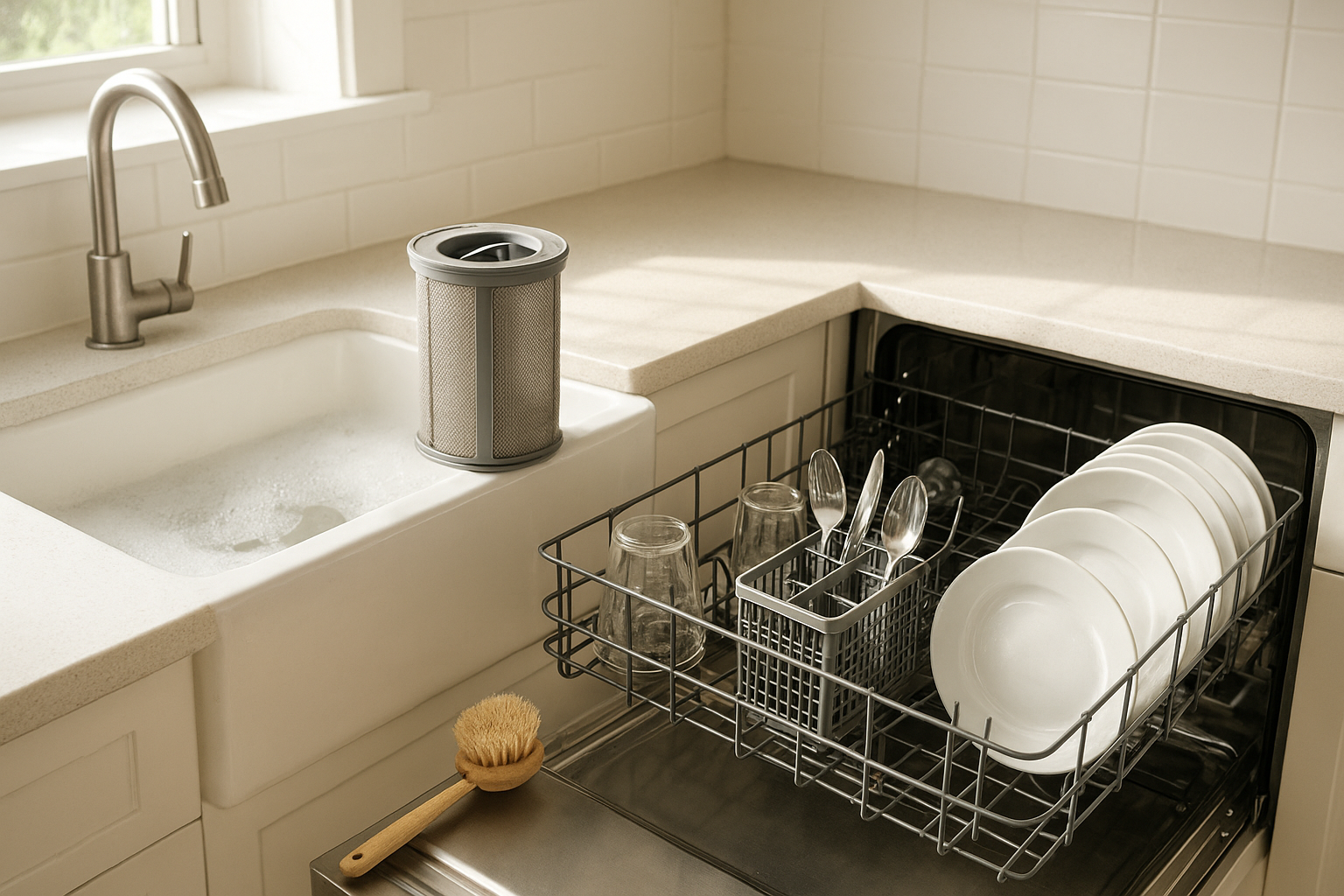
Most removable dishwasher filters sit in the bottom of the tub, usually near the center or back, below the lower spray arm. Many are round or cylindrical and twist to unlock. Some models have two parts: an upper cylindrical filter and a flat lower filter screen.
If the filter does not move easily, stop and look up the manual. Forcing the filter can crack the locking tabs or misalign the lower screen.
3. Unlock and remove the filter
On many machines, you turn the filter counterclockwise, then lift it straight up. Remove any flat screen or lower filter piece if your model has one. Pay attention to how the parts sit together so you can reinstall them the same way.
If there is standing water in the sump area, a small amount can be normal after a cycle. A lot of water, however, may point to a clogged drain hose, blocked air gap, garbage disposal issue, or drain pump problem.
4. Rinse away loose debris
Hold the filter under warm running water. Rinse from the inside and outside to push out soft food particles. Whirlpool’s filter-cleaning guidance recommends rinsing under running water until most soil is removed, and using a soft brush for stuck-on bits or calcium deposits. ([producthelp.whirlpool.com](https://producthelp.whirlpool.com/%40api/deki/pages/16774/pdf/Cleaning%2Bthe%2BFilter%2B-%2BDishwasher.pdf?utm_source=openai))
5. Soak and gently scrub
If the filter feels greasy, let it sit in warm, soapy water for 5 to 10 minutes. Then brush gently along the mesh and plastic frame. Do not poke holes through the screen. For mineral crust, spend a little extra time with the soft brush rather than scraping with metal.
6. Wipe the filter well
Before reinstalling the filter, check the opening where it sits. Remove lemon seeds, twist ties, bits of plastic, broken glass, paper labels, or pasta pieces. Wipe the area with a damp cloth. Be careful if you suspect broken glass; use gloves and lift debris with a paper towel rather than your bare fingers.
7. Reinstall the filter securely
Put the lower screen back first if your dishwasher has one, then set the cylindrical filter into place. Turn it clockwise until it locks. It should sit flat and feel secure. GE warns that filters need to be fully seated because improper replacement can reduce dishwasher performance. ([geappliances.ca](https://geappliances.ca/medias/?context=bWFzdGVyfGltYWdlc3w4ODAxMTAyfGFwcGxpY2F0aW9uL3BkZnxhR0V3TDJoaU5DOHhNREEzTURFeU1UWXhNVEk1TkF8YjE1MjAxMjZlMmQ1YWY5MzBjMzk2YmU5OWUyMjE3M2QyNDNhZWZmZGIyYTEwYmM4OTJkM2UyZTljZTU5ZDY2Ng&utm_source=openai))
8. Run a short test cycle
Replace the bottom rack and run a short rinse or normal cycle with the dishwasher empty or lightly loaded. Listen for normal water movement and make sure the lower spray arm can spin freely.
Common Mistakes to Avoid
- Putting the filter back crooked: If it is not locked in place, debris can bypass the filter and end up on dishes.
- Using a wire brush: It can tear fine mesh and make the filter less effective.
- Ignoring the spray arms: If filter cleaning helps only a little, check spray arm holes for seeds, mineral bits, or paper labels.
- Using regular dish soap: Hand dish soap can create too many suds and may cause leaks or poor rinsing.
- Skipping the manual: Filter designs vary. Your model number is the best guide if the filter does not twist out easily.
If Dishes Still Come Out Gritty
A clean filter solves many gritty-dish problems, but it is not the only possible cause. After cleaning the filter, check these simple fixes:
- Load with space between items. Bowls nested tightly together block water and detergent.
- Make sure the spray arms spin. Tall pans, cutting boards, or utensils can stop them.
- Use the right amount of detergent. Too little may leave soil behind; too much can leave residue, especially in soft water.
- Run hot water at the sink first. Starting with hot water can help the dishwasher begin the cycle at a better temperature.
- Check for hard water film. White haze may be mineral buildup rather than leftover food.
When to Call for Repair
Call an appliance technician if the dishwasher still will not drain, leaves standing water after every cycle, makes grinding noises, leaks from the door, or shows an error code after the filter has been cleaned and reinstalled correctly. Those symptoms can point to a drain pump, hose, float, or control issue rather than simple filter maintenance.
The Simple Monthly Habit
Once you have cleaned the filter the first time, it becomes a quick kitchen chore. Add it to your monthly cleaning list: pull the bottom rack, twist out the filter, rinse, brush, wipe the well, and lock it back in place.
It is not glamorous, but it is one of the easiest ways to help your dishwasher do its job. Clean water flow, fewer odors, and fewer gritty surprises on clean plates are worth the few minutes it takes.