How to Clean a Humidifier Before Winter Use
Before you run a humidifier for the first dry week of winter, give it a real cleaning—not just a quick rinse. Stale water, mineral scale, and hidden film can build up in the tank and base, and a dirty humidifier can send unwanted particles into the room along with the mist.
The good news is that cleaning one is simple if you separate the job into three parts: descale, disinfect, and dry. Here is a practical, step-by-step guide for getting a portable humidifier ready before heating season.
Why You Should Clean a Humidifier Before Winter
A humidifier is one of those appliances that often gets put away in a hurry in spring and pulled out again when the house feels dry. But water left in small crevices can leave behind mineral deposits, musty odors, or slick residue. The EPA recommends using and maintaining home humidifiers carefully because microorganisms and minerals can be dispersed from some units if they are not cleaned properly. It also recommends low-mineral water, such as distilled water, to reduce mineral release into the air. ([epa.gov](https://www.epa.gov/indoor-air-quality-iaq/use-and-care-home-humidifiers?utm_source=openai))
Mayo Clinic’s current guidance is plain: keep humidifiers clean, clean them every three days when in use, and remove mineral buildup or film from the tank and other parts. That makes a pre-season cleaning especially worthwhile if the machine has been sitting unused for months. ([mayoclinic.org](https://www.mayoclinic.org/diseases-conditions/common-cold/in-depth/humidifiers/art-20048021?utm_source=openai))
What You’ll Need
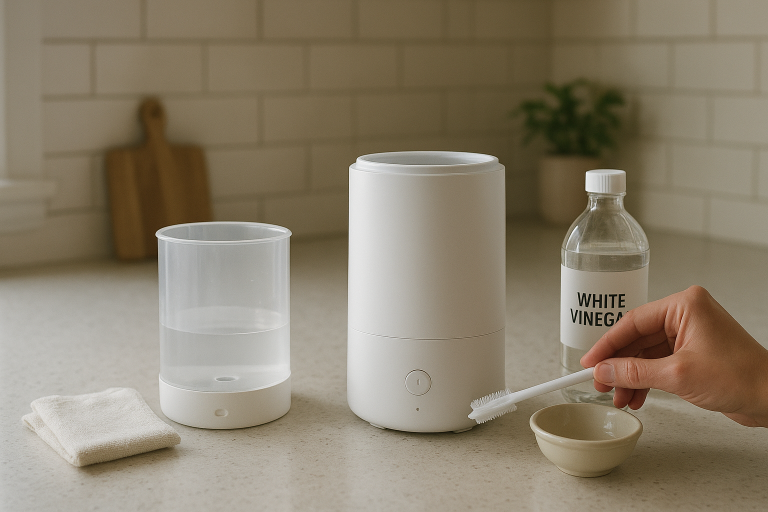
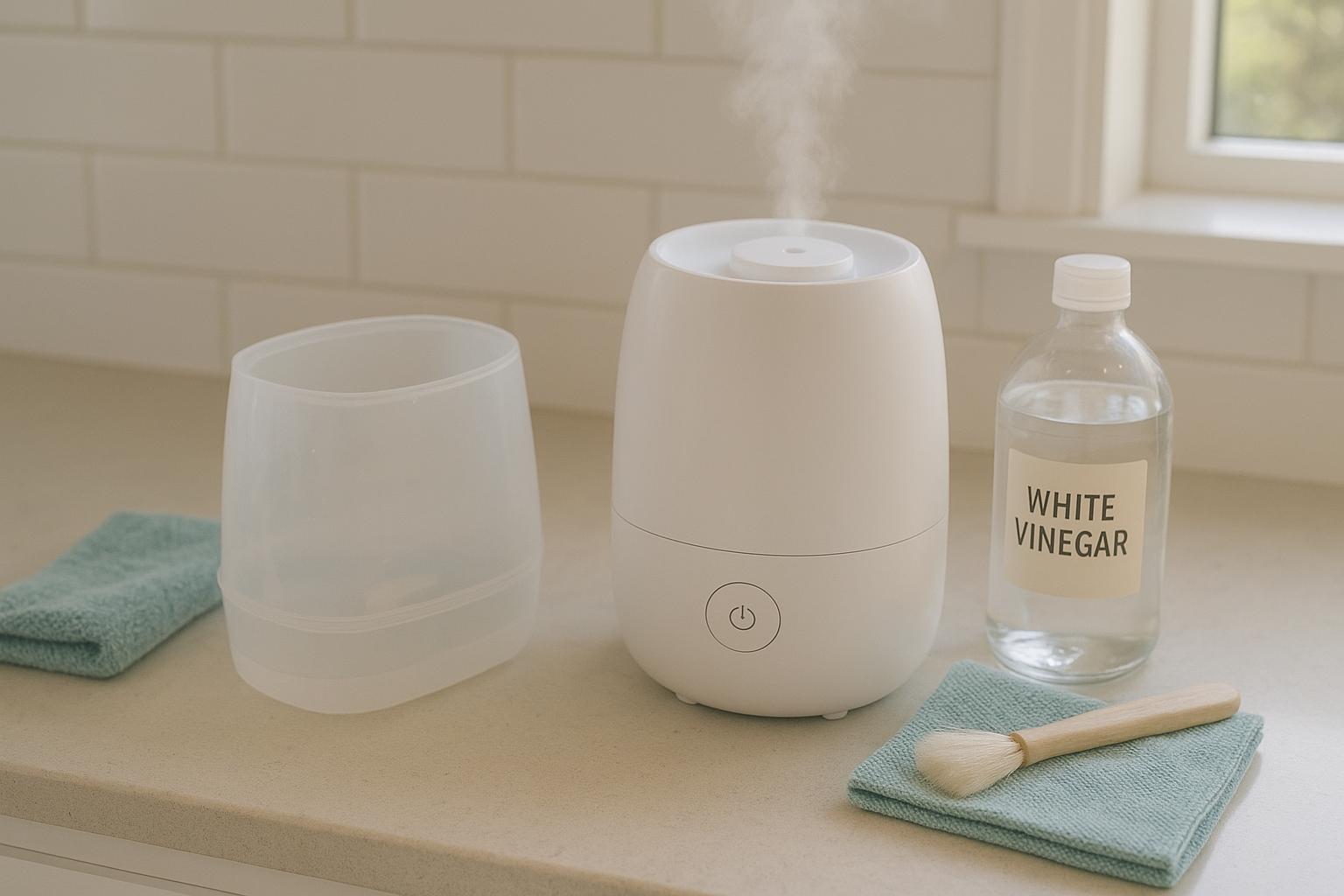
- White distilled vinegar
- 3% hydrogen peroxide, or the disinfectant recommended in your owner’s manual
- A soft bottle brush, old toothbrush, or small detail brush
- Microfiber cloths or clean cotton towels
- Warm water
- Gloves, especially if your skin is sensitive
- Your humidifier manual, if you still have it
Important: Do not mix vinegar with hydrogen peroxide, bleach, or other cleaners. Use one cleaning step at a time, rinse thoroughly between steps, and work in a ventilated area. The EPA specifically advises rinsing the tank thoroughly with several changes of tap water after using any cleaning or disinfecting agent so chemicals are not dispersed into indoor air during use. ([epa.gov](https://www.epa.gov/indoor-air-quality-iaq/use-and-care-home-humidifiers?utm_source=openai))
Step 1: Unplug and Take the Humidifier Apart
Unplug the humidifier before doing anything else. Remove the tank, cap, mist nozzle, tray, filter, wick, cartridge, and any removable covers your model allows. Pour out old water from the tank and base.
If your humidifier has a wick filter, inspect it closely. If it is stiff, discolored, crusted with minerals, smells sour, or has been stored wet, replacement is usually better than trying to revive it. Many manufacturers treat filters as seasonal or regular replacement parts, so check the manual for your exact model.
Step 2: Rinse Loose Dust and Debris
Rinse the tank and removable plastic parts with warm water. Swish water around the tank, dump it, and repeat until the water runs clear. Wipe the outside of the machine, too. Dust around the intake or fan area can reduce performance and may blow around once the unit starts running.
Do not submerge the motor base unless your manual says it is safe. For most portable humidifiers, the electrical base should be wiped carefully rather than dunked.
Step 3: Descale With Vinegar
Mineral scale looks like white, gray, or chalky crust. It is especially common if you use tap water. To loosen it, fill the tank with enough white vinegar to wet the scaled areas, then let it sit for 20 to 30 minutes. For the base or tray, pour in just enough vinegar to cover the mineral deposits while keeping liquid away from vents, cords, and electrical openings.
After soaking, scrub gently with a bottle brush or toothbrush. Pay attention to corners, the tank cap, the water channel, and the small areas around the float or valve. If scale remains, repeat the vinegar soak instead of scraping with anything sharp. Scratches can create places for residue to cling later.
When the scale is loosened, pour out the vinegar and rinse several times with clean water. If the vinegar smell is strong, keep rinsing. The goal is a clean machine, not vinegar-scented mist.
Step 4: Disinfect the Tank and Base
Once the mineral buildup is gone, disinfect the water-contact parts. Mayo Clinic notes that a 3% hydrogen peroxide solution can be used to remove mineral buildup or film from humidifier parts, and many people use it as a simple disinfecting step for the tank and base. Always follow your model’s instructions first, especially if the manual names a specific cleaner or warns against certain products. ([mayoclinic.org](https://www.mayoclinic.org/diseases-conditions/common-cold/in-depth/humidifiers/art-20048021?utm_source=openai))
Pour enough 3% hydrogen peroxide into the tank to coat the interior surfaces. Swish it around, let it sit for about 10 to 15 minutes, then empty it. Do the same for the base reservoir, using only enough liquid to contact the water-holding area. Scrub any remaining slimy spots gently.
Rinse thoroughly afterward with several changes of water. This rinse matters. Any leftover cleaner can become part of the mist the next time you run the humidifier.
Step 5: Dry Everything Completely
Set all removable pieces on a clean towel and let them air-dry fully. Wipe the base with a dry cloth, then leave it open for air circulation. Do not reassemble the humidifier while parts are still damp unless you are filling and using it right away.
If you are cleaning it before the season starts but do not plan to use it for a few days, store it dry with the tank cap loosened or off. Trapped moisture is one reason a freshly cleaned humidifier can smell musty by the time you need it.
How Often to Clean It During Winter
For regular winter use, build a small routine. Empty the tank daily, wipe surfaces dry when you can, and refill with fresh water. The EPA recommends emptying the tank, drying all surfaces, and refilling portable humidifiers daily; it also advises cleaning portable humidifiers every third day. ([epa.gov](https://www.epa.gov/indoor-air-quality-iaq/use-and-care-home-humidifiers?utm_source=openai))
That may sound frequent, but it is much easier to clean a lightly used humidifier every few days than to rescue one with thick scale and stale water film after several weeks.
Use the Right Water
If your humidifier leaves white dust on nearby furniture, tap water minerals are a likely reason. Ultrasonic and impeller humidifiers are especially known for dispersing minerals from water into the room. The EPA recommends water with lower mineral content, such as distilled water, and says demineralization cartridges or filters may help when supplied or recommended by the manufacturer. ([epa.gov](https://www.epa.gov/indoor-air-quality-iaq/use-and-care-home-humidifiers?utm_source=openai))
Distilled water costs more than tap water, but it can reduce scale inside the machine and cut down on the fine white residue around it. If you use tap water, expect to descale more often.
Don’t Over-Humidify the Room
A clean humidifier still needs to be used wisely. Too much humidity can make windows sweat, dampen walls, and encourage mold growth. Mayo Clinic recommends keeping humidity between 30% and 50%, and notes that humidity above that range can promote growth of organisms such as dust mites and mold. ([mayoclinic.org](https://www.mayoclinic.org/diseases-conditions/common-cold/in-depth/humidifiers/art-20048021?utm_source=openai))
A small digital hygrometer is inexpensive and more reliable than guessing. If you see condensation on windows or dampness around the humidifier, turn the unit down, move it to a better location, or run it for shorter periods.
Common Mistakes to Avoid
- Leaving water in the tank for days. Empty and refill with fresh water daily during use.
- Using harsh cleaner without rinsing. Any cleaner left behind can be released when the humidifier runs.
- Scrubbing with metal tools. Scratches can damage plastic and make future buildup worse.
- Ignoring the filter or wick. A dirty wick can make the whole unit smell bad even after the tank is clean.
- Storing it wet. At the end of the season, clean it, dry it completely, and store it open if possible.
Quick Winter-Ready Checklist
- Unplug and disassemble the humidifier.
- Dump old water and rinse loose debris.
- Soak mineral scale with white vinegar.
- Scrub gently and rinse well.
- Disinfect water-contact parts with 3% hydrogen peroxide or the cleaner your manual recommends.
- Rinse with several changes of water.
- Air-dry completely before storing or refilling.
- Use distilled water if mineral dust or scale is a problem.
A humidifier can make winter air feel much more comfortable, but only if the machine itself stays clean. Give it a thorough reset before the first cold stretch, then keep up with quick daily emptying and a deeper clean every few days. Your humidifier will run better, smell fresher, and be much easier to maintain all season.