How to Clean a Dryer Vent the Right Way
If your dryer suddenly needs two cycles to dry towels, the problem may not be the machine. A clogged dryer vent can slow drying, waste energy, overheat the dryer, and create a real fire risk.
The good news: many homeowners can handle basic dryer vent cleaning with a vacuum, a vent brush kit, and a little patience. Here is how to clean a dryer vent safely, plus the signs that mean it is time to stop and call a professional.
Why dryer vent cleaning matters
Every load of laundry sheds lint. The lint screen catches a lot of it, but not all of it. Some lint moves through the dryer’s exhaust path and can collect in the transition hose, wall duct, elbows, and outside vent hood.
The U.S. Fire Administration has reported that failure to clean was the leading factor contributing to ignition in residential clothes dryer fires, and that dust, fiber, and lint were among the leading items first ignited. That does not mean you need to panic, but it does mean dryer lint deserves the same kind of routine attention as smoke alarms and furnace filters. ([usfa.fema.gov](https://www.usfa.fema.gov/downloads/pdf/statistics/v13i7.pdf?utm_source=openai))
Cleaning also helps your dryer work better. ENERGY STAR recommends cleaning the lint filter after every load to improve air circulation and efficiency, and it notes that dryer sheet residue can reduce airflow through the screen over time. ([energystar.gov](https://www.energystar.gov/products/clothes_dryers?utm_source=openai))
Signs your dryer vent is clogged
You do not have to wait for a total blockage. Watch for these common warning signs:
- Clothes take longer than usual to dry, especially towels, jeans, or bedding.
- The dryer feels unusually hot on the top or sides during a cycle.
- The laundry room feels humid or warmer than normal while the dryer runs.
- Clothes smell musty or slightly scorched after drying.
- The outside vent flap barely opens when the dryer is running.
- Lint collects around the outside vent hood or behind the dryer.
- The dryer shuts off mid-cycle, which can happen when overheating protections kick in.
If you notice a burning smell, turn the dryer off right away and do not use it again until the cause is found.
What you will need
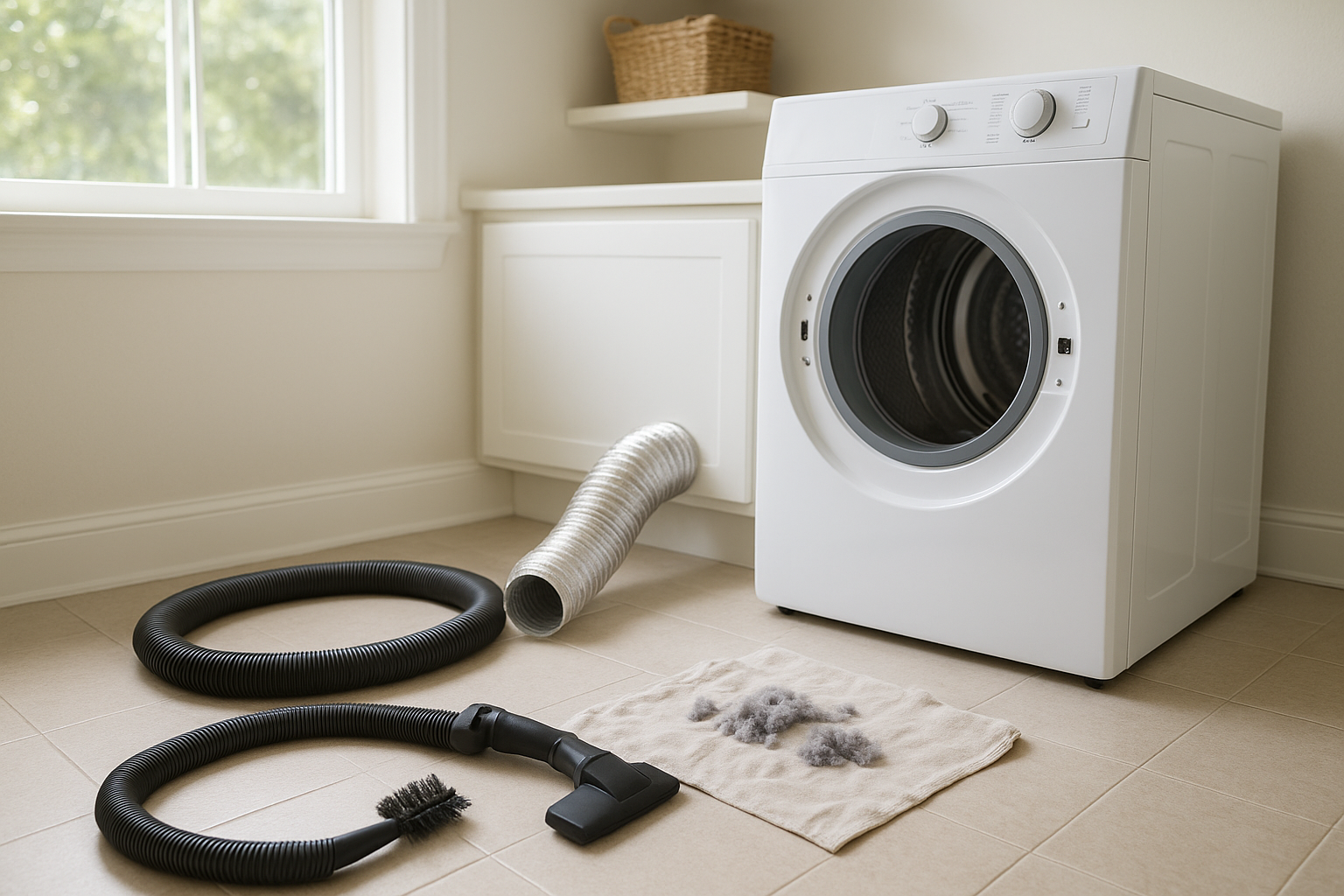
- Vacuum with hose attachment
- Dryer vent brush kit or long flexible lint brush
- Screwdriver or nut driver, depending on your vent clamp
- Work gloves
- Flashlight
- Microfiber cloth
- Foil HVAC tape, if a duct joint needs resealing
A dryer vent brush kit with flexible rods is useful for longer runs. Choose one meant for dryer ducts, and read the instructions before attaching it to a drill. If your vent line has sharp turns, go slowly so you do not disconnect or damage the duct inside the wall.
Step-by-step: how to clean a dryer vent
1. Unplug the dryer
For an electric dryer, unplug it before you start. For a gas dryer, unplug the power cord and be careful not to disturb the gas line when you pull the appliance forward. If you smell gas at any point, stop, leave the area, and call your gas utility or a qualified technician.
2. Pull the dryer away from the wall
Move the dryer just far enough to reach the vent connection without stretching cords, hoses, or gas lines. This is often where you find the first surprise: a crushed flexible hose, a loose clamp, or a thick mat of lint behind the appliance.
3. Disconnect the transition hose
Loosen the clamp that holds the hose to the dryer outlet. Remove the hose gently. If the hose is torn, crushed, or made from flimsy plastic or foil, plan to replace it with a safer, more durable transition duct approved for dryer use.
4. Vacuum the dryer outlet and hose
Use your vacuum hose to remove lint from the dryer outlet, the detached transition hose, and the floor behind the dryer. Do not shove the vacuum attachment deep into the dryer if it does not fit easily. The goal is to remove loose lint, not damage internal parts.
5. Brush the wall duct
Insert the dryer vent brush into the wall duct and work it in slowly. Rotate the brush as you go, pulling it back often to remove lint. If you are using drill-powered rods, use a low speed and keep the drill rotating in the direction recommended by the kit so the rods do not unscrew inside the duct.
Dryer exhaust should move outdoors through a short, smooth, direct route when possible. Building America guidance favors smooth, rigid metal ducting because some spiral or flexible designs can trap lint and reduce airflow. ([basc.pnnl.gov](https://basc.pnnl.gov/resource-guides/proper-clothes-dryer-venting?utm_source=openai))
6. Clean the outside vent hood
Go outside and find the dryer vent outlet. Remove lint from the hood and make sure the flap opens freely. Clear away leaves, snow, mulch, vines, bird nesting material, or anything else blocking airflow.
A dryer vent should not be covered with fine mesh screening. It may seem like a good way to keep pests out, but it can catch lint quickly and create a blockage. Use a proper dryer vent hood with a working damper instead.
7. Reconnect and test
Reconnect the transition hose, tighten the clamp, and avoid crushing the hose when you slide the dryer back. Plug the dryer in. Run it on an air-only or low-heat setting for a few minutes, then check outside. You should feel steady airflow and see the vent flap opening.
Do not skip the lint screen
Cleaning the vent once in a while will not help much if the lint screen is neglected. Clean the lint filter after every load. Once a month, especially if you use dryer sheets, wash the screen with warm water and a little dish soap, scrub it gently with a soft brush, rinse, and let it dry completely before putting it back. ENERGY STAR specifically notes that dryer sheets can leave a film on the lint filter that affects airflow. ([energystar.gov](https://www.energystar.gov/products/clothes_dryers?utm_source=openai))
Here is a quick test: hold the lint screen under running water. If water pools on top instead of flowing through, residue may be clogging the mesh.
How often should you clean a dryer vent?
For many homes, a thorough dryer vent cleaning once a year is a sensible starting point. Clean it sooner if you dry several loads a day, have pets, wash lots of fuzzy blankets or towels, or notice longer drying times.
You should also inspect the outside vent seasonally. In fall and winter, leaves, snow, and nesting debris can block the vent hood. USFA data found clothes dryer fires in residential buildings were more common in fall and winter months, with January the peak month in the report period. ([usfa.fema.gov](https://www.usfa.fema.gov/downloads/pdf/statistics/v13i7.pdf?utm_source=openai))
When to call a professional
Some dryer vents are simple: the dryer backs up to an exterior wall and vents straight outside. Others run up through a wall, across a ceiling, or out the roof. Call a professional if:
- The duct run is long, hidden, or vents through the roof.
- You cannot get strong airflow after cleaning.
- The vent brush gets stuck or you suspect a disconnected duct.
- You see signs of birds, rodents, or nesting material.
- The dryer still overheats after the vent is clear.
- You have a gas dryer and are not comfortable moving it.
Also call for service if the dryer makes unusual noises, displays an error code, or shuts down repeatedly. A clogged vent is common, but it is not the only possible problem.
A simple dryer safety routine
Once the vent is clean, keep it that way with a few small habits:
- Clean the lint screen after every load.
- Wash the lint screen monthly if you use dryer sheets.
- Keep the area behind and around the dryer free of lint, boxes, and cleaning rags.
- Check the outside vent flap every month or two while the dryer is running.
- Do not run the dryer when you are asleep or away from home.
- Replace crushed, torn, or sagging transition duct.
The Consumer Product Safety Commission advises cleaning the dryer vent and exhaust duct periodically to help prevent lint buildup and overheating. ([cpsc.gov](https://www.cpsc.gov/s3fs-public/5022.pdf?utm_source=openai))
The bottom line
Learning how to clean a dryer vent is one of those unglamorous home chores that pays you back quickly. Your laundry dries faster, your dryer does not have to work as hard, and you reduce a preventable household fire risk.
Start with the lint screen, check the outside vent, and give the duct a real cleaning at least once a year. If the setup is hard to reach or the dryer still struggles afterward, bring in a qualified dryer vent or appliance pro before the next load.