How to Clean a Greasy Range Hood Filter
If your range hood sounds busy but barely pulls steam, the grease filter may be overdue for a wash. The good news: most metal mesh and baffle filters can be cleaned in the sink with hot water, degreasing dish soap, baking soda, and a soft brush.
This is one of those small kitchen chores that pays off quickly. A clean filter helps the fan move air better, reduces greasy odors, and keeps sticky buildup from spreading across the underside of the hood.
Before You Start: Know What Kind of Filter You Have
This guide is for metal grease filters, usually aluminum mesh, stainless steel mesh, or stainless baffle filters. These are common under range hoods and over-the-range microwaves.
Do not wash a charcoal filter this way. Charcoal filters are usually used in ductless or recirculating hoods and are meant to be replaced, not scrubbed clean. If you are not sure which type you have, check your owner’s manual before soaking or dishwashing anything. Appliance makers also recommend checking the manual because cleaning methods and dishwasher safety can vary by model. ([whirlpool.com](https://www.whirlpool.com/blog/kitchen/range-hood-maintenance.html?utm_source=openai))
How Often Should You Clean a Range Hood Filter?
A practical rule for many busy kitchens is about once a month, especially if you fry, sear, sauté, or cook with oil several nights a week. Broan-NuTone says aluminum mesh grease filters should be washed in the dishwasher approximately every month, depending on use, and Wolf gives a monthly cleaning recommendation for aluminum mesh hood filters. ([help.broan-nutone.com](https://help.broan-nutone.com/en/range-hoods/How-often-should-I-clean-my-filters-79f5?utm_source=openai))
If you cook lightly, you may be able to stretch it longer. If your filter feels tacky, looks amber or brown, drips grease, smells stale when the fan runs, or lets smoke linger, clean it now.
Supplies You’ll Need
- Rubber gloves
- A sink, dishpan, or rimmed baking sheet large enough for the filter
- Very hot water
- Degreasing dish soap
- Baking soda
- Soft dish brush or old toothbrush
- Microfiber cloth or clean towel
- Optional: non-abrasive degreaser approved for your hood finish
Step-by-Step: How to Clean a Greasy Range Hood Filter
1. Turn off the fan and let the cooktop cool
Make sure the range hood fan and light are off. If you have been cooking, wait until the burners, grates, and hood area are cool enough to work around safely.
2. Remove the filter carefully
Most filters slide, tilt, or release with a small tab. Support the filter with one hand as you unlatch it so it does not drop onto the cooktop. If there is loose grease along the edges, carry it flat to the sink.
3. Fill the sink with very hot, soapy water
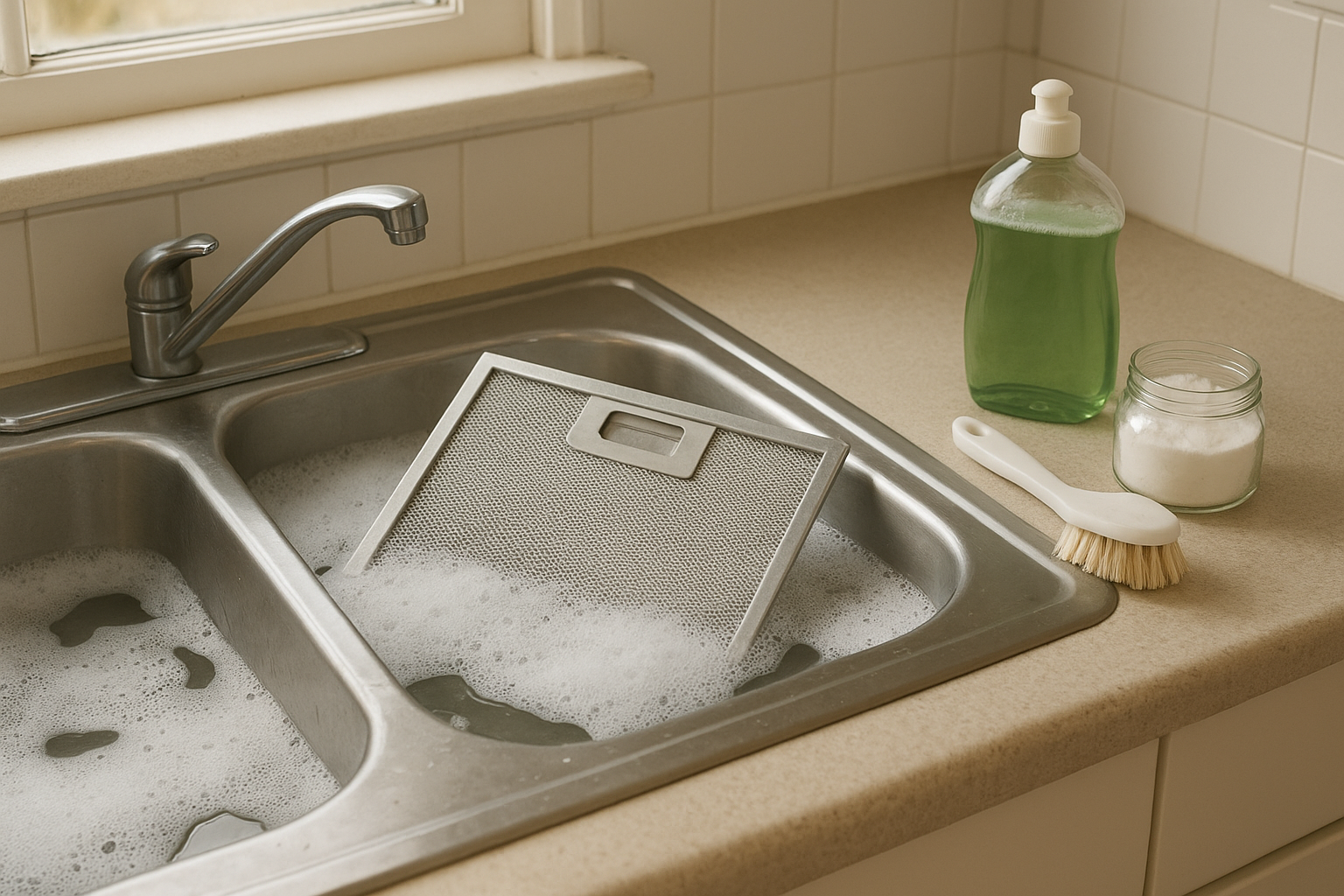
Plug the sink and add enough very hot water to cover the filter. Add 1 to 2 tablespoons of degreasing dish soap and about 1/2 cup baking soda. Whirlpool describes a similar hand-washing method using boiling water, degreasing dish liquid, and 1/2 cup of baking soda for range hood filters. ([whirlpool.com](https://www.whirlpool.com/blog/kitchen/range-hood-maintenance.html?utm_source=openai))
If your sink cannot fit the whole filter, use the largest pan you have and clean one half at a time. For delicate aluminum mesh, avoid harsh scrubbing pads that can bend or fray the layers.
4. Soak for 15 to 30 minutes
Lower the filter into the solution and let it soak. Light buildup may loosen in 15 minutes. A neglected filter may need 30 minutes, or even a second fresh soak if the water turns dark and greasy quickly.
For very greasy filters, drain the dirty water halfway through and mix a fresh batch. Grease redeposits easily when the water gets oily, so a second soak can make the job much easier.
5. Scrub gently with the grain or mesh
Use a soft brush to work along the mesh or baffle channels. Do not crush aluminum mesh by pressing too hard. Pay attention to the corners and the frame, where grease often hides.
If you are cleaning baffle filters, brush along the channels where grease collects. If you are cleaning mesh, use small strokes and rinse from both sides to push loosened grease out instead of deeper into the layers.
6. Rinse well
Rinse the filter under hot running water until it no longer feels slippery. Hold it up and check for dull, sticky patches. If you still see clogged areas, repeat the soak and scrub rather than using a sharp tool.
7. Dry completely before reinstalling
Shake off excess water and set the filter on a towel or drying rack. Let it dry fully before putting it back. Reinstalling a wet filter can drip onto the cooktop and may leave water trapped in seams.
Can You Put a Range Hood Filter in the Dishwasher?
Sometimes, yes—but check the manual first. GE Appliances says dishwasher cleaning is acceptable for metal grease filters, though discoloration may happen. Broan-NuTone also notes that aluminum mesh filters can be washed in the dishwasher and that discoloration may occur without affecting performance. ([products.geappliances.com](https://products.geappliances.com/appliance/gea-support-search-content?contentId=16685&utm_source=openai))
Use the dishwasher for regular maintenance, not as a miracle fix for a filter packed with months of sticky grease. If the filter is heavily coated, hand-soak it first so you do not send a lot of grease through the dishwasher.
Skip heated dry if your manual warns against it, and keep aluminum filters away from harsh cycles unless the manufacturer says they are safe. Some detergents and water conditions can darken aluminum, even when the filter still works fine.
Clean the Hood While the Filter Soaks
While the filter is soaking, wipe the underside of the hood. Spray cleaner on a cloth rather than directly into the fan, controls, or light area. Use warm soapy water for light grease or a manufacturer-approved degreaser for stubborn film.
For stainless steel exteriors, wipe with the grain and avoid abrasive powders or rough pads. If grease has collected around the filter slot, soften it with a damp, warm cloth first, then wipe it away in layers.
What Not to Do
- Do not use oven cleaner unless your range hood manual specifically allows it. It can damage finishes and aluminum.
- Do not mix cleaning chemicals. Dish soap and baking soda are enough for most filters.
- Do not scrub with steel wool on aluminum mesh or finished stainless surfaces.
- Do not reinstall a damp filter over a hot cooktop.
- Do not wash charcoal filters. Replace them according to your model’s instructions.
When to Replace the Filter Instead
Cleaning can remove grease, but it cannot fix a damaged filter. Replace the filter if the mesh is torn, the frame is warped, it no longer locks into place, or grease remains trapped after repeated soaking. Whirlpool notes that damaged mesh, warped covers, loose-fitting panels, or recurring vibration are signs that range hood parts may need attention. ([whirlpool.com](https://www.whirlpool.com/blog/kitchen/range-hood-maintenance.html?utm_source=openai))
You should also replace a filter that has been cleaned with the wrong chemical and has started to corrode, shed pieces, or leave residue behind.
A Simple Monthly Habit
The easiest way to keep this chore from becoming unpleasant is to clean the filter before it looks terrible. Add it to a monthly kitchen reset: run the dishwasher empty or clean the sink, soak the hood filter, wipe the underside of the hood, and let everything dry before dinner prep.
If you fry bacon, sear steaks, or cook with a wok often, check the filter every two weeks. A quick soak now is much easier than wrestling with a sticky, amber-coated filter later.