How to Store Potatoes So They Don’t Sprout
Potatoes are one of the best pantry staples—until you reach into the bag and find long sprouts, soft spots, or green skin. The good news is that a few simple storage changes can keep potatoes firm and usable much longer.
If you want to know how to store potatoes so they don’t sprout, focus on four things: cool temperature, darkness, airflow, and keeping them away from the wrong neighbors.
The Best Place to Store Potatoes
Potatoes keep best in a place that is cool, dark, humid, and well ventilated. Iowa State University Extension notes that potatoes are ideally stored around 40°F with high relative humidity, and that tubers often begin to sprout when storage temperatures rise above 50°F. Oregon State University Extension gives a similar home-storage range of about 40°F to 46°F for table potatoes after curing. ([yardandgarden.extension.iastate.edu](https://yardandgarden.extension.iastate.edu/faq/why-are-my-potatoes-beginning-sprout?utm_source=openai))
Most homes do not have a perfect potato cellar, and that is okay. Your goal is simply to choose the coolest practical spot that does not freeze:
- A basement shelf
- A cool mudroom
- An unheated pantry that stays above freezing
- A garage cabinet only if temperatures stay steady and safely above freezing
- A dark lower kitchen cabinet, if that is your only option
Avoid warm spots like the top of the refrigerator, near the oven, under the sink next to hot pipes, or beside a sunny window. Warmth tells potatoes it is time to grow, which means sprouting.
Don’t Store Potatoes in the Refrigerator
It is tempting to put potatoes in the fridge, but that is usually not the best choice for everyday storage. Penn State Extension explains that cold temperatures can convert potato starch to sugar, and the FDA advises against storing potatoes in the refrigerator because it can increase sugars that may contribute to acrylamide formation during high-heat cooking such as frying or roasting. ([extension.psu.edu](https://extension.psu.edu/canning-potatoes?utm_source=openai))
Refrigerated potatoes can also cook up darker and taste sweeter than expected. If your potatoes accidentally get chilled, let them sit at room temperature for a few days before cooking, especially if you plan to roast or fry them.
Use a Breathable Container, Not a Sealed Bag
Potatoes are still living vegetables after harvest. They need airflow to reduce moisture buildup and slow spoilage. A sealed plastic bag traps condensation, which can encourage soft spots and rot.
Better potato storage containers include:
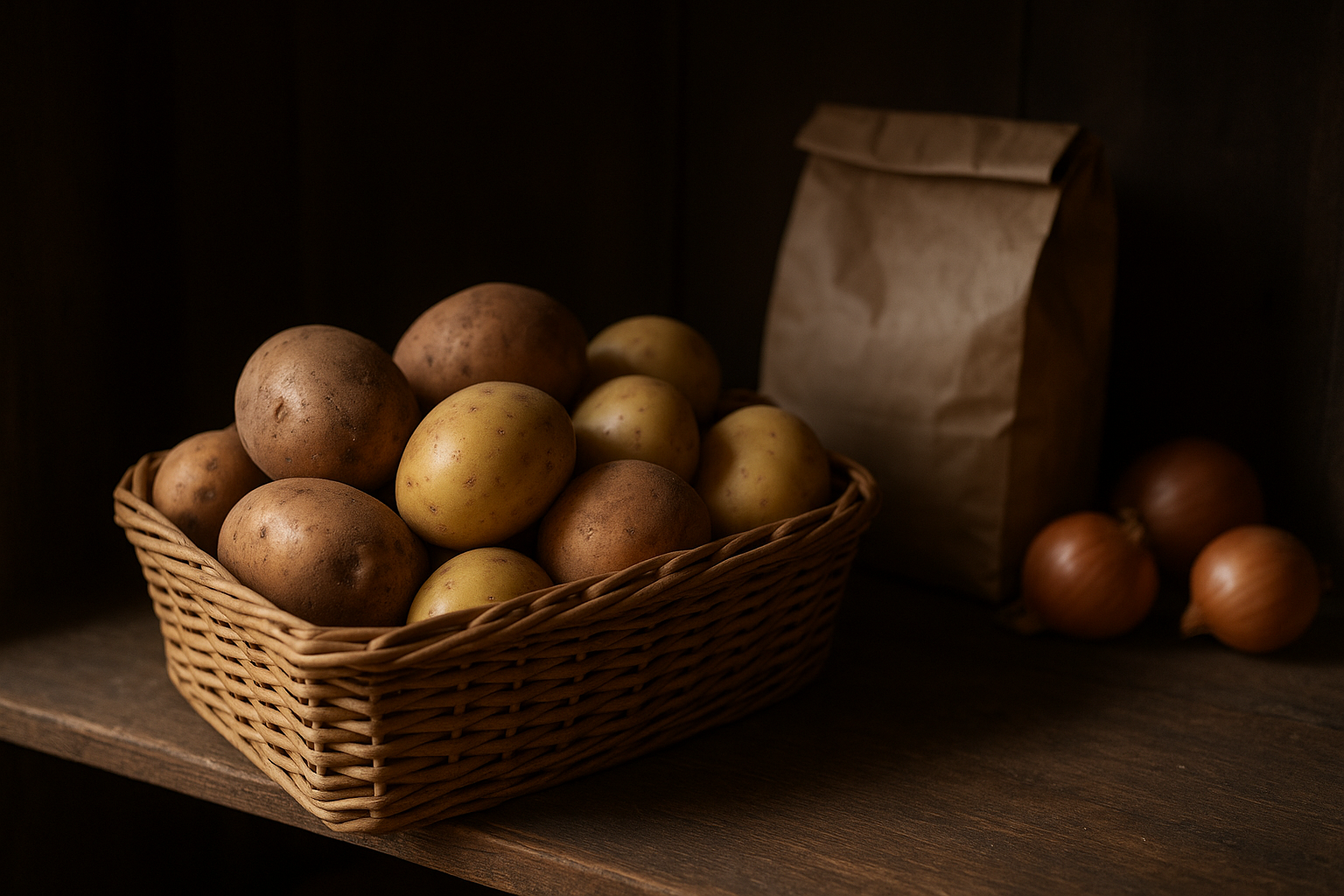
- A paper bag with the top loosely folded
- A cardboard box with ventilation holes
- A wire basket kept in a dark cupboard
- A burlap sack
- A wooden crate lined with newspaper
If your potatoes came in a plastic bag, remove them when you get home. If the plastic bag has many ventilation holes and you will use the potatoes quickly, it is less of a problem, but for longer storage, breathable is better.
Keep Potatoes in the Dark
Light exposure can make potatoes turn green. The green color itself is chlorophyll, but it can signal increased glycoalkaloids such as solanine, which are bitter and can be toxic in high amounts. University of Maryland Extension notes that green portions of potatoes are associated with solanine, and Oregon State Extension explains that greening often signals solanine presence even though chlorophyll itself is harmless. ([extension.umd.edu](https://extension.umd.edu/resource/growing-potatoes-home-garden?utm_source=openai))
That is why a clear bowl on the counter is one of the worst ways to store potatoes. It looks charming for a day or two, but it exposes them to light and room warmth.
For better storage, use a dark cabinet, a closed pantry, or an opaque bag or box. If you use a basket, tuck it into a cupboard rather than leaving it on the counter.
Store Potatoes Away from Onions
Potatoes and onions are often stored together, but they are not ideal roommates. Iowa State University Extension notes that ethylene can promote potato sprouting. Onions and many fruits release ethylene, so it is wise to give potatoes their own storage area. ([yardandgarden.extension.iastate.edu](https://yardandgarden.extension.iastate.edu/faq/why-are-my-potatoes-beginning-sprout?utm_source=openai))
Keep potatoes away from:
- Onions
- Apples
- Bananas
- Pears
- Ripening tomatoes
You do not need a separate room. Even different shelves or opposite sides of the pantry are better than piling onions and potatoes in the same bin.
Should You Wash Potatoes Before Storing?
No. Do not wash potatoes before putting them away. Moisture encourages spoilage, especially if potatoes are then stored in a bag or box without enough airflow.
If the potatoes are dusty, brush off loose soil with your hands or a dry towel. Wash them right before cooking. If one potato is wet or has a damp patch when you unpack groceries, set it aside to use soon rather than storing it with the rest.
How Long Do Potatoes Last?
Storage life depends on the type of potato, how fresh it was when purchased, and your storage conditions. At room temperature, potatoes often last only a couple of weeks before sprouting or softening. Iowa State University Extension’s AnswerLine notes that potatoes usually last about two weeks at room temperature. In cooler storage above 46°F, Oregon State Extension says storage life may drop to two to three months, with more risk of sprouting and shriveling. ([blogs.extension.iastate.edu](https://blogs.extension.iastate.edu/answerline/2024/04/02/spouting-or-greening-potatoes-keep-or-toss/?utm_source=openai))
In a typical kitchen pantry, plan to use potatoes within two to four weeks. In a cool basement or cellar-like space, they may last much longer.
What to Do If Potatoes Start Sprouting
Small sprouts do not automatically mean a potato is trash. If the potato is still firm, not green, and smells normal, you can usually remove the sprouts and cook the potato soon. Use the tip of a vegetable peeler or a small paring knife to dig out the sprout and the eye beneath it.
Throw the potato away if it has:
- Long, thick, or numerous sprouts
- Soft, wrinkled, or shriveled flesh
- A bitter smell
- Rotten or wet spots
- Green color that goes deep into the flesh
Iowa State University Extension advises tossing potatoes with extensive sprout growth, shriveling, and deep green color because of potential glycoalkaloid risk. ([blogs.extension.iastate.edu](https://blogs.extension.iastate.edu/answerline/2024/04/02/spouting-or-greening-potatoes-keep-or-toss/?utm_source=openai))
What About Green Potatoes?
If there is just a small green patch near the skin, cut it away generously before cooking. If the potato remains green after peeling, tastes bitter, or has widespread greening, discard it. Cooking does not reliably make a green potato safe, because glycoalkaloids are not easily destroyed by normal cooking heat.
This is one reason darkness matters so much. Preventing greening is easier than trying to salvage potatoes later.
A Simple Potato Storage Setup
Here is an easy system that works in most homes:
- Unpack the potatoes. Remove them from plastic unless the bag is very well ventilated and you will use them quickly.
- Sort them. Pull out any potatoes with cuts, wet spots, or soft areas. Use those first if they are still safe.
- Choose a breathable container. Use a paper bag, cardboard box, basket, or crate.
- Keep them dark. Place the container in a cabinet, pantry, basement, or covered box.
- Separate them from onions and fruit. Give potatoes their own shelf or bin.
- Check weekly. Remove any soft or sprouting potatoes before they affect the rest.
Best Potatoes to Buy for Longer Storage
Some potatoes simply store better than others. Thick-skinned, mature potatoes such as russets and many yellow potatoes usually keep longer than delicate new potatoes or small creamers. New potatoes have thinner skins and higher moisture, so they are better for using within a week or two.
At the store, choose potatoes that feel firm and heavy for their size. Skip bags with moisture inside, a sour smell, visible mold, green patches, or lots of sprouting. One bad potato can shorten the life of the whole bag.
The Bottom Line
To keep potatoes from sprouting, store them somewhere cool, dark, breathable, and away from onions and ripening fruit. Do not wash them before storage, do not seal them in plastic, and do not keep them in a warm spot on the counter.
With a paper bag, a dark cupboard, and a quick weekly check, you can stretch a bag of potatoes much further—and waste far fewer of them.