Best Plants for Terracotta Pots—and Ones to Avoid
Terracotta pots are a classic choice for patios, balconies, and doorsteps because they look great and help keep plants from staying too wet. That breathable clay can be a real advantage, but only if you match the right plant to the right pot. Some plants love the extra airflow and faster drying; others struggle when the soil dries out too quickly.
If you want healthier containers and fewer mystery plant failures, it helps to think beyond style. The best plants for terracotta pots usually come from dry, sunny, well-drained habitats, while thirsty or humidity-loving plants often do better in plastic, glazed ceramic, or self-watering containers.
Why terracotta works so well
Terracotta is porous, which means moisture can move through the pot walls and evaporate. That reduces the chance of waterlogged roots and improves air movement around the root zone. For many plants, especially herbs and Mediterranean species, that is exactly what they want.
There is one important trade-off: terracotta dries out faster than many other materials. In hot weather, a clay pot may need watering more often than you expect. That is why the best matches are plants that prefer evenly moist-but-not-soggy soil or those that naturally tolerate drier conditions.
Best plants for terracotta pots
These plants generally perform well in clay containers because they appreciate drainage and airflow.
1. Herbs with Mediterranean roots
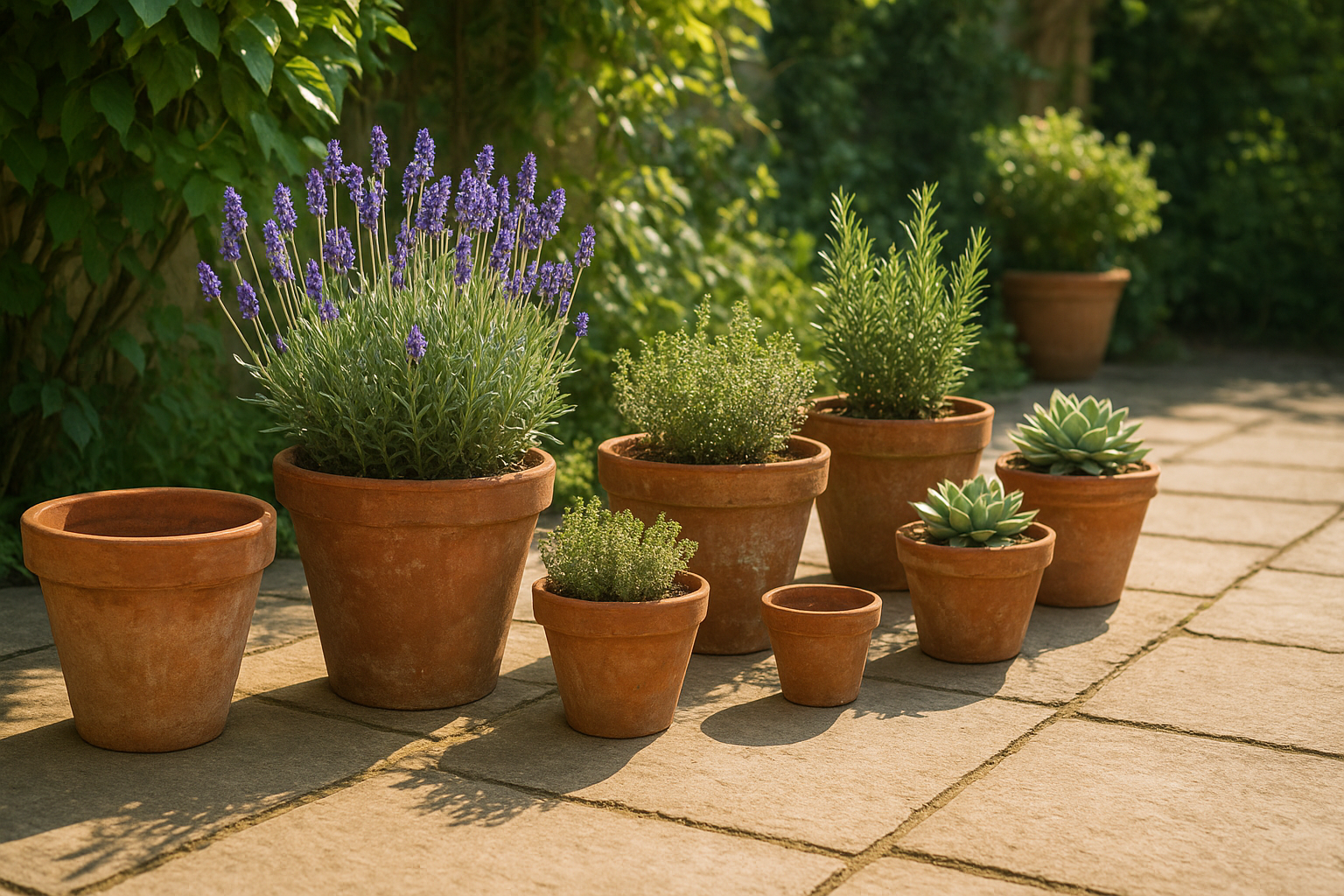
Thyme, rosemary, oregano, sage, and marjoram are all excellent choices. These herbs come from sunny, dry environments and dislike sitting in damp soil. Terracotta helps prevent root rot and can even improve flavor by keeping growth compact and healthy.
- Place herbs in full sun
- Use a free-draining potting mix
- Let the top inch of soil dry between waterings
2. Lavender
Lavender is one of the best-known plants for terracotta pots. It needs excellent drainage, plenty of light, and a soil mix that never stays soggy. In a clay pot, lavender is less likely to suffer from winter wet, which is often the biggest problem in container growing.
For best results, use a slightly gritty mix and avoid overfeeding, which can lead to floppy growth rather than the compact shape lavender is known for.
3. Succulents and cacti
Aloe, echeveria, sedum, haworthia, jade plant, and many cacti thrive in terracotta because they store water in their leaves or stems. They need soil that dries quickly between waterings, and clay pots help make that happen naturally.
These are especially good options if you tend to overwater. Just remember that a terracotta pot in direct sun can dry very fast, so check moisture more often during summer.
4. Geraniums
Pelargoniums, commonly called geraniums, do very well in terracotta on sunny patios and window ledges. They like steady moisture but hate sitting in wet soil, so clay can help keep the root system healthier.
Deadhead regularly and feed lightly during the growing season for more flowers and a tidier shape.
5. Citrus trees in containers
Lemon, lime, and kumquat trees can grow beautifully in terracotta, especially if the pot is large enough. These trees need excellent drainage and benefit from the stability of a heavyweight clay pot that will not tip easily in wind.
Use a citrus-specific potting mix and keep an eye on watering, because container citrus dislikes drying out completely.
6. Bay laurel
Bay plants are another good fit for terracotta. They prefer well-drained soil and can be pruned into a neat shape for doorways or courtyards. Clay pots suit their slow, woody growth and reduce the risk of soggy roots.
7. Small ornamental grasses
Compact grasses such as blue fescue or fountain grass often look elegant in terracotta. They like sun, drainage, and room for their roots to breathe. A clay pot also gives a natural, relaxed look that suits grasses well.
8. Pansies and violas in cool weather
In spring and fall, pansies and violas can do well in terracotta if you stay on top of watering. They prefer cool conditions and benefit from the improved drainage, though they will need more frequent moisture checks than in a glazed container.
Plants that usually struggle in terracotta
Some plants can be grown in clay pots, but they are often harder to manage there. If your plant likes constant moisture, terracotta may be the wrong fit.
1. Ferns
Most ferns prefer evenly moist soil and higher humidity. Terracotta can dry them out too quickly, especially indoors or on hot patios.
2. Peace lilies
Peace lilies dislike drying out. They are better suited to a pot that holds moisture longer, such as plastic or glazed ceramic.
3. African violets
These houseplants prefer consistent moisture and are sensitive to temperature swings. Terracotta can make the root zone too dry unless you water very carefully.
4. Calatheas and prayer plants
These tropical plants often struggle in terracotta because they need stable moisture and humidity. A drying clay pot can lead to crispy edges and drooping leaves.
5. Moisture-loving vegetables
Plants such as celery or lettuce can be grown in containers, but they usually do better in pots that hold moisture more evenly. Terracotta may work in cool weather, but it demands more frequent watering.
How to get the best results with terracotta
If you already have a stack of clay pots, you do not need to replace them all. A few simple habits will make them work better.
- Match the plant to the pot. Choose terracotta for sun-loving, well-drained plants.
- Use the right compost. Add grit, perlite, or coarse sand for plants that hate wet feet.
- Check moisture by hand. Clay pots dry unevenly, so test the soil before watering.
- Protect pots in winter. Raise pots off the ground and avoid letting them sit in water.
- Seal if needed. If a pot dries too fast indoors, a terracotta sealer can reduce moisture loss a little.
Simple planting combos that work well
If you want an easy way to style your containers, try these combinations:
- Sunny herb pot: rosemary, thyme, oregano
- Pollinator pot: lavender, sage, thyme
- Dry-garden pot: echeveria, sedum, small cactus
- Patio feature pot: bay laurel or citrus with underplanting of thyme
Bottom line
Terracotta is not just decorative; it changes how a container behaves. That makes it a smart choice for plants that like drainage, airflow, and slightly drier roots. If you grow herbs, succulents, lavender, or other sun lovers, terracotta can be one of the easiest ways to keep them healthy. For thirstier plants, though, a different pot may save you a lot of frustration.
Choose the pot for the plant, not just the plant for the pot, and your containers will look better and last longer.