6 Fall Container Garden Ideas That Last Until Frost
Once summer annuals start looking tired, containers can make a porch or patio feel fresh again. The good news is that cool weather opens the door to a whole new set of plants that actually prefer the shorter days and lower temperatures of fall.
If you want containers that look full, colorful, and polished well past the first chilly nights, the trick is choosing plants with the same light, water, and temperature needs. A few smart combinations can carry your pots from early autumn straight through the first frost.
Start with the right container setup
Before you buy plants, take a close look at the pots you already have. A container that worked in July may need a quick reset before it can support a healthy fall display.
- Clean out old roots and debris: Pull summer plants that have declined and remove any dead leaves, moldy stems, or compacted soil.
- Check drainage: Every pot should have at least one drainage hole so fall rains do not leave roots sitting in water.
- Refresh the soil: Reuse existing potting mix if it is still loose, but blend in fresh potting soil to restore texture and nutrients.
- Leave room at the top: Fill containers to about 1 inch below the rim so water can soak in without spilling over the sides.
If your summer container was overfed or had disease problems, it is safer to start with completely fresh potting mix. Fall plants often grow more slowly than summer annuals, so they need well-drained soil more than they need heavy fertilizer.
How to choose fall plants that work together
The best combinations do more than look pretty. They also share the same growing conditions. A sunny front step arrangement should include sun-loving plants, while a shady porch container should feature plants that tolerate less direct light.
Try to match these three needs when building a display:
- Light: full sun, part sun, part shade, or full shade
- Moisture: dry, moderate, or consistently moist soil
- Cold tolerance: some plants shrug off light frost, while others fade fast
For the longest show, combine a tall centerpiece, a mid-height filler, and a plant that softens the edges. That layered approach makes even a small pot feel professionally designed.
6 fall container garden ideas to try
1. Burgundy and gold for a warm harvest look
This combination feels classic and cozy. Use a dark maroon plant as the focal point, then surround it with golden blooms and trailing foliage for a rich autumn palette.
- Thriller: ornamental millet or upright purple fountain grass
- Filler: yellow pansies or gold chrysanthemums
- Spiller: creeping Jenny or trailing ivy
This palette works especially well near wood doors, copper accents, and neutral planters. It is also a good choice if you want the container to echo pumpkins and dried cornstalks without looking too busy.
2. Purple, silver, and white for a cooler modern style
If you like a softer, more elegant look, try cooler tones with plenty of texture. Silver foliage helps the container stay interesting even when flowers slow down in colder weather.
- Thriller: dust-resistant ornamental kale or a narrow grass
- Filler: white violas and lavender-toned pansies
- Spiller: dusty miller or silver trailing plantain lily in a protected spot
This style pairs beautifully with black planters, white stone steps, or modern entryways. It is especially useful if you want fall color without the brightest orange and red tones.
3. Pumpkin spice tones with texture
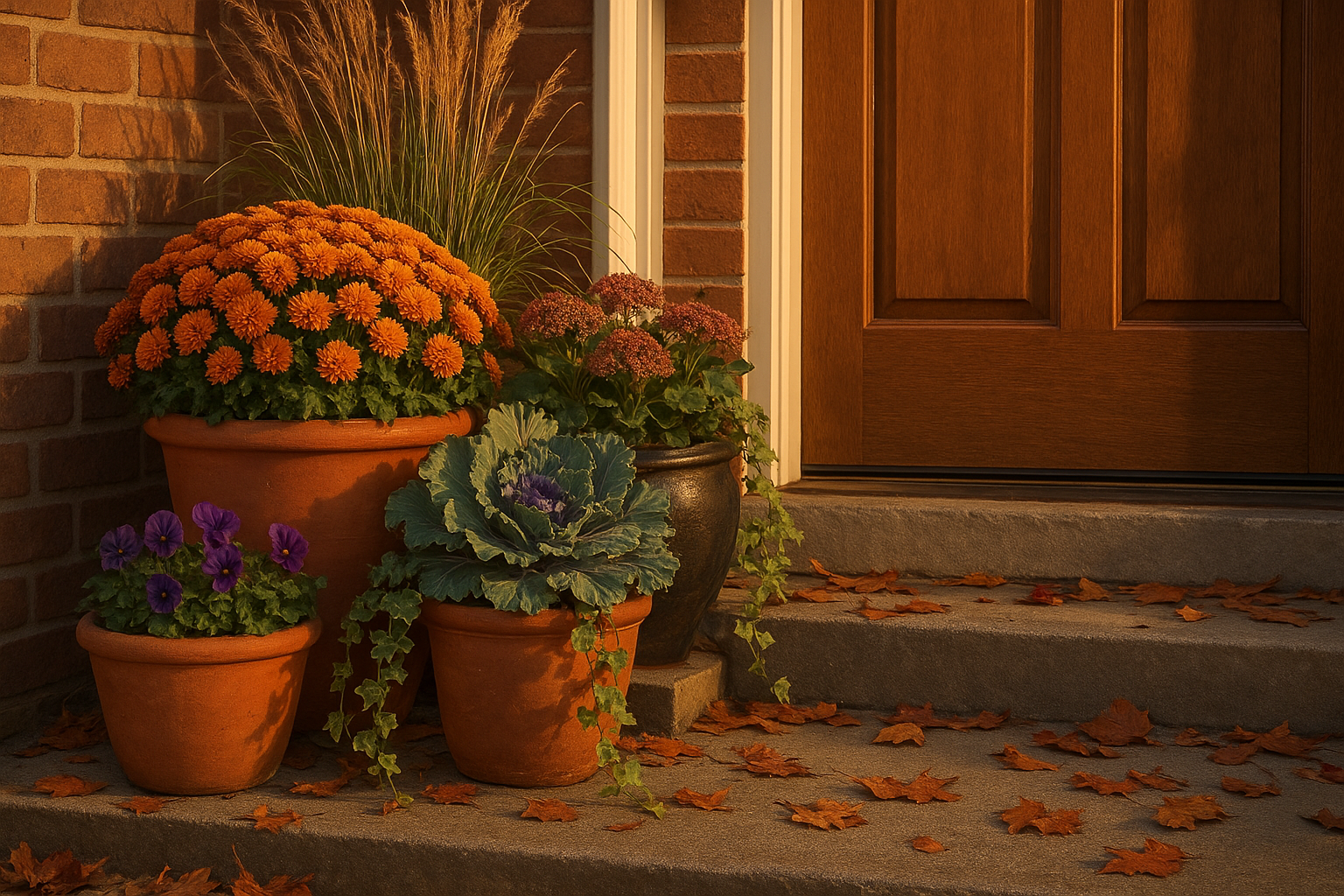
For a display that feels unmistakably seasonal, layer oranges, copper, and rust tones. The key is mixing flower color with leaf shape so the container does not look flat.
- Thriller: upright ornamental pepper or a tall grass
- Filler: orange pansies, calendula, or compact mums
- Spiller: trailing sweet potato vine or ivy
Use this arrangement on a porch where you already have pumpkins, lanterns, or a woven doormat. The repeated warm colors make the whole entry look intentional.
4. Evergreen structure with seasonal accents
Not every fall pot needs to rely on flowering plants alone. A container with strong foliage can look attractive for weeks, even if the blossoms come and go.
- Thriller: dwarf conifer, small boxwood, or upright grass
- Filler: heuchera with deep red or caramel leaves
- Spiller: ivy or creeping Jenny
This type of container works well if you want something that transitions smoothly into winter. In mild climates, the evergreen backbone can remain in place long after annual flowers are finished.
5. Shade-friendly fall containers
Shady porches can still feel lively in autumn. The trick is using foliage color and flower form instead of depending on nonstop bright blooms.
- Thriller: variegated grass or tall coleus if nights are still mild
- Filler: begonias, wax begonias, or shade-tolerant pansies
- Spiller: variegated ivy or delicate trailing foliage
If your porch gets morning sun but afternoon shade, this type of container is ideal. Keep the soil evenly moist, but not soggy, since shady spots dry more slowly.
6. Edible and decorative fall pots
Fall containers can be useful as well as pretty. Mix edible herbs with decorative plants for a display that smells great and stays attractive.
- Thriller: upright rosemary or a compact ornamental grass
- Filler: thyme, parsley, or compact kale
- Spiller: trailing thyme or ivy
These pots work nicely near the kitchen door or on a sunny deck. Just make sure the herbs you choose get enough light and are harvested gently so the arrangement keeps its shape.
Care tips to keep fall containers looking good
Cool weather may slow plant growth, but container care still matters. In fact, fall pots often fail because people forget that containers dry out faster than garden beds, even when the weather feels cool.
- Water when the top inch feels dry: Check containers regularly, especially on sunny or windy days.
- Deadhead spent blooms: Remove faded flowers to keep the arrangement tidy and encourage more blooms where possible.
- Rotate pots for even light: Turn containers every week or so if one side gets more sun.
- Watch for early frost: Bring movable pots closer to the house or under cover when a hard freeze is forecast.
- Skip heavy feeding: A light application of balanced fertilizer at planting time is usually enough for cool-season containers.
If you live in an area where frost arrives early, use containers with a mix of durable foliage and tougher flowers such as pansies, ornamental kale, or small grasses. Those plants usually keep the display attractive longer than tender annuals.
Simple design rules that make any pot look better
A beautiful container does not need a complicated formula. A few design choices can make even basic plants look more polished.
- Repeat one color: Echo a plant color in your doormat, wreath, or pumpkins.
- Use odd numbers: Three plants of one kind often look more natural than two.
- Mix leaf shapes: Pair spiky, round, and trailing forms for contrast.
- Match pot size to the plants: Small containers dry quickly and can look crowded fast.
If you are decorating an entryway, try repeating the same plant combo in two matching pots for a balanced look. For a more relaxed porch style, mix different heights and container materials while keeping the color family the same.
When to replace a container and start fresh
Sometimes the easiest fix is a full reset. If summer plants are root-bound, soil is compacted, or the arrangement looks lopsided, it is worth rebuilding the pot from scratch. New soil and carefully chosen fall plants often perform better than trying to rescue a tired setup.
Think of fall containers as a short seasonal project with a big visual payoff. With a little planning, you can create planters that welcome guests, brighten gray days, and keep your porch looking finished until winter truly settles in.