How to Clean a Dryer Vent Without Making a Mess
If your towels need two cycles to dry or the laundry room feels unusually hot, the dryer vent may be the problem. Learning how to clean a dryer vent is one of those unglamorous home chores that pays you back quickly: better airflow, shorter dry times, and a safer laundry room.
This guide walks you through the job from the lint screen to the exterior vent, with a few mess-saving tricks along the way. Plan on 30 to 60 minutes for a simple, reachable vent run.
Why Cleaning the Dryer Vent Matters
A dryer needs strong airflow to carry heat, moisture, and lint out of the house. When lint builds up in the duct, clothes take longer to dry and the dryer can run hotter than it should.
ENERGY STAR recommends cleaning the lint filter after every load because it improves air circulation and dryer efficiency. The U.S. Fire Administration also advises cleaning the lint filter before or after each cycle and not running a dryer with a damaged, loose, or clogged filter. ([energystar.gov](https://www.energystar.gov/products/clothes_dryers?utm_source=openai))
The vent duct needs attention too. The Building America Solution Center notes that cleaning a dryer duct annually can help clothes dry faster, save energy, and reduce fire risk. ([basc.pnnl.gov](https://basc.pnnl.gov/diy-guides/clean-dryer-exhaust?utm_source=openai))
Signs Your Dryer Vent Needs Cleaning
You do not need to wait for a yearly reminder if the dryer is already complaining. Clean the vent sooner if you notice:
- Clothes take longer than usual to dry, especially towels, jeans, and bedding.
- The dryer or laundry room feels hot during a normal cycle.
- A burning, smoky, or musty smell appears while the dryer is running.
- Lint collects behind the dryer or around the exterior vent.
- The outside vent flap barely opens when the dryer is on.
- The dryer shuts off mid-cycle or shows a duct-blockage warning.
Consumer Reports notes that many newer dryers include a duct blockage indicator, but you should not rely on that alone; slow drying and weak exterior airflow are still important clues. ([consumerreports.org](https://www.consumerreports.org/clothes-dryers/how-to-clean-your-dryer-vent/?utm_source=openai))
Tools and Supplies
Gather everything before you pull the dryer out. You will make less of a mess and spend less time wrestling with the vent hose.
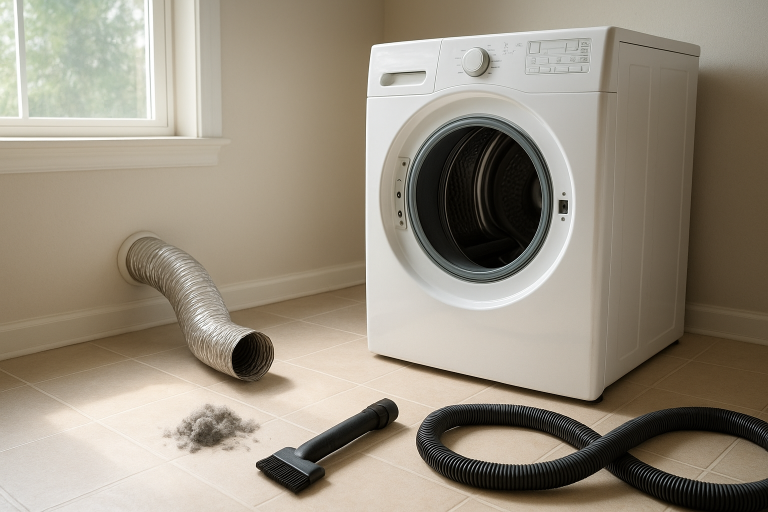
- Vacuum with hose attachment
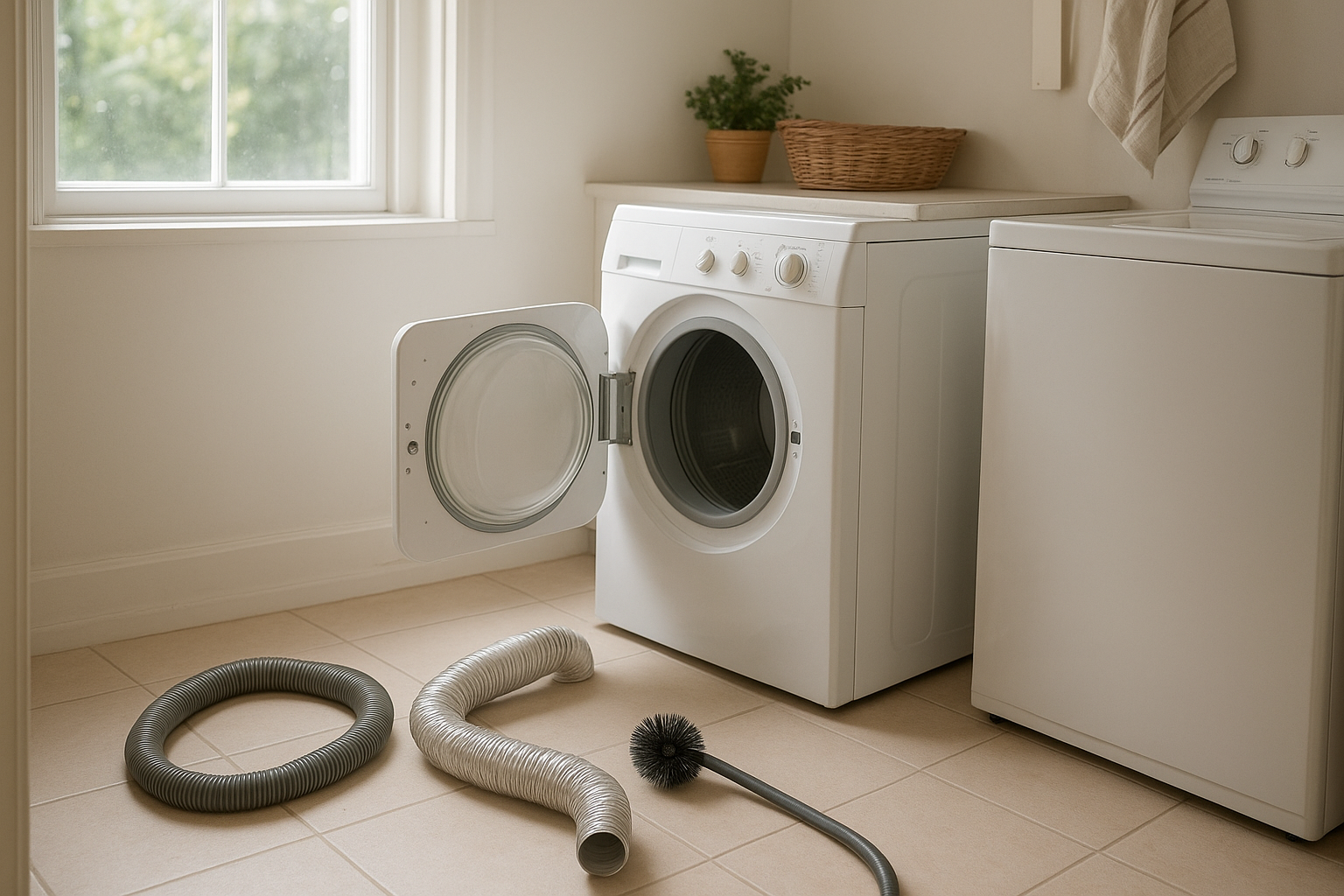
- Dryer vent brush kit or flexible duct brush
- Screwdriver or nut driver for the duct clamp
- Work gloves
- Flashlight
- Trash bag
- Painter’s tape or a towel to catch loose lint
- Replacement metal duct tape or clamp, if the old connection is loose
A rotary dryer vent brush kit can be useful for longer ducts, but go slowly. If the brush rods disconnect inside the duct, you have created a bigger problem than the one you started with.
Before You Start: Safety First
Turn the dryer off and unplug it before cleaning. If you have a gas dryer, be careful not to strain or kink the gas line when pulling the machine away from the wall. If you are not comfortable moving a gas appliance, clean what you can safely reach and call a professional for the rest.
Also check the duct material. Rigid or semi-rigid metal duct is easier to clean and generally better for airflow. If you find crushed foil duct, plastic duct, heavy lint mats, or a vent run that disappears into a wall with several turns, consider having it inspected.
Step-by-Step: How to Clean a Dryer Vent
1. Clean the lint screen area
Remove the lint screen and peel off lint by hand. Then vacuum the screen slot with a crevice tool. A surprising amount of lint can settle below the filter where you cannot see it.
If the screen looks waxy or water beads on it, wash it with warm water and a small amount of dish soap, then let it dry fully before reinstalling. Fabric softener residue can reduce airflow through the mesh.
2. Pull the dryer away from the wall
Move the dryer slowly, just far enough to reach the vent connection. Do not yank it forward. Keep an eye on the power cord, gas line, and duct so nothing stretches or crushes.
3. Disconnect the duct from the dryer
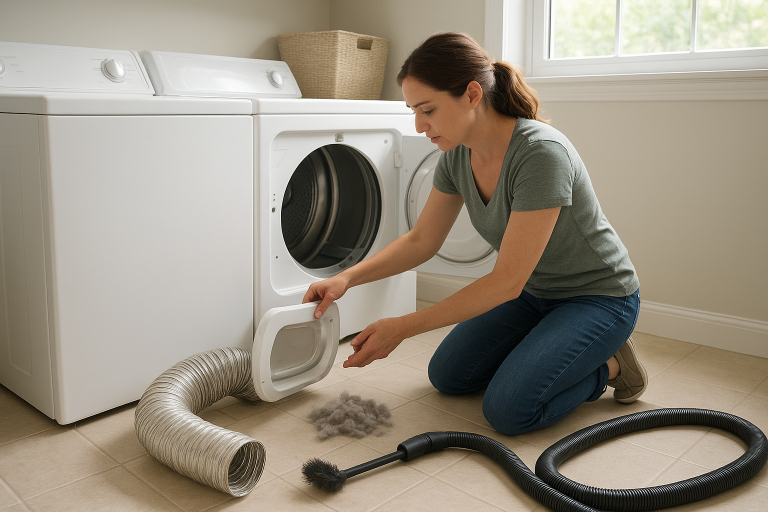
Loosen the clamp with a screwdriver or nut driver and slide the duct off the dryer outlet. Have the vacuum ready because loose lint often falls out right away.
Vacuum the dryer outlet and the first few inches of duct. Consumer Reports recommends disconnecting the duct, vacuuming the vent with a long-handled attachment, then using a dryer duct brush to loosen lint. ([consumerreports.org](https://www.consumerreports.org/appliances/how-to-make-your-washer-and-dryer-last-a2393416520/?utm_source=openai))
4. Brush the duct from the laundry room side
Feed the dryer vent brush into the duct gently. Move it forward a little, pull it back, and vacuum loosened lint as you go. If using a drill-powered brush, use a low speed and keep the brush moving in the direction recommended by the kit so the rods do not unscrew.
Do not force the brush around a tight bend. If it stops, back it out, vacuum, and try again. A jammed brush can damage lightweight duct or get stuck inside the run.
5. Clean the exterior vent
Go outside and find the dryer exhaust vent. Remove lint from the flap or louvers by hand, then use the brush and vacuum if you can reach safely. The vent cover should open freely when the dryer runs.
One important detail: the Building America Solution Center says a louvered dryer vent cap should not have screening that traps dryer lint. If your exterior cover has a fine screen packed with fuzz, replace it with a proper dryer vent hood. ([basc.pnnl.gov](https://basc.pnnl.gov/diy-guides/clean-dryer-exhaust?utm_source=openai))
6. Reconnect the duct
Slide the duct back onto the dryer outlet and tighten the clamp. Use metal foil HVAC tape only where appropriate; do not use regular cloth duct tape, which can dry out and fail near heat.
Push the dryer back carefully. Avoid crushing the duct behind the machine. A crushed duct restricts airflow almost as much as a lint clog.
7. Test the airflow
Plug the dryer back in and run it on an air-only or low-heat setting for a few minutes. Go outside and check the vent. You should feel steady airflow and see the flap open.
If airflow is still weak after cleaning, the clog may be deeper in the wall, the duct may be too long or damaged, or the dryer itself may need service.
How Often Should You Clean a Dryer Vent?
For most homes, clean the full dryer vent once a year. Check it every six months if you dry multiple loads a day, have pets that shed heavily, wash lots of towels or fleece, or have a long vent run.
In between deep cleanings, make these small habits automatic:
- Clean the lint screen every load.
- Look behind the dryer every few months for lint or crushed duct.
- Check the outside vent seasonally for lint, leaves, nests, snow, or stuck louvers.
- Do not overload the dryer; packed loads restrict airflow and dry unevenly.
When to Call a Professional
DIY cleaning works best when the vent is short, mostly straight, and easy to access. Call a dryer vent cleaning pro or appliance technician if:
- The vent exits through the roof.
- The duct run is long or has several elbows.
- You cannot reach the exterior vent safely.
- You smell burning after cleaning.
- The dryer still takes too long after the vent is clear.
- You find damaged, disconnected, or crushed duct inside the wall.
You should also call for help if you suspect birds or rodents have nested in the vent. Removing nesting material may require taking apart the exterior hood or inspecting the full duct run.
A Simple Dryer Vent Maintenance Schedule
Here is an easy routine to keep the chore from sneaking up on you:
- Every load: Clean the lint screen.
- Monthly: Vacuum around the dryer and under the lint screen if lint is visible.
- Every season: Check that the outside vent opens freely.
- Once a year: Disconnect and clean the duct from the dryer to the exterior vent.
Cleaning a dryer vent is not fancy, but it is a practical home task worth doing well. If you keep the lint screen clean, protect the duct from crushing, and give the vent a yearly cleanout, your dryer will have a much easier time doing its job.