Late-Summer Azalea Care for Bigger Blooms Next Spring
Azaleas and rhododendrons can look perfectly happy in late summer and still set you up for a disappointing spring if they dry out now. The reason is simple: this is when they’re building next year’s flower buds, and steady moisture helps those buds develop fully.
If you want a stronger bloom show next year, the most important thing is to water azaleas and rhododendrons consistently through the end of summer and into early fall. It’s not about flooding the bed once in a while. It’s about deep, even watering at the right time.
Why late summer matters so much
Azaleas and rhododendrons are often treated like low-maintenance shrubs, and in many ways they are. But their flower buds are formed months before they open. In midsummer and late summer, the plant is deciding how many buds to set and how well to support them.
When soil is too dry during this period, the shrub can respond by making fewer buds or dropping some before they fully develop. You may not notice anything wrong right away. The leaves may still look mostly fine, and the plant may even continue to grow. The real clue appears the following spring, when the display is lighter than expected.
That delay is what makes late-summer care easy to overlook. You’re not watering for today’s flowers. You’re watering for next year’s.
How much water these shrubs need
A good rule of thumb is about 1 inch of water per week, including rainfall. In hot spells or sandy soil, they may need a little more. In cooler weather or areas with regular rain, they may need less.
Instead of guessing, use a rain gauge or even a simple container placed near the shrubs to check how much natural water the bed is actually getting. A short shower often adds less moisture than people assume, especially if the soil is already dry and the water runs off before sinking in.
Signs they may need extra water
- Leaves droop or curl in the afternoon
- Soil feels dry a couple of inches below the surface
- Mulch looks damp, but the soil underneath is dry
- New growth appears weak or buds seem undersized
Young shrubs need closer attention than established ones. Plants in their first two years have smaller root systems and dry out faster, even if they’re planted in partial shade.
The best way to water azaleas and rhododendrons
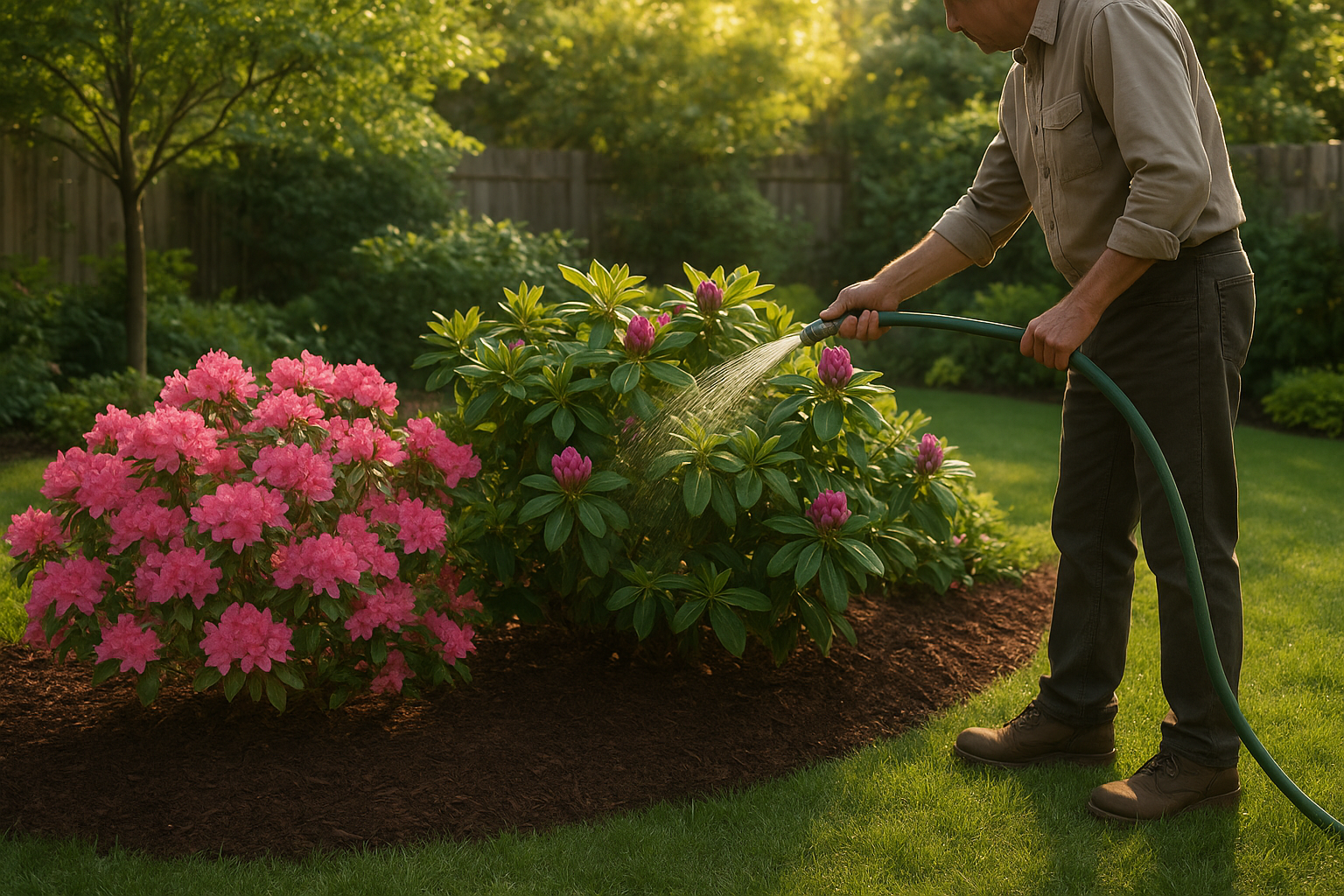
These shrubs do best with deep, slow watering. A quick splash with the hose wets the surface, but their roots need moisture farther down in the soil.
Try to soak the root zone to a depth of about 8 to 10 inches. The easiest way to do that is with a slow trickle from a hose, a soaker hose, or drip irrigation. Let water move in gradually so it can sink where roots can use it.
Here’s a practical approach:
- Water at the base of the shrub, not over the leaves.
- Run the hose slowly for a longer period rather than briefly and often.
- Check the soil after watering by pushing a trowel or screwdriver into it.
- If the soil is still dry below the mulch layer, water again more slowly next time.
Morning is the best time to water because it gives the soil time to absorb moisture before evening. That helps reduce stress on the plant and limits the chance of fungal issues that can sometimes develop in cool, damp nighttime conditions.
Mulch helps hold moisture in place
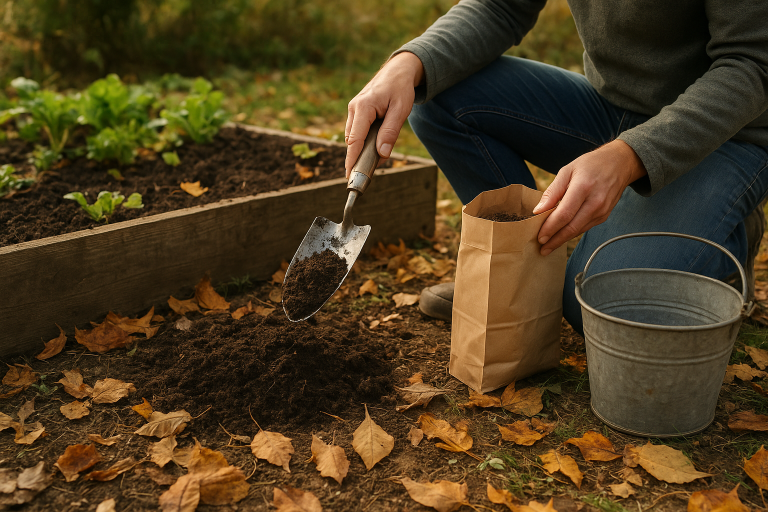
Mulch is one of the best partners for late-summer watering. A 2- to 3-inch layer of shredded bark, pine needles, or leaf mold helps keep the root zone cooler and slows evaporation.
Be careful not to pile mulch directly against the stems. Leave a small gap around the base of the plant so the bark can breathe. A mulch mound pressed against the trunk can trap moisture in the wrong place and invite rot.
Mulch doesn’t replace watering, but it helps you water less often and get more benefit from each session. That matters a lot during hot, dry stretches.
Common mistakes to avoid
It’s easy to accidentally give azaleas and rhododendrons the wrong kind of care at this time of year. These are the most common mistakes:
- Shallow watering: wetting only the surface encourages weak, shallow roots.
- Watering leaves instead of soil: the roots need the moisture, not the foliage.
- Ignoring rainfall totals: a quick storm may not provide enough water.
- Letting mulch hide dry soil: the top layer can look moist while the root zone is parched.
- Overfeeding late in the season: too much fertilizer can push tender growth when the plant should be preparing buds.
If you’ve already fertilized earlier in the year, that’s usually enough. Late summer is a better time to focus on water and soil moisture than on pushing more growth.
How to tell if your shrubs are planted in the right spot
Location affects how often you need to water. Azaleas and rhododendrons usually do best in partial shade with protection from harsh afternoon sun and drying wind. Too much exposure speeds up moisture loss, especially on slopes, near walls, or in open beds with reflected heat.
If your shrubs dry out every summer despite regular watering, the site may be working against you. In that case, improving mulch, checking drainage, and watering more deeply can help a lot. For heavily exposed plants, a bit of temporary shade or wind protection during heat waves can also reduce stress.
A simple late-summer care checklist
Use this easy routine to keep shrubs on track for spring flowers:
- Check soil moisture once a week
- Provide about 1 inch of water total each week
- Water slowly and deeply at the root zone
- Refresh mulch if the layer is thin
- Watch new buds and leaf health without overreacting to minor heat stress
If your weather stays hot and dry, don’t wait for the plant to look wilted before watering. By the time the leaves show stress, the shrub has already started spending energy it should be saving for bloom development.
The payoff next spring
Late-summer watering may not be glamorous, but it’s one of the most worthwhile jobs in the garden. A well-watered azalea or rhododendron is more likely to enter fall in good shape, carry those buds through winter, and reward you with a fuller bloom display when spring arrives.
Think of it as a small routine with a big future payoff. A little attention now can be the difference between a few scattered flowers and a shrub that looks like it’s covered in color.