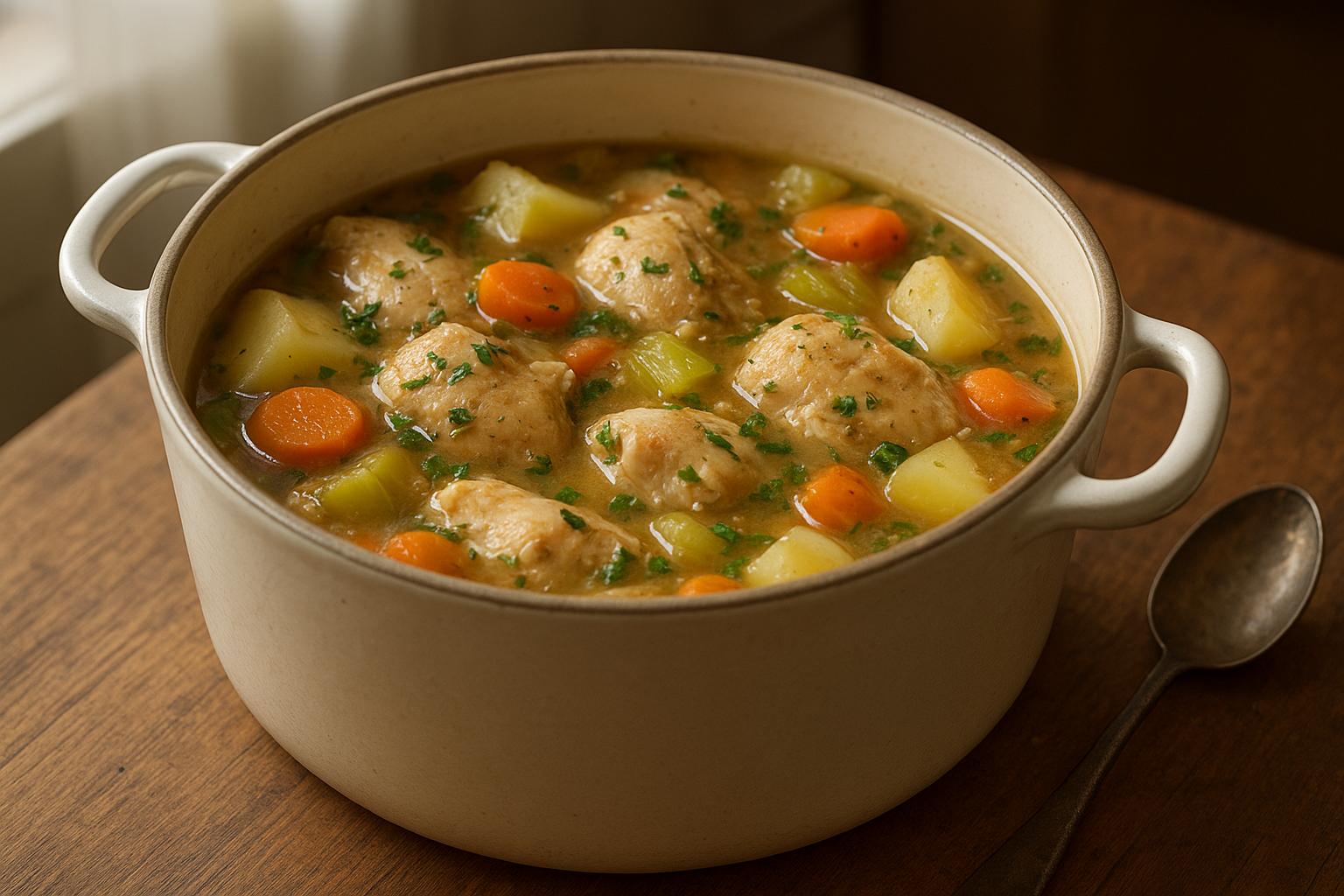
Hearty Chicken Stew with Potatoes and Herbs
When you want dinner to feel like a warm blanket, chicken stew is hard to beat. It has all the comfort of a classic stew, but it stays a little lighter than beef versions and comes together with everyday ingredients you may already have on hand.
This version leans on chicken thighs for tenderness, a simple mix of vegetables for body and sweetness, and a savory herb gravy that thickens as it simmers. It’s the kind of meal that tastes even better the next day, which makes it especially useful for leftovers and meal prep.
Why this chicken stew works
The best chicken stew has three things going for it: a flavorful base, evenly cooked vegetables, and chicken that stays juicy. Instead of relying on complicated steps, this recipe builds flavor in stages. First, the chicken is lightly coated in flour and browned to create a deep, savory foundation. Then the vegetables go in to pick up all that flavor from the bottom of the pot. Finally, broth and herbs simmer into a rich, spoon-coating gravy.
Using chicken thighs is a big part of the success here. They stay moist during a longer simmer and hold their texture better than chicken breast. If you prefer white meat, you can use it, but keep a close eye on the simmer time so the chicken doesn’t dry out.
Ingredients to gather
You do not need anything fancy for this stew. In fact, its appeal is that it turns basic ingredients into something deeply satisfying.
- Chicken thighs: Boneless or bone-in both work. Thighs give the stew richness and stay tender.
- Onion, carrots, and celery: This trio forms the aromatic base and adds classic stew flavor.
- Garlic: A few cloves add warmth without overpowering the broth.
- Potatoes: Yukon Gold or baby potatoes hold their shape well and make the stew hearty.
- Flour: Helps coat the chicken and thickens the broth into a gravy.
- Chicken broth: Use a broth you like the taste of, since it carries much of the final flavor.
- Herbs: Thyme, parsley, rosemary, and sage are all great choices.
- Salt and black pepper: Season in layers and adjust at the end.
How to make chicken stew
- Season and coat the chicken. Pat the chicken dry, season it lightly with salt and pepper, and toss it with flour. The flour helps the chicken brown and also thickens the stew later.
- Brown the chicken in batches. Heat oil in a heavy pot or Dutch oven and cook the chicken until it develops a deep golden crust. Don’t crowd the pan. Browning in batches is worth the extra few minutes because it gives the stew much more flavor.
- Cook the vegetables. Add the onion, carrots, and celery to the pot and cook until the onions are soft and the bottom of the pan loosens. Stir in the garlic near the end so it doesn’t burn.
- Build the stew. Return the chicken to the pot along with potatoes, broth, and herbs. Scrape up any browned bits from the bottom. Those bits dissolve into the broth and make the stew taste slow-cooked.
- Simmer gently. Bring the pot to a boil, then lower the heat and simmer uncovered or partially covered until the chicken is tender and the potatoes are cooked through. The stew should thicken as it cooks.
- Finish and taste. Stir in fresh parsley if you have it, then taste for salt and pepper before serving. If the stew is thicker than you like, add a splash of broth. If it is too thin, simmer a few minutes longer.
Helpful tips for the best texture
Cut vegetables evenly. Chop carrots and potatoes into similar sizes so they cook at the same pace. Larger chunks can leave you with a mix of soft and underdone pieces.
Don’t rush the browning. If the chicken sticks slightly at first, let it sit another minute. It will usually release when it has properly browned. That color is where a lot of the flavor comes from.
Keep the simmer gentle. A hard boil can make the chicken tough and break down the potatoes too quickly. A steady simmer is better for a silky, cohesive stew.
Check seasoning at the end. Broth brands vary a lot in saltiness. Taste before serving and adjust with salt, pepper, or a small squeeze of lemon if you want brightness.
Easy variations
This chicken stew is flexible, which makes it easy to adapt to what’s in your kitchen.
- Add peas or green beans: Stir them in near the end for color and freshness.
- Use sweet potatoes: Swap some or all of the regular potatoes for a slightly sweeter, cozier version.
- Make it extra herb-forward: Add rosemary and thyme for a more aromatic finish.
- Stir in greens: A few handfuls of spinach or chopped kale can be added in the last few minutes.
- Boost the richness: A spoonful of butter stirred in at the end gives the broth a rounder finish.
What to serve with chicken stew
This stew is complete enough to stand on its own, but a few simple sides make it feel even more satisfying. Crusty bread is the obvious choice for soaking up the gravy, but biscuits, dinner rolls, or a slice of buttered toast work just as well. If you want a lighter plate, serve it with a basic green salad dressed with vinaigrette.
For a more filling meal, spoon the stew over rice, egg noodles, or mashed potatoes. That may sound like a lot of starch, but on a cold evening it is exactly the kind of comfort many people are looking for.
Storage and reheating
Chicken stew stores well, which is one reason it’s so practical. Let leftovers cool, then transfer them to an airtight container and refrigerate for up to four days. The flavor usually improves after a night in the fridge as the herbs and vegetables have more time to meld.
To reheat, warm it slowly on the stove over medium-low heat or in the microwave in short intervals, stirring occasionally. If it has thickened in the fridge, add a splash of broth or water to loosen it back up. This stew also freezes well, though potatoes can become a bit softer after thawing. If you plan to freeze portions, slightly undercook the potatoes so they hold up better later.
Make it a reliable weeknight dinner
If you’re looking for a dependable comfort meal, chicken stew is a smart one to keep in your regular rotation. It uses budget-friendly ingredients, feeds a family well, and gives you a satisfying dinner without needing much more than one pot and a little patience. Once you make it a few times, you’ll start to see how easy it is to adjust the herbs, vegetables, and texture to match your taste.
Serve it hot, with something for dipping, and you’ve got the kind of dinner people remember for all the right reasons.