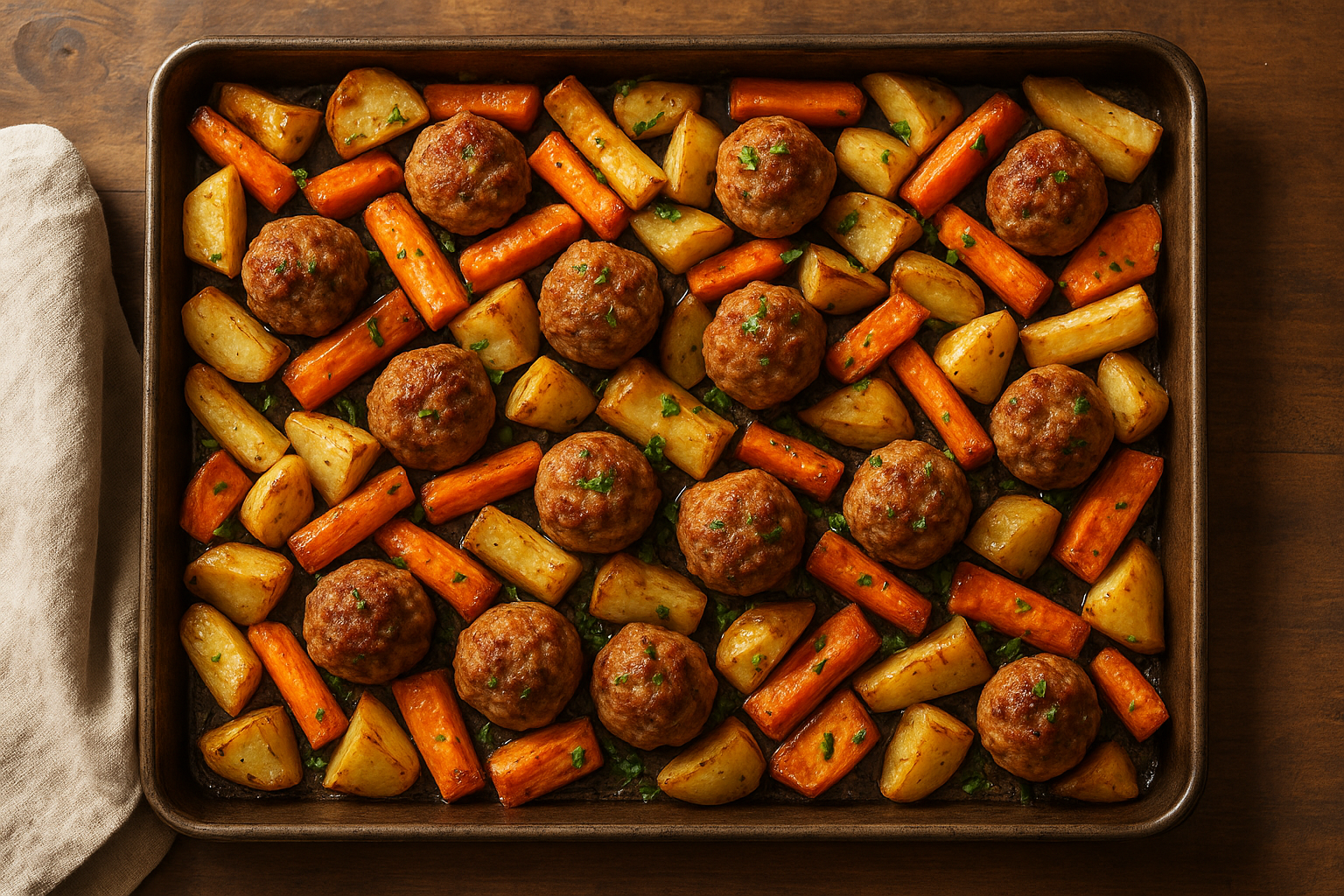
Sheet Pan Turkey Meatballs with Roasted Root Vegetables
If you need a dinner that feels hearty, homey, and manageable on a busy night, sheet pan turkey meatballs with root vegetables are a smart place to start. Everything roasts together on one pan, which means dinner is ready with less fuss and far fewer dishes.
The best part is that this meal is easy to adapt. You can use whatever sturdy vegetables you already have, mix up the seasonings, and still end up with a comforting dinner that tastes like you put in much more effort than you did.
Why this dinner works so well
Turkey meatballs can dry out if they are cooked too long, but pairing them with vegetables that roast at a similar pace solves that problem. The vegetables help create a full meal, and the high oven heat gives everything browning and flavor without a lot of extra steps.
Root vegetables are especially useful here because they hold their shape, turn sweet as they roast, and can be cut to match the meatballs’ cooking time. That makes this recipe feel practical in a way that lighter, faster-cooking vegetables often do not.
What you’ll need
You do not need anything fancy for this meal. A simple meatball mixture and a mix of sturdy vegetables are enough to build a satisfying dinner.
- Ground turkey for the meatballs
- Cottage cheese for moisture and tenderness
- Panko breadcrumbs to help the meatballs hold together
- Onion and parsley for flavor
- Carrots, potatoes, sweet potato, and parsnips or other root vegetables
- Olive oil, salt, and pepper
- Maple syrup, Dijon mustard, garlic, and butter for the glaze
If cottage cheese sounds unusual in meatballs, do not skip it. It keeps the turkey moist while also helping the mixture stay rich and tender after roasting.
How to prep the vegetables
Uniform cutting makes a big difference in a sheet pan dinner. Aim for small, even pieces so the vegetables roast through at the same time as the meatballs.
- Peel the carrots, parsnips, and sweet potato if needed.
- Cut everything into roughly 3/4-inch pieces.
- Toss the vegetables with olive oil, salt, and pepper before they go on the pan.
If you cut the vegetables too large, they will still be firm when the turkey is finished. Smaller pieces give you tender edges and better caramelization in the same roasting window.
Make the meatballs tender, not tough
Turkey meatballs benefit from a gentle hand. Mix the ingredients just until combined, then shape the meatballs without packing them tightly.
Practical tip: Finely chop the onion and parsley. Larger pieces can make the mixture harder to shape, and a softer mixture is already a little more delicate because of the cottage cheese.
For even cooking, keep the meatballs about 1 1/2 inches wide. That size gives you a nice bite without making dinner feel like a long project.
The maple-Dijon finish
The glaze is what pulls the whole pan together. Maple syrup adds sweetness, Dijon adds sharpness, garlic brings depth, and a little butter rounds everything out. Brushing it on near the end gives the vegetables a glossy finish without burning the garlic or darkening the maple too quickly.
This timing matters. If the glaze goes on too early, the sugars can scorch before the turkey is fully cooked. Adding it in the final stretch gives you caramelized edges and a flavorful coating instead of a bitter finish.
Simple glaze formula
- Maple syrup
- Dijon mustard
- Minced garlic
- Melted butter
- A pinch of salt
Whisk it together while the first round of roasting is happening, so it is ready the moment the pan comes out of the oven.
Step-by-step roasting method
- Heat the oven to 425°F. Line a large sheet pan with parchment for easier cleanup if you like.
- Mix and shape the meatballs. Combine the turkey, cottage cheese, breadcrumbs, onion, parsley, and seasonings, then roll into even balls.
- Season the vegetables. Toss the chopped root vegetables with oil, salt, and pepper, then spread them across the pan in a mostly single layer.
- Add the meatballs. Nestle them over the vegetables with a little space between each one.
- Roast for about 20 minutes. This gives the vegetables a head start and lets the meatballs begin to brown.
- Brush on the glaze. Coat the meatballs and vegetables, then return the pan to the oven until everything is cooked through and caramelized.
Turkey should reach 165°F in the center, and the vegetables should be tender when pierced with a fork.
Ways to make it fit your kitchen
This is the kind of meal that adapts well to what you have on hand.
- Swap the vegetables: rutabaga, turnips, beets, or chunks of butternut squash can work if cut to a similar size.
- Use different herbs: parsley is classic, but thyme or rosemary can add a more savory, wintry feel.
- Adjust the sweetness: if you prefer a less sweet glaze, reduce the maple slightly and add a little more Dijon.
- Serve it differently: pair it with rice, quinoa, or a simple green salad if you want to stretch the meal further.
Note on beets: they roast beautifully, but they can stain everything nearby. If that matters to you, keep them grouped on one side of the pan.
Common mistakes to avoid
- Cutting the vegetables too large. Bigger chunks will take longer and may not finish with the meatballs.
- Overmixing the turkey. That can make the meatballs dense.
- Crowding the pan. Too many ingredients packed together will steam instead of roast.
- Adding the glaze too early. The sugar in the maple syrup can brown too fast.
If your oven runs hot, check the pan a few minutes early. You want browned edges, not dark spots.
How to serve it
This meal is satisfying on its own, but a few simple additions can make it feel even more complete.
- A spoonful of plain yogurt or sour cream on the side
- Chopped fresh herbs for brightness
- Crusty bread to catch the glaze
- A lemon wedge for a little freshness
Leftovers reheat well, especially in the oven or air fryer. If you plan to meal prep, store the meatballs and vegetables together in airtight containers and reheat until hot.
Why this belongs in your weeknight rotation
Some dinners are quick but forgettable. Others taste great but create a pile of dishes. This one strikes a useful balance: easy prep, simple ingredients, and a rich finished flavor that makes the kitchen feel calmer. When you can put one pan in the oven and end up with protein, vegetables, and sauce all at once, dinner gets a lot easier to repeat.
If you are looking for a cozy, practical dinner that works hard without asking much from you, this is a strong contender for the regular rotation.