September Lavender Care: 5 Tasks for Better Blooms
September is a useful month for lavender. The plant is slowing down after summer, but it still has enough warmth and daylight to benefit from a little attention before cold weather settles in. A few small chores now can help protect the plant through winter and set the stage for stronger growth and richer blooms next season.
The good news is that lavender does not ask for much. In fact, the biggest mistake many gardeners make is treating it like a thirsty, fast-growing perennial. September lavender care is mostly about restraint: prune lightly, ease off the watering, and make sure the plant is set up for dry, well-drained conditions.
1. Give the plant one last harvest, then tidy it up
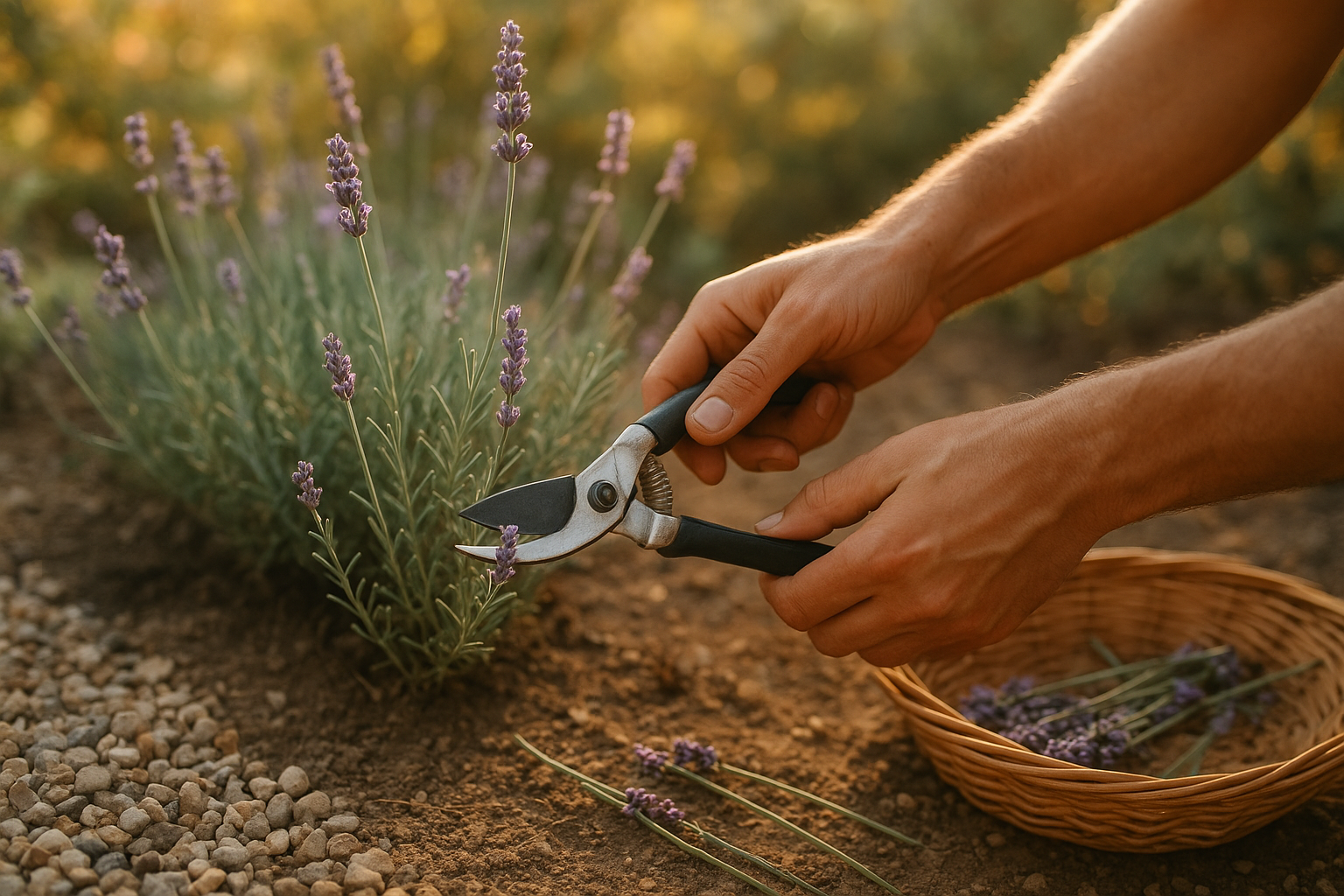
If your lavender is still in bloom, September can be a good time to cut a final small harvest for drying. Snip stems when the buds are colored but not fully open for the best fragrance. Hang the bundles upside down in a dry, airy spot, or spread sprigs on a screen if you want to dry them quickly.
After harvesting, remove spent flower stems so the plant does not waste energy on seed production. Use clean, sharp pruners and make cuts just above leafy growth. A tidy plant is less likely to become lanky and open at the center, which helps airflow and keeps the shrub looking compact.
Tip: Never cut hard into the woody base. Lavender usually does not resprout well from old wood, and a deep cut can leave an ugly gap that never fills in.
2. Prune lightly, not heavily
September is not the time for a big haircut. Think of this as shaping, not renovation. Light pruning helps keep the plant manageable and encourages a neat mound, but heavy pruning can stimulate tender new growth that is vulnerable to frost.
Trim back the soft green stems by about a third at most, depending on the plant’s size and condition. The goal is to remove long, leggy stems and rounded flower stalks while keeping plenty of healthy foliage. If your lavender has flopped open in the center, remove a few of the oldest outer stems to improve the shape, but stop well before the woody crown.
- Use bypass pruners for clean cuts.
- Sanitize blades first if you have been working with diseased plants.
- Stop pruning if you reach brown, leafless wood.
- Leave enough foliage for the plant to keep making energy before dormancy.
3. Reduce watering as the weather cools
Lavender prefers drier conditions, especially in fall. As temperatures drop and growth slows, the plant uses less moisture than it did in summer. If you keep watering on a summer schedule, roots can sit in damp soil too long, which increases the risk of rot.
Instead of watering on a fixed routine, check the soil first. Stick a finger into the ground or use a moisture meter. Water only when the top few inches of soil are dry, then water deeply at the base of the plant. Avoid spraying the foliage, and skip overhead irrigation whenever possible.
Rule of thumb: in September, it is usually safer to give lavender a little too little water than a little too much. Established plants are naturally drought-tolerant and generally recover better from brief dry spells than from soggy roots.
4. Check drainage before winter rain arrives
Lavender hates wet feet. September is a smart time to inspect the soil around the plant and make sure water can drain away quickly. If your lavender sits in heavy clay, a low spot, or a bed that stays damp after rain, it may struggle when winter moisture increases.
Look for warning signs such as yellowing lower leaves, weak growth, or soil that stays muddy long after watering. If drainage is poor, there are several easy fixes you can tackle now:
- Mix in coarse grit or small gravel around the root zone if the plant is already established and the soil is workable.
- Top-dress the bed with a thin layer of compost mixed with sharp sand only if the soil is not overly rich.
- Raise the planting area slightly with more well-drained soil during future garden renovations.
- Move container-grown lavender into a pot with drainage holes and a fast-draining mix.
For potted lavender, drainage is especially important. Empty saucers after rain or watering so the roots do not sit in standing water.
5. Prepare for winter without overprotecting the plant
Lavender is tough, but young plants and container-grown specimens can struggle when temperatures swing sharply. September is the time to prepare, not smother. Good winter prep means protecting roots from excess moisture and harsh exposure rather than wrapping the plant tightly.
If you live in a wet climate, the biggest winter threat is usually rot, not cold. Keep mulch light and airy, and avoid piling it directly against the crown. A thin layer of gravel mulch can help keep stems drier while still allowing air circulation. In colder zones, a bit of extra shelter from wind can also help, especially for plants exposed on the edge of a bed.
Container plants need the most attention. Move pots to a spot where they can stay drier, such as against a south- or west-facing wall, under the eaves, or in a protected but bright area. If your winters are severe, consider sinking the pot into the ground temporarily or storing it in an unheated garage with enough light and airflow to prevent problems.
Extra help for young lavender plants
Newly planted lavender needs gentler handling than an established shrub. For plants put in the ground this year, skip major pruning and focus on root health. Keep the soil lightly moist while the plant settles in, but do not let it stay wet. If fall planting was recent, avoid fertilizing now. Lavender does not need rich soil, and late feeding can push soft growth that is easily damaged by frost.
A quick September checklist for lavender
If you want the shortest possible version, this is the order to follow:
- Harvest any usable flowers.
- Deadhead faded stems.
- Trim lightly for shape only.
- Cut back on watering.
- Check that the soil drains well.
- Make simple winter adjustments for pots or exposed plants.
That small amount of work can make a noticeable difference. Lavender that enters winter with a tidy shape, dry roots, and good airflow is much more likely to bounce back with strong growth and fuller bloom clusters in spring and summer.
What not to do in September
Sometimes the most helpful care is knowing what to avoid. Do not fertilize lavender heavily now, because lush new growth is more likely to suffer in cold weather. Do not shear the plant into a tight ball, and do not remove old woody stems expecting them to sprout again. Also avoid covering the plant with thick, moisture-trapping mulch or plastic wraps that can hold dampness around the crown.
If you keep your September routine simple, lavender usually rewards you with healthier plants and better fragrance later on. A little attention now is often enough to carry this easy-care perennial safely into the next growing season.