How to Clean a Dishwasher Filter in 10 Minutes
If your dishwasher smells a little off or your glasses keep coming out with grit, the problem may not be your detergent. Many modern dishwashers have a removable filter at the bottom of the tub, and when it gets clogged with food bits and grease, the whole machine struggles.
The good news: learning how to clean a dishwasher filter is quick, free, and usually takes about 10 minutes. You do not need special cleaners—just warm water, dish soap, and a soft brush.
Why Your Dishwasher Filter Matters
The filter catches food particles before they recirculate onto your dishes or settle in the drain area. Consumer Reports notes that a clogged filter can leave dishes dirty and that cleaning it is a fast way to improve dishwasher performance. Some filters are manual-clean filters, while older or certain models may have self-cleaning grinder-style systems.
If you are not sure which type you have, check your owner’s manual or look up the model number on the manufacturer’s website. Do not force parts that do not seem removable.
How Often Should You Clean It?
For most busy households, once a month is a good habit. Clean it more often—every one to two weeks—if you run the dishwasher daily, cook greasy foods often, or scrape plates poorly before loading. If you use the dishwasher only occasionally, every couple of months may be enough.
You should also clean the filter right away if you notice:
- Food specks or sand-like grit on clean dishes
- A sour or musty smell inside the dishwasher
- Water draining slowly from the bottom
- Cloudy glasses that look worse than usual
- The machine sounds louder or strained during a cycle
What You Need
- Rubber gloves, optional but helpful
- Warm water
- Dish soap
- A soft toothbrush, bottle brush, or small scrub brush
- A sponge or microfiber cloth
- A shallow bowl or towel for carrying the filter to the sink
Avoid steel wool, metal brushes, harsh abrasive pads, and bleach-based scrubbing powders. These can damage plastic mesh, rubber seals, or stainless surfaces. LG’s dishwasher care guidance also warns against abrasive brushes on filters.
Step-by-Step: How to Clean a Dishwasher Filter
1. Empty the dishwasher
Take out any clean or dirty dishes first. Pull the bottom rack all the way out and set it aside. This gives you room to see the floor of the dishwasher.
2. Find the filter
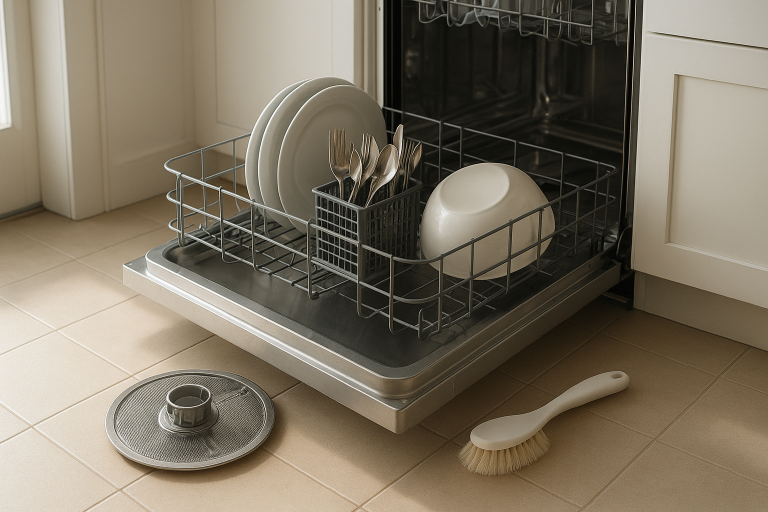
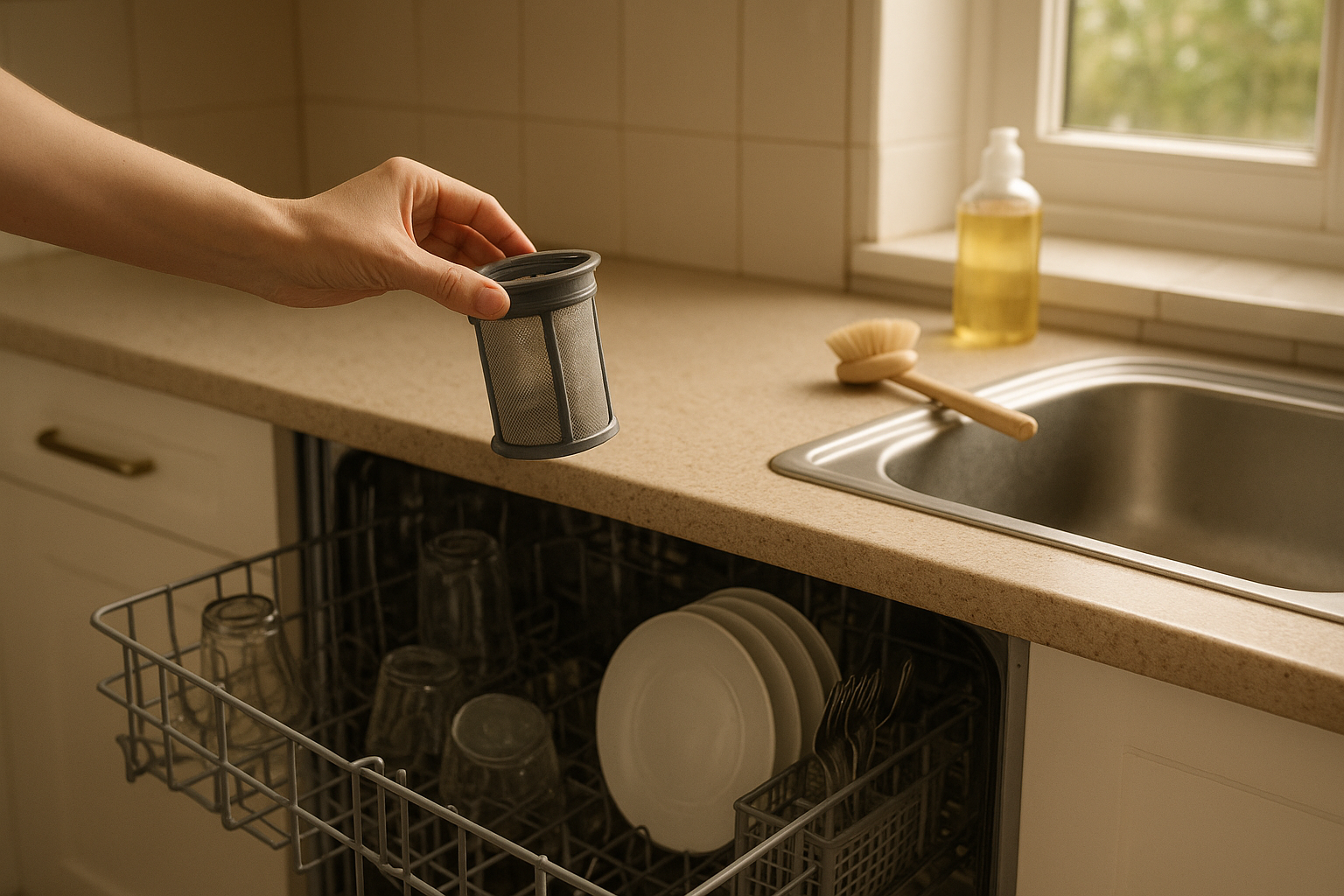
Most removable filters sit in the bottom center or back corner of the dishwasher tub, often below the lower spray arm. It may look like a round plastic cylinder, a flat mesh screen, or a two-part assembly with a twist-lock center piece.
If there is standing water, soak it up with a towel before reaching in. A small amount of water in the sump area can be normal, but a large pool may point to a clog or drain issue.
3. Remove the lower spray arm if needed
Some dishwashers let you access the filter without removing anything else. Others require lifting or unscrewing the lower spray arm first. If it lifts easily, set it on the counter. If it resists, stop and check the manual.
4. Unlock and lift out the filter
Many filters twist counterclockwise to unlock, then pull straight up. You may also have a flat screen that lifts out after the cylinder is removed. Move slowly so trapped food does not spill back into the dishwasher.
5. Rinse away loose debris
Hold the filter under warm running water. Rinse from both sides of the mesh or screen. If you see rice, seeds, eggshell pieces, labels, glass shards, or pasta bits, remove them carefully. Wear gloves if the filter is especially grimy.
6. Scrub gently with soap
Add a few drops of dish soap to a soft brush and clean the mesh, plastic frame, and crevices. A toothbrush works well around small holes and seams. The goal is to remove greasy buildup without stretching or tearing the screen.
If the filter has a stubborn greasy film, soak it in a bowl of warm, soapy water for 10 minutes, then scrub again. Do not use boiling water, which may warp plastic parts.
7. Wipe the filter well
Before reinstalling the filter, wipe the opening where it sits. Food scraps often collect in the sump area, around the rim, and under the lower spray arm. Use a damp sponge or cloth, and remove anything that could block drainage.
8. Check the spray arm holes
While the rack is out, look at the lower spray arm. If the tiny holes are clogged, rinse the arm under the sink and use a toothpick or soft brush to clear debris. Clogged spray arms can make dishes look dirty even after the filter is clean.
9. Reinstall the filter securely
Put the flat screen back first if your model has one, then insert the cylindrical filter. Twist it until it locks. This part matters: a loose filter can let debris back into the wash water or rattle during a cycle.
10. Run a hot empty cycle
After the filter is back in place, run an empty hot cycle or dishwasher cleaning cycle. For odor control, many cleaning experts recommend placing a cup of white vinegar in a dishwasher-safe container on the top rack and running the hottest cycle, but skip vinegar if your manufacturer advises against it.
Common Mistakes to Avoid
- Forgetting to lock the filter: If it is not seated correctly, food debris can bypass it.
- Using abrasive tools: Scratched or torn filter mesh will not trap particles properly.
- Rinsing dishes too aggressively: Most modern dishwashers are designed for scraped, not pre-washed, dishes. Scrape large food pieces into the trash, but you usually do not need to wash every plate by hand first.
- Ignoring the door gasket: Odors can come from the rubber seal, not just the filter. Wipe it with a damp, soapy cloth.
- Using too much detergent: Extra detergent can leave residue, especially in soft water.
What If the Filter Is Clean but Dishes Are Still Dirty?
If you cleaned the filter and the dishwasher still performs poorly, check a few other basics before calling for service.
- Make sure the spray arms spin freely and are not blocked by tall pans or utensils.
- Load bowls and plates with space between them so water can reach every surface.
- Use fresh dishwasher detergent; old pods or powder can clump and clean poorly.
- Run the kitchen sink hot before starting the dishwasher so the first fill is warmer.
- Check whether your rinse aid dispenser is empty, especially if glasses are spotty.
If there is standing water after every cycle, a burning smell, leaking, or grinding noise, stop using the machine and check the manual or call an appliance technician. Those symptoms may involve the drain hose, pump, motor, or disposal connection rather than the filter.
A Simple Monthly Dishwasher Routine
To keep the job easy, tie it to something you already do monthly, like changing the HVAC filter or deep-cleaning the kitchen sink.
- Clean the dishwasher filter.
- Wipe the door edges and rubber gasket.
- Check the spray arm holes.
- Run an empty hot cleaning cycle.
- Leave the door cracked for a short time afterward so the tub can dry.
Once you have done it the first time, cleaning a dishwasher filter becomes a quick kitchen habit. It helps prevent odors, improves wash results, and may save you from blaming perfectly good detergent for a problem hiding at the bottom of the machine.