How to Clean Window Tracks Without Making Mud
Window tracks collect a special kind of grime: dust, pollen, dead bugs, pet hair, and damp dirt packed into narrow corners. The trick is to clean them dry first, then wash what is left, so you do not turn the whole mess into gray mud.
This guide walks you through how to clean window tracks with simple tools you probably already own. It also covers clogged weep holes, mild mildew, and when to be more cautious about mold.
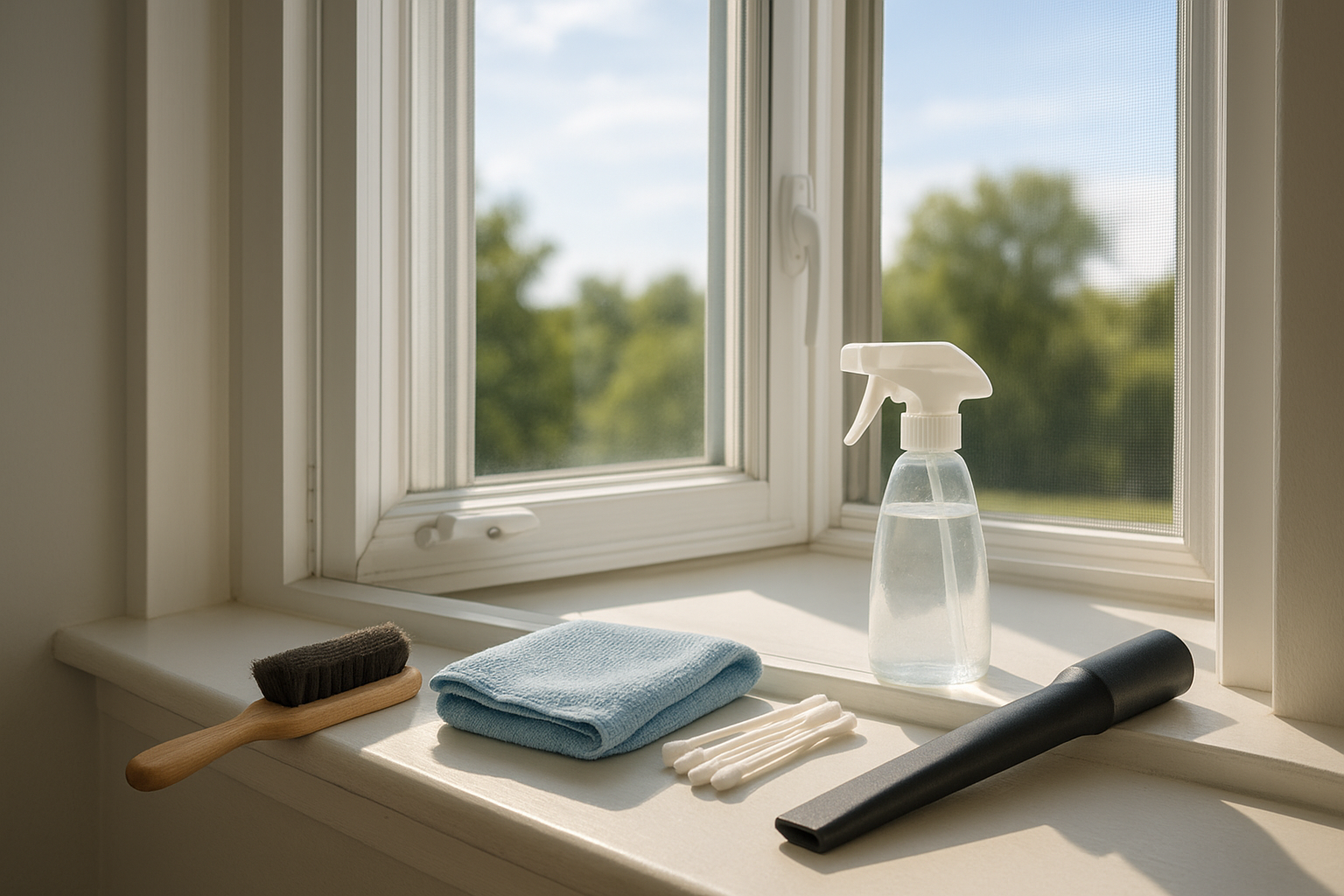
What You’ll Need
- Vacuum with crevice attachment
- Old toothbrush, small detail brush, or stiff paintbrush
- Microfiber cloths or rags
- Cotton swabs or folded paper towels
- Plastic putty knife, old gift card, or butter knife wrapped in a cloth
- Spray bottle with warm water and a few drops of dish soap
- Optional: white vinegar for mineral spots and odor
- Optional: disposable gloves and eye protection if you see mildew or heavy debris
For most window tracks, dish soap and water are enough. The CDC notes that cleaning with soap and water removes most germs from surfaces in typical household situations, and stronger disinfecting is usually only needed for specific circumstances. ([cdc.gov](https://www.cdc.gov/hygiene/about/when-and-how-to-clean-and-disinfect-your-home.html?CDC_AAref_Val=https%3A%2F%2Fwww.cdc.gov%2Fhygiene%2Fcleaning%2Fcleaning-your-home.html&utm_source=openai))
Step 1: Open the Window and Inspect the Track
Open the window as wide as it safely goes. Look closely at the lower track, the side channels, and the tiny drain openings, often called weep holes, near the outside edge of the frame.
If the window sticks, do not force it hard. Clean what you can reach first, then try again. Packed dirt in the track can make a window drag, but a bent frame, broken balance, or swollen wood may need repair rather than more scrubbing.
Step 2: Start Dry, Not Wet
This is the step most people skip. Before spraying anything, loosen dry debris with a toothbrush or detail brush. Work from the corners toward the center of the track. Use short strokes so you are not flinging dirt onto the glass or wall.
Then vacuum thoroughly with the crevice tool. If your vacuum attachment is too wide, hold a cardboard toilet paper tube over the nozzle and pinch the end into a narrow shape. It is not fancy, but it helps reach into tight channels.
Repeat the brush-and-vacuum step until you have removed as much dry material as possible. The cleaner the track is before water touches it, the faster the rest of the job goes.
Step 3: Wash with Soapy Water
Mix warm water with a few drops of dish soap in a spray bottle. Lightly mist the track. You want it damp, not flooded. Too much water can run into the wall cavity, drip onto the floor below, or carry dirt into places you cannot reach.
Let the soapy water sit for two or three minutes to soften stuck-on grime. Scrub with the toothbrush, paying attention to the corners and seams. Wipe up the dirty liquid with a microfiber cloth.
For narrow grooves, wrap a cloth around a plastic putty knife or old gift card and slide it along the channel. Cotton swabs work well for the very ends of the track, but folded paper towel over a thin tool is less wasteful for the long runs.
Step 4: Clear the Weep Holes
Weep holes let rainwater drain out of the window frame. If they are clogged with dust or dead insects, water can sit in the track and feed mildew or leak indoors during wind-driven rain.
Find the small slots or round openings on the lower outside portion of the frame. Use a cotton swab, pipe cleaner, toothpick, or soft brush to clear them gently. Avoid metal picks that can scratch vinyl, aluminum, or painted finishes.
After cleaning, pour a teaspoon or two of clean water into the track near the weep hole. It should drain outside. If it pools, keep clearing the opening and check the exterior side of the window for debris.
What If You See Mildew or Mold?
Small dark spots in a window track are often a sign that moisture has been sitting there. The first fix is moisture control: clean the track, keep weep holes open, and reduce condensation when possible. The EPA emphasizes that mold control depends on controlling moisture, not just wiping away the visible growth. ([epa.gov](https://www.epa.gov/mold/printable-version-brief-guide-mold-moisture-and-your-home?utm_source=openai))
For a small amount on a hard, nonporous window track, scrub with dish soap and water, then dry the area well. Wear gloves if the grime is heavy, and avoid breathing dust or debris while brushing. If you choose to use bleach for mold cleanup, the CDC advises ventilation and says not to use more than 1 cup of household bleach in 1 gallon of water. ([cdc.gov](https://www.cdc.gov/mold-health/about/clean-up.html?utm_source=openai))
Never mix bleach with vinegar, ammonia, or other cleaners. If you use bleach, use it only after regular cleaning, follow the product label, open windows or doors for airflow, and keep children and pets away until the area is rinsed if needed and fully dry. CDC guidance also says diluted bleach solutions need at least 1 minute of contact time when used for disinfecting, if the product directions are not available. ([cdc.gov](https://www.cdc.gov/hygiene/about/cleaning-and-disinfecting-with-bleach.html?utm_source=openai))
Call a professional or your landlord if you see widespread mold, recurring moisture damage, soft drywall, a musty smell that returns quickly, or mold near HVAC vents. Those are signs that the problem may be bigger than a dirty track.
Should You Use Vinegar and Baking Soda?
You can use vinegar in a limited way, especially for light mineral deposits on glass or non-stone surfaces, but it is not magic. Vinegar is acidic and can help with some hard-water residue, but it is not a replacement for an EPA-registered disinfectant. The American Cleaning Institute says vinegar is not a disinfectant and will not work like a registered disinfecting product. ([cleaninginstitute.org](https://www.cleaninginstitute.org/cleaning-tips/clean-home/ask-aci/ask-aci-cleaning-vinegar?utm_source=openai))
Baking soda can be useful as a gentle abrasive paste for stubborn dirt, but mixing baking soda and vinegar mostly creates fizz. If you like using both, use them separately: scrub with a baking soda paste, wipe it away, then use diluted vinegar only if the window material can handle it.
How to Clean Wooden Window Tracks
Wood tracks need a lighter touch than vinyl or aluminum. Skip soaking sprays. Vacuum first, then wipe with a barely damp soapy cloth. Dry immediately with a clean towel.
If paint is peeling, wood is soft, or black staining keeps returning, do not keep adding water. That can make the damage worse. Let the area dry, then consider repainting, sealing, or repairing the sash or sill once the moisture source is fixed.
How Often to Clean Window Tracks
For most homes, clean window tracks twice a year: once in spring when pollen season settles down, and once in fall before you close windows for colder weather. If you live near a dusty road, keep windows open often, have shedding pets, or deal with condensation, check them every one to two months.
A quick maintenance clean takes only a few minutes. Vacuum the visible debris, wipe the lower track with a damp cloth, and make sure the weep holes are open. That small habit prevents the packed-in grime that turns this into a bigger chore.
Common Mistakes to Avoid
- Spraying first: Water turns loose dust into sludge. Brush and vacuum before washing.
- Flooding the track: Use a light mist, not a soaking spray.
- Ignoring the drain holes: Clean tracks still cause trouble if water cannot escape.
- Using sharp metal tools: They can scratch vinyl, aluminum, and painted wood.
- Mixing cleaners: Especially avoid combining bleach with vinegar or ammonia.
- Leaving the track wet: Dry it well so mildew is less likely to return.
A Simple 10-Minute Routine
- Open the window and brush debris toward the center.
- Vacuum the dry dirt with a crevice tool.
- Lightly spray with warm, soapy water.
- Scrub corners and grooves with a toothbrush.
- Wipe with a microfiber cloth wrapped around a flat plastic tool.
- Clear the weep holes.
- Dry the track completely.
Clean window tracks make windows easier to open, reduce musty grime, and help rainwater drain the way it should. Start dry, use only as much moisture as you need, and the job stays simple instead of turning into a muddy mess.