How to Flush a Tankless Water Heater with Vinegar
If your tankless water heater is slow to deliver hot water, throws service reminders, or has never been flushed, mineral scale may be part of the problem. The good news: many homeowners can handle a basic vinegar flush with a bucket, pump, and a little patience.
This guide explains how to flush a tankless water heater with vinegar in plain English. Always check your own model’s manual first, because valve layout, power instructions, and approved cleaners can vary by brand.
Why Tankless Water Heaters Need Flushing
Tankless water heaters heat water as it passes through a compact heat exchanger. In hard-water areas, minerals can build up inside those narrow passages. Over time, that scale can reduce flow, make the heater work harder, and trigger error or service codes.
Rinnai recommends flushing mineral deposits at least once a year and gives a vinegar-based procedure using 4 gallons of undiluted white vinegar. Noritz also describes descaling as routine maintenance and says homes with hard water may need periodic descaling based on the unit manual. ([rinnai.us](https://www.rinnai.us/residential/flushing-my-rinnai-tankless-water-heater?utm_source=openai))
Before You Start: Make Sure Your Heater Has Service Valves
This project is much easier if your tankless water heater has an isolation valve kit installed. You are looking for two small service ports near the cold-water inlet and hot-water outlet, usually with hose-thread caps. These allow you to circulate vinegar through the heater without running it through the whole house.
If you do not see service valves, do not start disconnecting plumbing at random. Call a plumber and ask about adding isolation valves. They make future flushing simpler and cleaner.
Tools and Supplies
- 4 gallons of undiluted white vinegar, or the descaler approved by your manufacturer.
- 5-gallon bucket.
- Small submersible utility pump.
- Two washer hoses or tankless flush hoses with 3/4-inch hose-thread ends.
- Adjustable wrench or pliers, used gently.
- Towels for drips.
- Gloves and eye protection.
- Your water heater manual, opened to the maintenance or flushing section.
Noritz’s descaling instructions call for a bucket, submersible pump, isolator valve kit, hose connections, and vinegar or an approved calcium/lime/rust remover. Rinnai’s homeowner flush procedure specifies 4 gallons, or 15.1 liters, of undiluted white vinegar and warns against chemical solutions not approved for potable-water equipment. ([help.noritz.com](https://help.noritz.com/index.php/knowledge-base/descale/?utm_source=openai))
Safety Notes You Should Not Skip
- Read your manual first. Some units have brand-specific steps, including whether power should be on or off during certain procedures.
- Shut off gas or electrical heating power as directed. For gas units, this usually means turning off the gas valve. For electric units, follow the manual and breaker instructions.
- Let the unit cool. Hot water trapped in the heater can scald.
- Do not mix cleaners. Use vinegar or the manufacturer-approved descaler, not a homemade chemical cocktail.
- Stop if valves are stuck, leaking, or corroded. A forced valve can turn a maintenance job into an emergency plumbing call.
How to Flush a Tankless Water Heater with Vinegar
1. Turn the heater off
Turn off the unit at the controller or power switch as your manual directs. Shut off the gas valve on a gas unit, or turn off the correct breaker for an electric unit if your manual calls for it. Do not rely on guessing here; different models have different restart procedures.
2. Close the hot and cold water valves
Close the main hot and cold water valves at the heater. These are usually the larger valve handles on the isolation kit. Closing them keeps vinegar in the heater loop instead of sending it into your home’s plumbing.
3. Remove the service-port caps carefully
Place a towel under the valves. Slowly remove the caps from the cold and hot service ports. A small amount of water may drip out. Keep the rubber washers inside the caps; you will need them when you put everything back together.
4. Connect the hoses
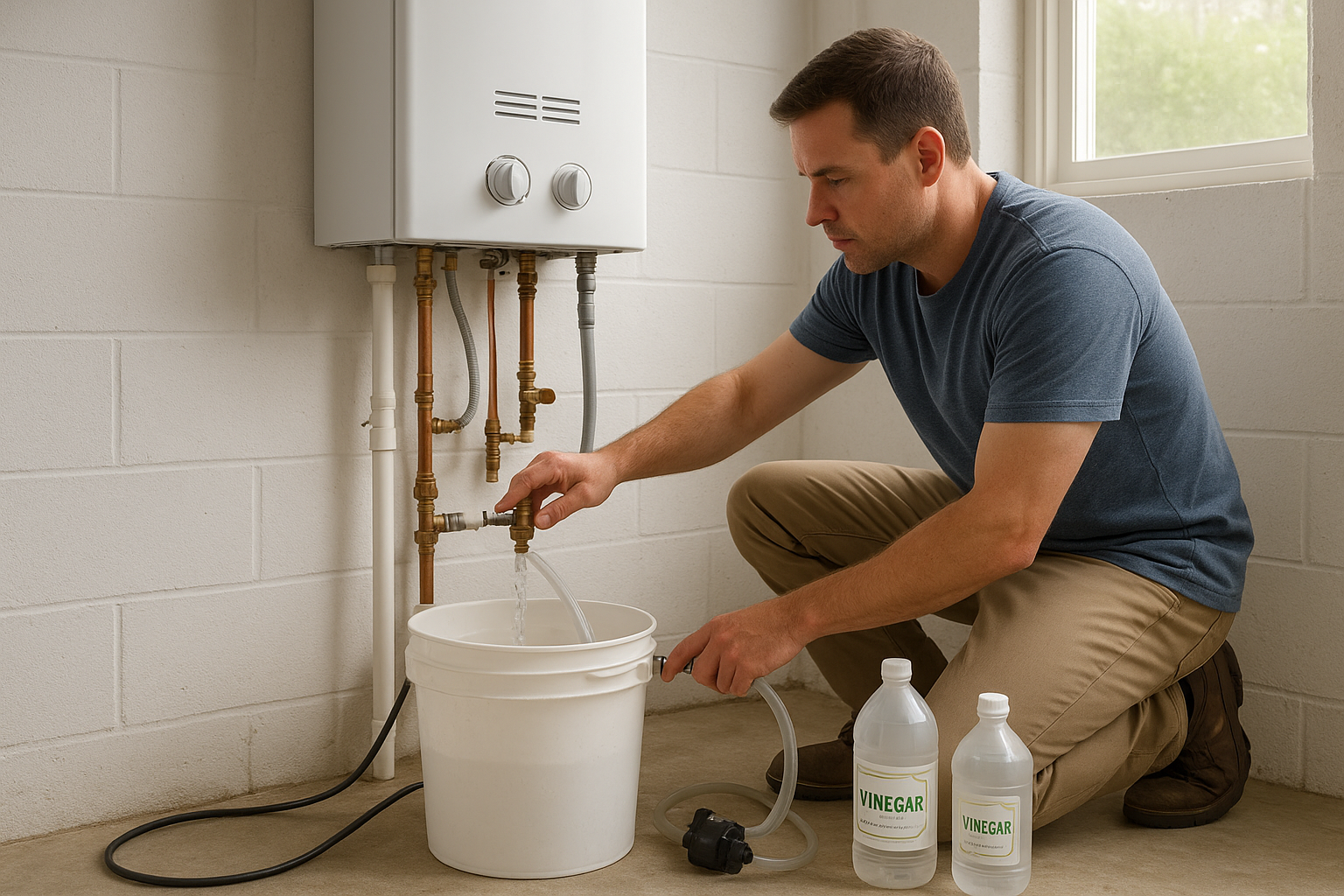
Attach one hose from the submersible pump outlet to the cold-water service port. Attach the second hose to the hot-water service port and place its loose end into the bucket. Tighten the hose connections snugly by hand, then just a little more if needed. Over-tightening can damage washers.
5. Add vinegar and open the service valves
Set the pump in the bucket and pour in the vinegar. For many homeowner procedures, 4 gallons is the right working amount because it keeps the pump submerged. Open the hot and cold service-port valves so the vinegar can circulate from the bucket, through the heater, and back into the bucket.
6. Run the pump
Plug in the pump and let the vinegar circulate. Rinnai says its flushing procedure may take up to 45 minutes. Noritz’s public descaling guidance says to pump vinegar for at least one hour, with an option to change the vinegar after 30 minutes for maximum effectiveness. ([rinnai.us](https://www.rinnai.us/residential/flushing-my-rinnai-tankless-water-heater?utm_source=openai))
For a general DIY flush, plan on 45 to 60 minutes unless your manual gives a different time. Stay nearby. Make sure the pump stays submerged, the return hose stays in the bucket, and no hose is leaking.
7. Turn off the pump and drain the vinegar
Unplug the pump. Close the cold service valve first, then remove the hose from the cold side. Leave the hot-side hose aimed into the bucket so the next step can rinse the vinegar out.
8. Rinse with fresh water
Open the main cold-water valve to push clean water through the heater and out the hot-side service hose into the bucket. Noritz’s guidance says to flush with fresh cold water for at least 5 minutes or until 20 gallons have passed through the heater. ([noritz.com](https://noritz.com/post/how-to-descale-a-noritz-tankless-water-heater?utm_source=openai))
This rinse matters. It clears vinegar, loosened mineral grit, and any sour smell before you return the heater to normal use.
9. Clean the inlet filter
Many tankless units have a small inlet water filter or screen. With the water valves off and pressure relieved, remove it according to the manual, rinse away grit under running water, and reinstall it by hand. Noritz includes filter cleaning as part of its descaling maintenance steps. ([noritz.com](https://noritz.com/post/how-to-descale-a-noritz-tankless-water-heater?utm_source=openai))
10. Reassemble and restart
Close the service valves. Remove both hoses. Reinstall the service-port caps with their washers in place. Open the main hot and cold water valves. Turn gas or electrical power back on according to the manual.
Finally, open a hot-water tap inside the house slowly. Let it run until the sputtering stops and the flow is steady. Rinnai notes that this can take 2 or 3 minutes as air leaves the pipes. ([rinnai.us](https://www.rinnai.us/residential/flushing-my-rinnai-tankless-water-heater?utm_source=openai))
How Often Should You Flush It?
Once a year is a practical rule for many homes, especially if you have hard water. If you have very hard water, no softener, or a large household using lots of hot water, your manual may recommend more frequent service. If you have softened water and light use, the interval may be longer, but annual inspection is still smart.
Common Mistakes to Avoid
- Using random chemicals. Stick with white vinegar or a descaler approved by your water heater manufacturer.
- Forgetting to rinse. A proper fresh-water flush clears vinegar and loosened scale.
- Running the pump dry. Keep enough vinegar in the bucket to cover the pump intake.
- Skipping the filter screen. Scale and grit often collect there after flushing.
- Ignoring the manual. Brand-specific instructions matter, especially for power, bypass valves, condensate drains, and error-code resets.
When to Call a Plumber
Call a pro if you do not have isolation valves, see active leaks, smell gas, have electrical concerns, or cannot get water to circulate through the heater. Also call if the unit continues to show error codes after a proper flush and restart. Scale may be only one part of the problem.
A vinegar flush is not glamorous, but it is one of those small maintenance jobs that can help a tankless water heater do its job better. Set aside an hour or two, follow your manual, and take your time with the valves and rinse step.