When to Plant Carrots for Fall and Winter Harvests
Carrots are one of the most rewarding cool-season crops to grow, especially when you want sweet, crunchy roots well into fall or even through winter. The key is not just sowing seeds, but sowing them at the right time so the plants mature in cooler weather instead of struggling in summer heat.
If you want a steady supply of homegrown carrots for autumn and winter harvesting, a little planning goes a long way. The right planting window depends on your climate, your first frost date, and the carrot variety you choose.
The best time to plant carrots for fall and winter
For most gardeners, carrots meant for autumn harvest are sown in mid to late summer, usually about 10 to 12 weeks before your expected first fall frost. That gives the roots enough time to size up while temperatures begin to cool, which improves flavor and texture.
For winter harvest, the timing is similar, but the goal is to have mature or nearly mature carrots ready before the ground freezes hard. In mild climates, carrots can stay in the ground through much of winter and be pulled as needed. In colder regions, you may need to protect the crop with mulch or a low tunnel so the soil stays workable.
A simple rule of thumb is this: count backward from your first frost date, then check the days to maturity on your seed packet. Add a little extra time if your soil tends to be slow to warm up or if you are growing in a short-season area.
How climate affects planting time
Carrots germinate best when soil temperatures are cool but not cold, ideally around 50°F to 75°F. Hot weather can make seeds slow to sprout or fail altogether. That is why late summer sowing often works better than spring in some regions.
Here is a general guide:
- Cool climates: Sow late summer for fall harvest; use row cover or mulch to extend into winter.
- Temperate climates: Sow in midsummer for fall carrots and again in late summer for overwintering.
- Mild winter climates: Sow in late summer or early fall for winter harvest from the garden bed.
If you are not sure how early to start, look at your local frost date and remember that carrots grow best in cool weather. It is usually safer to plant a bit too early than too late, because roots need time to size up before growth slows dramatically.
Choose the right carrot variety
Not all carrots perform the same in fall and winter. Some types mature quickly, while others are bred for storage or colder conditions. Picking the right variety can make a big difference in your harvest.
For autumn and winter crops, look for varieties described as:
- Early or quick-maturing if you are sowing later in the season
- Storage carrots if you want them to hold flavor in the ground or after harvest
- Cold-tolerant if you plan to leave roots in the soil through chilly weather
Shorter varieties can be a smart choice for heavy or shallow soil, while longer roots do better in deeply loosened beds. If your soil is rocky or compacted, choose round or stubby types instead of forcing a long carrot to struggle.
Prepare the bed for straight, sweet roots
Carrots need loose soil if you want straight roots instead of forked, twisted ones. Before planting, remove stones, break up clods, and work the bed to a depth of at least 8 to 12 inches if possible. Avoid adding fresh manure, which can lead to hairy, split roots.
Carrots also prefer soil that drains well but still holds moisture. A light compost top-dressing is usually enough to improve structure without making the bed too rich. If your soil crusts over after watering, mix in a small amount of compost and rake the surface smooth before sowing.
For the best results, make a shallow seed furrow, sprinkle seeds thinly, and cover with about a quarter-inch of fine soil or compost. Carrot seeds are tiny, so uneven sowing often leads to crowded seedlings and wasted space.
Keep seeds consistently moist
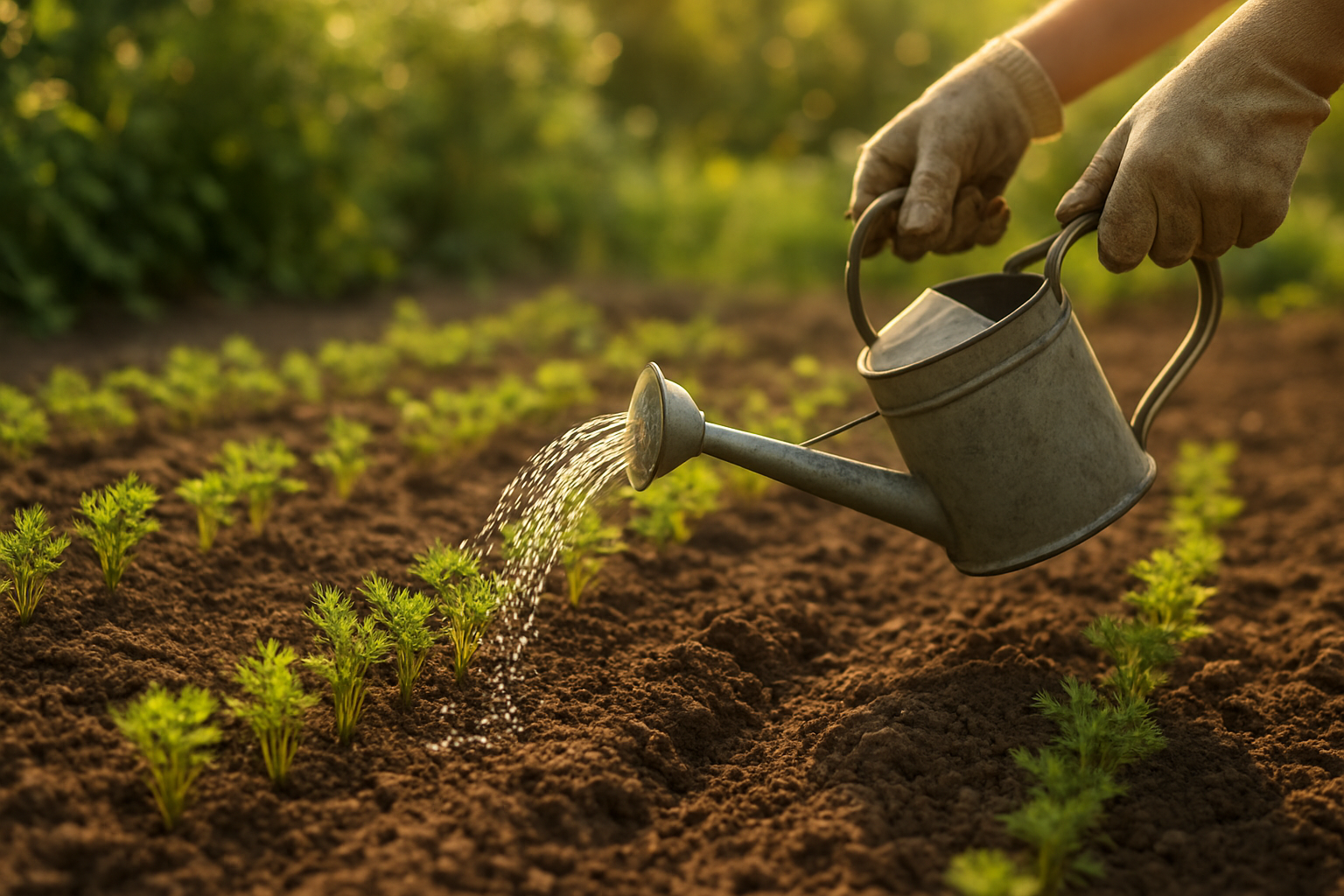
One of the hardest parts of growing carrots is getting them to germinate evenly. The seeds can take 1 to 3 weeks to sprout, and they dry out easily at the surface. For late-summer sowings, warm soil can make this even trickier.
To improve germination:
- Water the bed before planting so the soil is evenly moist.
- Cover seeds lightly with fine soil or vermiculite.
- Water gently to avoid washing seeds away.
- Keep the top layer damp until seedlings appear.
Many gardeners place a board, burlap, or cardboard over the row for a few days to help hold moisture. Check daily and remove the cover as soon as the first seedlings emerge.
Thin seedlings early
Carrots need room to develop full-sized roots. If seedlings grow too close together, they compete for light, water, and nutrients, resulting in small or misshapen carrots. Thin them once they are large enough to handle, usually when they have a couple of true leaves.
Leave seedlings spaced according to the variety, often about 1 to 3 inches apart. Thinning feels wasteful, but it is one of the most important steps for getting a good harvest. A crowded row will almost always produce smaller carrots.
How to extend the harvest into winter
If you want to harvest carrots after cold weather arrives, insulation is your friend. Once temperatures drop, mulch the bed with straw, shredded leaves, or another loose organic material. This helps moderate soil temperature and keeps the ground from freezing too quickly.
In areas with mild winters, carrots can often stay in the bed and be dug as needed. In colder climates, a low tunnel, cold frame, or thick mulch layer can stretch the harvest window. Just be sure the soil is still accessible when you want to pull roots.
Another useful trick is to stop watering once the roots are nearly mature and weather is cooling naturally. This can improve flavor and reduce the chance of cracking, though the soil should not be allowed to become bone dry.
Harvest at the right size
Carrots are usually sweetest when harvested at their mature size and before they become overly woody. Check the shoulders at the top of the root; if they are the right width for the variety, the carrot is likely ready.
For fall harvest, pull roots before prolonged hard freezes if you have no protection in place. For winter harvest, dig on milder days or use a garden fork carefully to loosen the soil. Pulling carrots when the ground is slightly moist makes the job much easier.
If you are storing carrots after harvest, remove the tops right away so they do not keep drawing moisture from the roots. Store unwashed carrots in damp sand, peat-free medium, or perforated bags in a cool place.
Common problems and how to avoid them
Carrots are simple to grow, but a few common issues can affect fall and winter crops:
- Poor germination: Usually caused by dry soil or crusting at the surface.
- Forked roots: Often the result of rocks, compacted soil, or fresh manure.
- Small carrots: Can happen if plants are not thinned or the sowing was too late.
- Cracking: Often linked to irregular watering.
- Woody texture: Usually caused by carrots sitting too long in warm weather.
Staying ahead of these issues is easier than fixing them later. Good soil prep, proper spacing, and timely sowing solve most carrot-growing problems before they start.
Quick checklist for success
If you want a simple plan, use this checklist before planting:
- Find your first fall frost date
- Count back 10 to 12 weeks for sowing
- Select a variety suited to your season length
- Prepare deep, stone-free soil
- Keep seeds evenly moist until they sprout
- Thin seedlings for proper spacing
- Mulch or protect beds if you want winter harvests
Once you understand when to plant carrots for autumn and winter harvesting, the rest becomes much easier. With the right timing and a little care, you can enjoy crisp, homegrown carrots long after many other crops have faded from the garden.