How to Clean a Garbage Disposal and Stop Sink Odors
A smelly garbage disposal can make the whole kitchen feel dirty, even when the counters are wiped and the dishes are done. The good news: you usually do not need harsh drain chemicals or a plumber for everyday odor control.
This guide shows how to clean a garbage disposal safely, freshen the splash guard, and prevent the most common gunky buildup that causes stink in the first place.
Why Garbage Disposals Start to Smell
Most disposal odors come from small bits of food stuck under the rubber splash guard, along the grinding chamber, or in the drain line. When those scraps sit in a damp, enclosed space, they break down and create that sour kitchen-sink smell.
Running water correctly matters. InSinkErator advises running water while the disposal is working and letting it run for a few seconds afterward to help clear the drain. It also recommends not pre-loading the disposal before turning it on. ([insinkerator.com](https://www.insinkerator.com/en-us/kitchen-better/what-can-i-grind?utm_source=openai))
Grease is another big culprit. It may go down as a liquid, but it can cling to pipe walls and food particles as it cools. The EPA’s WaterSense kitchen guidance specifically says not to pour grease into a food disposal system. ([epa.gov](https://www.epa.gov/sites/production/files/2017-02/documents/watersense-at-work_final_508c3.pdf?utm_source=openai))
What You’ll Need
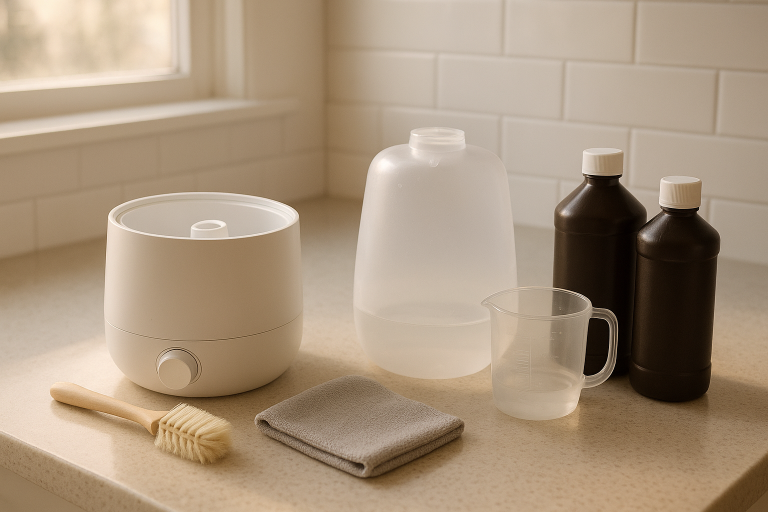
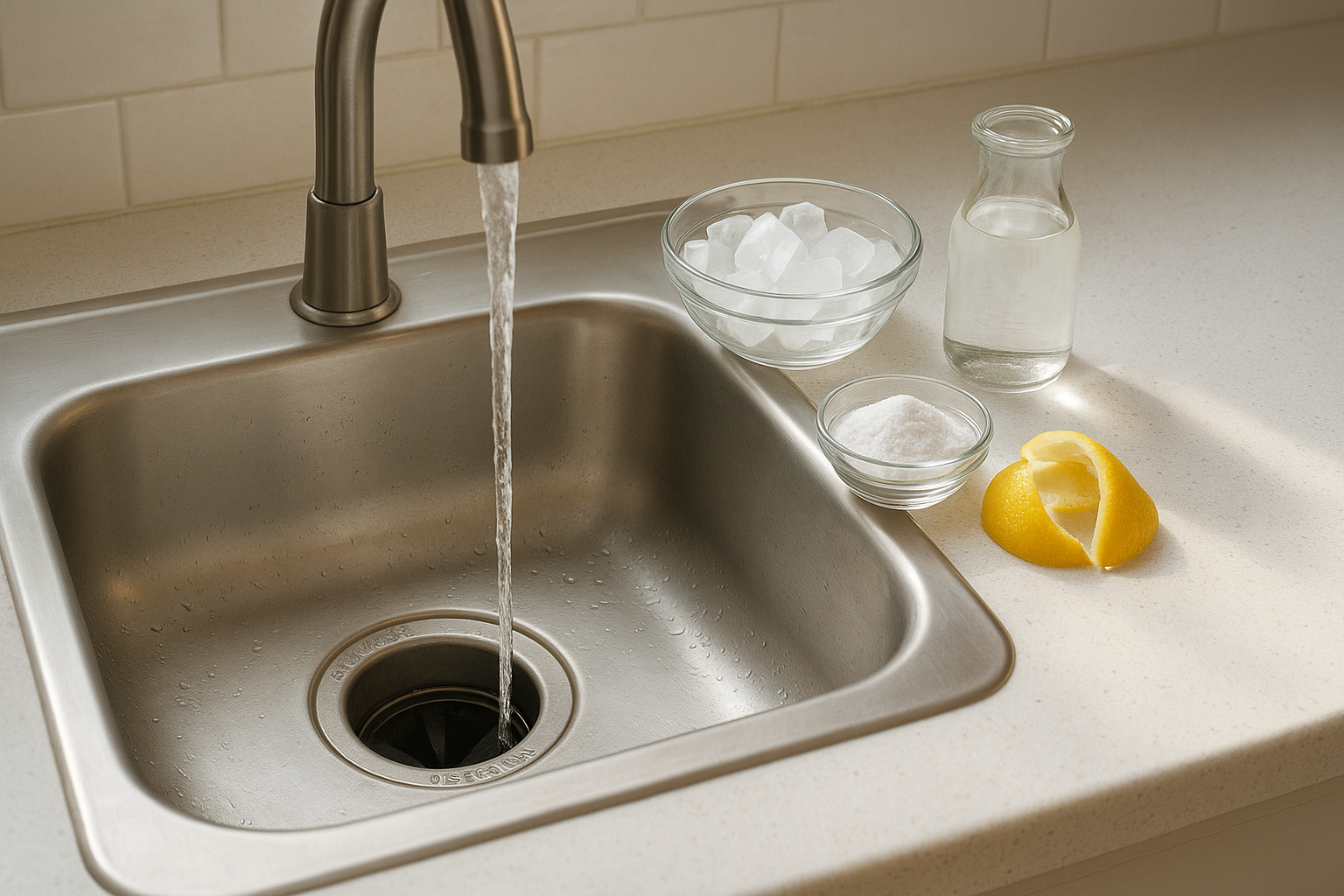
- Ice cubes, about 2 cups
- Cold water
- Dish soap
- Old toothbrush or small cleaning brush
- 1/2 cup baking soda
- 1 cup white vinegar
- Optional: a few small citrus peels for scent
- Flashlight
- Tongs or pliers for removing visible debris
Safety note: Never put your hand into a garbage disposal. If something is stuck, turn the unit off and use tongs or pliers. If the disposal is jammed, humming, leaking, or repeatedly tripping the reset button, stop and check the owner’s manual or call a pro.
Step 1: Flush the Disposal with Cold Water
Turn on a steady stream of cold water, then run the disposal for 20 to 30 seconds. Keep the cold water running for another 10 to 15 seconds after you switch the unit off.
Cold water is the better everyday choice because it helps keep fats more solid so they can be chopped and rinsed through, rather than melting into a slick coating inside the disposal and pipes. Hot water is useful for many kitchen cleaning jobs, but it is not your best friend when greasy food residue is involved.
Step 2: Clean the Rubber Splash Guard
If your sink still smells after a quick flush, the rubber splash guard is the first place to check. Food slime often hides on the underside of the flaps.
- Turn the disposal off.
- Lift each rubber flap gently with a spoon handle or gloved fingers, staying above the drain opening.
- Scrub the underside with dish soap and an old toothbrush.
- Rinse with cold water.
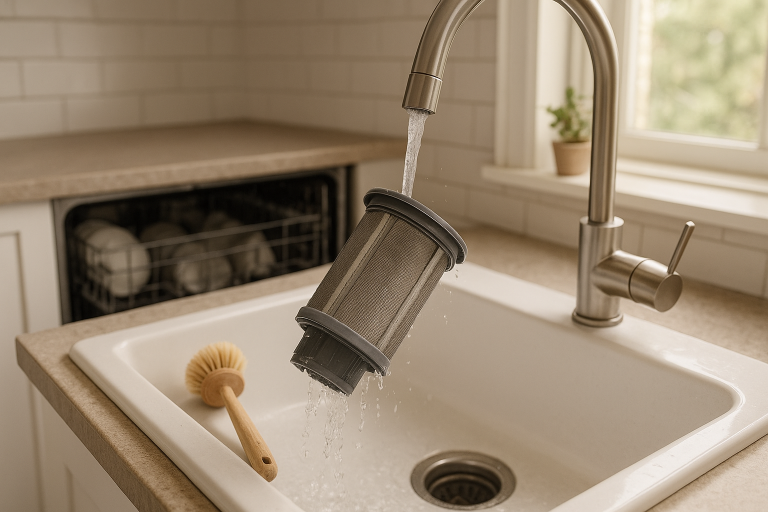
Some splash guards are removable; some are not. If yours lifts out easily, wash it in hot, soapy water in a separate basin, rinse well, and reinstall it. If it does not come out, clean it in place and take your time around each flap.
Step 3: Use Ice to Knock Loose Buildup
Ice is one of the simplest ways to freshen a disposal because the cubes tumble around the chamber and help knock loose soft buildup. InSinkErator lists ice cleaning as a care method for its disposals, and the process is quick. ([insinkerator.com](https://www.insinkerator.com/en-us/kitchen-better/faq?utm_source=openai))
- Turn on cold water.
- Add about 2 cups of ice cubes to the disposal opening.
- Turn on the disposal and let it grind until the loud crunching smooths out.
- Keep the cold water running for another 30 seconds.
If the disposal has not been cleaned in a while, you may see grayish water or small bits rinse away. That is normal. Do not pack the chamber full of ice so tightly that the motor struggles; feed it gradually if your disposal is small.
Step 4: Deodorize with Baking Soda and Vinegar
For a sour-smelling drain, baking soda and vinegar can help freshen the disposal area. Iowa State University Extension’s AnswerLine suggests pouring 1/2 cup baking soda and 1 cup white vinegar into drains or garbage disposals, then letting it fizz for 10 to 15 minutes. ([blogs.extension.iastate.edu](https://blogs.extension.iastate.edu/answerline/2026/05/05/keep-bacteria-out-of-your-kitchen/?utm_source=openai))
- Pour 1/2 cup baking soda into the disposal.
- Slowly add 1 cup white vinegar.
- Let the mixture fizz for 10 to 15 minutes.
- Flush with cold water while running the disposal briefly.
This is for odor and light residue, not a serious clog. If water is backing up into the sink, baking soda and vinegar are unlikely to fix the real problem. Avoid chemical drain cleaners in a disposal unless your owner’s manual specifically allows them; some products can be hard on parts and dangerous if they splash back.
Step 5: Add a Light Citrus Freshener
Once the disposal is clean, a few small citrus peels can leave a fresh scent. Use only thin strips or small pieces, not a whole lemon half, and run plenty of cold water.
Citrus is a finishing touch, not the main cleaning step. If you use peels to cover up odor without cleaning the splash guard and chamber, the smell will usually come back.
What Not to Put Down a Garbage Disposal
A disposal is handy, but it is not a trash can. When in doubt, scrape plates into the trash or compost first. The EPA notes that composting food scraps can return nutrients and carbon to soil and support plant growth, making it a useful option for many kitchen scraps. ([epa.gov](https://www.epa.gov/sustainable-management-food/composting?utm_source=openai))
Avoid these common troublemakers
- Grease, oil, and fat: Wipe pans with a paper towel and throw the towel away.
- Large amounts of potato peels or starchy scraps: They can turn pasty and cling in pipes.
- Coffee grounds: A small accidental amount is not a disaster, but repeated dumping can collect in drains.
- Fibrous scraps: Celery strings, corn husks, onion skins, and artichoke leaves can wrap or mat together.
- Expandable foods: Rice, pasta, and oats can swell and make clogs worse.
- Non-food items: Twist ties, labels, plastic, glass, metal, and cigarette butts do not belong in the sink.
If you are on a septic system, be extra cautious. EPA SepticSmart materials advise homeowners to think carefully about what goes down the sink and to avoid sending grease, fats, and food waste into the system. ([epa.gov](https://www.epa.gov/sites/default/files/2018-09/documents/epa-septicsmart-kitchen.pdf?utm_source=openai))
A Simple Weekly Routine
For most kitchens, this five-minute routine is enough to keep odors away:
- Run cold water and the disposal after dish cleanup.
- Scrub the splash guard with dish soap once a week.
- Grind a small bowl of ice cubes with cold water.
- Use baking soda and vinegar when odors linger.
- Keep grease and bulky scraps out of the drain.
If your disposal smells rotten again within a day or two, the odor may be coming from the P-trap, dishwasher hose connection, or a partial clog farther down the line. A slow-draining sink, gurgling, leaks under the cabinet, or water backing up into the other basin are signs it is time to investigate beyond routine cleaning.
Bottom Line
The best way to clean a garbage disposal is also the simplest: cold water, a clean splash guard, ice for stuck-on residue, and an occasional baking soda and vinegar freshen-up. Pair that with smarter food-scrap habits, and your sink will smell cleaner with far less effort.