How to Clean a Humidifier with Vinegar Safely
A humidifier can make dry-season living much more comfortable, but only if it is kept clean. Standing water, mineral buildup, and leftover moisture can turn a helpful little machine into something you would rather not be breathing from.
This guide explains how to clean a humidifier with vinegar for everyday scale removal, when to disinfect it, and how to keep it fresher between cleanings. Always check your owner’s manual first, because some models have special parts, filters, or electronic bases that should never be soaked.
Why vinegar helps, and what it does not do
White vinegar is useful because it helps loosen the chalky mineral deposits that collect in humidifier tanks, caps, trays, and mist outlets. Those deposits are especially common if you use hard tap water. Vinegar is a cleaner and descaler, not a true disinfectant, so it should not be treated as a substitute for disinfecting when your manual calls for it.
The U.S. Environmental Protection Agency recommends cleaning portable humidifiers every third day and using distilled water to reduce the release of minerals into indoor air. The EPA also advises rinsing thoroughly after using any cleaning or disinfecting product so chemicals are not dispersed when the unit runs. ([epa.gov](https://www.epa.gov/indoor-air-quality-iaq/use-and-care-home-humidifiers?utm_source=openai))
What you need
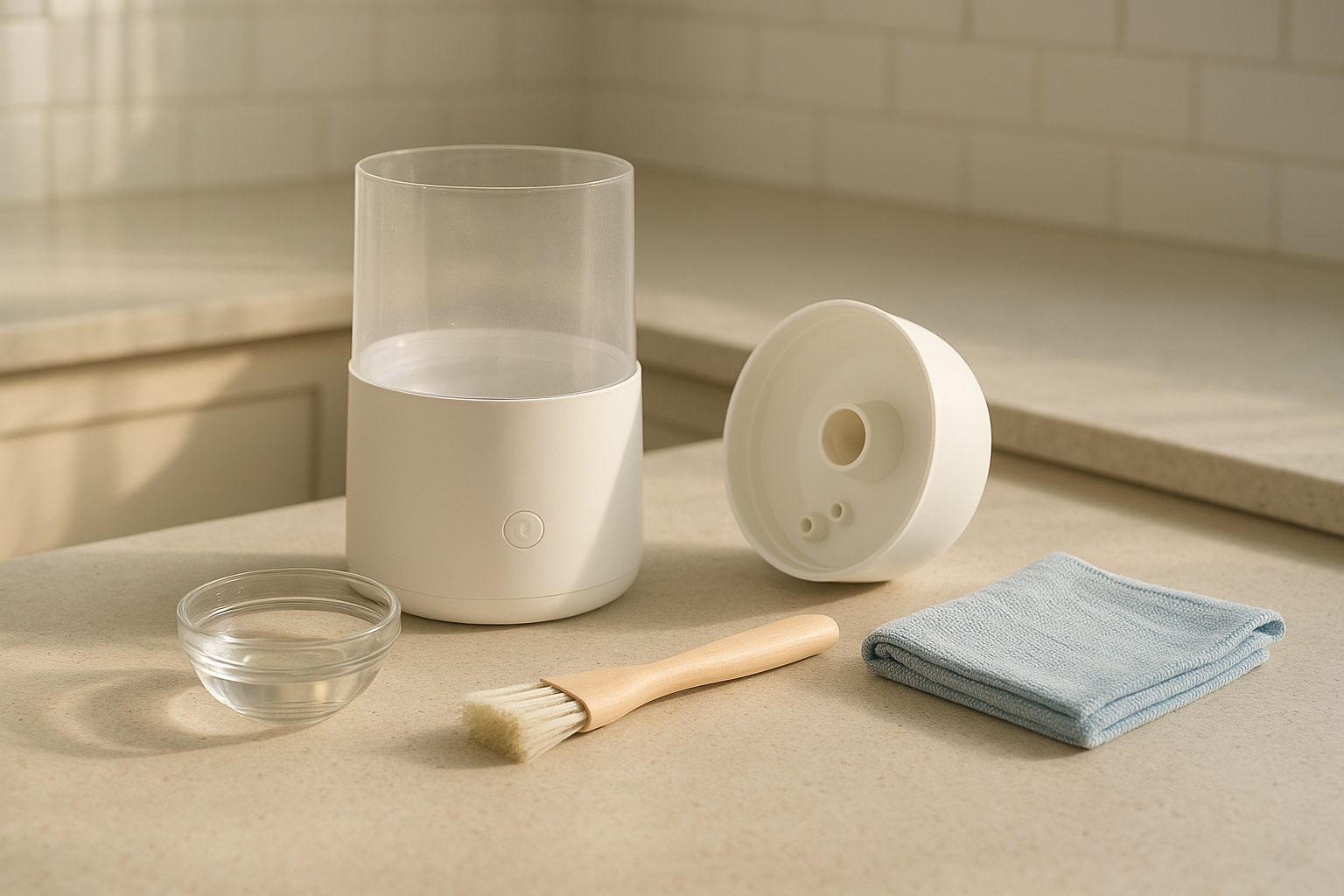
- Distilled white vinegar
- Clean water for rinsing
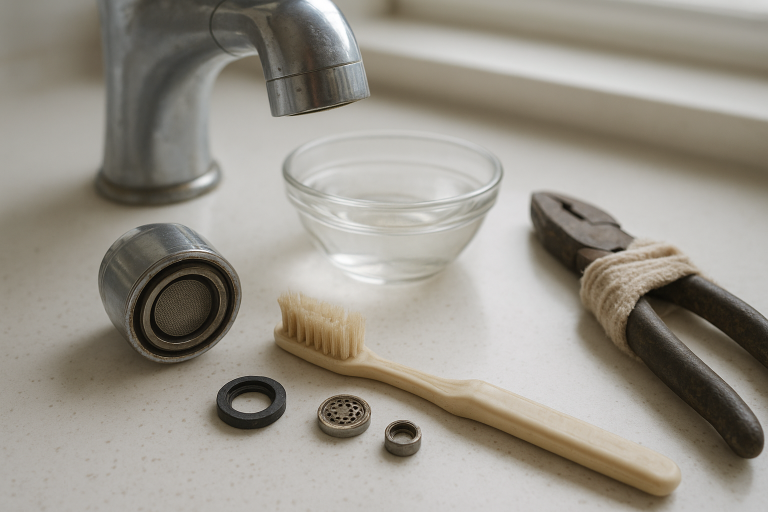
- A soft bottle brush, old soft toothbrush, or small detail brush
- Microfiber cloth or clean dish towel
- Cotton swabs for tight corners
- Rubber gloves, especially if you will disinfect afterward
Avoid abrasive scrub pads unless your manual specifically says they are safe. Scratched plastic can hold more residue over time, and rough scrubbing may damage gaskets or small mist parts.
Before you start: unplug and empty it
Turn the humidifier off, unplug it, and move it to a sink or towel-covered counter. Empty any standing water from the tank and base. If your humidifier has a removable wick, filter, cartridge, aroma tray, or demineralization cartridge, remove those parts and handle them according to the manufacturer’s directions.
Do not pour water into the motor housing or control panel. On many portable models, the base has a water tray but also contains electrical components. If you are not sure which areas can get wet, pause and read the manual.
Step-by-step: how to clean a humidifier with vinegar
1. Soak the tank
Fill the tank with enough white vinegar to cover the areas with visible scale. If the tank is only lightly cloudy, you can use a mixture of equal parts vinegar and water. For heavy crust around the cap or bottom seams, use straight vinegar.
Close the tank, gently swish the vinegar around, and let it sit for 20 to 30 minutes. Set the tank in the sink if the cap area tends to leak.
2. Soak the base or tray carefully
Pour vinegar into the water tray or reservoir area of the base, using only enough to cover mineral deposits. Keep vinegar away from vents, cords, buttons, and openings that lead to the motor. Let it sit for 20 to 30 minutes.
If your humidifier has a small ultrasonic disk, mist chimney, or narrow outlet, use a cotton swab dipped in vinegar to soften residue. Be gentle. These parts can be delicate.
3. Scrub loosened scale
After soaking, use a soft brush to lift softened mineral buildup. Pay attention to the tank cap threads, corners of the base tray, float valve, and mist outlet. If scale remains, add fresh vinegar and soak another 10 to 15 minutes rather than scraping hard.
4. Rinse several times
Dump the vinegar and rinse the tank, cap, and tray with clean water. Rinse more than once. This step matters because leftover cleaner can be carried into the air the next time the humidifier runs. The EPA specifically recommends rinsing tanks thoroughly with several changes of tap water after using cleaning or disinfecting agents. ([epa.gov](https://www.epa.gov/indoor-air-quality-iaq/use-and-care-home-humidifiers?utm_source=openai))
5. Dry before refilling
Wipe the outside and reachable inside areas with a clean cloth, then let parts air-dry if you are not using the humidifier right away. If you are running it again immediately, refill with fresh water after the vinegar smell is gone.
When and how to disinfect
Vinegar removes mineral scale, but disinfecting is a separate step. Follow your model’s instructions for approved disinfectants and dilution. Many manufacturers give specific directions for using diluted household bleach or hydrogen peroxide, but not all materials tolerate the same products.
If you disinfect, do it after cleaning away visible residue. Wear gloves, ventilate the room, and never mix bleach with vinegar, ammonia, or other cleaners. CDC cleaning guidance warns against mixing chemical products and recommends following product labels, using adequate ventilation, and keeping cleaners away from children and pets. ([stacks.cdc.gov](https://stacks.cdc.gov/view/cdc/88412/cdc_88412_DS1.pdf?utm_source=openai))
After disinfecting, rinse repeatedly until there is no cleaner odor left. Let all parts dry or refill with fresh water only after rinsing well.
How often should you clean a humidifier?
For a portable humidifier used daily, a practical routine looks like this:
- Every day: Empty old water, rinse the tank, and refill with fresh water.
- Every three days: Clean with vinegar to remove scale and residue, matching the EPA’s recommendation for portable humidifiers. ([epa.gov](https://www.epa.gov/indoor-air-quality-iaq/use-and-care-home-humidifiers?utm_source=openai))
- As directed: Replace filters, wicks, cartridges, or demineralization inserts on the schedule in your manual.
- Before storage: Clean, disinfect if recommended, rinse well, and dry completely.
MedlinePlus also notes that humidifiers should be drained and cleaned regularly because bacteria can grow in standing water, and it recommends distilled water instead of tap water. ([medlineplus.gov](https://www.medlineplus.gov/ency/article/002104.htm?utm_source=openai))
How to prevent white dust and crusty buildup
White dust is usually mineral residue from water, and it is most common with ultrasonic and impeller-style cool mist humidifiers. The easiest fix is to use distilled water, especially in bedrooms, nurseries, and small rooms where the humidifier runs for long stretches. The EPA recommends bottled water labeled “distilled” for humidifiers to help reduce mineral dispersal. ([epa.gov](https://www.epa.gov/indoor-air-quality-iaq/use-and-care-home-humidifiers?utm_source=openai))
You can also reduce buildup by keeping the humidity setting reasonable. Many homes feel comfortable in the 30% to 50% relative humidity range during dry months, but if windows are wet, walls feel damp, or musty smells appear, the humidifier may be running too high. Use a small hygrometer if your machine does not have a built-in humidity reading.
Common mistakes to avoid
- Letting water sit for days: Empty the tank when the humidifier is not in use.
- Running it with a vinegar smell: Rinse again before turning it on.
- Soaking the whole base: Only wet the water tray areas approved by the manual.
- Mixing cleaners: Vinegar and bleach should never be combined.
- Ignoring filters: A clean tank will not help much if the wick or filter is overdue for replacement.
End-of-season storage
Before putting a humidifier away, clean it thoroughly, disinfect if the manual recommends it, rinse well, and let every part dry completely. Store it with the tank cap loosened or off so trapped moisture does not linger. Keep filters or wicks out unless the manufacturer says otherwise; many are meant to be replaced at the start of the next season.
A clean humidifier does not take much effort, but it does need consistency. A quick daily empty-and-refill, a vinegar clean every few days, and a careful rinse afterward will keep the machine working better and make your dry-weather routine feel much fresher.