Pepper Plant Problems: Causes, Fixes, and Prevention
Pepper plants can be surprisingly rewarding: give them warmth, steady moisture, and good soil, and they’ll often keep producing for months. But when something is off, they usually show it fast through curled leaves, stunted growth, dropped flowers, or fruit that never seems to mature. The good news is that most pepper plant problems are fixable once you know what to look for.
If your peppers are looking tired, spotty, or unproductive, start with the basics before assuming the worst. Many issues come down to watering, temperature, nutrition, pests, or pollination—not a doomed plant.
1. Yellow Leaves: Usually a Watering or Nutrient Clue
Yellowing leaves are one of the most common pepper plant problems, and they can point to several different causes. The key is to look at where the yellowing starts and whether the plant is otherwise healthy.
Common causes
- Overwatering: Soil that stays soggy can suffocate roots and trigger yellow leaves.
- Underwatering: Plants may yellow and wilt if they dry out too often.
- Low nitrogen: Older leaves may turn pale first when the plant needs more nutrients.
- Cold stress: Cool nights can cause temporary yellowing, especially in young plants.
How to fix it
- Check the soil before watering. If the top 1 to 2 inches are still moist, wait.
- Water deeply so moisture reaches the root zone, then allow the surface to dry slightly.
- Feed with a balanced vegetable fertilizer if the plant has been in the ground for several weeks and growth looks weak.
- Mulch around the base to help hold even moisture without waterlogging the roots.
Tip: If the entire plant suddenly looks yellow and droopy even when the soil is wet, root problems may be the issue. In that case, improve drainage right away.
2. Blossom Drop: Why Flowers Fall Without Fruit
It’s frustrating to see pepper plants covered in blooms only to have them drop off before fruit forms. Blossom drop is common, especially during weather swings, and it’s often a sign that the plant feels stressed.
Most likely reasons
- Temperature extremes: Peppers set fruit best when nights are warm but not hot, and days are moderate. Very cool or very hot conditions can interfere with pollination.
- Inconsistent watering: Dry spells followed by heavy watering can stress the plant.
- Too much nitrogen: Plants may grow lush leaves but put less energy into flowers and fruit.
- Low pollination activity: In a protected area like a greenhouse or covered patio, flowers may need help transferring pollen.
What to do
- Keep watering steady, especially during flowering.
- Use a fertilizer that is lower in nitrogen and higher in phosphorus and potassium if plants are leafy but not setting fruit.
- Grow peppers in the warmest, sunniest spot you have, with shelter from cold wind.
- If plants are indoors or under cover, gently shake the stems or tap flowers to help pollen move.
Blossom drop often improves once weather stabilizes, so don’t rush to pull a plant that still looks vigorous.
3. Small or Misshapen Peppers: Stress in the Fruit Stage
When pepper fruits stay tiny, develop oddly, or have thin walls, the plant is usually struggling to support steady growth. This can happen even if the leaves look fine.
Possible causes
- Poor pollination: Fruits may not develop evenly if flowers aren’t fertilized well.
- Not enough sunlight: Pepper plants need full sun for strong fruiting.
- Overcrowding: Plants competing for light, water, and nutrients may produce fewer good-quality peppers.
- Uneven moisture: Sudden dry periods can slow fruit development.
How to improve fruit size
- Make sure plants receive at least 6 to 8 hours of direct sun.
- Space peppers properly so air and light can reach all sides of the plant.
- Harvest ripe peppers regularly to encourage more production.
- Maintain even watering rather than waiting for plants to wilt.
4. Leaf Curling and Distortion: Look for Pests or Heat Stress
Curled leaves can be harmless in a heat wave, but they can also signal pests or herbicide exposure. The shape of the curl and the condition of nearby growth can help narrow it down.
What to inspect
- New growth: If the newest leaves are twisted or crinkled, sap-sucking insects may be involved.
- Undersides of leaves: Check for aphids, thrips, or mites.
- Leaf color: Speckling, bronzing, or stippling can point to pest damage.
- Recent spraying or drift: Weed killer drift can deform pepper leaves badly.
Best response
- Rinse small pest infestations off with a strong spray of water.
- Use insecticidal soap if pests persist, following the product directions carefully.
- Avoid spraying during the hottest part of the day.
- If herbicide drift is suspected, keep the plant watered and protected; damaged leaves may not recover, but new growth can still be healthy.
5. Holes in Leaves or Chewed Fruit: Pests at Work
Chewed foliage usually means larger pests, while tiny holes or surface damage may come from insects feeding on the plant. Fruit damage can also invite rot later, so it’s worth addressing quickly.
Common culprits
- Flea beetles: Tiny round holes in leaves.
- Caterpillars: Ragged chewing and sometimes fruit damage.
- Slugs and snails: Irregular holes, often with slime trails.
- Aphids: Distorted leaves and sticky residue called honeydew.
Practical control steps
- Hand-pick larger pests in the evening or early morning.
- Keep weeds down around the bed so pests have fewer hiding spots.
- Use row covers early in the season if insects are a recurring issue, removing them once flowering starts if pollination is needed.
- Remove badly damaged leaves to improve airflow and reduce disease risk.
6. Slow Growth: Soil, Temperature, and Root Health
Peppers are warm-season crops, so slow growth can happen when soil is too cool or roots are struggling. If plants look stalled for weeks, check conditions before adding more fertilizer.
What to check first
- Soil temperature: Cold soil slows root activity and plant growth.
- Drainage: Waterlogged roots can’t take up nutrients properly.
- Transplant shock: Recently planted peppers may pause while they establish roots.
- Container size: Plants in small pots can become root-bound and stop growing well.
How to help
- Wait to plant outdoors until nights are reliably warm.
- Use dark mulch or black landscape fabric in cool climates to warm the soil faster.
- Pot up container peppers into larger containers if roots are circling tightly.
- Give transplants time; healthy roots often mean the top growth will catch up later.
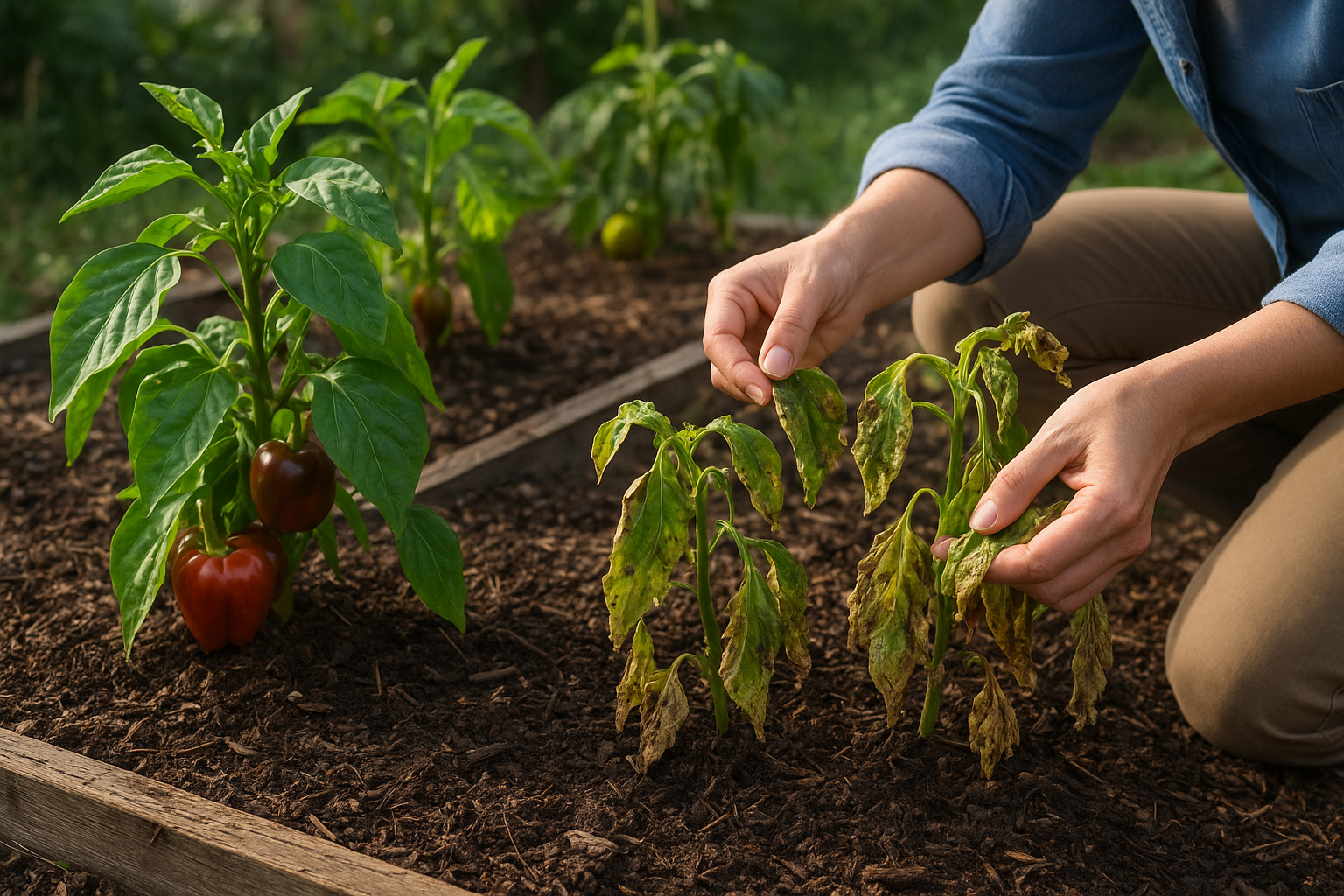
7. Disease Problems: Spots, Wilting, and Rot
Some pepper plant problems come from fungal or bacterial diseases, especially in humid weather or crowded beds. Early action can slow the spread and protect the rest of the crop.
Signs to watch for
- Dark or water-soaked leaf spots
- Wilting even when the soil is moist
- Dark lesions on stems or fruit
- Leaves dropping from the lower part of the plant first
How to reduce disease pressure
- Water at the soil line instead of overhead.
- Give plants enough space for air circulation.
- Remove fallen leaves and fruit from the bed.
- Rotate pepper beds each year if possible, especially if disease has been a repeated issue.
If a plant shows severe wilting with dark stem discoloration or rapidly spreading spots, it’s often best to remove it so the problem doesn’t spread.
Prevent Pepper Problems Before They Start
The easiest pepper harvest is the one that starts with healthy plants. A few habits can prevent many of the most common problems before they appear.
- Choose the right spot: Full sun, warm soil, and shelter from harsh wind.
- Improve soil: Mix in compost before planting for better structure and moisture retention.
- Water consistently: Deep, even watering beats frequent shallow sprinkles.
- Feed wisely: Too much fertilizer, especially nitrogen, can create lots of leaves and very few peppers.
- Inspect weekly: Catching pests or leaf changes early makes them much easier to manage.
When to Keep Waiting and When to Replace a Plant
Not every pepper plant problem means the plant is failing. If the stems are firm, the roots are intact, and new growth looks healthy, there’s a strong chance it will recover. On the other hand, if a plant is collapsing from the base, spreading disease rapidly, or has extensive root damage, replacing it may be the smarter choice.
For most gardeners, peppers are worth the patience. With steady care and a little troubleshooting, many stressed plants bounce back and produce well into the season.