How to Clean a Range Hood Filter Without the Mess
If your stovetop still smells greasy after dinner cleanup, the range hood filter may be the culprit. Learning how to clean a range hood filter is one of those small kitchen jobs that makes a big difference: better airflow, fewer lingering odors, and less sticky buildup above the stove.
The good news is that most metal grease filters can be cleaned with hot water, dish soap, and a short soak. Here is a practical, low-mess method that works for everyday home kitchens.
First, Know What Kind of Filter You Have
Most range hoods have one of two common filter types:
- Metal grease filters: These are usually aluminum mesh, stainless steel mesh, or baffle-style filters. They are reusable and can typically be washed by hand. Many manufacturers also allow dishwasher cleaning, though discoloration can happen and does not always mean the filter is damaged.
- Charcoal filters: These are used in many ductless or recirculating range hoods. Charcoal filters are not meant to be washed. Once they are saturated with grease and odor, they need to be replaced.
If you are not sure which type you have, check your range hood manual or look up the model number before soaking anything. When in doubt, hand-wash metal filters and replace charcoal ones.
How Often Should You Clean a Range Hood Filter?
For a typical home kitchen, clean the metal grease filter about once a month if you cook most days, fry foods, use a wok, or cook a lot of bacon, burgers, or high-heat meals. If you cook lightly, every 2 to 3 months may be enough.
A quick visual check helps: if the filter feels tacky, looks dull and yellowed, drips grease, or your hood seems weaker than usual, it is time to clean it. Grease buildup can also hold odors, so a smelly hood is another clue.
Supplies You’ll Need
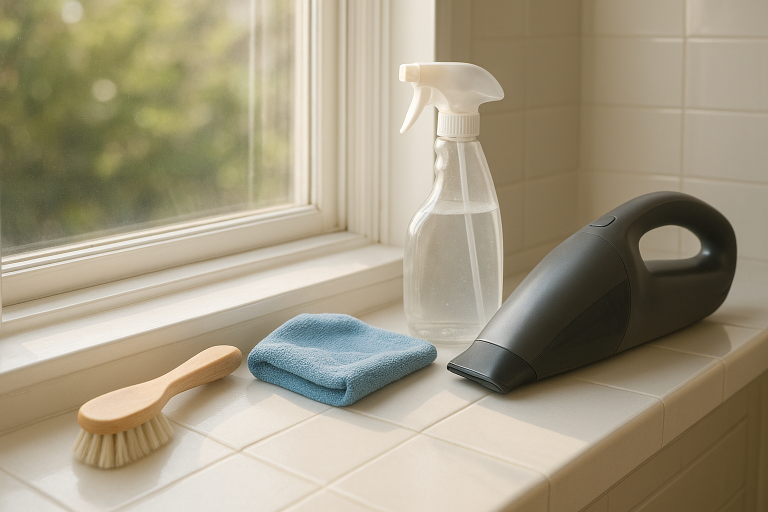
- Rubber gloves
- A sink, dish tub, or rimmed baking sheet large enough for the filter
- Very hot tap water
- Degreasing dish soap
- Baking soda
- Soft scrub brush or old toothbrush
- Microfiber cloth or towel
- Optional: kitchen degreaser safe for your filter material
Avoid harsh abrasives, steel wool, and oven cleaner unless your manufacturer specifically says they are safe. They can scratch, discolor, or damage the filter and nearby hood finish.
Step-by-Step: How to Clean a Range Hood Filter
1. Turn Off the Hood and Let Everything Cool
Make sure the fan and light are off. If you have just finished cooking, let the stovetop, hood, and filter cool before removing anything. Grease can stay warm longer than you expect.
2. Remove the Filter Carefully
Most filters slide, tilt, or pop out with a small latch or pull tab. Hold the filter with both hands as you release it so it does not drop onto the stovetop. If it is very greasy, place an old towel or sheet pan underneath while you remove it.
3. Knock Off Loose Grease and Crumbs
Before soaking, wipe the outer edges with a paper towel or scrape away any thick grease with a plastic scraper. Do not push hard into mesh filters; the goal is just to remove the worst buildup so it does not all end up in your sink.
4. Make a Hot Degreasing Soak
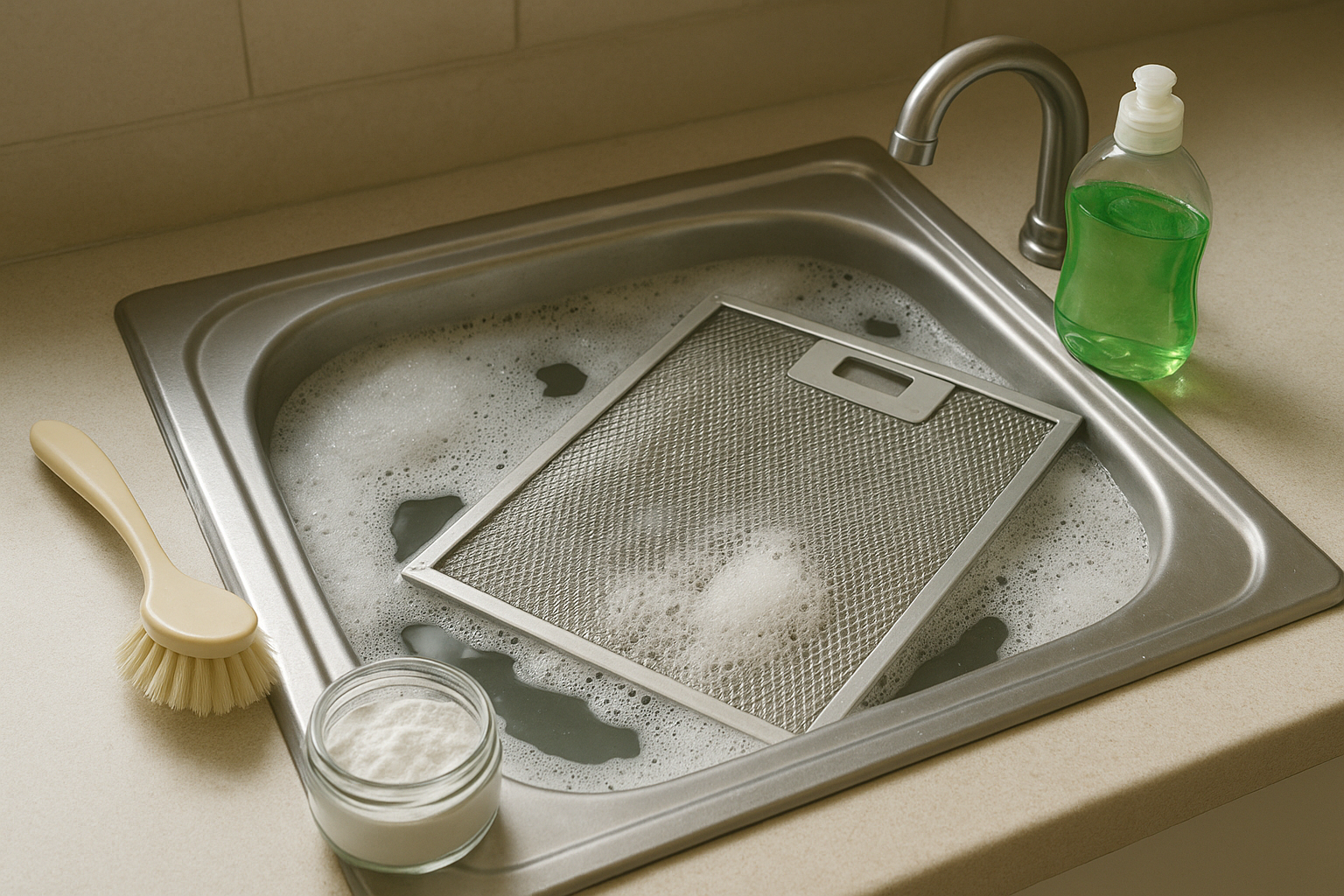
Fill the sink or a dish tub with enough very hot water to fully cover the filter. Add a generous squirt of degreasing dish soap and about 1/4 cup baking soda. Stir with a brush or spoon until the water is sudsy.
If your filter is too large for the sink, use a rimmed baking sheet and clean one half at a time, flipping it halfway through.
5. Soak for 15 to 20 Minutes
Place the filter in the hot soapy water and let it soak for 15 to 20 minutes. If the water turns brown and greasy quickly, drain it and repeat with fresh hot water, dish soap, and baking soda. A second soak is often better than aggressive scrubbing.
6. Scrub Gently
Use a soft brush to scrub both sides of the filter. Work with the direction of the mesh or baffles instead of mashing the brush straight down. For corners and tabs, an old toothbrush works well.
If there are stubborn sticky spots, add a drop of dish soap directly to the brush and scrub again. You can also use a manufacturer-approved degreaser, but rinse it thoroughly afterward.
7. Rinse Until the Water Runs Clear
Rinse the filter under hot running water from both sides. Keep rinsing until the water runs clear and the filter no longer feels slippery. Soap left behind can attract more grime, so do not rush this step.
8. Dry Completely Before Reinstalling
Shake off excess water, then lay the filter on a towel to air-dry. You can pat the edges dry with a microfiber cloth, but give mesh filters extra time so water is not trapped inside. Reinstall only when the filter is completely dry.
Can You Put a Range Hood Filter in the Dishwasher?
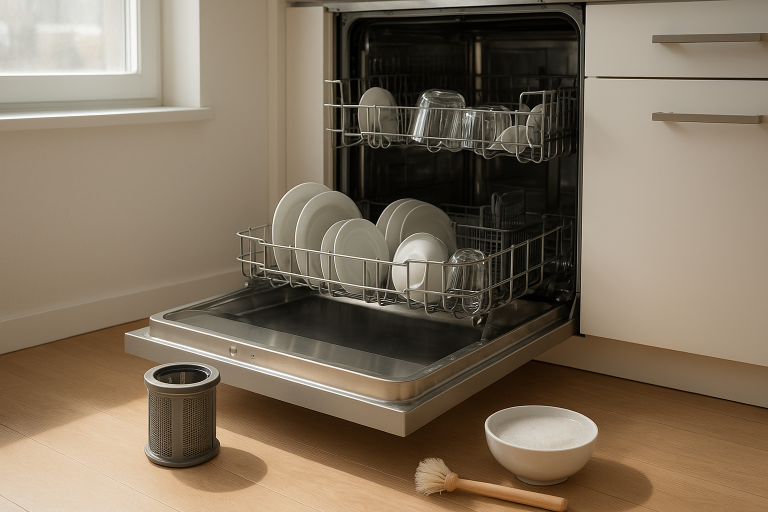
Many metal filters are dishwasher-safe, but not all. If your manual allows it, place the filter securely in the dishwasher so it will not rattle around. Use regular detergent and skip washing it with dishes if the filter is heavily greasy.
Be aware that aluminum filters may darken or discolor in the dishwasher, especially with certain detergents or hard water. That cosmetic change may not affect performance, but if you care about the appearance, hand-washing is the safer choice.
How to Clean the Hood While the Filter Is Out
With the filter removed, take a few minutes to wipe the underside of the hood. Spray a mild kitchen degreaser onto a cloth, not directly into the fan or electrical parts. Wipe greasy surfaces, then follow with a clean damp cloth and dry well.
For stainless steel exteriors, wipe with the grain to reduce streaks. Do not flood seams, switches, lights, or the fan housing with liquid.
What Not to Do
- Do not wash charcoal filters. Replace them instead.
- Do not use steel wool. It can damage metal mesh and scratch stainless surfaces.
- Do not reinstall a wet filter. Let it dry completely first.
- Do not ignore heavy grease inside the hood or duct. If you see thick grease beyond the removable filter, consider having the hood inspected or professionally cleaned.
- Do not mix cleaners. Stick with dish soap, baking soda, or one approved degreaser at a time.
Easy Maintenance Between Deep Cleans
After greasy cooking, run the hood fan for a few extra minutes to help move steam and odors out. Once the hood is cool, wipe the outer surface and underside with a damp, soapy cloth. This 60-second habit keeps grease from hardening into a sticky layer.
You can also set a recurring reminder for filter cleaning. Monthly is a good starting point for busy kitchens; adjust based on how quickly your filter gets tacky.
The Bottom Line
Cleaning a range hood filter is not glamorous, but it is simple when you let heat and soap do most of the work. Remove the filter, soak it in very hot water with degreasing dish soap and baking soda, scrub gently, rinse thoroughly, and dry completely before putting it back.
Do it regularly, and your kitchen will smell fresher, your hood will work better, and future cleanings will take a lot less elbow grease.