How to Descale a Dishwasher for Cleaner Dishes
If your glasses come out cloudy, the dishwasher smells a little stale, or you see a chalky white film around the tub, your machine may not be dirty so much as scaled. Hard water minerals can build up inside the dishwasher, especially around spray arms, filters, and the heating area, making clean dishes harder to get.
The good news: descaling a dishwasher is a simple maintenance job you can do in under an hour of hands-on time. The key is using the right product for your machine, cleaning the parts that trap debris, and not overdoing acidic cleaners.
What Descaling a Dishwasher Actually Does
Descaling removes mineral deposits, often called limescale, left behind by hard water. Those deposits can show up as white crust, cloudy glassware, dull silverware, or poor water spray.
It is slightly different from basic dishwasher cleaning. Cleaning removes grease, food residue, and odor-causing grime. Descaling focuses on hard water buildup. Many dishwasher cleaners are designed to handle both, but not all are. Bosch notes that its dishwasher descaler removes scale but does not clean the machine, so always read the label before you start. ([bosch-home.com](https://www.bosch-home.com/us/en/product/cleaning-and-care/descalers/dishwasher-descaler/00312330?utm_source=openai))
Before You Start: Check Your Manual
Dishwashers are not all built the same. Some manufacturers allow white vinegar occasionally, while others warn against vinegar or pure citric acid because acids may affect certain internal parts over time. Whirlpool says vinegar is acidic and using it too often could damage the dishwasher, while some Bosch manuals specifically advise against using pure citric acid or vinegar. ([whirlpool.com](https://www.whirlpool.com/blog/kitchen/how-to-clean-a-dishwasher.html?utm_source=openai))
For the safest route, use a dishwasher descaler or dishwasher cleaner labeled for your appliance type. If your machine is under warranty, this is especially worth doing.
What You’ll Need
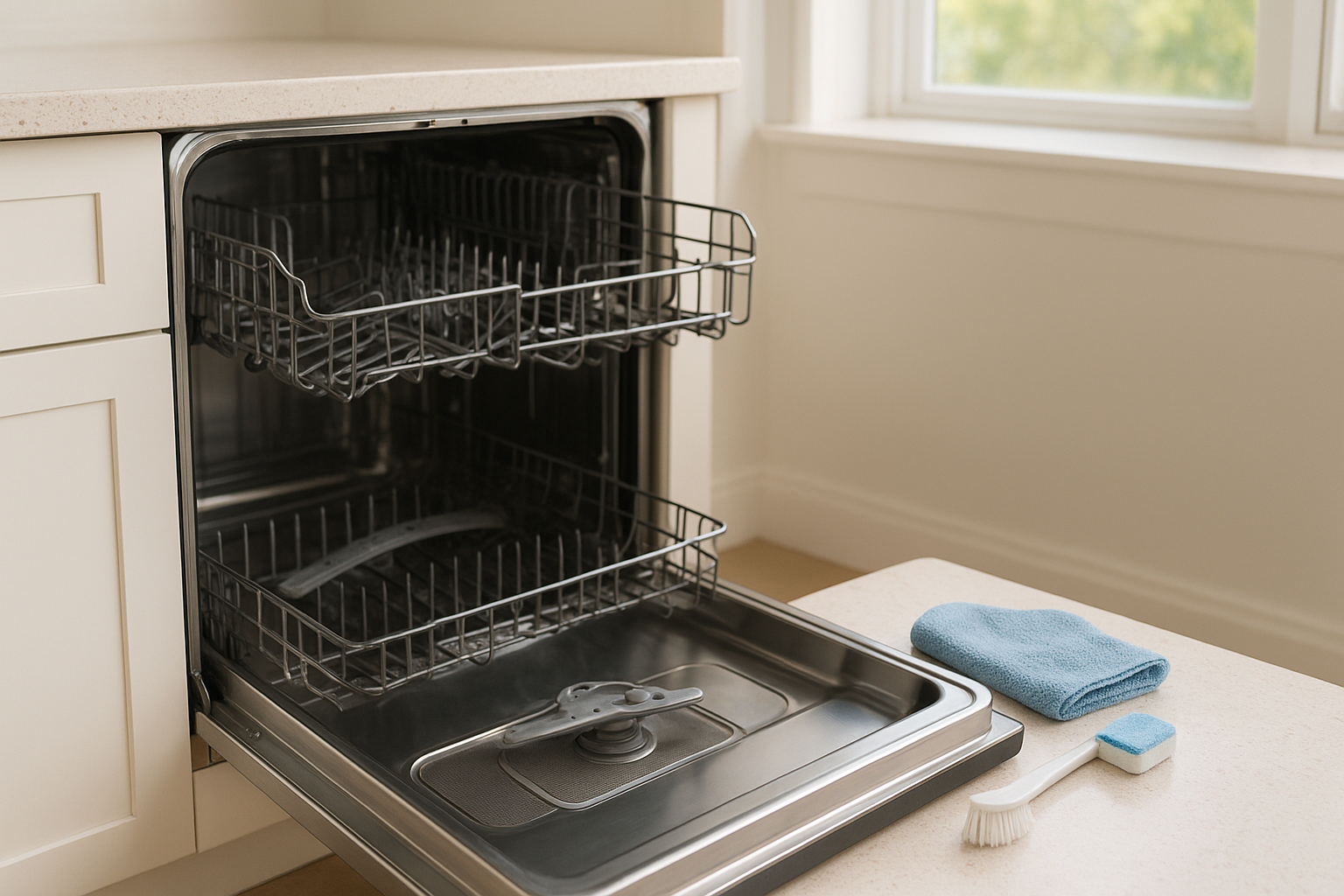
- Dishwasher descaler or dishwasher cleaner made for hard water buildup
- Small soft brush or old toothbrush
- Microfiber cloth
- Toothpick, wooden skewer, or soft pipe cleaner for spray arm holes
- Dish soap for hand-washing removable parts
- Gloves, if the filter area is grimy
Avoid bleach unless your dishwasher manual specifically says it is safe. Never mix bleach with vinegar, descalers, or other cleaners.
Step 1: Empty the Dishwasher Completely
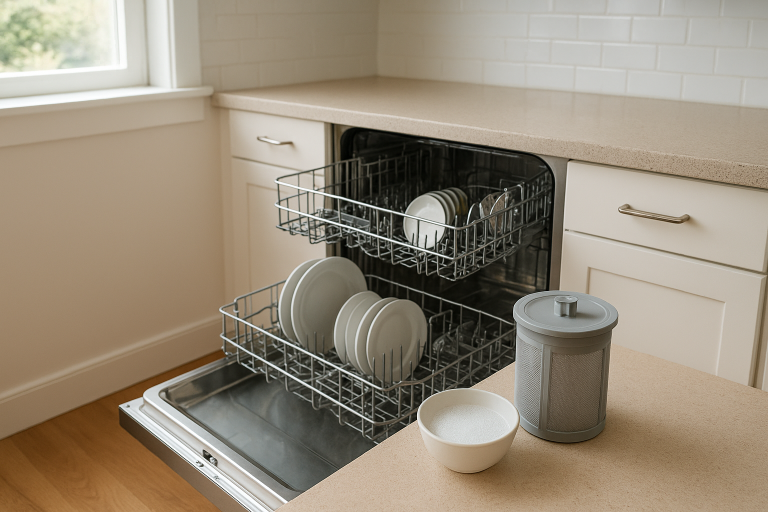
Take out every dish, utensil, and removable accessory you can safely remove. Descaling works best when the cleaner can circulate through the whole tub and internal water lines without dishes blocking the spray.
If your racks slide out easily, pull them forward so you can inspect the bottom of the tub. Look for labels, olive pits, broken glass, twist ties, seeds, and bits of plastic. Remove anything that could block the drain or filter.
Step 2: Clean the Filter First
A clogged filter can make a freshly descaled dishwasher perform like a dirty one. Food scraps and greasy residue restrict water flow, which means the descaler may not reach every area well.
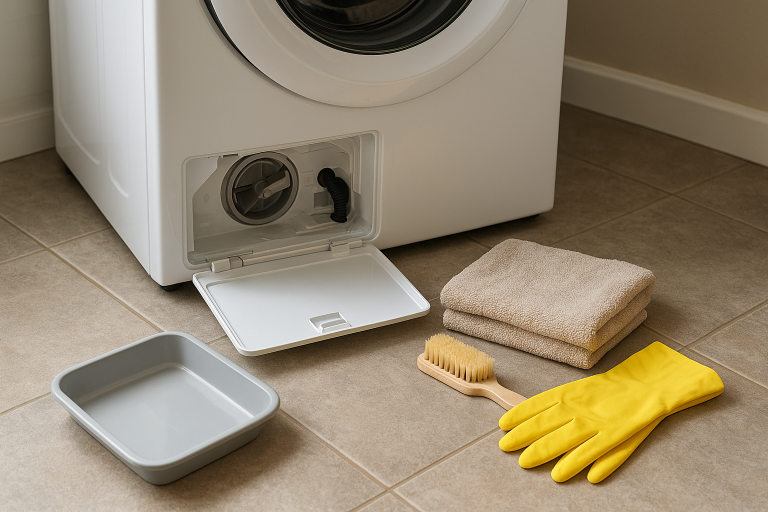
- Remove the bottom rack.
- Twist or lift out the filter according to your dishwasher manual.
- Rinse the filter under warm running water.
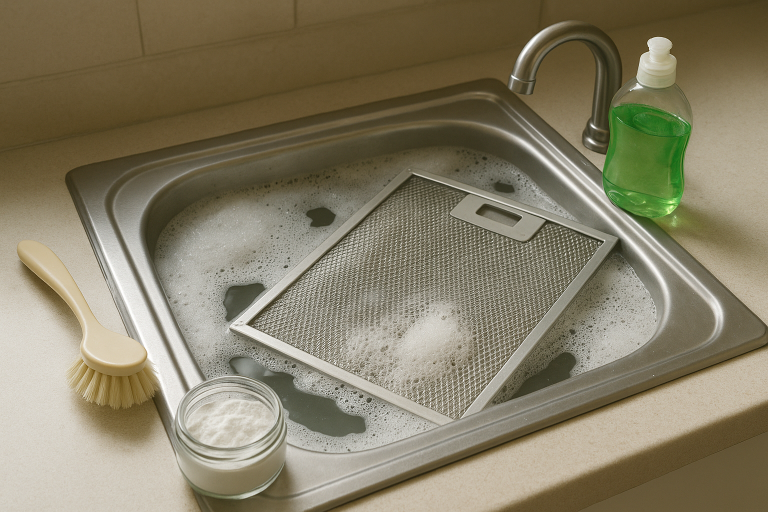
- Use a soft brush and a drop of dish soap to clean the mesh gently.
- Rinse well and reinstall it securely.
Thermador recommends cleaning the dishwasher filter every one to four months, depending on use, and after loads with heavy food soils or starches. If you cook often or run full loads daily, monthly is a smart rhythm. ([thermador.com](https://www.thermador.com/us/support/customer-care/dishwashers/how-to-clean-your-dishwasher?utm_source=openai))
Step 3: Check and Clear the Spray Arms
Spray arms do the real work of washing. If their tiny holes are clogged with minerals or food grit, dishes can come out gritty, spotted, or only partly clean.
Spin each spray arm by hand. It should move freely without hitting a pan handle, loose rack piece, or tall utensil. If your manual allows removal, take the spray arms out and rinse them at the sink. Use a toothpick or wooden skewer to gently clear clogged holes. Do not enlarge the holes or scrape aggressively.
Manufacturers including Bosch and Thermador point to spray arm maintenance as part of keeping a dishwasher cleaning properly, and limescale can block spray nozzles. ([thermador.com](https://www.thermador.com/us/support/customer-care/dishwashers/how-to-clean-your-dishwasher?utm_source=openai))
Step 4: Wipe the Door Gasket and Detergent Area
Before running the descaling cycle, wipe around the rubber door gasket, the lower door edge, and the detergent dispenser. These spots collect greasy film and mineral residue because they do not always get blasted directly by water.
Use a damp microfiber cloth. If the gasket is grimy, add a tiny amount of dish soap to the cloth, then wipe again with plain water. Avoid pulling hard on the gasket or digging under it with sharp tools.
Step 5: Run a Descaling Cycle
Follow the instructions on your dishwasher descaler. Most products are used in an empty dishwasher on a hot cycle, but placement varies. Some go in the detergent cup, some sit upright in the rack, and some are poured into the bottom of the tub.
Choose the hottest normal or heavy cycle available unless the product label says otherwise. If your dishwasher has a sanitize or high-temp option, check both the descaler label and your manual before using it.
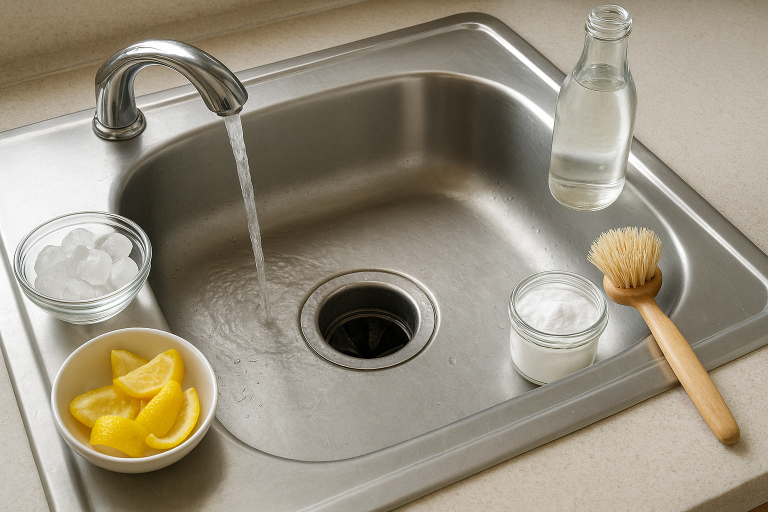
One useful trick for older machines: run the kitchen sink hot water until it is hot before starting the dishwasher. The American Cleaning Institute notes this can help older machines begin with hotter water, which may improve cleaning performance. ([cleaninginstitute.org](https://www.cleaninginstitute.org/cleaning-tips/clean-home/ask-aci/ask-aci-hard-water-residue?utm_source=openai))
Can You Descale a Dishwasher with Vinegar?
Sometimes, but be cautious. Some dishwasher brands provide vinegar instructions for occasional cleaning, while others discourage it. Whirlpool’s guidance mentions using vinegar and baking soda as one cleaning option, but also cautions that vinegar is acidic and should not be used too often. ([whirlpool.com](https://www.whirlpool.com/blog/kitchen/how-to-clean-a-dishwasher.html?utm_source=openai))
If your manual allows vinegar, use it sparingly and never combine it with bleach or commercial cleaners. If your manual says not to use vinegar, choose a manufacturer-approved dishwasher cleaner or descaler instead.
Can You Use Citric Acid?
Citric acid is common in many dishwasher cleaners and descalers because it helps dissolve mineral deposits. Consumer Reports recommends citric-acid-based dishwasher cleaners for removing deposits monthly, especially for hard water stains. ([consumerreports.org](https://www.consumerreports.org/appliances/dishwashers/how-to-clean-a-dishwasher-a1075685014/?utm_source=openai))
That does not mean loose citric acid powder is right for every machine. Some manuals warn against pure citric acid. A packaged dishwasher cleaner gives you a measured formula and clearer directions, which is safer for most households.
How Often Should You Descale a Dishwasher?
For many homes, descaling every one to three months is enough. If you have very hard water, run the dishwasher daily, or notice cloudy glasses returning quickly, monthly maintenance may be better.
Use these signs as your guide:
- White film inside the tub: Minerals are building up.
- Cloudy glasses: Hard water may be leaving deposits, though permanent etching is also possible.
- Grit on dishes: Check the filter and spray arms before blaming detergent.
- Weak cleaning on the top rack: A spray arm or water path may be partly blocked.
- Musty smell: Clean the filter and gasket, then run a cleaning cycle.
How to Prevent Scale from Coming Back
- Use rinse aid. It helps water sheet off dishes, reducing spots.
- Measure detergent carefully. Too much detergent can leave residue, especially with soft or moderately hard water.
- Clean the filter regularly. A clean filter supports better circulation.
- Do not overload racks. Water needs room to reach every surface.
- Keep spray arms clear. Tall utensils, cutting boards, and pan handles can block rotation.
- Consider a water softener solution. If scale returns fast, your home’s water hardness may need a bigger fix.
When Descaling Isn’t Enough
If dishes are still dirty after descaling, the problem may not be mineral buildup. Check for a damaged spray arm, failing inlet valve, clogged drain, weak water heating, or detergent that is old or clumped. Also make sure the filter is locked back in place; a loose filter can let debris recirculate onto dishes.
If you hear grinding, see standing water, smell burning, or notice leaks, stop using the dishwasher and call an appliance technician. Descaling is good maintenance, but it will not fix a mechanical failure.
The Bottom Line
To descale a dishwasher safely, start with the filter and spray arms, then run an empty hot cycle with a dishwasher-safe descaler. Use vinegar or pure citric acid only if your manual allows it, and do not make acidic cleaners an everyday habit.
Done regularly, this simple chore can help reduce cloudy glasses, improve spray performance, and keep your dishwasher from working harder than it needs to.