How to Clean a Dishwasher Filter and Stop Odors
If your dishwasher smells sour or leaves little gritty bits on glasses, the filter is the first place to check. Learning how to clean a dishwasher filter takes only a few minutes, and it can make a tired-looking dishwasher work much better.
Most newer dishwashers have a removable filter in the bottom of the tub. It catches food particles before they recirculate onto your dishes, which is helpful—until the filter gets packed with grease, seeds, labels, and crumbs.
Why the Dishwasher Filter Gets So Dirty
A dishwasher is not a garbage disposal. Even if your machine is powerful, large food scraps, rice, pasta, corn kernels, bits of onion skin, and paper labels can collect in the filter. Over time, that buildup can cause odors, cloudy dishes, standing water, or food specks redepositing during the wash.
Manufacturer guidance commonly recommends cleaning the dishwasher interior regularly and paying attention to the filter, door gasket, and spray arms. Whirlpool, for example, advises cleaning the filter and running separate vinegar and baking soda cycles as part of routine dishwasher care, not mixing them together at the same time. ([whirlpool.com](https://www.whirlpool.com/blog/kitchen/how-to-clean-a-dishwasher.html?utm_source=openai))
How Often Should You Clean a Dishwasher Filter?
A good rule for most busy kitchens is to check the filter once a month. If you run the dishwasher daily, scrape instead of rinse, cook a lot of rice or oatmeal, or have hard water, you may need to clean it more often.
Some owner’s manuals give different filter-cleaning intervals based on how many loads you run and whether you scrape or rinse dishes first. For example, Whirlpool’s manual guidance lists more frequent cleaning for households that run 8 to 12 loads per week and only scrape dishes before loading. ([whirlpool.com](https://www.whirlpool.com/content/dam/global/documents/202404/owners-manual-w11711835-revA.pdf?utm_source=openai))
What You’ll Need
- Warm water
- Mild dish soap
- Soft sponge or microfiber cloth
- Old toothbrush or soft cleaning brush
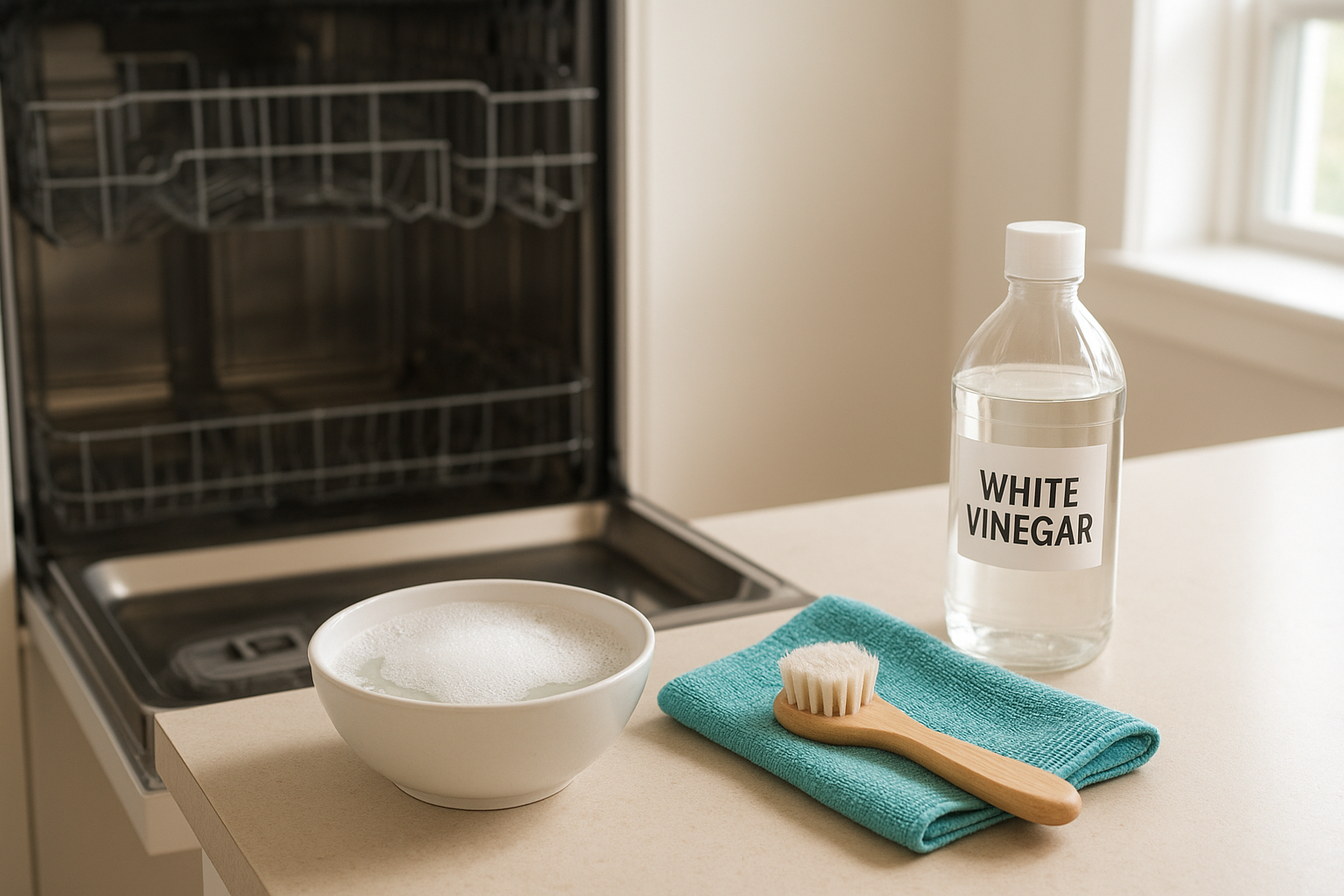
- White vinegar
- Baking soda, optional
- Toothpick or thin wooden skewer for spray arm holes
- Rubber gloves, optional
Skip bleach unless your dishwasher manual specifically allows it. Also avoid steel wool, harsh scouring pads, and drain cleaners, which can damage parts or seals.
Step 1: Empty the Dishwasher and Pull Out the Bottom Rack
Start with an empty dishwasher. Slide out the bottom rack so you can clearly see the floor of the tub. The filter is usually in the center or toward the back, near the lower spray arm.
If you see loose food, broken glass, fruit pits, twist ties, or labels, remove them carefully. If there may be glass, wear gloves and use a paper towel rather than your bare fingers.
Step 2: Remove the Dishwasher Filter
Most removable filters twist and lift out, but the exact design varies. Look for arrows, a lock symbol, or a round cylinder-shaped piece. Turn gently—usually counterclockwise—then lift the filter assembly out.
Some dishwashers have two pieces: an upper cylindrical filter and a flat lower filter plate. If yours does, remove both parts and note how they fit together so reassembly is easy.
If the filter will not budge, stop and check your model’s manual. Forcing it can crack plastic tabs.
Step 3: Rinse Away Loose Debris
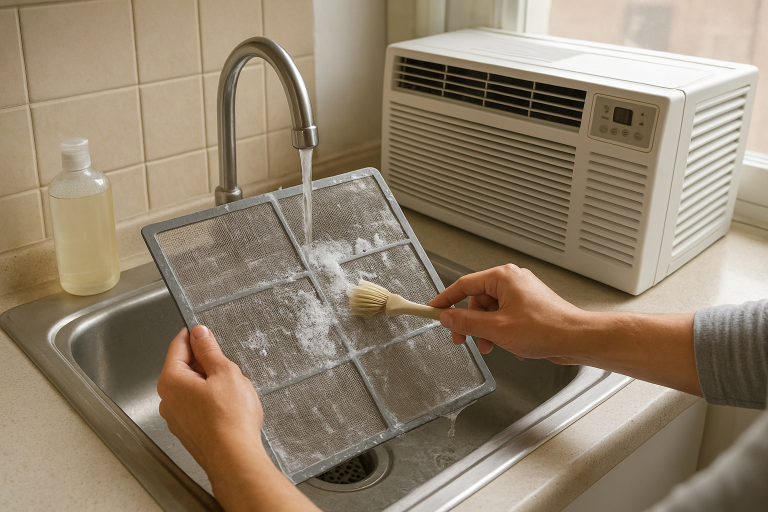
Carry the filter to the sink and rinse it under warm running water. Do not be surprised if the water turns cloudy or bits of food fall out. That is exactly what the filter has been holding.
Use your fingers or a soft sponge to remove greasy film. If food is stuck in the mesh, use an old toothbrush and gentle pressure. Scrub with the grain of the mesh instead of jabbing at it, which can stretch or damage the screen.
Step 4: Soak a Greasy Filter
If the filter feels slick or smells bad after rinsing, soak it in warm water with a few drops of dish soap for 10 to 15 minutes. Then brush it again and rinse well.
For mineral film or stubborn odor, you can soak the filter in a bowl of equal parts warm water and white vinegar for a short time, then rinse. Vinegar is often used by manufacturers as a dishwasher rinse for residue and odor, but it should be used thoughtfully and separately from baking soda. Whirlpool’s product help also describes running a vinegar rinse by placing 2 cups, or 500 mL, of white vinegar upright in a glass measuring cup on the lower rack. ([producthelp.whirlpool.com](https://producthelp.whirlpool.com/Dishwashers/Dishwasher/Other/Cleaning_and_Odor/Odors/Cleaning_the_Dishwasher?utm_source=openai))
Step 5: Wipe the Filter Well and Door Gasket
Before putting the filter back, clean the area where it sits. Use a damp cloth or sponge to wipe the filter well, the bottom edge of the door, and the rubber gasket around the door.
The bottom lip of the door is a sneaky spot. Water may not wash over it well during a cycle, so grime can build up there. Wipe until the cloth comes away clean.
Step 6: Check the Spray Arms
If dishes are still coming out dirty after the filter is clean, the spray arms may be clogged. Spin the lower spray arm with your hand. It should move freely and not hit a tall utensil, rack, or fallen item.
Look closely at the little holes along the spray arms. If you see seeds, scale, or tiny food bits, use a toothpick or thin wooden skewer to loosen them. Some spray arms can be removed for rinsing, but check your manual first so you do not break a clip.
ENERGY STAR notes that modern dishwashers rely on improved water filtration, efficient jets, and soil sensors to clean effectively, which is a good reminder that blocked spray arms and dirty filters can interfere with the machine’s design. ([energystar.gov](https://www.energystar.gov/products/dishwashers?utm_source=openai))
Step 7: Reinstall the Filter Correctly
Place the flat filter back first if your model has one. Then insert the cylindrical filter and twist it until it locks. Give it a gentle tug. It should feel secure, not loose.
This step matters. A filter that is not locked in place can let food particles pass through and may affect cleaning performance.
Step 8: Run a Cleaning Cycle
Once the filter is back in place, run an empty hot cycle to freshen the tub. You have two simple options:
- Vinegar rinse: Place a dishwasher-safe cup or glass measuring cup filled with white vinegar upright on the rack, then run a hot cycle.
- Dishwasher cleaner: Use a commercial dishwasher cleaner according to the package directions, especially if you have hard water or heavy mineral buildup.
If you want to use baking soda, do it in a separate cycle. Sprinkle a small amount across the bottom of the empty dishwasher and run a short hot cycle. Do not combine vinegar and baking soda in the same cup and expect extra cleaning power; together they fizz, then largely neutralize each other.
What If the Dishwasher Still Smells Bad?
If you cleaned the filter and the odor comes back quickly, check these common causes:
- Food trapped under the door: Wipe the lower door seam and gasket again.
- Clogged spray arms: Clear the holes and make sure the arms spin freely.
- Garbage disposal connection: If the dishwasher drains through the disposal, run the disposal and flush it well with water.
- Standing water: A little water in the sump can be normal, but pooling above the filter may mean a drain issue.
- Dirty drain hose or air gap: If your sink has an air gap, remove the cap and clean out debris.
If you see standing dirty water, hear gurgling, or the dishwasher will not drain, cleaning the filter may not be enough. Whirlpool’s troubleshooting guidance for poor cleaning includes checking that spray arms move freely, dishes are loaded properly, and the filter is clean and clear of clogs before moving on to service concerns. ([whirlpool.com](https://www.whirlpool.com/blog/kitchen/dishwasher-not-cleaning.html?utm_source=openai))
How to Keep the Filter Cleaner Longer
- Scrape plates well. Remove bones, peels, seeds, rice clumps, and sticky sauces before loading.
- Do not pre-rinse everything. Modern detergents need some soil to work well, but big scraps should go in the trash or compost.
- Load so water can move. Avoid nesting spoons, overlapping bowls, or blocking the spray arms with cutting boards and pans.
- Use the right detergent amount. Too much detergent can leave residue, especially in soft water.
- Run hot water first. Let the kitchen tap run hot before starting the dishwasher so the first fill is warmer.
- Leave the door cracked after unloading. A little airflow helps the tub dry and reduces stale smells.
The Simple Monthly Routine
For an easy maintenance habit, clean the filter on the first weekend of each month. Rinse and brush the filter, wipe the gasket and door edge, check the spray arms, then run an empty hot cycle with dishwasher cleaner or vinegar.
That small routine usually takes less than 20 minutes of hands-on work. It helps your dishwasher smell fresher, clean better, and avoid the frustrating job of rewashing dishes that should have come out clean the first time.