How to Start Cauliflower Seeds for a Fall Harvest
Cauliflower can be fussy, but fall is often the best season to grow it at home. If you start cauliflower seeds for fall harvest at the right time, the plants can size up in late summer and form heads as the weather cools.
The trick is to work backward from your first fall frost, protect young seedlings from heat, and avoid the little stresses that cause tiny heads or no heads at all.
Why Fall Cauliflower Is Worth Starting From Seed
Cauliflower prefers cool, steady growing weather. University extension guides commonly recommend fall planting because the crop can mature as temperatures ease out of summer heat. Minnesota Extension notes that most cauliflower types are best planted in mid-summer for a fall harvest, and Maryland Extension lists fall cauliflower seed starting in early July with transplanting from late July to early August. ([extension.umn.edu](https://extension.umn.edu/vegetables/growing-cauliflower?utm_source=openai))
Starting from seed also gives you more variety choices than buying nursery transplants. Look for short-season varieties, often listed around 50 to 80 days from transplanting, so the crop has time to head before hard freezes or very short fall days slow growth. ([extension.umd.edu](https://extension.umd.edu/resource/growing-cauliflower-home-garden?utm_source=openai))
When to Start Cauliflower Seeds for Fall
For many U.S. gardens, cauliflower seeds for a fall crop are started indoors or in a protected outdoor seed-starting area in early to late July. That timing is not one-size-fits-all, though. In warm regions with long falls, you may start later; in short-season northern gardens, you may need to start in June.
A practical rule is to start seeds about 4 to 7 weeks before you plan to transplant, then choose a variety that can mature before your usual hard-freeze period. Purdue’s seed-starting guidance lists cauliflower at 7 to 9 weeks before plant-out, while Iowa State notes fall transplants can be started indoors 4 to 5 weeks before setting outdoors. Use your local extension planting calendar if you have one, because regional timing matters. ([ag.purdue.edu](https://ag.purdue.edu/department/hla/extension/extension-publications-library/ext-pubs/ho-14-w.html?utm_source=openai))
Quick timing guide
- Cool northern climates: Start seeds in June to early July for transplanting in July.
- Middle climates: Start in early to mid-July for transplanting in late July or August.
- Long-season warm climates: Start in mid to late summer for transplanting when extreme heat begins to ease.
If you are unsure, check the “days to maturity” on your seed packet. Many cauliflower varieties list maturity from transplanting, not from seeding. Add several extra weeks for seedling growth.
Supplies You’ll Need
- Cauliflower seeds, preferably a short-season or heat-tolerant fall variety
- Seed-starting mix, not heavy garden soil
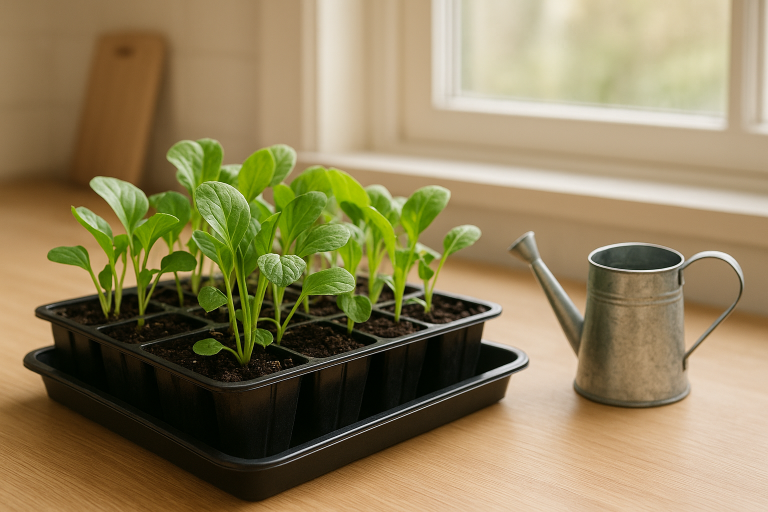
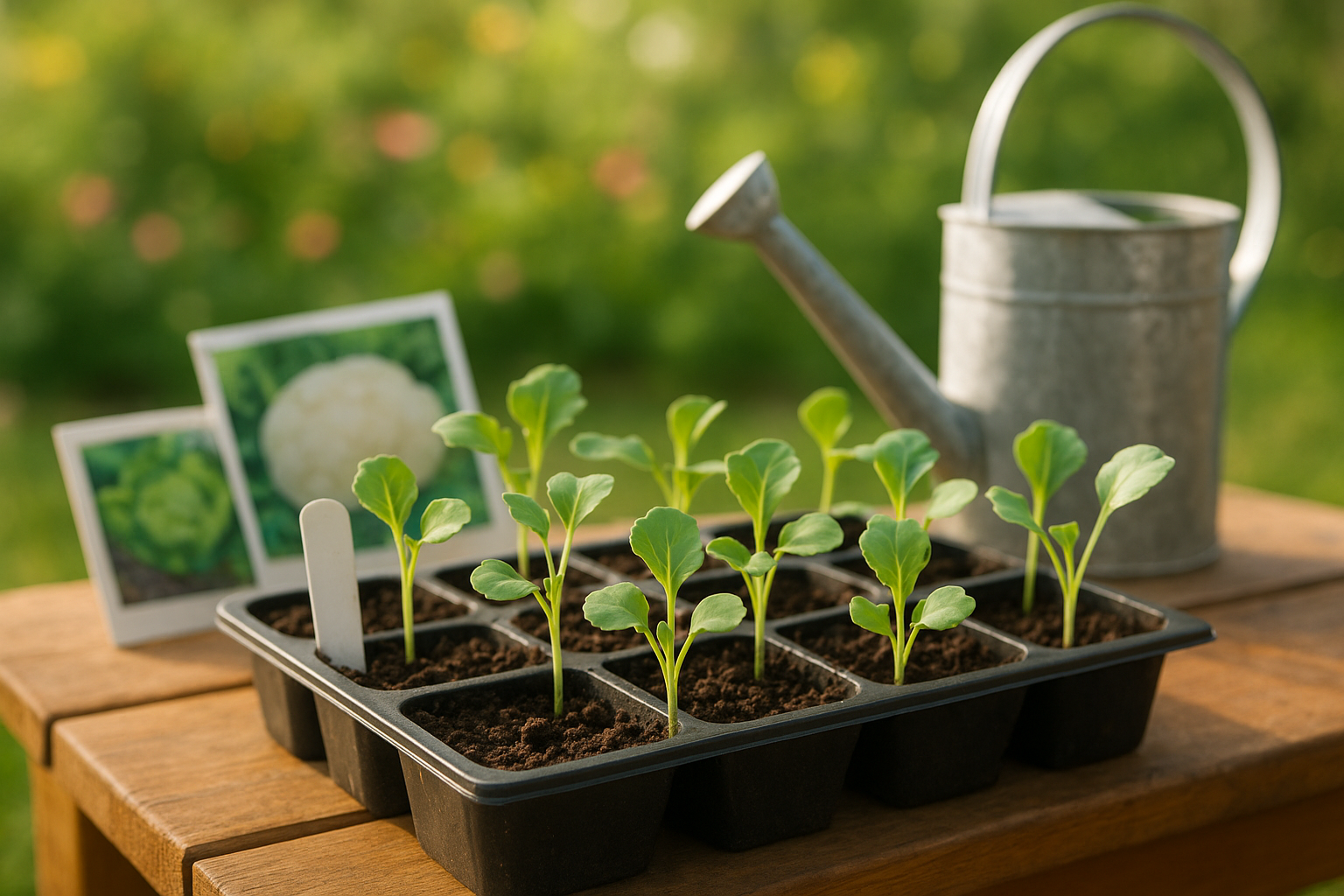
- Cell trays, soil blocks, or small pots with drainage
- Plant labels
- Grow light or a very bright window
- Watering can with a gentle rose or spray bottle
- Small fan for air movement, optional but helpful indoors
How to Sow Cauliflower Seeds
- Moisten the seed-starting mix first. It should feel like a wrung-out sponge, not muddy.
- Fill your cells or pots. Firm the mix lightly so it does not sink too much after watering.
- Sow 1 to 2 seeds per cell. Plant seeds about 1/4 to 1/2 inch deep. UC Marin Master Gardeners lists cauliflower seed depth at 1/2 inch, which is a good simple target. ([ucanr.edu](https://ucanr.edu/site/uc-marin-master-gardeners/document/cauliflower?utm_source=openai))
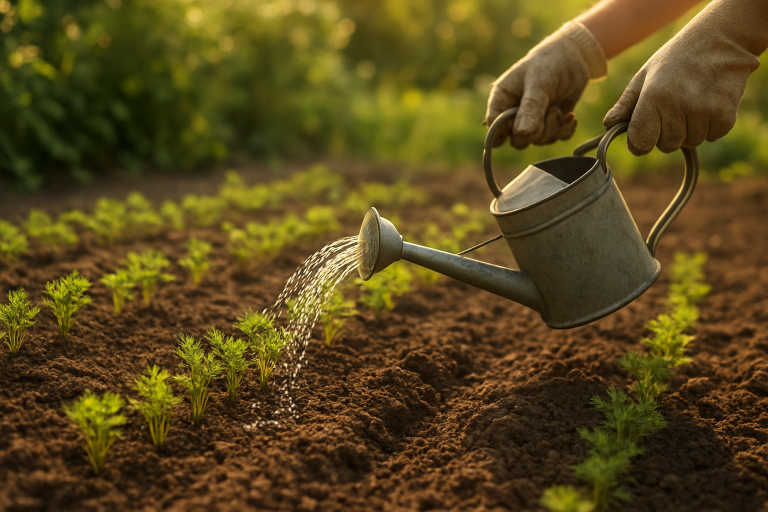
- Cover and water gently. Use a fine spray or bottom-water the tray so seeds do not wash out.
- Keep evenly moist. Do not let the mix dry into a crust, but avoid soggy trays.
- Thin to one seedling per cell. Once seedlings have emerged and are growing well, snip the weaker one at soil level.
Cauliflower seedlings grow best with bright light. If they stretch toward a window, move them under a grow light for 14 to 16 hours a day, keeping the light just a few inches above the leaves.
Growing Strong Seedlings in Summer Heat
Summer seed starting has one big challenge: heat. Cauliflower can struggle when temperatures are too high. Iowa State Extension notes that hot weather around 86°F or higher during the day and 77°F or higher at night can keep cauliflower from forming heads or crowns, while UC IPM lists the upper growth range around 77°F to 86°F. ([yardandgarden.extension.iastate.edu](https://yardandgarden.extension.iastate.edu/how-to/growing-cauliflower-home-garden?utm_source=openai))
If your house is hot, start trays in the coolest bright spot you have. A basement with grow lights often works better than a sunny porch. Outdoors, keep trays in bright shade and protect them from pounding rain, drying wind, and afternoon sun.
Do not let seedlings stall in tiny cells. Cauliflower wants steady growth from seedling to harvest. Drought, low nitrogen, cold shock, root stress, and other setbacks can contribute to “buttoning,” where the plant forms a small premature head instead of a full one. Utah State University Extension specifically lists dry soils, low temperatures, low nitrogen, and planting shock as causes of buttoning. ([extension.usu.edu](https://extension.usu.edu/yardandgarden/research/cauliflower-in-the-garden?utm_source=openai))
When and How to Transplant
Transplant cauliflower when seedlings are sturdy, usually with several true leaves, before they become rootbound. Pick a cloudy day if possible, or transplant in the evening so plants are not hit by full sun right away.
- Harden off first. Set seedlings outside in shade for a few hours, then gradually increase outdoor time over about a week.
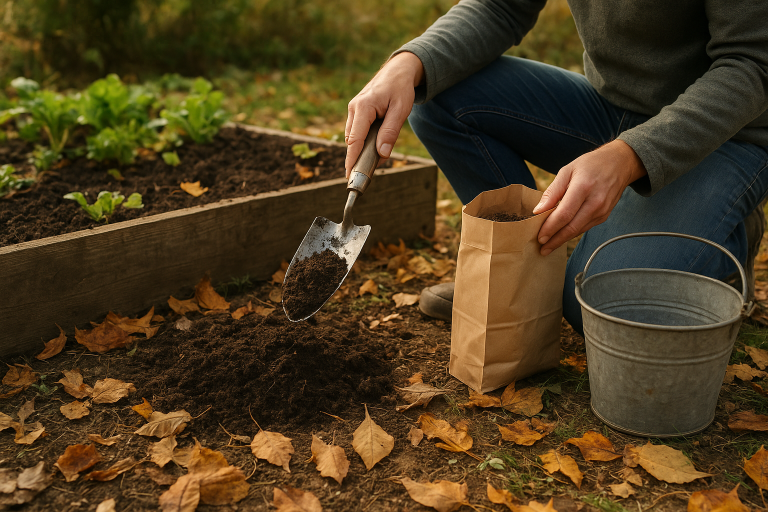
- Prepare rich soil. Mix in compost before planting. Cauliflower is a hungry crop and grows best with steady fertility.
- Space plants well. Give most varieties about 18 to 24 inches between plants, unless your seed packet says otherwise.
- Water deeply after planting. Keep soil consistently moist while roots settle in.
- Shade if needed. In hot late-summer weather, use shade cloth, row cover held above the plants, or a temporary patio umbrella for a few afternoons.
UC Marin Master Gardeners recommends protecting late-summer cauliflower seedlings from sunburn with shade cloth or floating row cover during the middle of the day for at least a week after planting. ([ucanr.edu](https://ucanr.edu/site/uc-marin-master-gardeners/document/cauliflower?utm_source=openai))
Care After Planting
Once transplants are in the garden, aim for boringly steady care. Water when the top inch of soil begins to dry. Mulch with straw, shredded leaves, or untreated grass clippings to keep the root zone cooler and more evenly moist.
Feed lightly but consistently. If your soil is poor, use a balanced vegetable fertilizer according to the label, or side-dress with compost once the plants begin growing strongly. Avoid huge swings: starving plants and overfed plants can both disappoint.
Do You Need to Blanch Cauliflower Heads?
Some white cauliflower varieties need blanching, which means loosely tying the outer leaves over the developing head to keep it pale. Many modern varieties are “self-blanching,” but the leaves may still not fully cover the curd in windy or uneven growth.
When a head is about the size of a small egg, check your seed packet. If blanching is recommended, gently pull several large leaves over the head and secure them with a soft tie, clothespin, or rubber band. Keep it loose so air can still move.
Common Problems and Simple Fixes
- Tiny heads: Usually stress-related. Plant on time, avoid rootbound seedlings, and keep moisture steady.
- No head forming: Heat, too much shade, or late planting may be the cause.
- Loose or ricey heads: Often linked to heat or uneven growth.
- Cabbage worms: Check leaf undersides often. Handpick worms or use row cover right after transplanting.
- Wilting transplants: Provide temporary shade and water deeply, but do not keep soil soggy.
When to Harvest Fall Cauliflower
Harvest cauliflower when the head is full, firm, and still tight. Do not wait too long once the curd begins to loosen. Cut the head with a sharp knife and leave a few wrapper leaves attached to protect it in the kitchen.
Fall cauliflower may take a little longer than the seed packet says if cool weather and shorter days slow growth. Check plants often as heads begin forming. A beautiful cauliflower head can go from perfect to overmature quickly, especially during a warm spell.
The Bottom Line
To start cauliflower seeds for fall harvest, begin early enough for your climate, grow stocky seedlings in bright light, and transplant before the plants become stressed or rootbound. Keep them watered, shaded during hot spells, and growing steadily. Cauliflower asks for more attention than kale or radishes, but a firm homegrown fall head is worth the trouble.