How to Design a Purple Garden That Feels Balanced
A purple garden can feel elegant, relaxing, and surprisingly easy to pull together. Whether you prefer soft lilac tones or deeper plum shades, a thoughtful purple palette can make a border look cohesive without feeling flat or overly formal.
The secret is not just choosing purple flowers. It is pairing them with the right greens, textures, and bloom times so the whole space feels lively from spring through late summer.
Why Purple Works So Well in the Garden
Purple is one of those colors that can do a lot of heavy lifting in a planting scheme. It can read as cool and calming, but it also has enough depth to give a garden real presence. In the landscape, purple often looks especially striking because it stands out against green leaves without shouting for attention.
That contrast is one reason purple borders often feel polished. Green acts like a backdrop, helping purple flowers look richer and more defined. Purple also blends well with silver, white, pink, and blue, which makes it easy to layer into different garden styles, from cottage gardens to more modern, restrained designs.
Choose Your Shade Family First
Before buying plants, decide what kind of purple garden you want. Mixing every purple tone at once can work, but it is easier to create a pleasing result if you stick to one main direction.
- Soft purple: Lavender, lilac, pale mauve, and mauve-pink tones for a gentle look.
- True purple: Clear mid-purple shades that feel classic and versatile.
- Deep purple: Plum, burgundy-purple, and nearly black tones for drama.
If you want a restful look, stay mostly within one family and repeat it in several plants. If you want more energy, combine two related tones, such as lavender and deep violet, but keep the rest of the planting relatively simple.
Best Plants for a Purple Garden
The best purple garden design uses a mix of flowers, foliage, and structure, not just short-lived blooms. That way, the garden still looks attractive when one plant finishes flowering.
Reliable purple bloomers
- Lavender: Fragrant, drought-tolerant, and excellent for edging paths.
- Catmint: Long-flowering and easy to grow, with airy purple-blue spikes.
- Salvia: Great for a long season of color and loved by bees.
- Alliums: Architectural spring bulbs that add height and shape.
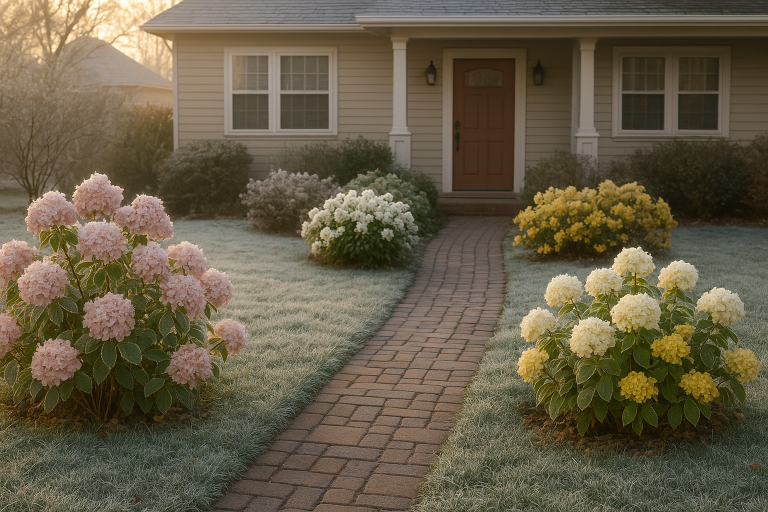
- Hydrangeas: In the right soil, they can shift toward purple or blue-purple tones.
- Wisteria: Ideal for walls, pergolas, or sturdy arbors if you have the space.
- Verbena bonariensis: Tall, see-through stems that add lightness above borders.
Plants with purple foliage
Flowers are only part of the picture. Purple-leaved plants can keep the color theme going between bloom cycles. Look for plants like dark heuchera, purple basil in summer containers, or ornamental grasses with burgundy tones.
Good supporting colors
To make purple stand out, add plants that soften the scheme rather than compete with it:
- Silver foliage such as artemisia or lamb’s ear
- White flowers like foxgloves, daisies, or allium cultivars
- Soft pinks for a romantic cottage-garden feel
- Fresh greens to keep the whole bed balanced
How to Keep a Purple Border from Looking Flat
A successful purple garden needs variety in more than just color. If everything is the same height, texture, and flower shape, the result can feel one-note. The easiest fix is to layer your planting.
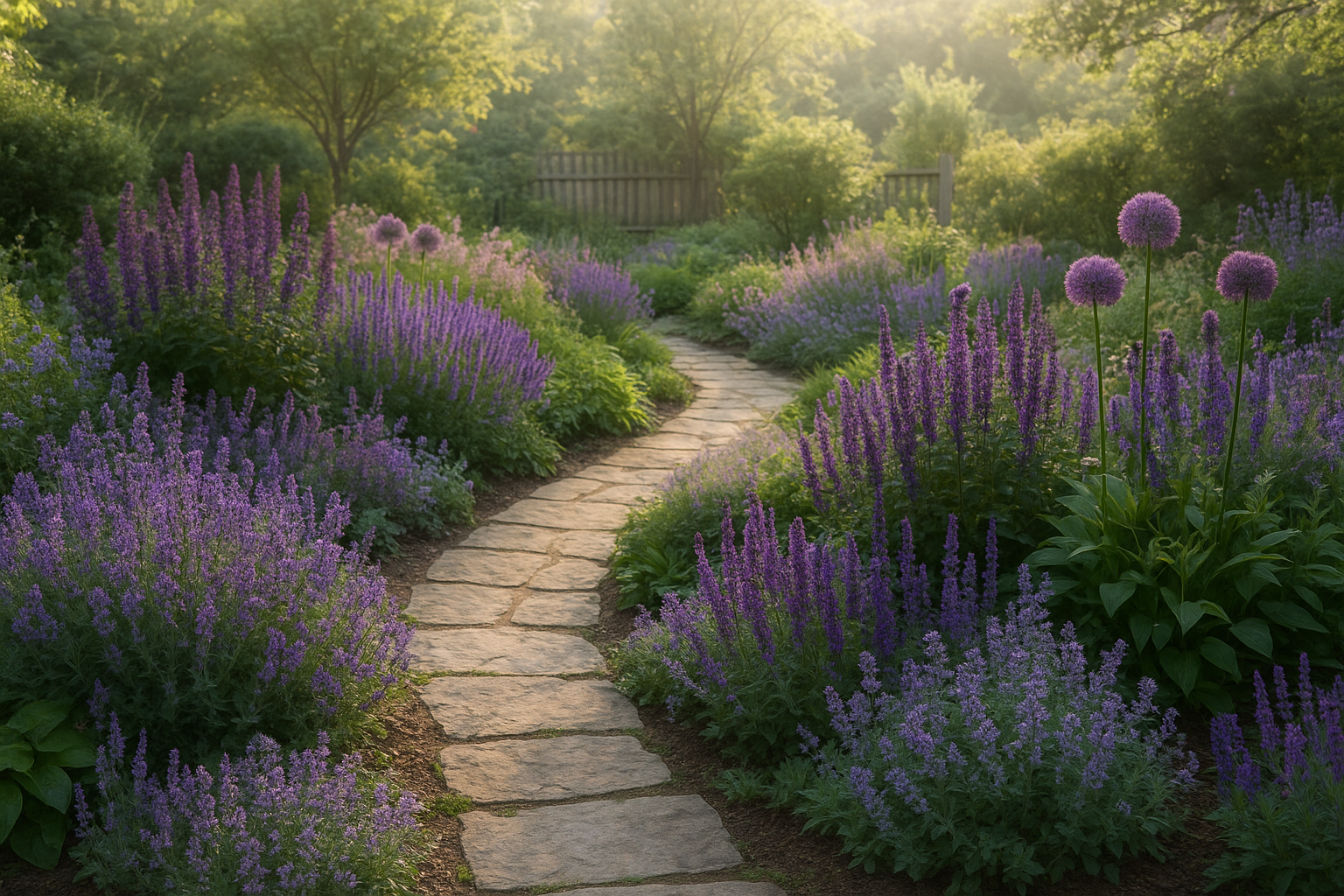
Use a mix of tall, medium, and low plants. Place upright flowers like salvia or alliums toward the back or center, soften the front with catmint or lavender, and tuck in lower plants or groundcovers to fill gaps. This creates depth and makes the color feel richer.
Also think about form. Round flower heads, spiky blooms, and airy stems all catch the eye differently. A border with varied shapes feels more natural and less staged.
Practical Planting Tips for Success
Purple flowers will look best when they are healthy, vigorous, and planted in the right conditions. A few basics make a big difference:
- Match the plant to the site. Lavender and many salvias like sun and free-draining soil.
- Group plants in repeats. Repeating the same variety in threes or fives creates stronger visual rhythm.
- Leave room to grow. Crowding reduces airflow and can make blooms look messy.
- Use mulches wisely. Organic mulch helps conserve moisture and suppress weeds, but keep it away from woody stems.
- Deadhead regularly. This encourages more flowers on many summer bloomers.
If your soil is heavy or wet, choose purple plants that tolerate those conditions rather than forcing drought lovers into unsuitable ground. Good plant choice matters more than any color plan.
Best Purple Garden Combinations
If you are not sure where to start, these combinations are easy to use and reliably attractive:
Calm and classic
Lavender, white roses, catmint, and silver foliage. This is a timeless combination that looks clean and romantic.
Bold and dramatic
Deep purple salvia, dark heuchera, ornamental grasses, and alliums. The mix feels modern and structured.
Pollinator-friendly cottage style
Verbena bonariensis, lavender, purple foxgloves, and airy white blooms. This approach feels loose, lively, and full of movement.
Container-friendly purple display
Pair purple petunias or calibrachoa with trailing ivy, pale lavender, and a purple-leaved foliage plant for long-lasting patio color.
How to Make Purple Look Fresh, Not Overdone
Too much of any color can become tiring if there is nothing to break it up. In a purple garden, the trick is to add breathing space. Paths, gravel, terracotta pots, wooden edges, and lots of green foliage help the planting feel intentional instead of overwhelming.
Another useful trick is to vary the intensity. For example, combine one or two strong purple plants with softer lilac tones and a few white flowers. That balance keeps the border from becoming visually heavy.
If you enjoy a more natural look, avoid rigid symmetry. Loose drifts of repeated purple plants often feel more relaxed and garden-like than formal blocks.
Do Purple Flowers Help Pollinators?
Yes, many purple flowers are excellent for bees, butterflies, and other beneficial insects. Plants such as lavender, catmint, salvia, and verbena are particularly valuable because they provide nectar over a long season.
If pollinators are a priority, choose plants with simple flower shapes that are easy for insects to access. Avoid relying only on highly double flowers, which can sometimes offer less nectar and pollen. A mix of bloom times will keep your garden useful for longer.
Simple Care Plan for a Purple Garden
- Spring: Divide crowded perennials, plant summer annuals, and feed emerging bulbs if needed.
- Early summer: Stake taller plants before they flop and start deadheading repeat bloomers.
- Midsummer: Water deeply during dry spells rather than giving frequent shallow watering.
- Autumn: Cut back tired growth, add compost, and plan bulb planting for next year.
A purple garden does not need complicated design rules to work. Start with a strong color direction, repeat a few dependable plants, and support them with good structure and contrasting foliage. The result can be soothing, lively, and much easier to manage than a border packed with every color at once.