How to Clean a Shower Head with Vinegar
If your shower suddenly sprays sideways, dribbles, or feels weaker than it used to, the shower head may not be broken. In many homes, the problem is simple hard water buildup clogging the tiny spray holes.
Here’s how to clean a shower head with vinegar using a no-fuss soak, plus what to do if the buildup is stubborn, the finish is delicate, or the water flow still does not improve.
Why Shower Heads Get Clogged
Shower heads collect mineral deposits from hard water, especially calcium and lime scale. Over time, those deposits narrow or block the small openings where water comes out. The result is uneven spray, lower pressure at the shower head, and white or chalky crust around the nozzles.
Regular cleaning also helps remove dirt and debris from shower fixtures. The CDC notes that showerheads and hoses may need to be removed and soaked in a solution such as white vinegar to clear buildup, and it recommends regularly cleaning devices like showerheads and faucet aerators to remove germs, dirt, and debris. ([cdc.gov](https://www.cdc.gov/drinking-water/prevention/preventing-waterborne-germs-at-home.html?utm_source=openai))
What You’ll Need
- White vinegar
- A sturdy plastic food-storage bag or small bowl
- Rubber band, twist tie, or zip tie
- Old toothbrush or small nylon brush
- Soft cloth or microfiber towel
- Toothpick, if needed
- Adjustable wrench and plumber’s tape, optional
Before you start: Check the manufacturer’s care instructions if your shower head has a special finish such as oil-rubbed bronze, unlacquered brass, brushed gold, or matte black. Some manufacturers recommend diluted vinegar only, short soak times, or mild soap instead of acids.
The Easiest Method: Clean It Without Removing It
This is the best first try for a standard fixed shower head with mild to moderate hard water buildup.
- Wipe the outside. Use a damp cloth to remove soap film and loose dust from the shower head.
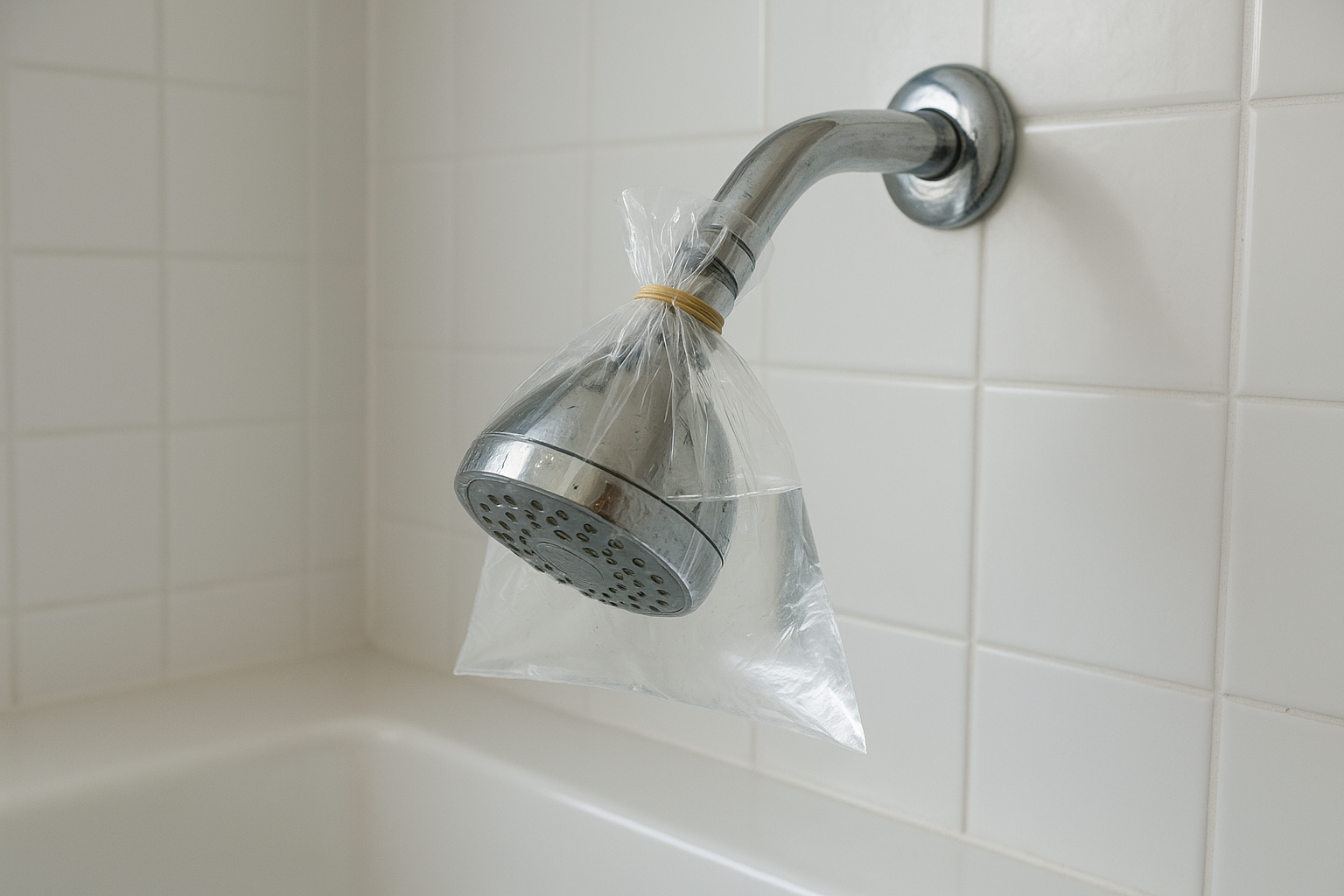
- Fill a bag with vinegar. Add enough white vinegar to cover the spray face when the bag is lifted around the shower head.
- Secure the bag. Slip the bag over the shower head and fasten it tightly around the shower arm with a rubber band or twist tie. Make sure the clogged spray holes are submerged.
- Soak it. Let it sit for 30 minutes to 2 hours. For a chrome or stainless finish with heavy buildup, you can often go longer, but avoid overnight soaking on delicate finishes unless the manufacturer says it is safe.
- Remove and scrub. Take off the bag, then scrub the spray holes gently with an old toothbrush.
- Flush with hot water. Run the shower for a minute or two to rinse out loosened mineral grit.
- Dry and polish. Wipe the fixture with a soft cloth to prevent new water spots.
Vinegar works because its acidity helps dissolve alkaline mineral deposits. Delta Faucet recommends a 50/50 white vinegar and water soak for difficult deposits on non-Touch-Clean shower heads, while some product-care guidance recommends diluted vinegar and limited soak times to protect finishes. ([deltafaucet.com](https://www.deltafaucet.com/node/264?utm_source=openai))
For Heavy Buildup: Remove the Shower Head
If the spray holes are still clogged or water flow is weak, remove the shower head for a deeper clean. This lets vinegar reach the inside screen and threaded connection where grit often hides.
- Turn the shower off completely. You do not need to shut off water to the whole house for most shower head cleaning.
- Unscrew the shower head. Try by hand first. If it is tight, wrap the connector with a cloth and use an adjustable wrench gently so you do not scratch the finish.
- Rinse loose debris. Hold the shower head under running water, letting water move through it backward if possible.
- Soak in diluted vinegar. Place the shower head in a bowl with equal parts white vinegar and warm water. Soak 30 minutes, then check progress.
- Brush and clear holes. Scrub the face with a toothbrush. Use a toothpick gently in clogged holes, but do not use metal pins that can enlarge or damage nozzles.
- Check the washer and screen. If your shower head has a small filter screen, rinse it well. Replace cracked washers.
- Reinstall. Wrap fresh plumber’s tape clockwise around the shower arm threads if needed, screw the shower head back on, and hand-tighten.
- Flush it. Run hot water for a minute to clear vinegar and loosened mineral bits.
What Not to Do
- Do not mix vinegar with bleach. This can create dangerous fumes. If you used a bleach-based bathroom cleaner recently, rinse the area well and wait before using vinegar.
- Do not scrub with steel wool. It can scratch chrome, nickel, brass, and coated finishes.
- Do not assume longer is always better. Long vinegar soaks can dull or damage some specialty finishes.
- Do not use baking soda in the vinegar soak. The fizz looks satisfying, but baking soda neutralizes vinegar’s acidity, which is the part doing the mineral-dissolving work.
How Often Should You Clean a Shower Head?
For most homes, cleaning the shower head every 1 to 3 months is enough. If you have very hard water, visible white crust, or spray that starts going in odd directions, clean it monthly. A quick weekly wipe of the spray face after showering can also slow buildup.
Moisture control matters in the bathroom, too. The EPA recommends keeping indoor humidity below 60%, ideally between 30% and 50%, and using bathroom ventilation to reduce moisture that can encourage mold growth. ([epa.gov](https://www.epa.gov/indoor-air-quality-iaq/what-can-i-do-improve-indoor-air-quality-my-home?utm_source=openai))
When Vinegar Is Not Enough
If vinegar improves the spray but does not fully restore it, try a second short soak and a more careful brushing. If the shower head still performs poorly, the issue may be one of these:
- A clogged flow restrictor or filter screen: Remove and rinse the screen if your model has one.
- Old internal parts: Plastic parts and rubber nozzles can wear out over time.
- Plumbing pressure issues: If every faucet in the bathroom has weak pressure, the shower head may not be the main problem.
- Severe scale inside the fixture: Replacement may be easier and more effective than repeated soaking.
How to Keep Buildup from Coming Back
- Wipe the shower head face with a towel once a week.
- Rub flexible silicone nozzles with your thumb after showers if your model has them.
- Run the bathroom fan during showers and for about 20 minutes afterward.
- Use a squeegee on shower walls and doors to reduce moisture and water spots.
- If hard water is a whole-house problem, consider testing your water and looking into a water softener.
The Bottom Line
The best way to clean a shower head with vinegar is to soak the spray face, scrub the loosened mineral deposits, and flush the fixture well with hot water. Start with the bag method while the shower head is still attached, then remove it for a deeper soak if water flow does not bounce back.
A little routine maintenance makes a big difference. Clean it before the spray gets badly clogged, protect delicate finishes from long acid soaks, and your shower should run stronger and more evenly with very little effort.