Planting Lettuce in Fall for a Bigger Harvest
When summer heat starts fading, many gardeners assume the fresh harvest is winding down too. In reality, planting lettuce in fall can be one of the smartest moves of the year, giving you tender, flavorful greens when spring-planted lettuce often struggles.
Cool nights, softer sunlight, and fewer pest problems all work in lettuce’s favor. With a little timing and a few simple tricks, you can keep bowls of salad greens coming well into the season.
Why fall is such a good season for lettuce
Lettuce prefers cool weather, and hot spells can make it bolt, turn bitter, or stop growing altogether. Fall brings milder temperatures that help leaves stay crisp and sweet. The plants also use less water than they do in summer, and many common pests become less active as the weather cools.
Another bonus: fall lettuce often tastes better. Slow, steady growth in cool conditions usually produces better texture and flavor than quick growth during heat waves.
Timing matters most
The biggest challenge with fall lettuce is not growing it, but planting it at the right time. You want the crop to mature before hard freezes arrive, while still giving it enough cool weather to thrive.
A good rule is to count backward from your average first fall frost date. Most lettuce varieties need about 30 to 60 days from sowing to harvest, depending on the type and whether you want baby leaves or full heads.
How to figure out your sowing window
- Baby leaf lettuce: sow about 30 to 40 days before your first frost.
- Loose-leaf varieties: sow about 40 to 50 days before first frost.
- Head lettuce: sow about 50 to 60 days before first frost, or earlier in cooler regions.
If your fall temperatures stay mild for a long stretch, you can often sow a little later. If your region cools down quickly, aim for the early side of the window.
Choose lettuce varieties that handle cool weather well
Not every lettuce type performs equally in the fall. Some grow quickly and stay productive in fluctuating weather, while others are better suited to steady cool conditions.
For the most reliable harvest, look for varieties described as cold tolerant, fast-maturing, or slow to bolt. Loose-leaf types are especially forgiving because you can pick outer leaves while the plant keeps producing.
Good types to consider
- Loose-leaf lettuce: quick to harvest and easy for cut-and-come-again picking
- Romaine: sturdy plants with a good balance of crunch and flavor
- Butterhead: tender, sweet leaves that do well in cool weather
- Baby greens mixes: ideal if you want a fast salad harvest
For fall, many gardeners prefer a mix of leaf colors and textures so the bed produces both good looks and good eating.
Prepare the site for faster growth
Lettuce has shallow roots, so it performs best in soil that is loose, moist, and rich in organic matter. Before sowing, remove weeds and work in a layer of compost to improve moisture retention and nutrient availability.
Choose a spot that gets morning sun and some afternoon shade if your fall weather still runs warm. Too much heat can slow germination, while too little light can leave plants thin and weak.
Soil setup checklist
- Loosen the top 6 to 8 inches of soil
- Mix in finished compost
- Break up clumps so small seeds can germinate evenly
- Water the bed before planting if the soil is dry
If you garden in containers, use a quality potting mix rather than heavy garden soil. A 6- to 8-inch-deep container is usually enough for lettuce.
Sow seeds evenly for better spacing
Lettuce seeds are tiny, which makes them easy to sow too thickly. Dense seedlings compete for light and airflow, leading to weak growth and higher disease risk. For the best results, sprinkle seeds lightly and thin them after germination.
Most lettuce seeds should be planted very shallowly, usually just covered with a fine layer of soil. They need light and consistent moisture to sprout well.
Simple sowing steps
- Make shallow rows or scatter seeds in blocks or containers.
- Cover with a thin layer of soil or compost.
- Water gently so the seeds stay in place.
- Keep the topsoil evenly moist until sprouts appear.
- Thin seedlings once they have true leaves.
If you want a steady supply, sow a small batch every 10 to 14 days while the weather remains suitable. This succession planting helps avoid one huge harvest all at once.
Keep seedlings cool and evenly moist
Lettuce germinates best when the soil is cool and consistently damp. In early fall, warm days may dry the soil quickly, so check the bed often. A light layer of mulch can help retain moisture once seedlings are established.
Try to water in the morning so leaves dry before evening. Wet foliage overnight can encourage disease, especially if air circulation is poor.
What lettuce needs most
- Even moisture: irregular watering can make leaves tough or bitter
- Good airflow: helps prevent mildew and rot
- Moderate nitrogen: supports leafy growth without overdoing it
If your soil is already rich, you may not need much extra feeding. In poorer soil or containers, a light application of balanced organic fertilizer can help keep growth moving.
Protect lettuce as temperatures change
One of the best parts of fall gardening is that a little protection goes a long way. As nights get colder, simple coverings can extend the season and keep your lettuce harvest going longer.
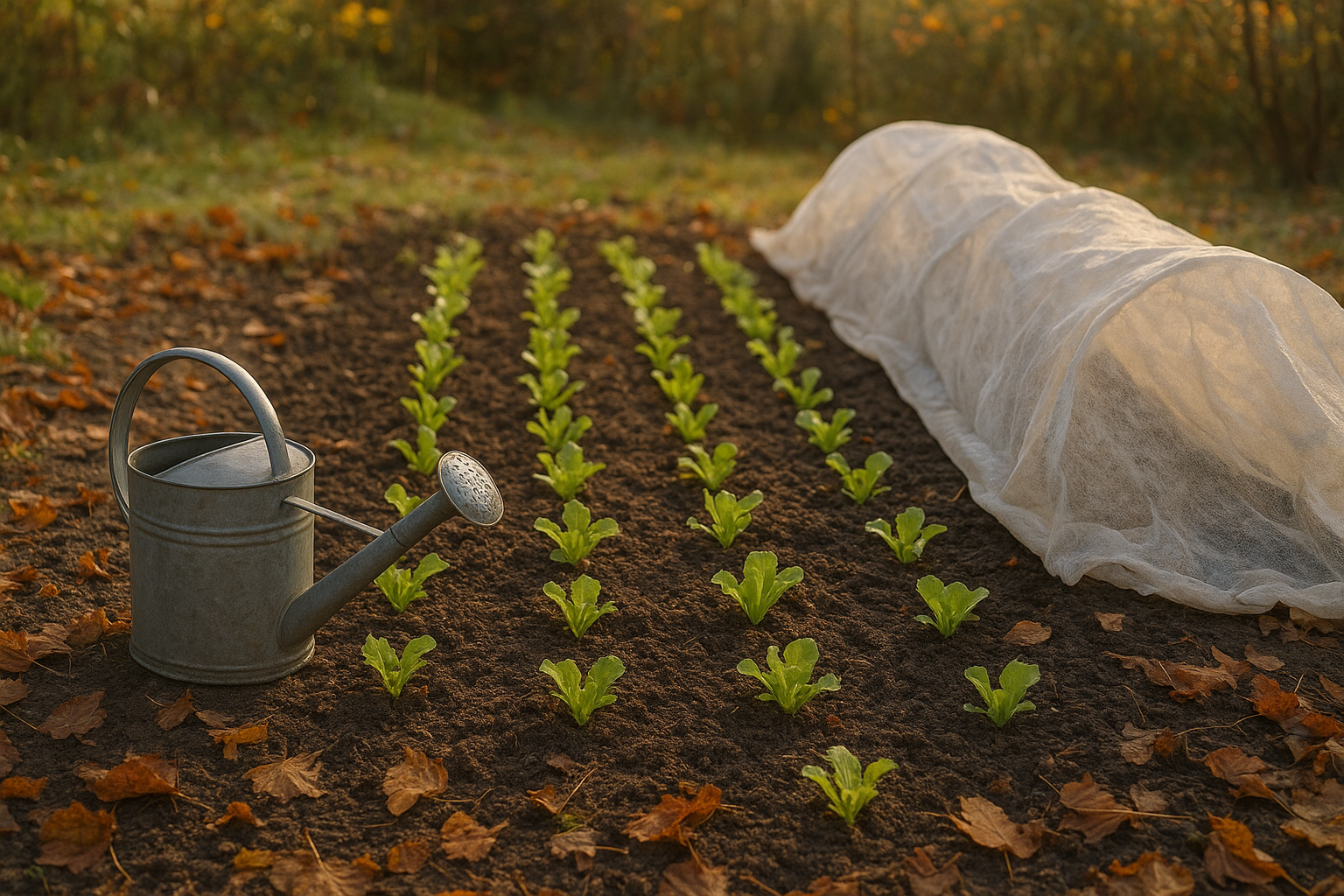
Floating row cover, a cold frame, or even a lightweight garden tunnel can shield plants from early frosts and reduce wind stress. These covers also help preserve the tender texture that makes fall lettuce so appealing.
Easy protection options
- Floating row cover: useful for a quick frost buffer
- Low tunnel: gives more space and longer protection
- Cold frame: ideal for stretching the season well into late fall
If a light frost is in the forecast, cover plants in the evening and remove the cover after sunrise if temperatures rise again. For more persistent cold, keep protection in place longer, but still check moisture levels underneath.
Harvest often for the best flavor
Harvesting regularly keeps lettuce productive. For loose-leaf and baby greens, you can snip outer leaves while leaving the center to continue growing. This method gives you more meals from the same planting.
Head lettuce should be harvested when the head feels full and firm, but before it becomes overmature. If cold weather is coming soon, it is often better to harvest a little early than to lose the crop to frost.
Best harvest practices
- Pick in the morning when leaves are crisp
- Use clean scissors or a sharp knife
- Rinse gently and dry well before storing
- Store in the refrigerator in a breathable container or bag
Freshly picked fall lettuce can stay crisp longer if you chill it quickly after harvest.
Common problems and how to avoid them
Even in cool weather, a few issues can slow lettuce down. The good news is that most are easy to prevent with a little planning.
- Poor germination: keep seeds shallow and moisture consistent
- Leggy seedlings: give plants more light and thin overcrowded rows
- Bitter leaves: avoid letting soil dry out for long periods
- Slugs and snails: watch for damage in damp conditions
- Early bolting: plant early enough and choose bolt-resistant varieties
Because fall weather can swing from warm to cool quickly, checking your lettuce patch every few days helps you catch problems early.
Try growing lettuce in more than one place
If you want a bigger harvest, consider planting lettuce both in garden beds and in containers. A few pots near the kitchen or back door make it easy to harvest salad greens often, which encourages you to use them before they wilt.
Containers are especially handy if you need to move plants into shade during warm spells or tuck them under cover when frost threatens. For small spaces, this can be the easiest way to keep lettuce coming all fall.
A simple fall lettuce game plan
If you want a straightforward approach, start with a fast-growing loose-leaf variety, sow a small batch every two weeks, and keep the soil consistently moist. Add row cover when nights cool down, and harvest outer leaves often to stretch production.
With that routine, planting lettuce in fall becomes less of a gamble and more of a dependable way to keep fresh greens on the table long after summer crops have faded.
For gardeners who like a quick win, lettuce is hard to beat: it grows fast, tastes great, and fits neatly into the changing rhythm of the season.