Can You Clean a Deck With Vinegar? What Works Best
It’s tempting to reach for vinegar when a deck looks dull, spotted, or grimy. It’s inexpensive, easy to find, and already works well around the house in plenty of situations. But when it comes to outdoor decking, the answer depends on what your deck is made of and what kind of mess you’re trying to remove.
If you want to clean deck with vinegar, it helps to know where it shines, where it falls short, and when a gentler cleaner is the safer choice. A little know-how can save you from discoloration, dried-out wood, or damage to the finish.
Can You Clean a Deck With Vinegar?
Sometimes, yes—but not as a universal deck cleaner. White vinegar can be useful for specific problems, especially mineral buildup or hard-water spots on some composite boards. It is not the best choice for routine deck washing, and it can be too harsh for some surfaces and finishes.
Vinegar is acidic, which is why it can dissolve certain deposits and help loosen residue. That same acidity is also why it can be risky. On wood, repeated use may affect the finish or protective coating. On plants nearby, overspray or runoff can cause damage. And on some decking materials, it may lighten the color or dull the surface.
When Vinegar Makes Sense
Vinegar is best reserved for narrow, targeted jobs rather than a full deck scrub. It may help in these situations:
- Hard-water stains left behind by sprinklers or hose spray
- Mineral deposits on some composite decking
- Light residue in small spots where a mild acidic cleaner is appropriate
If you use vinegar for one of these tasks, test it in a hidden area first. A spot near a stair tread or under a bench is a good place to check for color change before treating the whole deck.
When to Skip Vinegar
Do not make vinegar your go-to cleaner if your deck has any of the following:
- Sealed or stained wood that you want to protect
- Older boards that are already weathered or rough
- Nearby landscaping that could be affected by runoff
- Painted or specialty finishes that may react unpredictably
For general dirt, pollen, muddy footprints, and everyday grime, soap and water are usually safer and more effective. Vinegar is not a substitute for a proper deck wash when the goal is routine maintenance.
What to Use Instead for Routine Cleaning
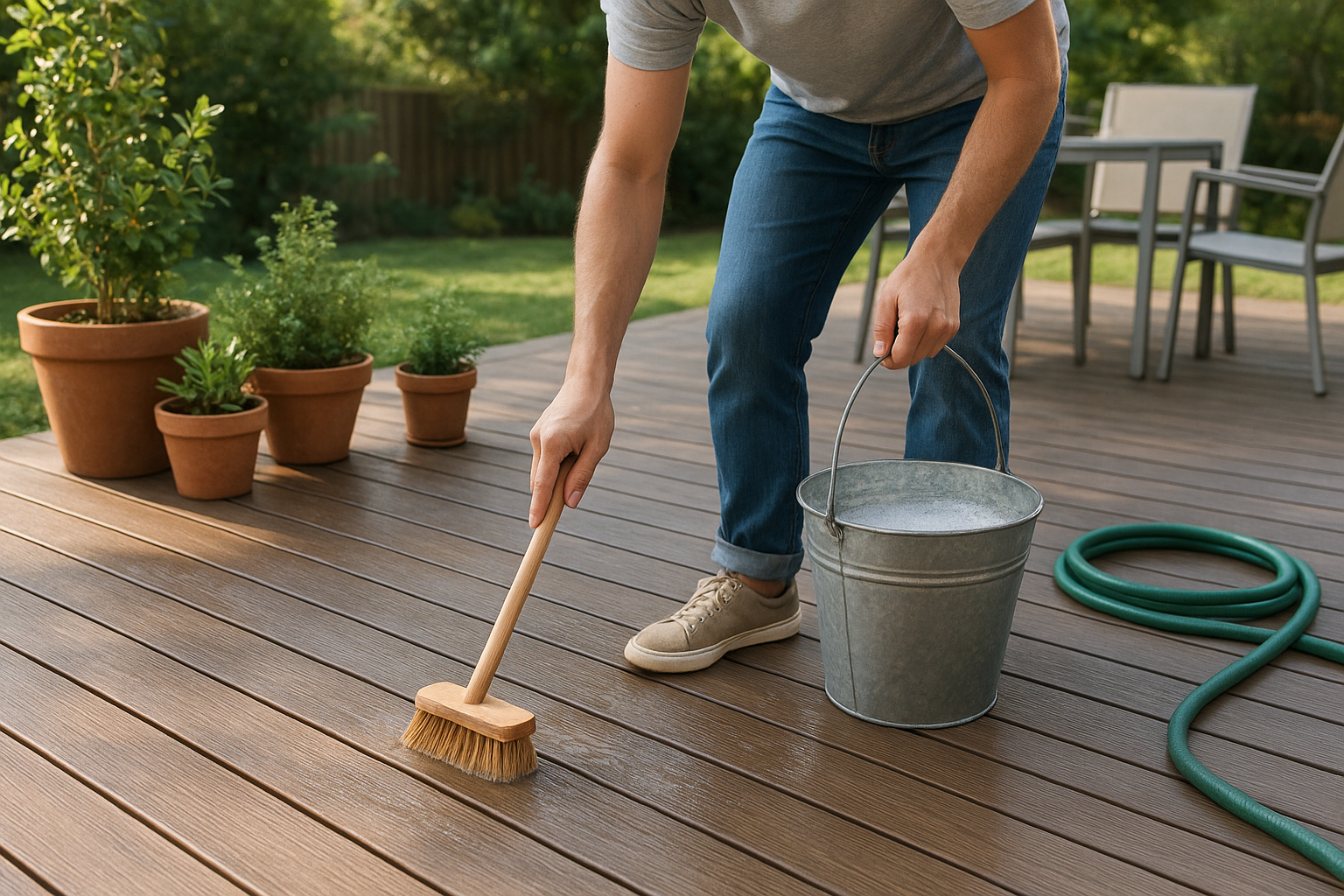
For most decks, the simplest solution is the best one: warm water, a mild dish soap, and a soft-bristle brush. This combination removes everyday buildup without being overly aggressive.
Basic deck-cleaning method
- Sweep the deck thoroughly to remove leaves, dirt, and grit.
- Mix a small amount of dish soap into a bucket of warm water.
- Wet the surface lightly with a hose.
- Scrub with a soft-bristle brush, working with the grain on wood.
- Rinse well so no soapy film remains.
- Let the deck dry completely before moving furniture back.
This is usually enough for seasonal cleaning or a quick refresh before guests arrive.
How to Clean Different Deck Materials
Wood decks
Wood needs the most caution. Avoid harsh scrubbing pads and strong acids. Use gentle soap, water, and a brush with soft to medium bristles. If the deck is stained or sealed, keep cleaning solutions mild so you don’t strip the finish prematurely.
If you notice mildew, use a deck cleaner made for wood rather than improvising with stronger acidic mixes. Wood decks often benefit more from regular sweeping and prompt stain removal than from heavy-duty chemical cleaning.
Composite decks
Composite decking is more forgiving in some ways, but it still has rules. Check the manufacturer’s care instructions before using vinegar or any other cleaner. Some brands allow vinegar for mineral spots only, while others warn against acids altogether. A small test spot is always a smart idea.
For most composite surfaces, plain soap and water work well for general cleaning. A soft brush helps lift dirt from textured grain patterns without scratching the surface.
PVC or capped decking
These materials are often easy to clean, but they can still discolor if exposed to the wrong chemicals. Stick to manufacturer-approved products whenever possible. Even when a surface is low-maintenance, it is better to choose the mildest effective cleaner.
If You Do Use Vinegar, Use It Carefully
If you’ve confirmed that vinegar is safe for your deck’s material and you’re treating a specific issue, keep the application controlled.
- Dilute when possible rather than using full-strength vinegar everywhere.
- Apply only to the affected area instead of soaking the whole deck.
- Avoid surrounding plants and rinse nearby greenery if any solution splashes.
- Rinse thoroughly after the spot is cleaned.
- Never mix vinegar with bleach or other cleaners.
It’s also wise to wear gloves and choose a calm, dry day. Wind can spread droplets onto siding, furniture, or plants, and a hot day can make cleaning solutions dry too quickly.
Easy Alternatives for Stubborn Problems
Some deck issues need a more targeted approach than vinegar can provide.
- For mildew: use a deck-safe mildew remover labeled for your surface type.
- For grease: try a mild degreasing dish soap solution and a soft brush.
- For rust stains: look for a rust remover designed for outdoor surfaces.
- For heavy grime: use a commercial deck cleaner approved for wood or composite.
If you are dealing with peeling finish, splintering, or deep discoloration, cleaning alone may not solve the problem. In that case, sanding, resealing, or replacing damaged boards may be the better fix.
Deck-Cleaning Mistakes to Avoid
Even a good cleaner can cause problems if it’s used the wrong way. Keep these mistakes off your list:
- Using too much pressure from a pressure washer
- Scrubbing with steel wool or stiff abrasive pads
- Leaving cleaners on the surface too long
- Skipping a rinse after washing
- Cleaning in full sun, which can dry residue onto the boards
- Ignoring the manufacturer’s instructions for composite decking
A slow, gentle cleaning routine protects the deck’s appearance and helps it last longer.
The Bottom Line
You can clean deck with vinegar in limited situations, especially for certain mineral deposits on some composite boards. But for regular deck care, it is usually better to use soap, water, and a soft brush. That approach is safer for most surfaces, easier on nearby plants, and less likely to cause discoloration or damage.
When in doubt, check the deck manufacturer’s guidance first. The right cleaner depends on the material under your feet—and taking a few extra minutes to choose well can keep your deck looking good for many seasons.