7 Kitchen Scraps Backyard Birds Can Safely Eat in Fall
As fall settles in, backyard birds begin working harder for every calorie. Natural food sources thin out, insects disappear, and cold nights demand more energy than summer ever does. That’s why a few simple kitchen scraps for birds can make a real difference when offered safely and in small amounts.
You do not need to buy special “bird treats” to help local wildlife. With a little care, several everyday leftovers can give birds a timely boost while you enjoy more activity at your feeder. The key is choosing the right foods, offering only fresh portions, and keeping feeders clean.
Why fall is a tough season for birds
In autumn, birds are preparing for migration, storing fat, or simply trying to survive colder nights. Their bodies burn through energy fast to stay warm, and they need more food than they did in summer. At the same time, many insects have vanished and berries may be picked clean.
That’s why supplemental feeding can help. It should not replace a bird’s natural diet, but it can support local species during a seasonal food shortage. Think of it as a small handoff from your kitchen to your backyard wildlife.
Best kitchen scraps for birds
Not all leftovers are bird-safe, but several plain, unseasoned foods work well in moderation. Always keep portions small and fresh.
1. Apples and pears
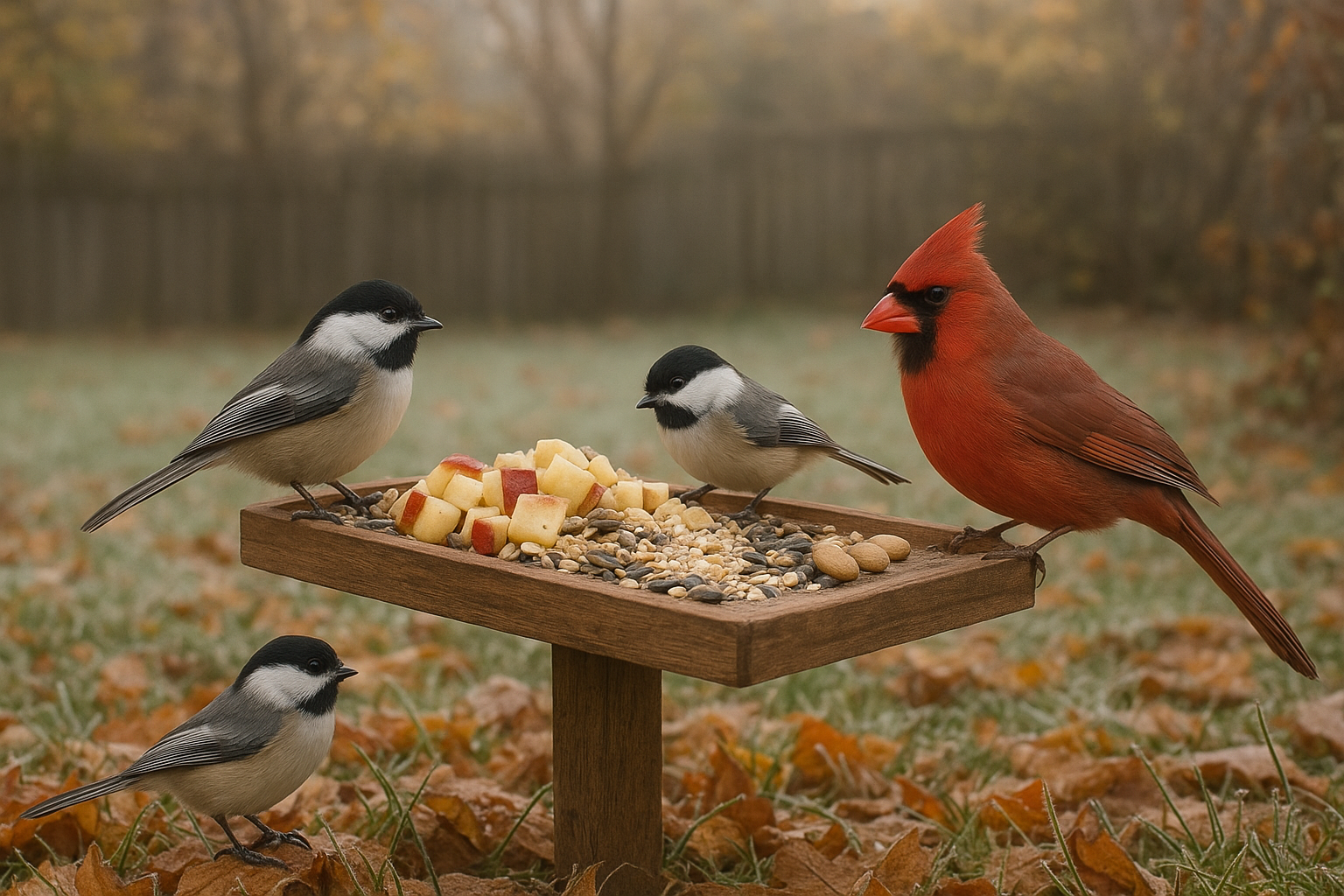
Soft fruit is one of the easiest fall offerings. Birds enjoy small pieces of apple or pear, especially when the flesh is a little bruised but not moldy. Remove seeds and core pieces, since the seeds contain compounds that are not meant to be eaten in quantity.
How to serve: Chop fruit into bite-size bits and place them on a tray feeder or a flat dish. You can also spear a few slices onto a skewer or citrus feeder if you have one.
2. Oats
Plain rolled oats are a good quick-energy food for many songbirds. They are easy to scatter and generally well accepted. Make sure they are dry and unflavored.
How to serve: Sprinkle a small amount on a platform feeder or mix with seeds. Avoid instant oatmeal packets, which often contain sugar, salt, or added flavorings.
3. Unsalted peanuts
Peanuts are rich in fat and protein, making them especially useful as temperatures drop. They must be unsalted and free from seasoning. Whole peanuts can be a choking hazard for some smaller birds, so chopped pieces are safer.
How to serve: Use chopped peanuts in a feeder with small openings or mix them with seed. If you offer whole peanuts, choose a feeder designed for them.
4. Sunflower seeds from the kitchen
If you have plain, shelled sunflower seeds on hand, birds will likely appreciate them. These are especially helpful because they are calorie-dense and easy to digest. Black-oil sunflower seeds are especially popular, but any plain unsalted sunflower seed can work.
How to serve: Offer a small handful in a feeder or on a tray. Remove any damp or moldy seeds promptly.
5. Plain pumpkin seeds
After carving pumpkins or cooking squash, the seeds can be saved for birds if they’re cleaned and thoroughly dried. They should be offered plain, with no salt, oil, or spice.
How to serve: Roast them without seasoning or dry them completely, then break them into smaller pieces if needed. A few seeds go a long way.
6. Raisins and currants
Small dried fruit can attract robins, bluebirds, and other species that enjoy fruit in fall. These are best offered sparingly because dried fruit is sticky and can spoil if left wet.
How to serve: Scatter a few on a dry tray feeder. If the weather is damp, replace them quickly to prevent mold.
7. Cooked rice or pasta, plain
Leftover plain rice or pasta can be used in very small amounts. It should be unseasoned, fully cooked, and cooled before offering. This is more of an occasional filler than a staple, but it can be helpful when other foods are limited.
How to serve: Mix a little into a larger blend of seeds or fruit so it is not the only food available.
What not to feed backyard birds
Some common kitchen scraps can do more harm than good. Keep these out of your bird feeding setup:
- Anything salty, such as chips, pretzels, salted nuts, or seasoned crackers
- Moldy or spoiled food, which can make birds sick
- Bread and baked goods, which offer little nutrition and can fill birds up without helping them
- Chocolate, avocado, onions, and garlic, which are unsafe
- Milk or dairy-heavy foods, since birds do not digest them well
- Sticky peanut butter in large amounts, unless it is used carefully in a bird-safe feeder and never offered in thick globs
If you’re unsure whether a food is safe, skip it. A better choice is always a plain, simple option with no added salt, sugar, or seasoning.
How to offer scraps safely
Fresh kitchen scraps can spoil quickly outdoors, especially in cool, damp fall weather. Feeding responsibly matters just as much as what you feed.
- Use a clean tray or platform feeder. Birds can easily pick up food without digging through debris.
- Put out only small amounts. Offer enough for one morning or afternoon, not a whole day’s supply.
- Remove leftovers before dusk. This helps reduce mold, odor, and unwanted nighttime visitors like rats.
- Wash feeders regularly. Scrub with hot soapy water often, and disinfect occasionally if needed. Rinse well and let everything dry fully before refilling.
- Keep food dry when possible. Wet scraps spoil faster and can clump together.
A good rule is to feed what birds can finish quickly. If a treat sits around untouched, it is probably too much for one day.
Pair food with fresh water
Birds need water just as much as food, especially when the air gets cold and dry. Clean water helps them swallow, digest, and preen their feathers. If you have a birdbath, refresh it often and scrub it regularly so algae and debris do not build up.
When frosts arrive, consider using a birdbath de-icer or a heated bath designed for outdoor wildlife. Moving or unfrozen water can be just as attractive as food and may bring in more birds than seed alone.
Make your backyard feeding station more inviting
If you want birds to find your offerings more easily, create a simple feeding area with a few different food options. Place feeders near shrubs or trees so birds have quick cover, but keep them far enough from thick brush that predators cannot hide nearby.
You can also add a nearby perch, such as a low branch or shepherd’s hook, so birds have a place to pause before approaching the feeder. Variety helps too: a mix of seed, fruit, and one or two safe scraps can attract different species over the season.
A simple fall feeding plan
If you want an easy routine, try this:
- Put out a small tray of chopped apple or pear in the morning.
- Add a few plain sunflower seeds or unsalted peanuts.
- Refresh the tray by midday if it’s mostly gone.
- Clean the feeder that evening if any food remains.
- Repeat a few times a week, not necessarily every day.
This approach keeps feeding manageable and reduces waste while still supporting local birds during the hardest part of the season.
The bottom line
Kitchen scraps for birds can be a helpful, budget-friendly way to support backyard wildlife in fall. Stick to fresh, plain foods like apples, oats, unsalted peanuts, and other safe options, and always keep cleanliness in mind. With a little care, your leftover bits can become a welcome boost for chickadees, cardinals, finches, and other seasonal visitors.
Helping birds through colder weather does not have to be complicated. A small feeder, a few smart choices from your kitchen, and fresh water are often enough to make your yard a more valuable stop as the season turns.