October Iris Care: 7 Steps for Healthy Spring Blooms
October is a useful month for irises. The flowers are long gone, the leaves may be fading, and the plant is shifting into dormancy. A little attention now can prevent winter problems and set the stage for stronger growth and better blooms next spring.
The trick is knowing what to cut, what to leave alone, and which plants need extra help. Different iris types have slightly different needs, but the basic goal is the same: keep roots healthy, reduce disease pressure, and protect the plant through winter.
Start with a quick iris checkup
Before you grab your pruners, take a slow look at each clump. Not every iris should be treated the same way. Bearded irises, Siberian irises, and Japanese irises all grow differently, and their fall care reflects that.
Use this time to notice:
- whether the leaves are mostly green, mostly yellow, or fully browned
- if the clump looks crowded and congested
- whether the crown or rhizomes are showing signs of rot
- if there are dead leaves, weeds, or other debris tucked around the plant
That quick inspection tells you whether your plant needs simple cleanup or a bigger project, like division.
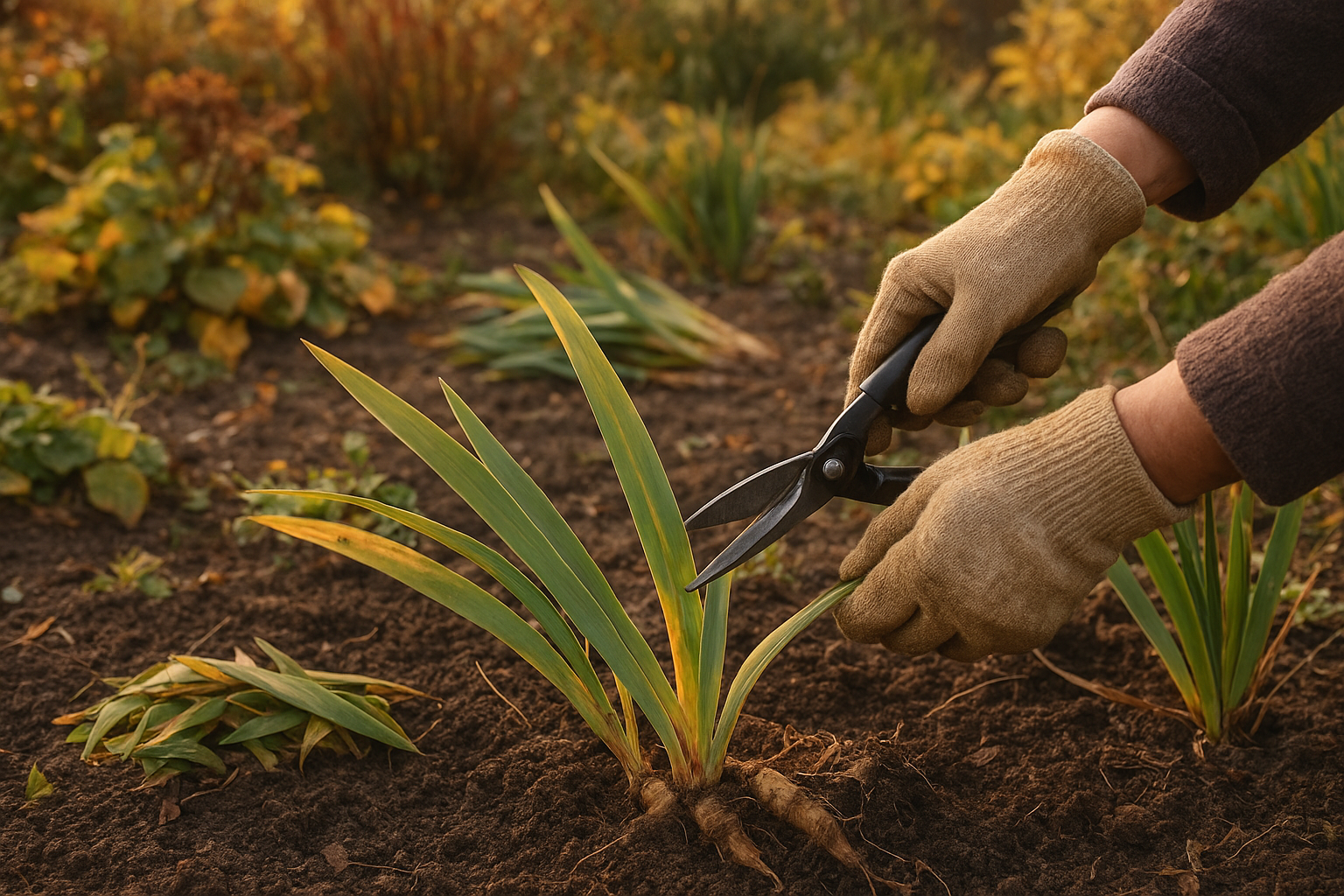
1. Trim declining foliage on bearded irises
For bearded irises, October is usually the time to tidy up tired leaves. Once foliage starts yellowing or collapsing, it is no longer doing much good for the plant and can become a winter problem if left in place.
Use clean, sharp garden shears and trim the leaves back to about 6 to 8 inches tall. This helps keep winter wind from shredding the foliage and dragging diseased material onto the rhizomes. If some leaves are still firm and green, you do not need to remove every single one. Green tissue still photosynthesizes and stores energy for next year’s growth.
Tip: If a leaf looks floppy, spotted, or mushy, remove it completely rather than simply shortening it. Clean cuts reduce the chance of disease spreading through the clump.
2. Clean up fallen leaves and plant debris
One of the best things you can do for irises in fall is simple cleanup. Remove dead leaves, spent flower stalks, weeds, and any other plant debris around the base of the clump. This matters more than many gardeners realize.
Old foliage can shelter pests and disease through winter. In particular, iris borer problems often start with eggs or larvae overwintering in dead plant material. Even if you have not seen pests yet, a clean bed gives you a better chance of avoiding trouble later.
Take the debris out of the garden rather than leaving it nearby. Compost healthy material only if your compost pile heats up well; otherwise, discard anything that looks diseased.
Why airflow matters
Irises do best when air can move freely around their crowns and leaves. A crowded, messy bed stays damp longer, which creates ideal conditions for fungal problems. A few minutes of cleanup can save you from bigger issues in spring.
3. Check the rhizomes and roots for trouble
Bearded irises grow from thick rhizomes that sit partly on top of the soil. These storage structures need good drainage and airflow. In October, it is smart to gently inspect them for soft spots, discoloration, or a bad smell, all of which can point to rot.
If a rhizome feels firm and healthy, leave it alone. If you see a section that is soft, blackened, or hollow, cut away the damaged part with a clean knife or pruners. If rot has spread widely through the clump, you may need to remove and replant only the healthiest pieces.
Healthy rhizomes should feel firm, not spongy. They should be exposed to some air, not buried deeply in soil or mulch. If they are covered too heavily, they can stay wet and rot more easily.
4. Divide crowded clumps if they have outgrown the space
October is often a good time to divide bearded irises in many climates, especially if the plants have stopped blooming well or have become crowded. Division gives each section more room, better airflow, and younger, more productive growing points.
Signs that an iris clump needs division include:
- fewer blooms than usual
- bare centers in the clump
- rhizomes piling on top of one another
- plants leaning outward and crowding the bed
To divide, lift the clump carefully, shake or rinse away loose soil, and separate the healthiest rhizomes. Trim the leaves back, remove old or damaged sections, and replant only the firm, active pieces. Space them so the rhizomes are set near the soil surface and the roots can spread downward.
If you do not need more plants, give extras to neighbors or tuck them into another sunny, well-drained area of the garden.
5. Adjust mulch based on iris type
Mulch can be helpful in fall, but irises are a little unusual. Bearded irises do not want a heavy blanket over their rhizomes. Too much mulch traps moisture and raises the risk of rot.
For bearded irises, keep mulch very light or skip it directly over the rhizomes. If you want to mulch nearby soil to suppress weeds or moderate temperature swings, keep the material a little away from the crown and rhizome area.
Siberian and Japanese irises are more tolerant of moisture and can appreciate a bit more organic matter around them, especially if your climate gets very cold. Even then, avoid burying the crown. The key is to protect roots without smothering the plant.
Best mulch habits for irises
- use a thin layer, not a deep pile
- keep mulch off the rhizome tops
- remove soggy mulch that has compacted over the crown
- choose a material that drains well and does not mat heavily
6. Water only if the soil is dry
By October, irises usually need far less water than they did in summer. In fact, too much moisture during cool weather can contribute to rot, especially for bearded irises. That said, new divisions and newly planted irises should not be allowed to dry out completely.
Check the soil before watering. If it is already moist a few inches down, leave it alone. If the weather has been unusually dry and the plant was recently divided or transplanted, give it a thorough drink and let the soil drain well.
Rule of thumb: fall watering should support roots, not keep the bed constantly damp.
7. Make a note for spring pest control
If iris borers have been a recurring issue in your garden, October cleanup is only part of the solution. The other part is being ready to act early in spring, before the larvae burrow into the plants.
Once new growth appears and the shoots are several inches tall, monitor them closely. Early treatment is far more effective than waiting until the foliage is already damaged. Pairing spring attention with fall cleanup gives you the best chance of keeping the problem under control.
You can also reduce future issues by keeping the bed clean each fall, removing old foliage promptly, and avoiding overcrowded clumps.
What about Siberian and Japanese irises?
These iris types are not grown quite the same way as bearded irises, so they need a softer touch. Siberian irises often keep attractive foliage longer and generally do not need the same severe trimming. Japanese irises also prefer consistent moisture during the growing season, but they still benefit from a tidy fall cleanup and removal of dead material.
For both, focus on removing declining leaves, clearing debris, and dividing only if the clump is crowded or underperforming. If the foliage is still green and healthy, let it help feed the roots a little longer.
A simple October iris checklist
If you want a quick way to stay organized, use this short checklist:
- Inspect each iris clump for yellowing, damage, or rot.
- Trim declining bearded iris foliage back to 6 to 8 inches.
- Remove dead leaves, weeds, and other debris.
- Divide crowded clumps if blooming has declined.
- Keep mulch light over bearded iris rhizomes.
- Water only when the soil is dry or newly planted divisions need it.
- Make a note to watch for borers and other pests next spring.
A little October iris care goes a long way. By cleaning up old growth, protecting the rhizomes, and avoiding excess moisture, you give your plants a healthier winter and a better shot at strong spring flowers. Irises may be low-maintenance for much of the year, but this small seasonal reset can make a big difference when bloom time returns.