How to Clean Gutters Before Winter Safely
Cleaning gutters is not the most glamorous fall chore, but it is one of the most useful. If leaves, pine needles, roof grit, or seed pods block the gutter or downspout, rain and melting snow can spill where you do not want it: behind fascia boards, beside the foundation, over walkways, or into basement trouble spots.
The best time to clean gutters before winter is after most leaves have fallen but before the first hard freeze in your area. Plan for a dry, calm day, work slowly, and skip the ladder if the ground is slick, uneven, icy, or windy.
Why Clean Gutters Before Winter?
Your gutter system is meant to collect roof runoff and move it away from the house. WVU Extension notes that gutters help protect the house, windows, doors, and foundation by carrying rainwater through downspouts to prevent water damage and flooding. ([extension.wvu.edu](https://extension.wvu.edu/community-business-safety/home-safety/gutter-safety?utm_source=openai))
In cold climates, clogged gutters can make winter problems worse. A gutter packed with wet leaves can hold water, freeze, sag, and overflow. Clean gutters do not solve every ice dam problem, because ice dams are often tied to roof heat loss and attic air leaks, but clear drainage helps water move instead of pooling at the eaves. Recent winter maintenance guidance also stresses that attic insulation, ventilation, and clear downspouts all matter when reducing ice-dam risk. ([tomsguide.com](https://www.tomsguide.com/home/how-to-stop-ice-dams-from-ruining-your-roof-this-winter-we-ask-the-experts?utm_source=openai))
Tools and Supplies
Gather everything before you climb. You want fewer trips up and down the ladder.
- Heavy work gloves
- Safety glasses
- Sturdy shoes with good grip
- Garden trowel, gutter scoop, or small plastic shovel
- Bucket with a ladder hook, or a tarp on the ground
- Garden hose with a pistol-grip nozzle
- Plumber’s snake or flexible downspout cleaner for clogs
- Trash bags or compost bin for leaves
- Exterior-rated gutter sealant for small joint leaks
- Screwdriver or drill for loose brackets, if needed
Avoid using sharp metal tools inside thin aluminum gutters. They can scratch coatings, widen seams, or poke holes if you dig too hard.
Start With Ladder Safety
Ladder falls are a real home-maintenance hazard, not just a workplace problem. CDC/NIOSH highlights ladder fall injuries as a persistent hazard in maintenance work and at home, so this is the part of the job to take seriously. ([cdc.gov](https://www.cdc.gov/niosh/falls/ladder/?CDC_AAref_Val=https%3A%2F%2Fwww.cdc.gov%2Fniosh%2Ftopics%2Ffalls%2Fmobileapp.html&utm_source=openai))
Use a ladder that is tall enough for the job, set it on firm level ground, and do not stand on the top rungs. Keep your hips between the side rails and climb down to move the ladder instead of leaning far to one side. If you use an extension ladder, a stabilizer or standoff can help keep pressure off the gutter and make the ladder feel steadier; NIOSH ladder guidance notes that gutter standoffs provide support while protecting gutters. ([cdc.gov](https://www.cdc.gov/niosh/falls/pdfs/iOS_Ladder_Safety_Users_Manual.pdf?utm_source=openai))
Do not clean gutters from the roof unless you are trained and properly equipped. Also skip the job during rain, frost, ice, high wind, or storms. WVU Extension specifically warns that gutter cleaning and other ladder or roof work should not be done during storms or weather where ice or precipitation is possible. ([extension.wvu.edu](https://extension.wvu.edu/community-business-safety/home-safety/gutter-safety?utm_source=openai))
Step-by-Step: How to Clean Gutters Before Winter
1. Walk the House First
Before setting up the ladder, walk around the house and look for obvious trouble spots. Check for sagging gutter runs, detached downspouts, overflowing stains on siding, washed-out mulch, and places where water has been dumping near the foundation.
Also look overhead. Stay well away from power lines. If any part of the gutter is close to electrical service lines, do not work there yourself. Call a professional.
2. Scoop Out the Loose Debris
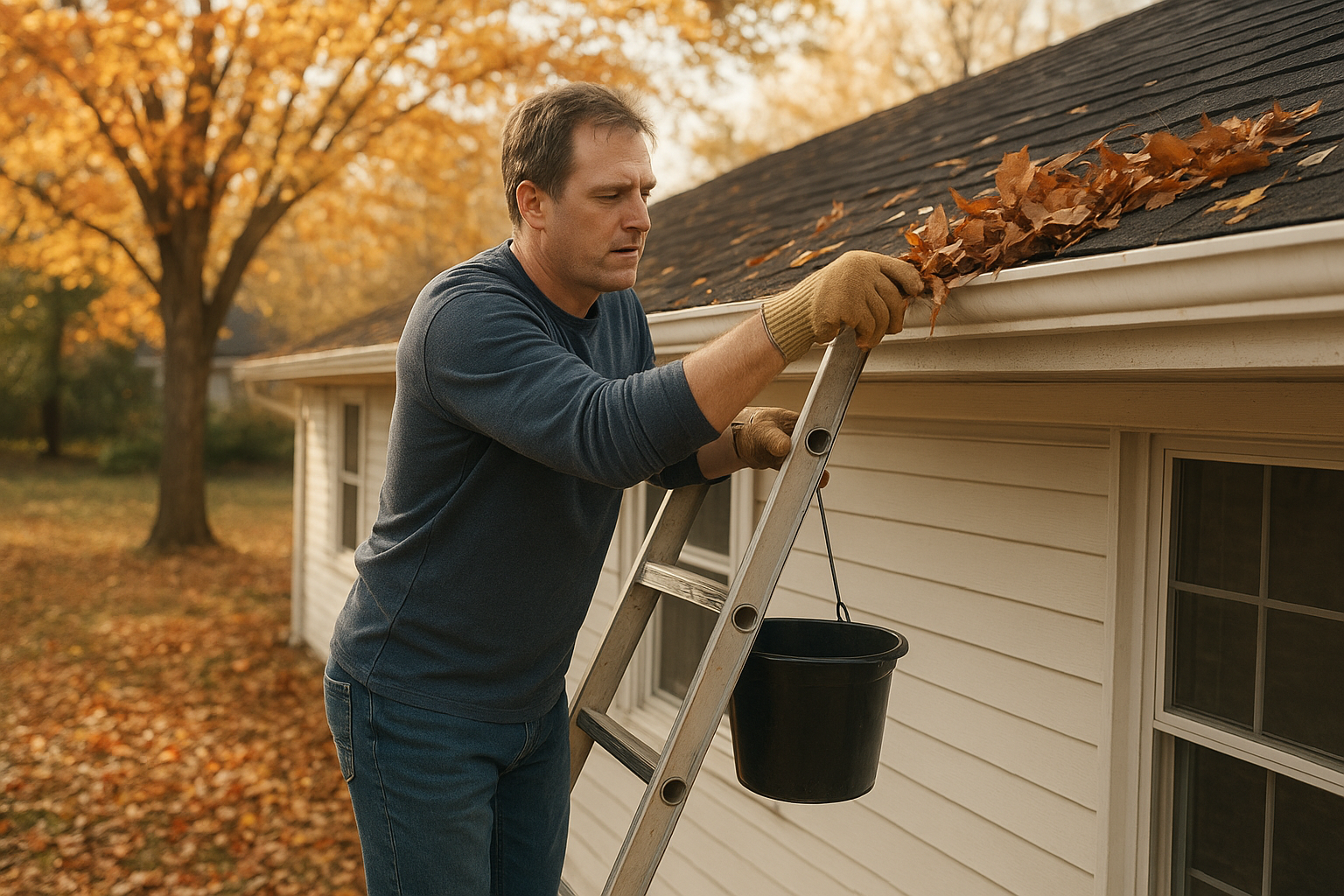
Set your ladder near a downspout or at one end of a gutter run. Put on gloves and safety glasses. Scoop leaves, twigs, acorns, and sludge into a bucket, or drop them onto a tarp below if the area is clear.
Work in short sections. Move the ladder often so you are never reaching more than is comfortable. Pay special attention to inside corners, valleys below roof intersections, and the area right above each downspout. Those are common clog points.
3. Flush the Gutter With a Hose
Once the big debris is out, use a garden hose to rinse the gutter toward the downspout. A pistol-grip nozzle lets you control the flow without leaving water running while you reposition yourself. This is also when you will see whether the gutter has low spots or leaks.
If water sits in the middle of a run instead of draining, the gutter may be sagging or pitched incorrectly. A small amount of dampness is normal, but standing water after flushing is a sign to adjust hangers or call a gutter pro.
4. Clear the Downspouts
If water backs up instead of flowing freely from the bottom of the downspout, you likely have a clog. Try spraying water up from the bottom opening first. If that does not work, use a plumber’s snake or remove the lower elbow and clear the blockage by hand.
Do not ignore a partly clogged downspout. In winter, trapped wet leaves can freeze into a solid plug. Then meltwater has nowhere to go except over the gutter edge or back toward the roofline.
5. Check Where the Water Ends Up
Downspouts should move water away from the foundation, not dump it beside the basement wall or crawl space. FEMA winterizing guidance reminds homeowners to keep gutters working and make sure downspouts direct water away from the home. ([fema.gov](https://www.fema.gov/sites/default/files/documents/fema_dr-4749-il-winterizing-your-home.pdf?utm_source=openai))
If your downspout ends right at the foundation, add a splash block or extension. As a practical rule, aim to carry runoff several feet away from the house where the ground slopes away and water will not freeze across a walkway.
6. Tighten, Seal, and Repair Small Problems
After the gutters are clean, inspect the system while everything is visible. Tighten loose hangers, reattach wobbly elbows, and look for gaps at seams or end caps. Small leaks at joints can often be sealed with exterior-rated gutter sealant after the area is clean and dry.
Replace cracked plastic extensions, missing screws, and crushed elbows. If the gutter is pulling away from the fascia, badly rusted, bent, or no longer holding slope, it is usually better to repair it before winter weather adds weight.
What About Gutter Guards?
Gutter guards can reduce how much debris gets into the gutter, but they do not make gutters maintenance-free. Small leaves, pine needles, roof grit, and seed pods can still collect on top or work through openings. If you have guards, inspect them in fall and rinse or brush off buildup before freezing weather.
Homes under pine trees or messy seed-dropping trees may need more than one cleaning per year. Some home maintenance sources recommend cleaning gutters at least twice a year, and more often when nearby trees shed heavily. ([homedepot.com](https://www.homedepot.com/c/ai/fall-home-maintenance-checklist/9ba683603be9fa5395fab9067ddfccb?utm_source=openai))
When to Call a Professional
Hire help if your home is more than one story, the ground is sloped or unstable, you are uncomfortable on ladders, the gutters are near power lines, or the roofline is steep and awkward. Also call a pro if gutters are sagging, seams are repeatedly leaking, or underground drain lines appear clogged.
The cost is often worth it compared with a fall. It is also worth scheduling early, because gutter cleaners tend to book up quickly after leaves drop and before the first serious freeze.
A Simple Fall Gutter Checklist
- Wait until most leaves have fallen.
- Choose a dry, calm day.
- Use gloves, eye protection, and a stable ladder.
- Scoop debris from gutters by hand or with a plastic scoop.
- Flush each run with a hose.
- Make sure every downspout drains freely.
- Extend water away from the foundation.
- Tighten loose hangers and seal small leaks.
- Recheck after late leaf drop or a heavy storm.
Clean gutters before winter give your home a better chance of handling cold rain, thawing snow, and freeze-thaw weather without preventable drainage problems. Take your time, respect the ladder, and fix small gutter issues now while the weather is still workable.