How to Bleed a Radiator That Is Cold at the Top
If one radiator is warm at the bottom but cold at the top, trapped air is often the reason. Learning how to bleed a radiator is a small, practical job that can help hot water move through the radiator more evenly and may save you from turning the thermostat up just to warm one chilly room.
This guide is for hot water radiators, the kind connected to a boiler system. Steam radiators work differently, and if you are not sure which type you have, check your boiler or ask a heating professional before opening any valves.
Why a Radiator Gets Cold at the Top
In a hot water heating system, the boiler heats water and circulates it through radiators, baseboards, or radiant flooring. ENERGY STAR describes boilers as systems that heat water or steam and send it through radiators or similar heat emitters. When air gets trapped in a hot water radiator, that air rises to the top and keeps hot water from filling the radiator completely. ([energystar.gov](https://www.energystar.gov/ia/home_improvement/heat_cool/GUIDE_2COLOR.pdf?utm_source=openai))
The usual clue is simple: the radiator heats at the bottom or near the inlet pipe but stays cool along the upper section. You might also hear gurgling, trickling, or knocking as water and air move through the radiator.
Tools and Supplies
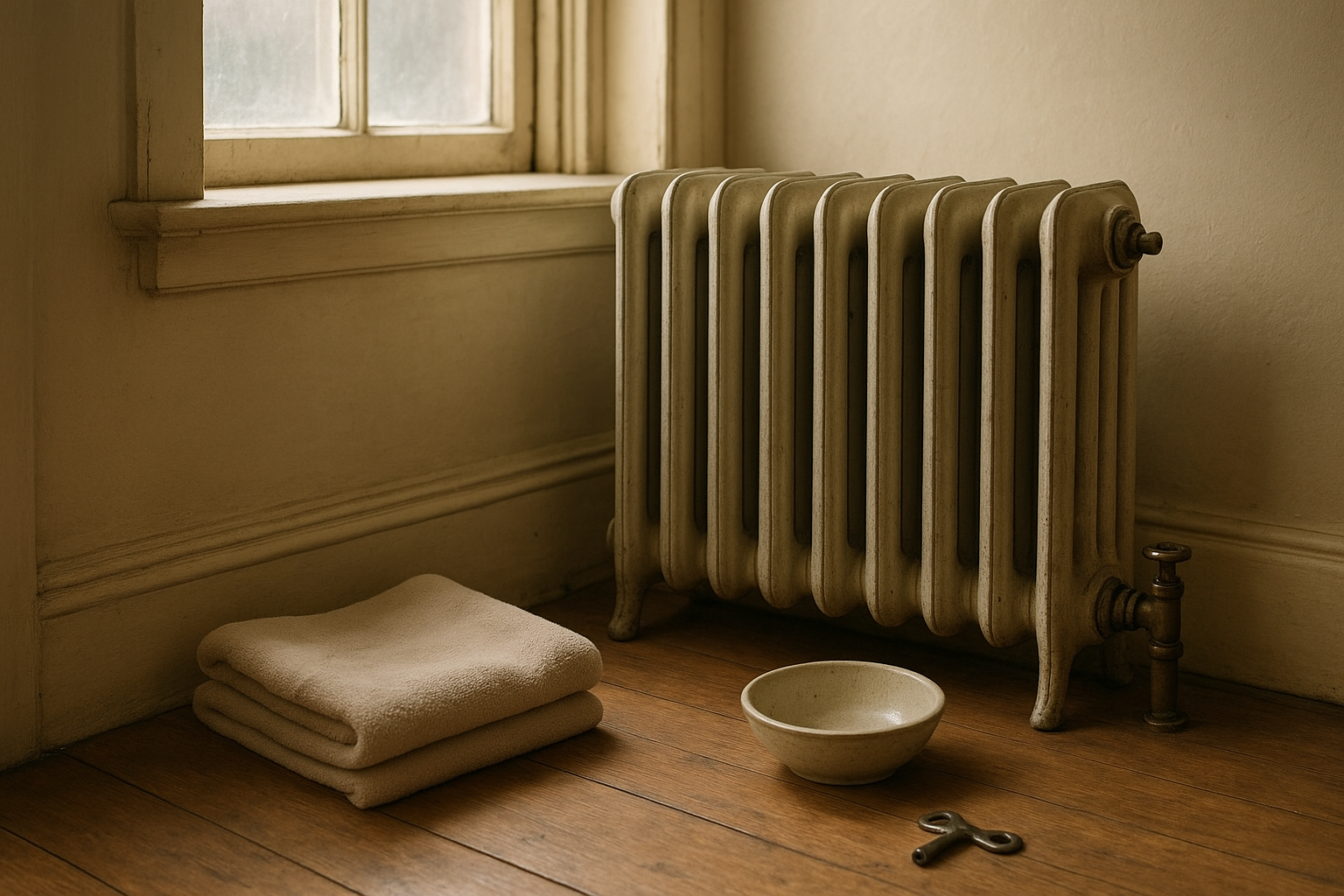
- Radiator bleed key or a flat-head screwdriver, depending on your bleed valve
- Old towel or rag
- Small bowl, cup, or shallow container
- Work gloves, especially if the radiator has sharp or painted edges
- Flashlight, if the valve is tucked into a dark corner
Radiator keys are inexpensive and usually available at hardware stores. If your bleed valve has a slotted screw head, a screwdriver may work, but do not force it. A stripped valve can turn a quick chore into a service call.
Before You Start: Do These Safety Checks
1. Make sure it is a hot water radiator
Do not use this process on a steam radiator unless you know exactly what you are doing. Steam radiators often have an air vent on the side, and their maintenance is different from bleeding a hot water radiator.
2. Turn off the heat and let things cool
Shut off the heating system at the thermostat and give the radiator time to cool enough to touch safely. Several radiator bleeding guides recommend turning the heat off first because opening a valve on a hot system can release hot water and may draw more air into the system. ([toolstation.com](https://www.toolstation.com/help-and-advice/how-to-guides/how-to-bleed-radiator?utm_source=openai))
3. Know where the boiler pressure gauge is
If you have a closed hot water boiler system, bleeding air can lower system pressure. You do not need to adjust anything before you begin, but it helps to know where the pressure gauge is so you can check it afterward. If pressure drops too low or you are unsure how to add water to the system, call a heating technician.
How to Bleed a Radiator Step by Step
- Turn the thermostat down or switch the heat off. Wait until the radiator is cool enough to work around comfortably.
- Find the bleed valve. It is usually near the top of the radiator on one end. Look for a small square stem or a slotted screw inside a little round fitting.
- Protect the floor. Lay a towel under the valve and hold a small bowl or cup just below it. The first water may be rusty or dirty, especially in an older system.
- Open the valve slowly. Insert the radiator key and turn it counterclockwise about a quarter turn. You should hear a hiss if air is trapped inside.
- Wait for water. Keep the valve open only until the hissing stops and a steady trickle of water appears. You are not draining the radiator; you are only letting trapped air escape.
- Close the valve snugly. Turn the key clockwise until the valve is closed. Do not overtighten it. Wipe the valve dry so you can spot any drips later.
- Check the boiler pressure. Look at the boiler gauge after bleeding one or more radiators. If the pressure is below the normal range listed in your boiler manual, follow the manual or call a pro.
- Turn the heat back on. Give the system time to circulate, then check that the radiator warms evenly from top to bottom.
If you are bleeding several radiators, many trade guides recommend starting with radiators on the lowest floor and working upward. This helps move air through the system in an orderly way rather than chasing pockets of air from room to room. ([screwfix.com](https://www.screwfix.com/guides/heating-plumbing/radiators/bleeding-a-radiator-guide?utm_source=openai))
How Often Should You Bleed Radiators?
You do not need to bleed radiators on a fixed weekly or monthly schedule. A practical routine is to check them at the start of heating season, then again if you notice cold tops, uneven heat, gurgling sounds, or one room lagging behind the rest of the house.
ENERGY STAR recommends seasonal maintenance for heating and cooling equipment, including checking thermostat settings and having fuel connections, gas pressure, burner combustion, and heat exchangers inspected where applicable. Bleeding radiators is only one homeowner-level task; the boiler itself still needs proper professional attention. ([energystar.gov](https://www.energystar.gov/saveathome/heating-cooling/maintenance-checklist?trk=article-ssr-frontend-pulse_little-text-block&utm_source=openai))
What If No Air or Water Comes Out?
If you open the bleed valve and nothing happens, close it again and do not keep twisting. Possible causes include a clogged bleed valve, low system pressure, a closed supply valve, or a circulation problem. This Old House notes that if air comes out but water does not follow, the next clue may be down at the boiler or system piping rather than at the radiator itself. ([thisoldhouse.com](https://www.thisoldhouse.com/plumbing/how-to-bleed-a-radiator?utm_source=openai))
At that point, it is safer to stop and call a heating technician, especially if you do not know how your boiler fill valve works. Adding too much water or changing boiler pressure incorrectly can create bigger problems.
What If the Radiator Is Cold at the Bottom?
A radiator that is cold at the top often points to air. A radiator that is cold at the bottom can point to a different issue, such as sludge, mineral buildup, a stuck valve, or poor circulation. Bleeding may not fix it because the problem is not simply trapped air.
Dark, rusty, or gritty water from the bleed valve can also be a sign that the system needs more than a quick bleed. A heating professional may recommend flushing, balancing, valve repair, or other maintenance depending on the age and condition of the system.
Common Mistakes to Avoid
- Opening the valve too far. A quarter turn is usually enough. If the valve comes loose, water can spray out quickly.
- Bleeding while the system is actively heating. Hot water can burn, and the system may pull in more air.
- Overtightening the valve. Close it firmly, but do not crank on it.
- Ignoring boiler pressure. Bleeding several radiators can lower pressure enough to affect heating performance.
- Assuming every cold radiator needs bleeding. Closed valves, failed circulator pumps, air elsewhere in the piping, or boiler issues can all cause poor heat.
When to Call a Pro
Call a licensed heating professional if the radiator valve leaks, the boiler pressure is too low or too high, you cannot identify your system type, you hear loud banging, several radiators will not heat, or you see rusty water that keeps coming. Also call if you need to bleed the same radiator repeatedly; recurring air usually means the system has a leak, pressure issue, or another fault that needs diagnosis.
For a simple cold-at-the-top radiator, though, bleeding is often a manageable homeowner task. Work slowly, keep a towel handy, stop when you get a steady trickle of water, and check the radiator again once the heat has had time to run.