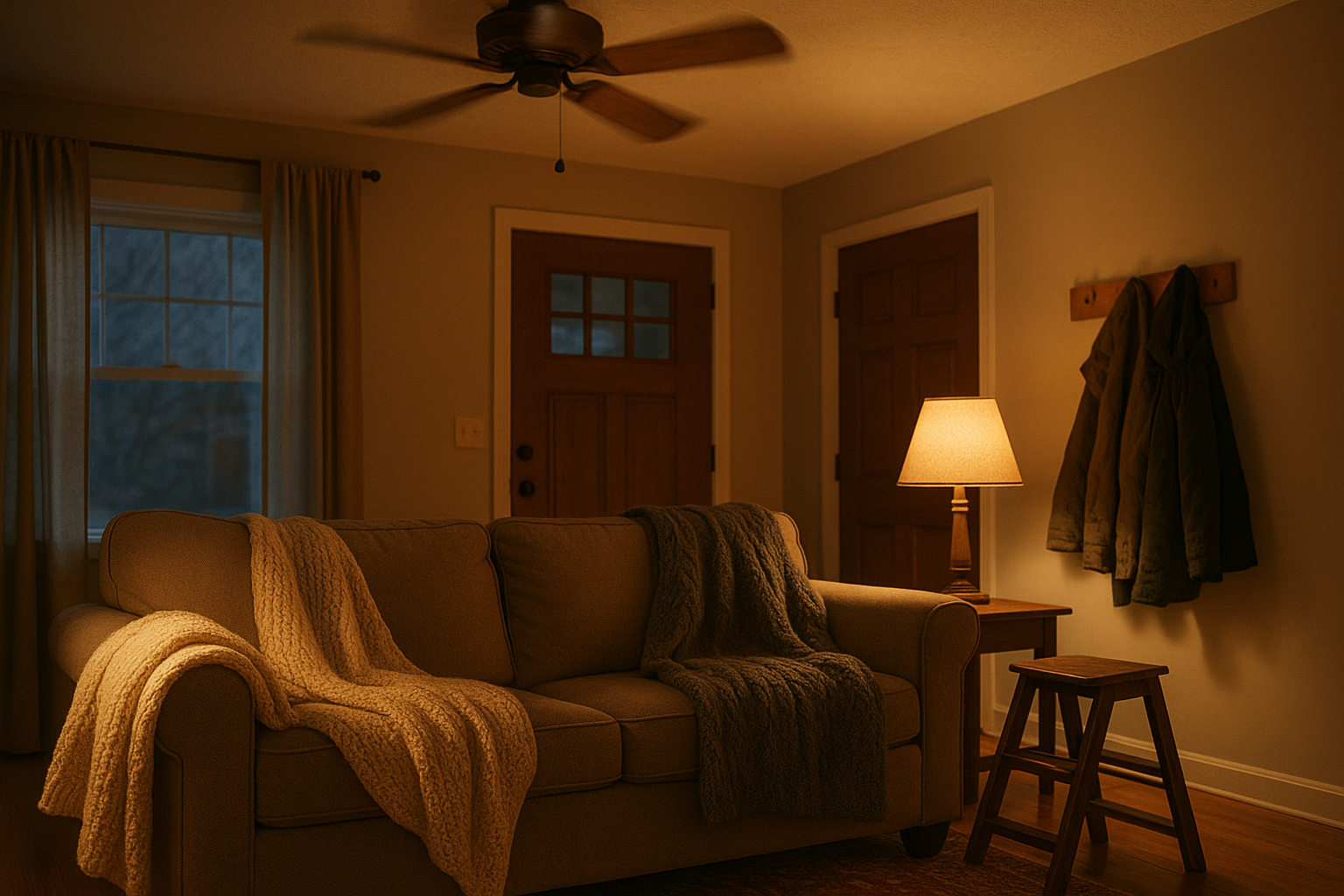
Ceiling Fan Direction for Winter: A Simple Room-by-Room Guide
Changing your ceiling fan direction for winter is one of those tiny home tasks that can make a room feel more comfortable without buying anything new. The trick is knowing which way the blades should spin, what speed to use, and when a fan is helping versus just making a draft.
Here’s the simple rule: in winter, most ceiling fans should run clockwise on low speed. That creates a gentle updraft, which helps move warmer air near the ceiling back down along the walls and into the room. ENERGY STAR gives the same seasonal guidance: counterclockwise in summer, clockwise in winter, with low speed for winter comfort. ([energystar.gov](https://www.energystar.gov/sites/default/files/asset/document/Ceiling%20Fan%20FS%20v14.pdf?utm_source=openai))
Which Way Should a Ceiling Fan Turn in Winter?
Stand under the fan and look up. In winter mode, the blades should appear to move clockwise, the same direction as the hands of a clock. You should not feel a strong breeze blowing straight down on you. If you do, the fan is probably still in summer mode or running too fast.
The goal in winter is not wind chill. It is air mixing. Warm air naturally gathers near the ceiling, especially in rooms with high ceilings, stairwells, fireplaces, large windows, or uneven heat. A slow clockwise fan helps pull cooler air upward and nudge that warm ceiling air outward and down. Hunter, a major ceiling fan manufacturer, also describes winter clockwise rotation as a way to move cooler air off the floor and push warmer air down the walls without a strong draft. ([support.hunterfan.com](https://support.hunterfan.com/hc/en-us/articles/115001396474-How-do-I-know-what-direction-to-set-my-ceiling-fan?utm_source=openai))
How to Reverse Your Ceiling Fan Safely
Most ceiling fans have one of three reverse controls: a small switch on the fan motor housing, a button on the remote, or a setting in a wall control or app. The exact setup depends on the model, but the safety steps are the same.
- Turn the fan off. Wait until the blades stop completely. Do not flip the direction switch while the fan is spinning.
- Use a sturdy step ladder if needed. Place it on a flat floor, not on a chair, ottoman, or bed.
- Find the direction control. On many pull-chain fans, the small reverse switch is on the side of the motor housing above the blades.
- Flip the switch or change the remote setting. If your fan has a remote, look for a reverse icon, airflow button, or seasonal direction setting.
- Turn the fan back on low. Watch the blades from below and confirm they are moving clockwise.
If your fan has a light kit, make sure the glass shades and bulbs are secure while you are up there. This is also a good time to dust the blade tops, because winter airflow can stir up dust that has been sitting there since summer.
Use Low Speed, Not Medium or High
For winter, low speed matters. A fan running too fast can make people feel colder, even if the air in the room is technically being mixed. ENERGY STAR’s winter guidance is to reverse the motor and run the fan at low speed so it produces a gentle updraft and redistributes warm air near the ceiling. ([energystar.gov](https://www.energystar.gov/ia/partners/univ/u_lighting/Ceiling_Fans_At-A-Glance.pdf?utm_source=openai))
After you switch directions, sit in the room for a few minutes. If you feel air blowing on your face, neck, or hands, turn the fan down. If low speed still feels breezy, that room may not be a good candidate for winter fan use while people are sitting directly underneath it.
When a Winter Ceiling Fan Helps Most
This little adjustment is most useful in rooms where heat collects above your head. Try it in:
- Rooms with high or vaulted ceilings, where warm air can sit far above the living space.
- Living rooms with fireplaces or wood stoves, where heat may rise quickly and leave the seating area uneven.
- Two-story foyers or stairwells, where warm air drifts upstairs.
- Bedrooms over garages or chilly rooms, where air circulation may help even out hot and cold spots.
- Open-plan spaces, where one thermostat may not reflect how the whole room feels.
It may help less in rooms with standard 8-foot ceilings, especially if the fan hangs low over a bed, dining table, or sofa. In those spaces, comfort is the test: if the room feels drafty, turn the fan off.
Should You Adjust the Thermostat?
A ceiling fan does not create heat. It simply moves air, so the savings come only if you can stay comfortable while nudging the thermostat lower or avoiding frequent thermostat bumps. ENERGY STAR notes that thermostat adjustments during fan use are where additional energy and dollar savings can happen. ([energystar.gov](https://www.energystar.gov/sites/default/files/asset/document/Ceiling%20Fan%20FS%20v14.pdf?utm_source=openai))
Try this practical approach: after setting the fan clockwise on low, wait 20 to 30 minutes. If the room feels more even and comfortable, lower the thermostat by 1 degree and see how the house feels over the next evening. If everyone is still comfortable, you can try another degree. If people start reaching for extra blankets and complaining, the setting is not working for your home.
Do You Leave the Fan On All Day?
Usually, no. Run the ceiling fan when you are using the room or when it helps balance heat in a problem area. If the room is empty for hours, the fan may not be worth running. Ceiling fans are small loads compared with major heating equipment, but they still use electricity.
The exception is a room where the fan helps your heating system work more evenly, such as a tall great room with a thermostat nearby. Even then, start with a few hours at a time and judge the comfort difference. You are looking for a room that feels steadier, not windier.
Quick Troubleshooting
The fan wobbles on low
Turn it off and check that the blades are tight, clean, and not warped. A basic balancing kit can help, but do not ignore a wobble that looks severe or new. If the mounting bracket seems loose, stop using the fan until it is checked.
I cannot find a reverse switch
Check the remote, wall control, owner’s manual, or manufacturer’s website. Some newer fans reverse through the remote or app. A few fans, especially certain outdoor or specialty models, may not have a reversible motor.
The room feels colder
Lower the speed or turn the fan off. Winter fan direction is a comfort tool, not a rule you must follow in every room.
The fan is over a bed
Be picky here. Even a slow fan can feel chilly while you sleep. Try it before bedtime, and if the room feels drafty, leave that fan off overnight.
A Simple Fall or Winter Habit
Pair this task with something you already do twice a year, such as changing clocks, replacing HVAC filters, or testing smoke and carbon monoxide alarms. In fall, set ceiling fans clockwise on low. In spring, switch them back to counterclockwise for cooling comfort.
That is the whole job: reverse the fan, keep it slow, and use it only where it makes the room feel better. Done right, ceiling fan direction for winter is a no-cost comfort tweak that takes less than five minutes per room.