How to Freeze Bell Peppers from the Garden
If your pepper plants are suddenly producing faster than you can use them, freezing is one of the simplest ways to save the harvest. Bell peppers freeze well, keep their color nicely, and are easy to grab later for quick meals when fresh peppers are pricey or out of season.
The best part is that you do not need any special equipment or complicated prep. With a little washing, slicing, and packing, you can put away enough peppers to last for months.
Can you freeze bell peppers?
Yes, bell peppers freeze very well. They will not stay crisp enough for salad after thawing, but they hold up beautifully in cooked dishes. That makes them a smart choice for future batches of fajitas, casseroles, scrambled eggs, soups, pasta sauces, and sheet pan dinners.
Because bell peppers are low in moisture compared with many other vegetables, they can be frozen raw without blanching. That saves time and keeps the process simple.
When to harvest peppers for freezing
For the best flavor, harvest peppers when they are fully sized and firm. You can freeze green peppers at any stage once they have reached usable size, but red, yellow, orange, and other ripe colors are often sweeter and more flavorful.
If frost is coming, pick all mature peppers before temperatures drop. Even peppers with a little cosmetic blemish can be frozen as long as they are otherwise sound. Just trim away any soft, damaged, or moldy spots before processing.
What you need
- Fresh bell peppers
- Sharp knife and cutting board
- Colander or clean towels
- Freezer bags or airtight freezer containers
- Permanent marker for labeling
Step-by-step: how to freeze bell peppers
1. Wash and dry the peppers
Rinse the peppers under cool running water to remove dirt and garden debris. Dry them well with a clean towel or let them air-dry completely. Removing excess moisture helps reduce ice crystals in the freezer.
2. Remove stems, seeds, and membranes
Cut off the top of each pepper, then slice it open and pull out the seed cluster. Bell peppers are easiest to freeze once they are cleaned and trimmed into the shape you plan to use later.
3. Slice or dice them
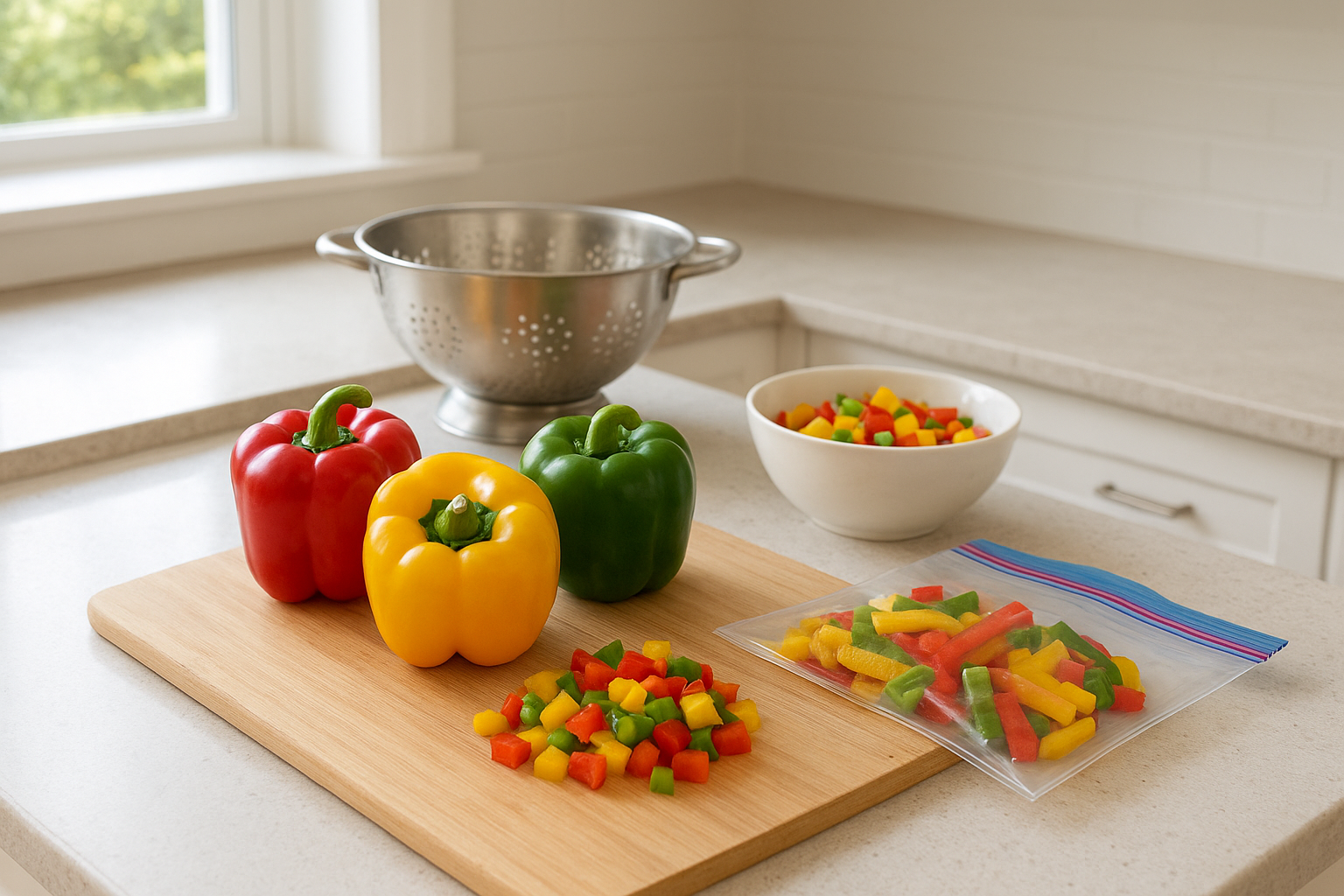
Think about how you usually cook with peppers before you cut them. Strips are useful for fajitas and sautés, diced peppers are convenient for soups and egg dishes, and larger chunks work well for roasting or stews. Keeping the pieces a similar size helps them freeze evenly.
4. Optional: flash freeze for easier portioning
If you want the pieces to stay loose instead of freezing in one solid block, spread them in a single layer on a baking sheet lined with parchment. Freeze until firm, usually a few hours. Then transfer the pieces to bags or containers.
This step is especially helpful if you plan to scoop out small amounts later without thawing the whole package.
5. Pack and remove excess air
Place the peppers in freezer bags or containers, leaving a little headspace if using rigid containers. Press out as much air as possible before sealing. Less air means better texture and flavor over time.
6. Label and freeze
Write the date and the contents on each bag. Bell peppers are best used within about 8 to 12 months for top quality, though they may remain safe longer if kept consistently frozen.
Do you need to blanch bell peppers first?
In most cases, no. Blanching is not necessary for bell peppers and can actually make them softer than many people want. Since peppers are usually used in cooked dishes after freezing, raw freezing is the easiest and most practical method.
If you are freezing peppers for stuffed pepper recipes, remember that frozen peppers will be softer after thawing. They still work, but the texture will not be as crisp as fresh.
Best ways to use frozen bell peppers
Frozen peppers are best when cooked straight from frozen or added during the cooking process. Thawing first usually makes them wetter and softer, which is fine for many recipes but not ideal for recipes that need crunch.
- Stir-fries: Add them straight to the pan.
- Soups and stews: Toss them in with other vegetables.
- Egg dishes: Use them in omelets, frittatas, and breakfast burritos.
- Pasta sauces: Stir diced peppers into simmering sauce.
- Casseroles: Mix them into rice, pasta, or potato dishes.
- Tacos and fajitas: Cook sliced peppers with onions and seasoning.
Helpful tips for better results
- Freeze in meal-size portions: Small bags are easier to use than one large batch.
- Keep peppers dry: Too much surface moisture can lead to freezer clumps.
- Mix colors if you like: A blend of red, yellow, and green peppers looks great in cooked dishes.
- Use wide, flat bags: They stack well and freeze more evenly.
- Avoid overpacking: A loosely filled bag is easier to break apart and measure later.
Can you freeze whole bell peppers?
You can, but it is not the most useful method for everyday cooking. Whole peppers take longer to freeze, are harder to pack efficiently, and can be awkward to use later. If you know you want stuffed peppers, freezing whole peppers may make sense, but for most home cooks, slicing or dicing is the better option.
What about roasted peppers?
If you prefer a deeper, sweeter flavor, you can roast bell peppers before freezing them. Roast, peel if desired, and cool completely before packing into freezer containers. Roasted peppers are great for dips, sandwiches, sauces, and pasta dishes.
Just keep in mind that roasted peppers will be much softer than raw-frozen peppers, so store them separately if you want different textures for different recipes.
How long do frozen peppers last?
For the best quality, use frozen bell peppers within 8 to 12 months. They are still safe after that if your freezer stays at a steady 0°F, but texture and flavor gradually decline. If you find old bags lurking in the back of the freezer, use them in soups or sauces where a slightly softer texture will not matter.
Make the most of a pepper harvest
When the garden delivers more peppers than you can eat fresh, freezing is one of the easiest ways to prevent waste and stock your freezer with ready-to-use ingredients. With a few simple steps, you can turn a short harvest window into months of easy weeknight meals.
Next time your pepper plants are loaded, process them in batches, label the bags clearly, and you will thank yourself when winter cooking gets busy. A freezer full of peppers is a small bit of garden work that pays off all season long.